Four days of rain
Diary and observations from summer '26 in Lithuania.
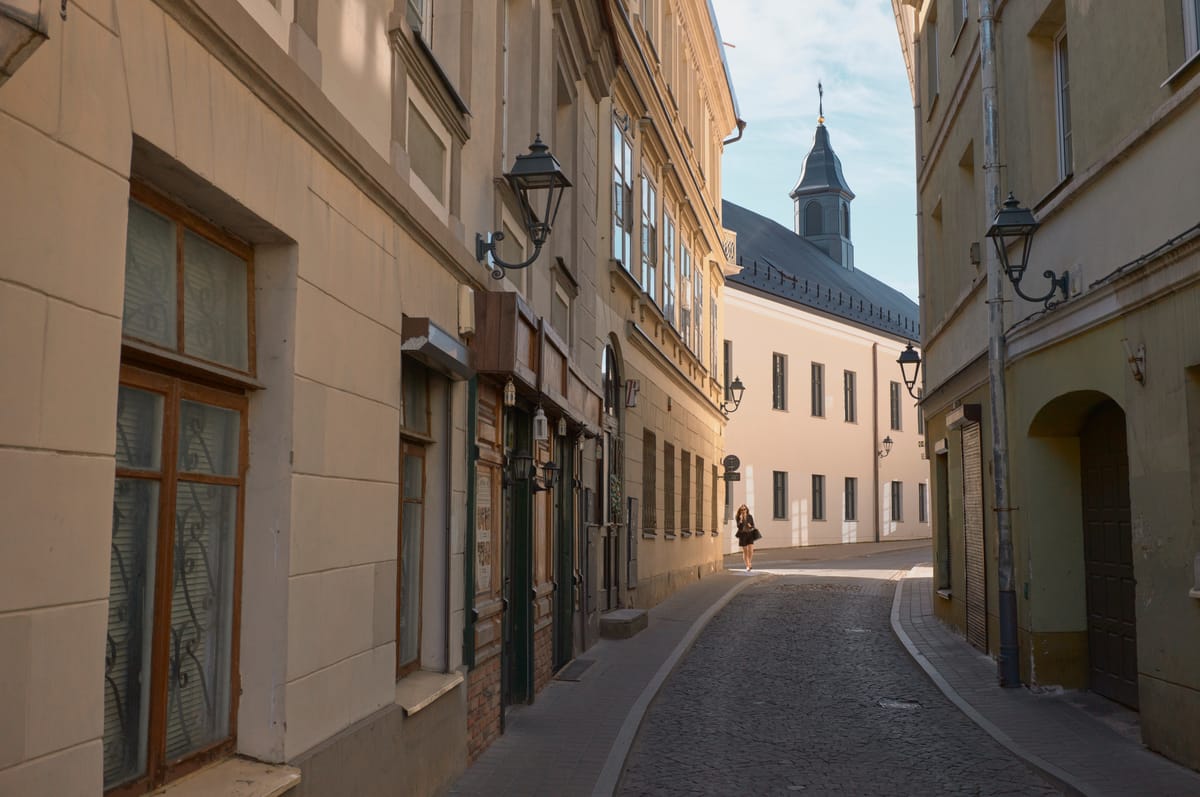
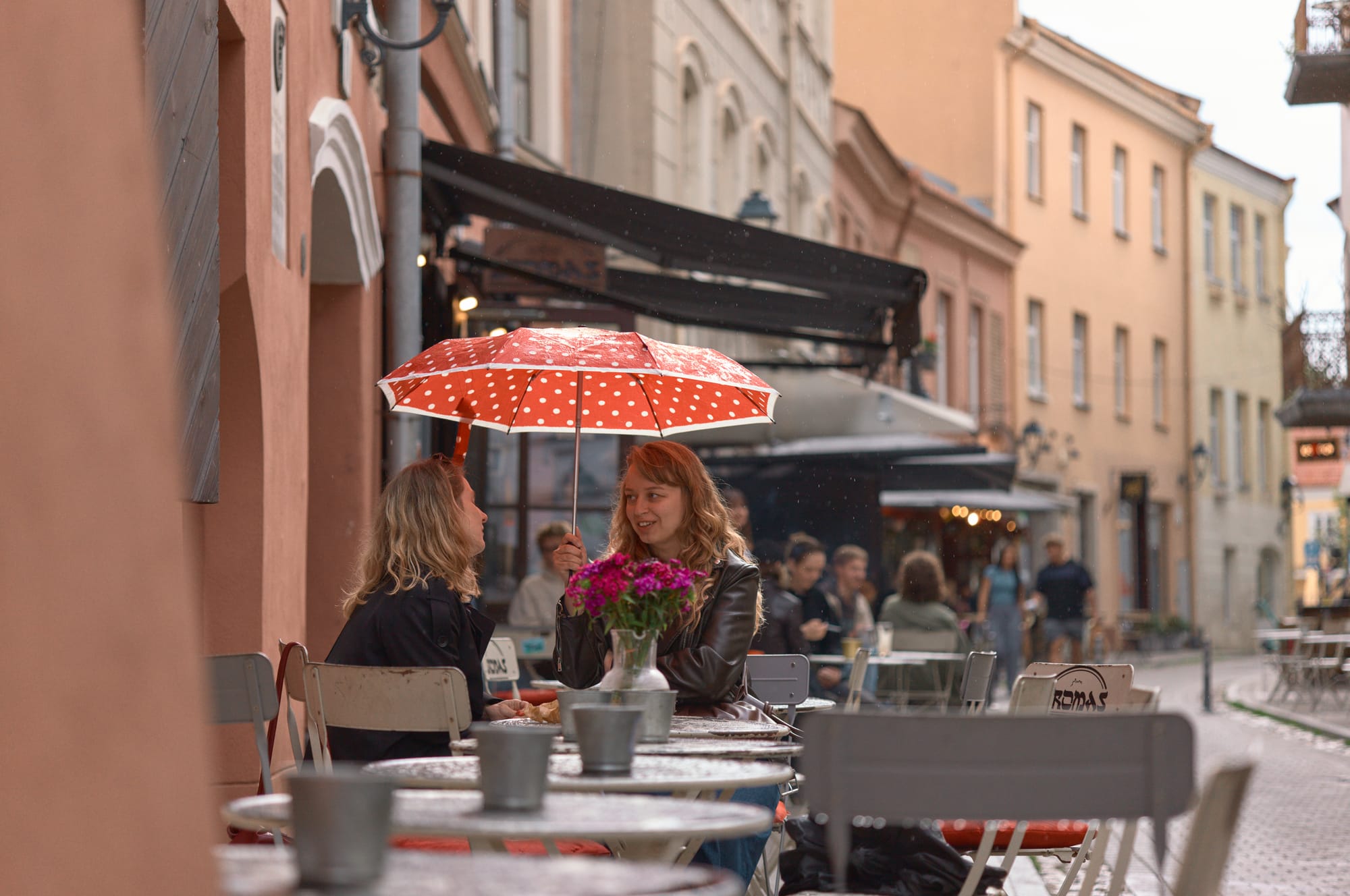
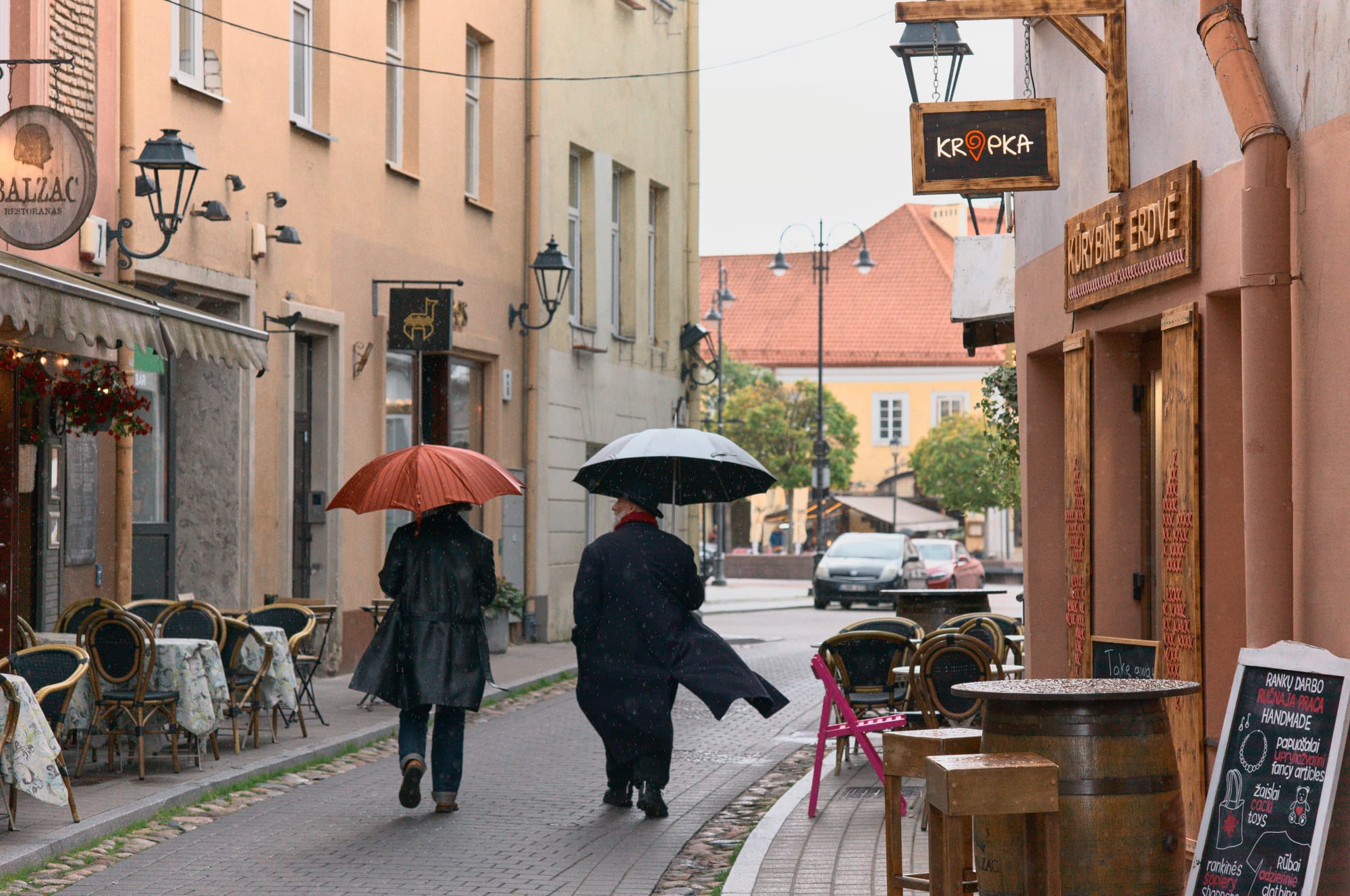
Signature cumulonimbus clouds rapidly rolling through the sky, sun peeking for minutes, then rain scenting the ground with a childhood smell. The weather is unpredictable here, unlike Chicago. Chicago rain has intent - it announces it is coming with a violent and thunderous front, unloads water with force for a few hours, and then recedes for days. Here it's ebbing, undecided, unpredictable like a primordial soup in the sky.
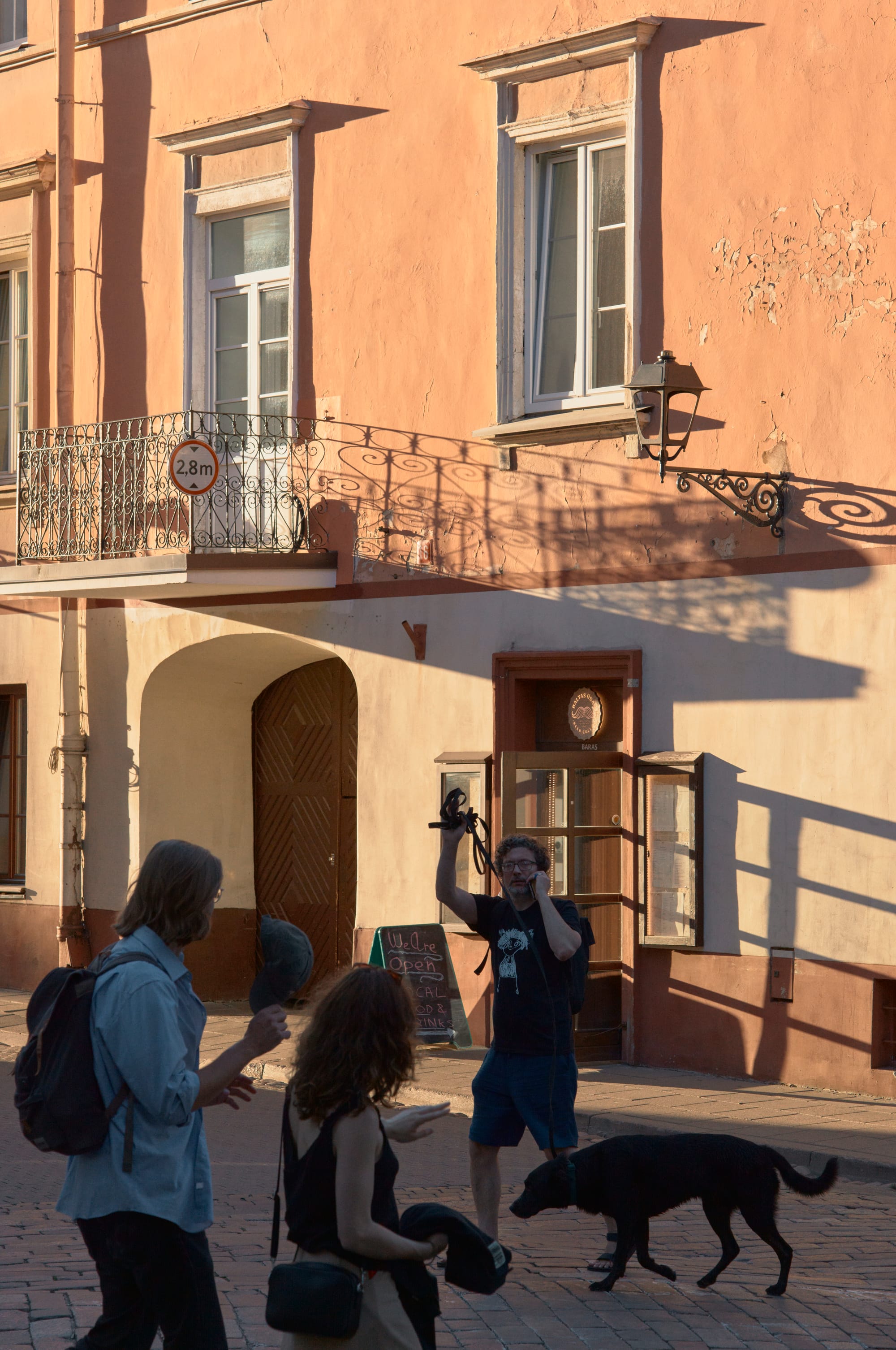
We're in our flat in old town Vilnius - small by American standards, large by Lithuanian. A hundred square meters of prime real estate in the old town of the city. It's a museum outside our windows: 14th-century churches, ringing bells, and defensive walls. The three of us - Ashton, Virginija, and I.
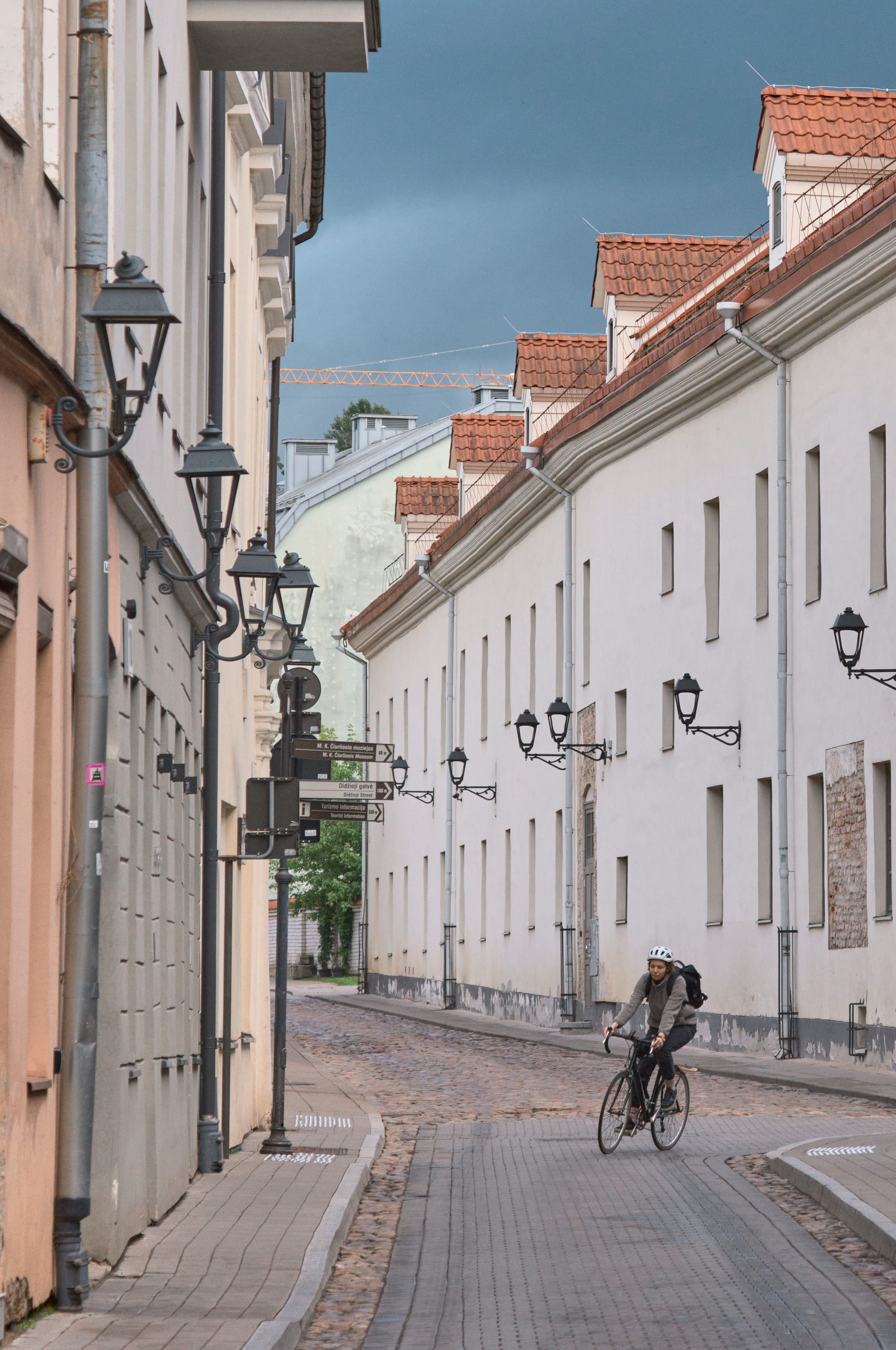
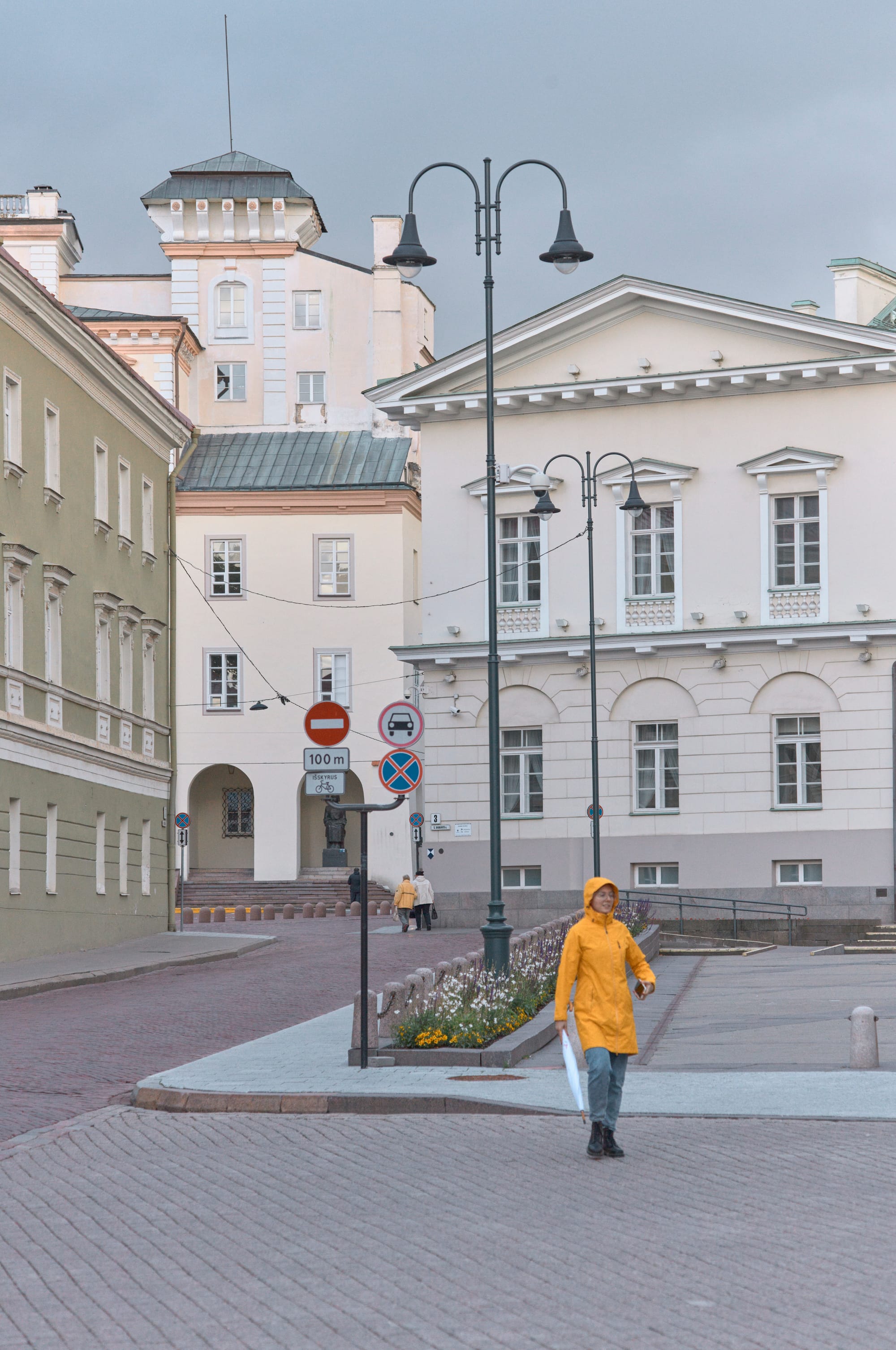
Brought the Leica EV1; it's paired with a 90mm lens for most of these walks.
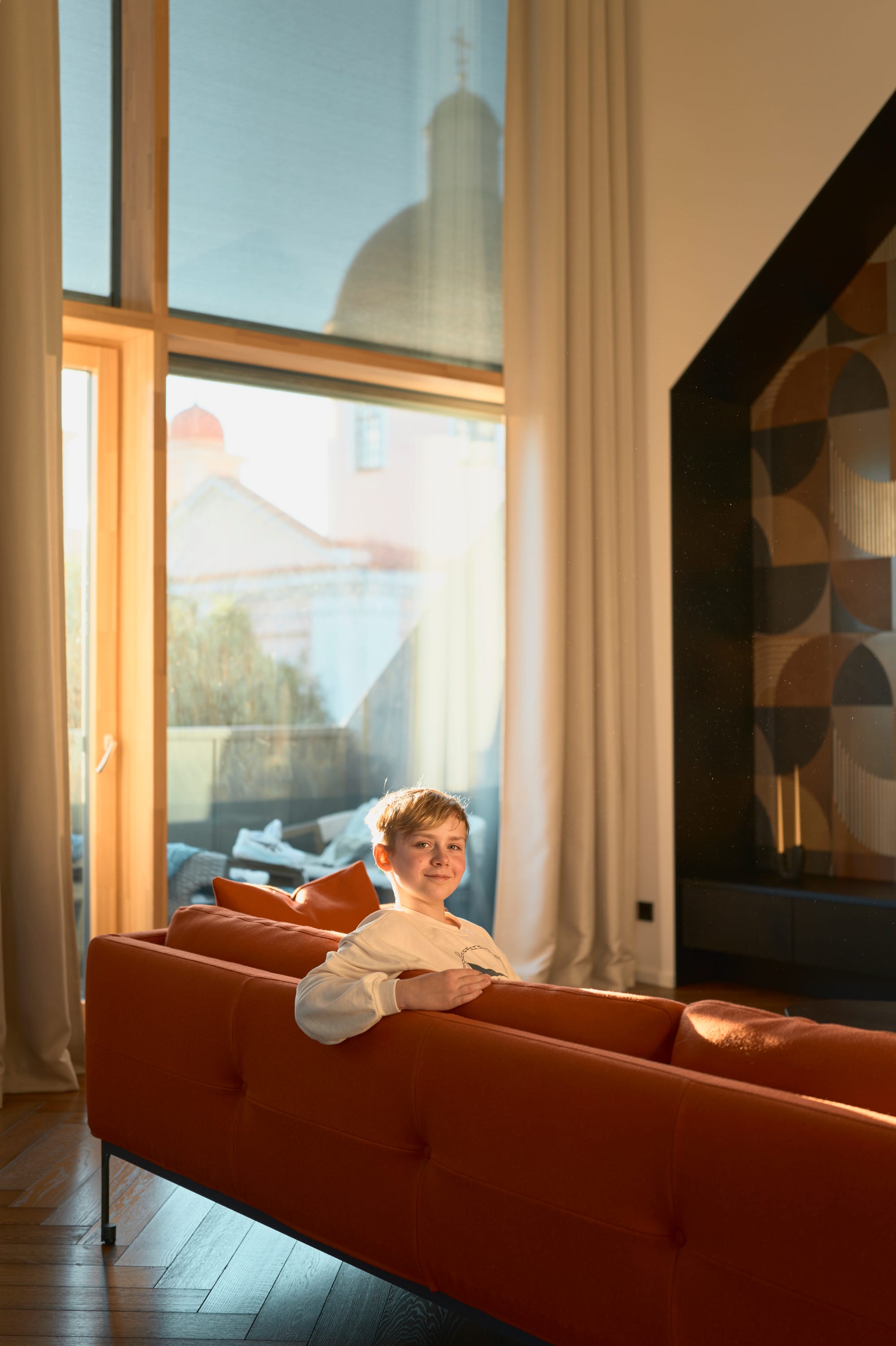
Our unit is a small act of architectural hypocrisy. Old town Vilnius generally forbids new construction, but the permits for this condo building somehow got slipped through the over regulated bureaucratic apparatus. A gray, monolithic modern block now sits on the edge of old town and a cobbled street, its wall-to-ceiling windows staring out over a sea of red rooftops and church spires.
We're on the top floor - a loft with twenty-foot ceilings in the living space and a modern chandelier hung so high that replacing a bulb would be a riskier proposition than free-soloing El Capitan. Inside, Ashton and I are working our way through the new Lego Batman game on the PlayStation. It's the perfect setup for when Lithuania decides to stain its sky with rainclouds, and quietly warm when the sun dips west in the evening and pours in through those enormous windows.
A lot of memories here from prior trips, of nostalgia - both Virginija and I grew up in Lithuania before we emigrated. We know the Lithuanian language. We appreciate the culture, the matter-of-factness, the refined bakeries, the delicate food, the cobblestone streets, the familiar faces, the homogeneity of the population. It's unique. It's preserved and distinctly Lithuanian even if Americanisms permeate the media with catchy phrases that sound silly and out of place in Lithuanian sentences.
As I get older, jetlag heading East is brutal. We go to bed at midnight because it's bright as day until then, wake at 3am after a successful nap has been completed. Quick workout, breakfast follows - then another nap at 10am that often lasts until late afternoon and leaves me feeling doped up. Time of day is relative. Ashton isn't bothered at all, collecting 12+ hours of sleep daily. Virginija and I are highly caffeinated zombies.
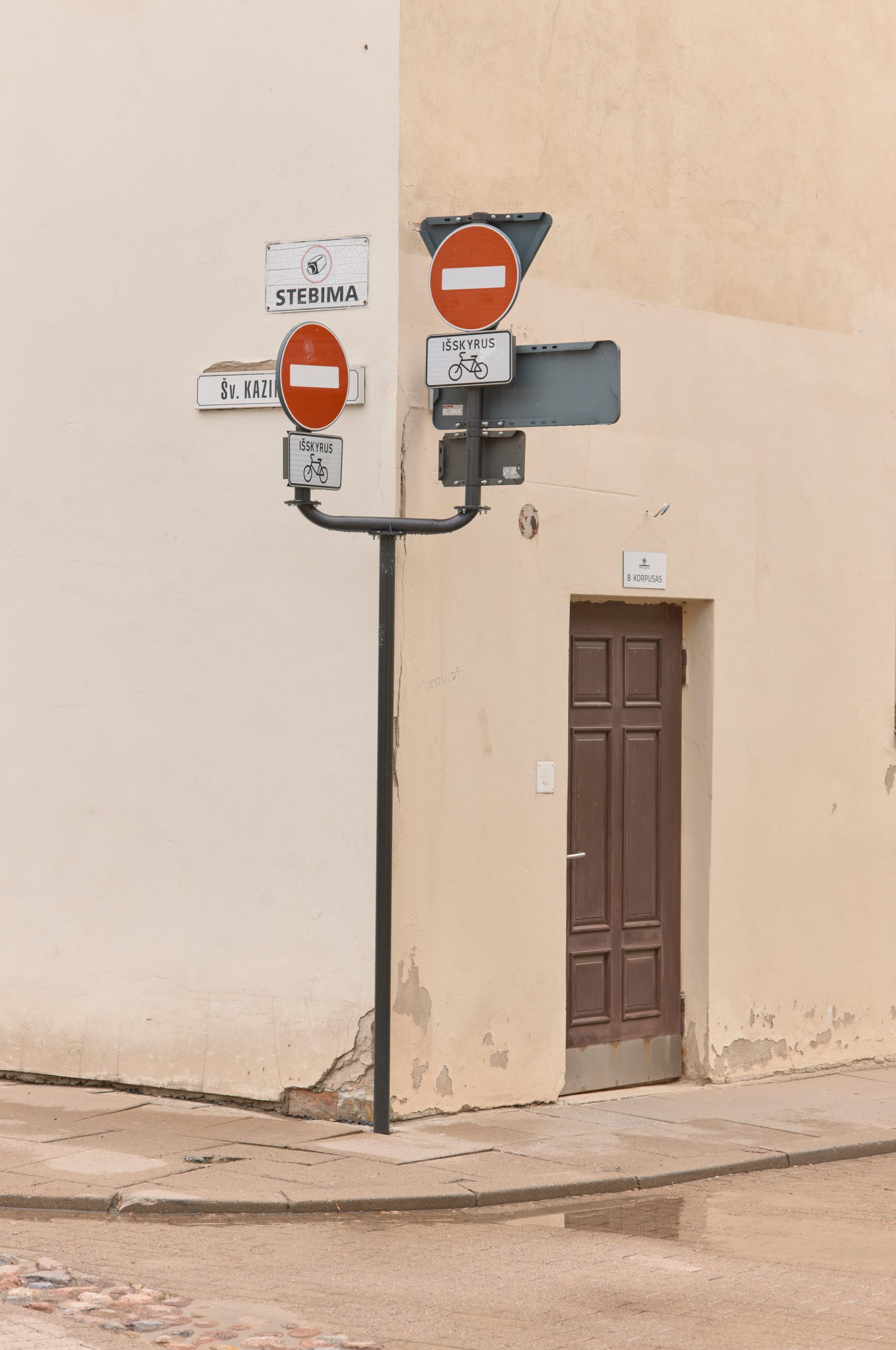
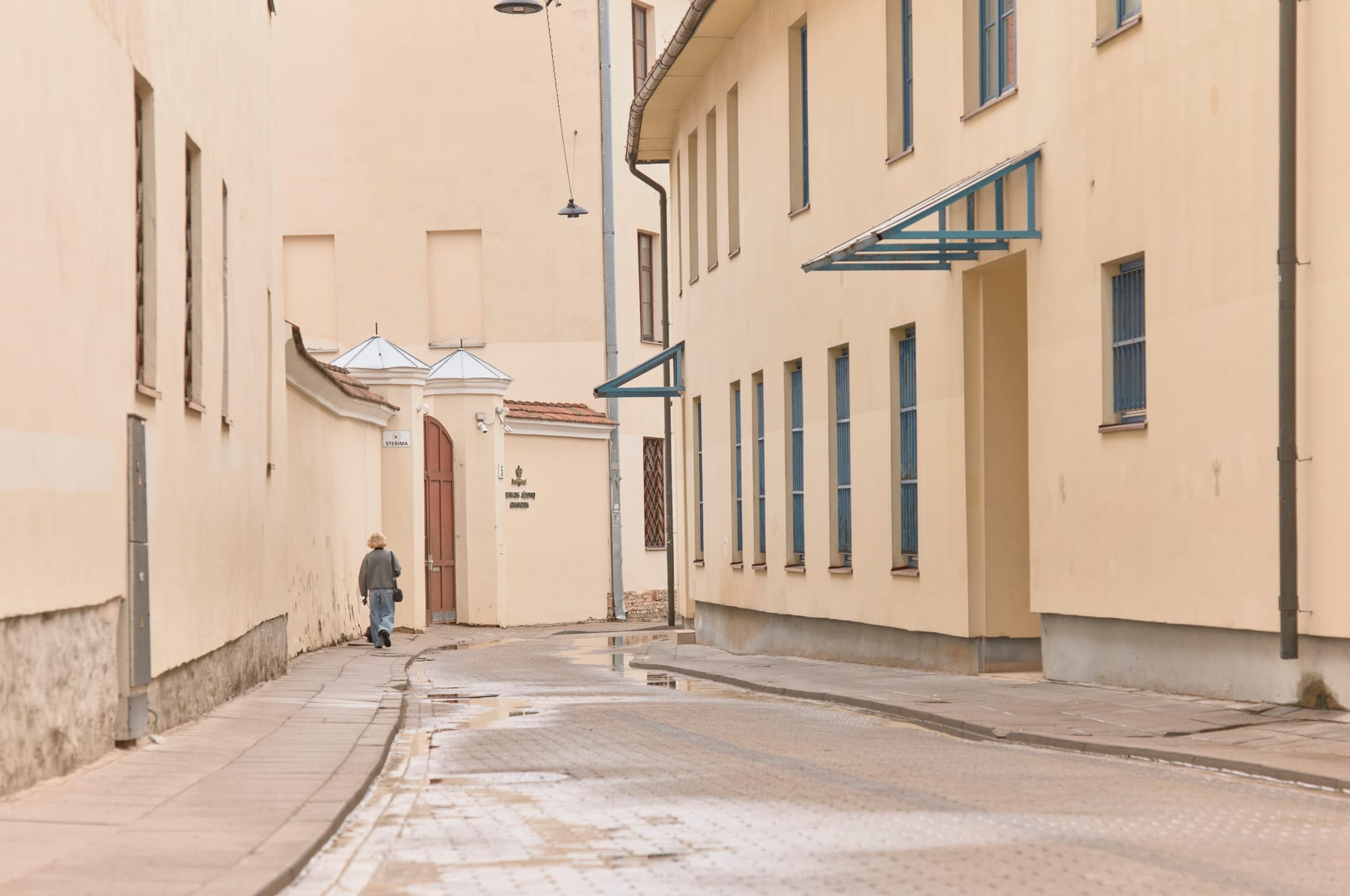
You're being watched by cameras and you can't go in either direction. Got it.
We skipped a year - Michigan last summer - so the house is coughing dust and shaking off rust as we power up the appliances. The dishwasher had calcium deposits that took three cycles to flush. The washing machine is beyond recovery: mold grew inside on the soap residue. The smell and the optics promise complete and utter destruction of any clothes you'd brave to wash in it. Had to scramble and order a new one.
We miss our one-thousand-horsepower washer and dryer in Chicago fueled by burning natural gas.
The moment we land in the unit, Virginija goes into her nesting phase and opens up an Amazon shopping spree. The orders ship from Germany and require three separate couriers to relay their way into Lithuania. The American cleaning brands and familiar utensils trickle in over the following days, one cardboard box at a time, forming an unstable column by the door.
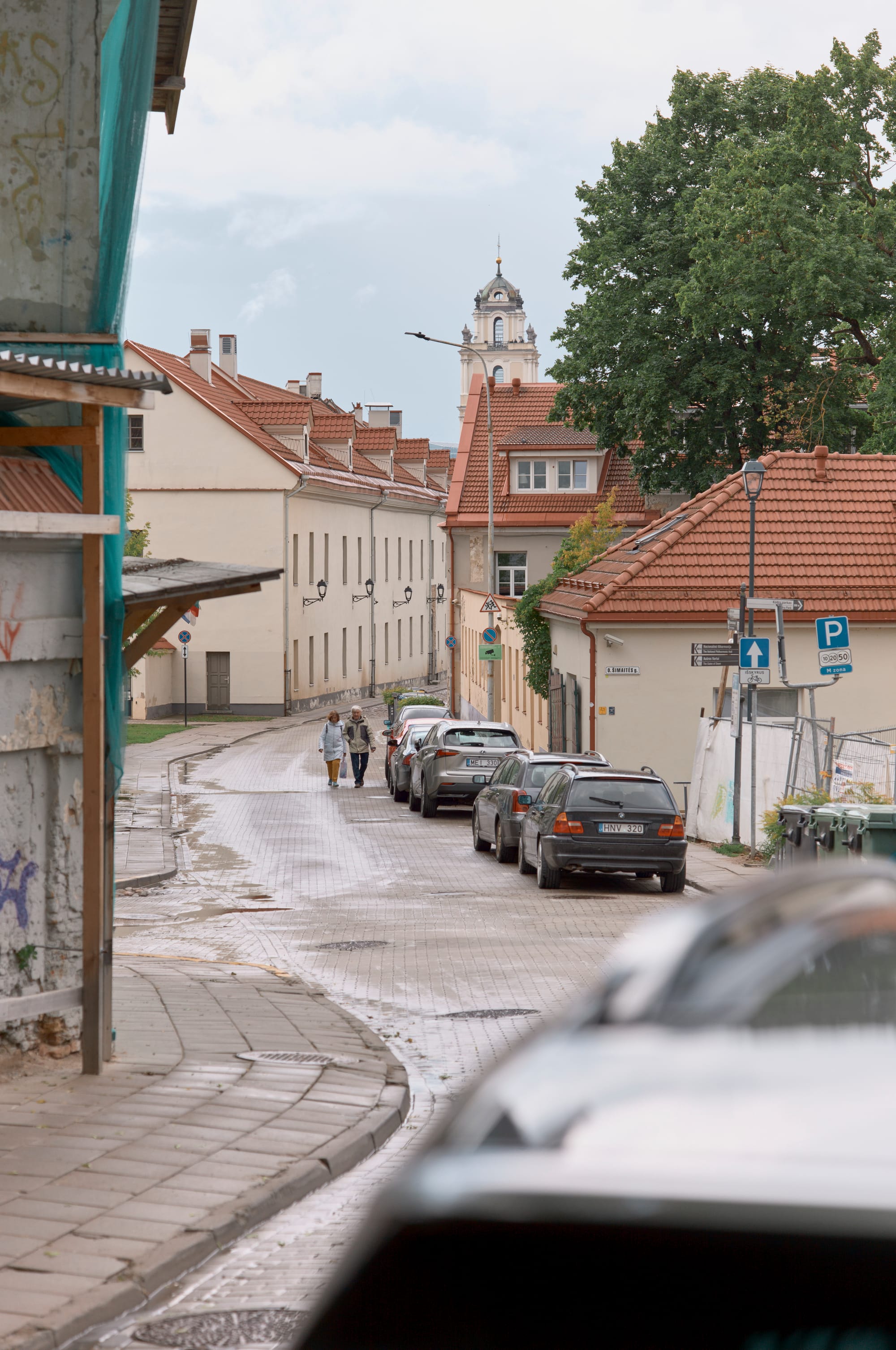
Regulated
The boxes are their own comedy. You can't simply throw them out - they have to be recycled. The recycling bins live outdoors, on the street, which is fine, except the opening in each bin is roughly the size of a 15-inch laptop. My only option is to cut every box down to ribbons before feeding it through the slot, or to drive the cardboard out to a mysterious recycling center I have not yet located. One of the boxes is too big to fit and too stubborn to succumb to a knife, and so it sits, undefeated, awaiting judgment day.
Everything is small here. Everything is euro-green, economic, sustainable, and frustrating to us Americans. The United States feels grand. Vast - not just geographically, but in the minor details: the size of the cars, the parking spots, the paper towels, the glasses you drink water from, the stores. The list goes on.
The rental Audi Q7 luckily has a petrol engine instead of a diesel. It's a plug-in hybrid I have nowhere to plug in but it makes cybernetic noises as braking energy is recaptured to charge the battery. It's large and comfortable, and I hog the narrow Lithuanian roads with pride. Parking in our Lilliputian underground garage is an existential crisis the first few times because why think about clearance on entry when you can save a few euros.
The stovetop is inductive. Easy to clean, but only the part of the pan in full contact with the surface heats up. I make an omelet and the sides stay runny while the center cooks through. I pair it with a locally grown, fragrant Lithuanian cucumber and the crunchy accomplice takes the edge off.
I drive to Kaunas at 6am to skip the Vilnius traffic. A solitary bakery in old town opens at 7am - not typical in slow-paced Lithuania, where the streets start showing signs of life at 9am. Lucci specializes in croissants. I decide to make it my base of operations before the Bison Commerce office opens, a place to grab a light breakfast and a coffee.
I order a breakfast croissant sandwich with ham. A solitary woman makes my food in between restocking the displays and stamping paper bags with the shop's logo. It is the softest, most buttery, cloud-airy croissant I've tasted in my life - baked, surely, bare minutes before I walked in. I bookmark the location and resolve to tell every contact in my phone about this place.
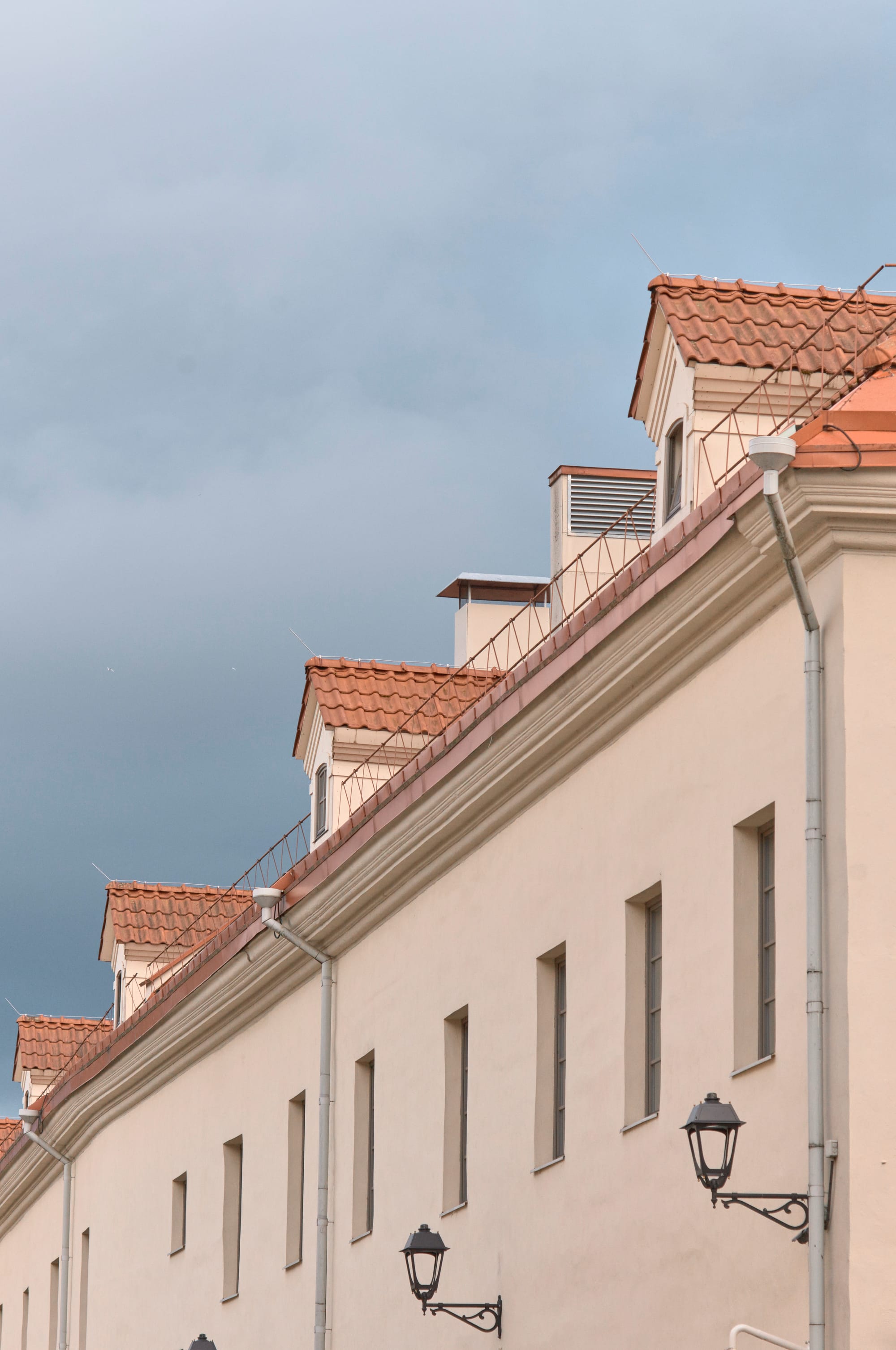
Kaunas old town requires paid parking, so I fiddle with a dedicated app, second-guessing where I am allowed to stop - the yellow curb markings are faded and misleading. Old town also charges an emissions fee for entry: two euros somehow billed to the owner of the vehicle. Maybe there are cameras? I have no clue how it works. Maybe they'll go after the rental company. But knowing Lithuanians, they'll likely just debit it directly from my bank account. Not kidding.
The water bottles are also regulated. The cap has to stay attached to the neck - for fear of it littering the environment while the bottle gets recycled. That came down from Brussels. Imagine the economic footprint, the industrial re-tooling for every bottler in Europe, all so a cap can't escape its fate. Funny and absurd. I can't remember a time I've lost a cap from my water bottle, seeing as it secures the liquid within. I rip each one off in silent protest, hoping the parking cameras track me and report the violation to unelected bureaucrats.
Rain soaks me as I hustle back into the Audi. It was sunny fifteen minutes ago.
The washer
The new clothes washer arrives Thursday, followed by two men and an apprentice - you can tell by the spooked glances and the way the kid waits for commands before taking action. The delivery trio rolls the device into our unit and announce the washer is unlikely to fit under our counter. Fear courses through me: maybe I had ordered the wrong one, and the wrath of Virginija will follow. We're properly out of clean clothes. I assure them it's the built-in version. They check the box, nod, matter of fact.
The leader asks if I'd ordered the anti-vibration pads. Obviously, I say. He laughs. "They got you. But don't worry, I'll return them for you. These machines have special legs already - plastic and rubber. You don't need the pads. I'll save you the money." Virginija and I both chuckle - a very Lithuanian move. In the US you'd likely get an upsell on the spot, let alone someone volunteering to walk a fee back out the door.
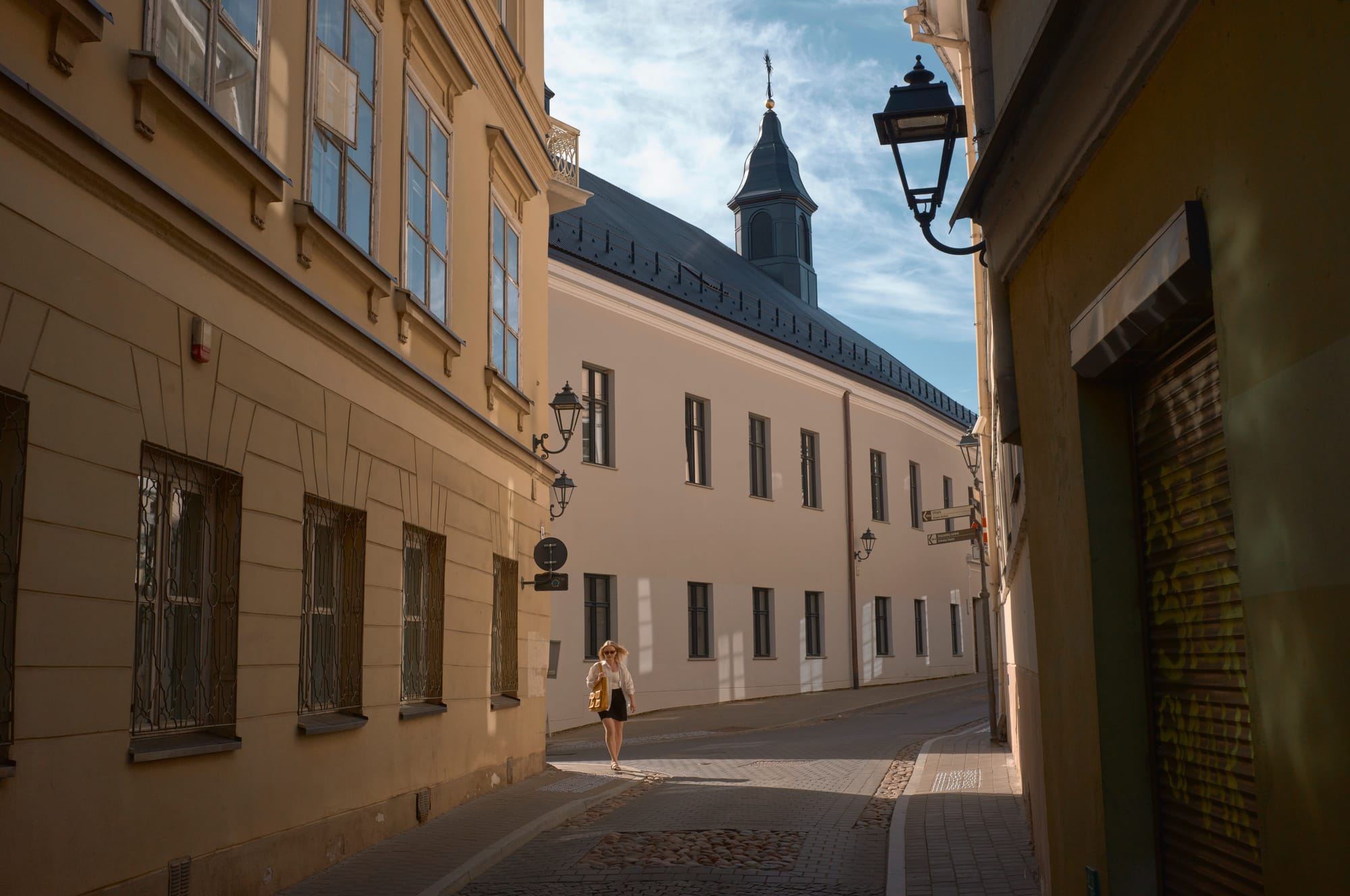
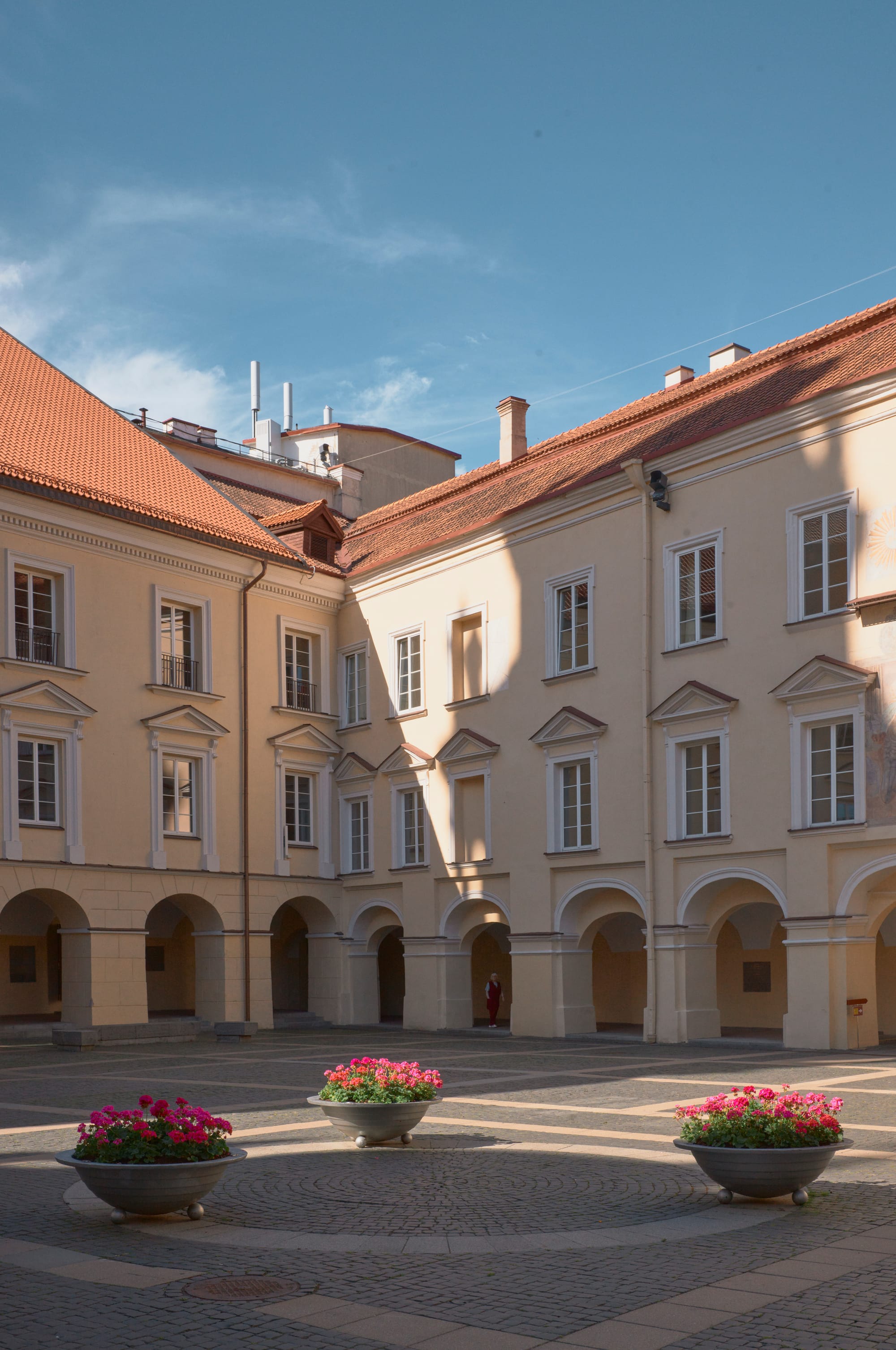
He continues to educate us - how to maintain the machine, how these things are built, the kickoff cycle you have to run empty to rinse the oils out of the machinery. Knowledgeable, competent, unhurried. I remember why I admire the people in this country. The apprentice, meanwhile, is told to break up the packaging, and quietly fusses about with the styrofoam (which is probably organic and edible here). Virginija is dressed in a designer dress shirt - she is running out of clean laundry by now - so we joke we should test the thing on something less fancy and valuable first. We thank them profusely for restoring civilization to our Lithuanian base of operations, and bid farewell.
We hang the laundry on the balcony; the dryer has lost its competition against the twenty hours of sunlight a day. I keep my eye on the sky; this is certainly a diversion.
Fresh is the floor
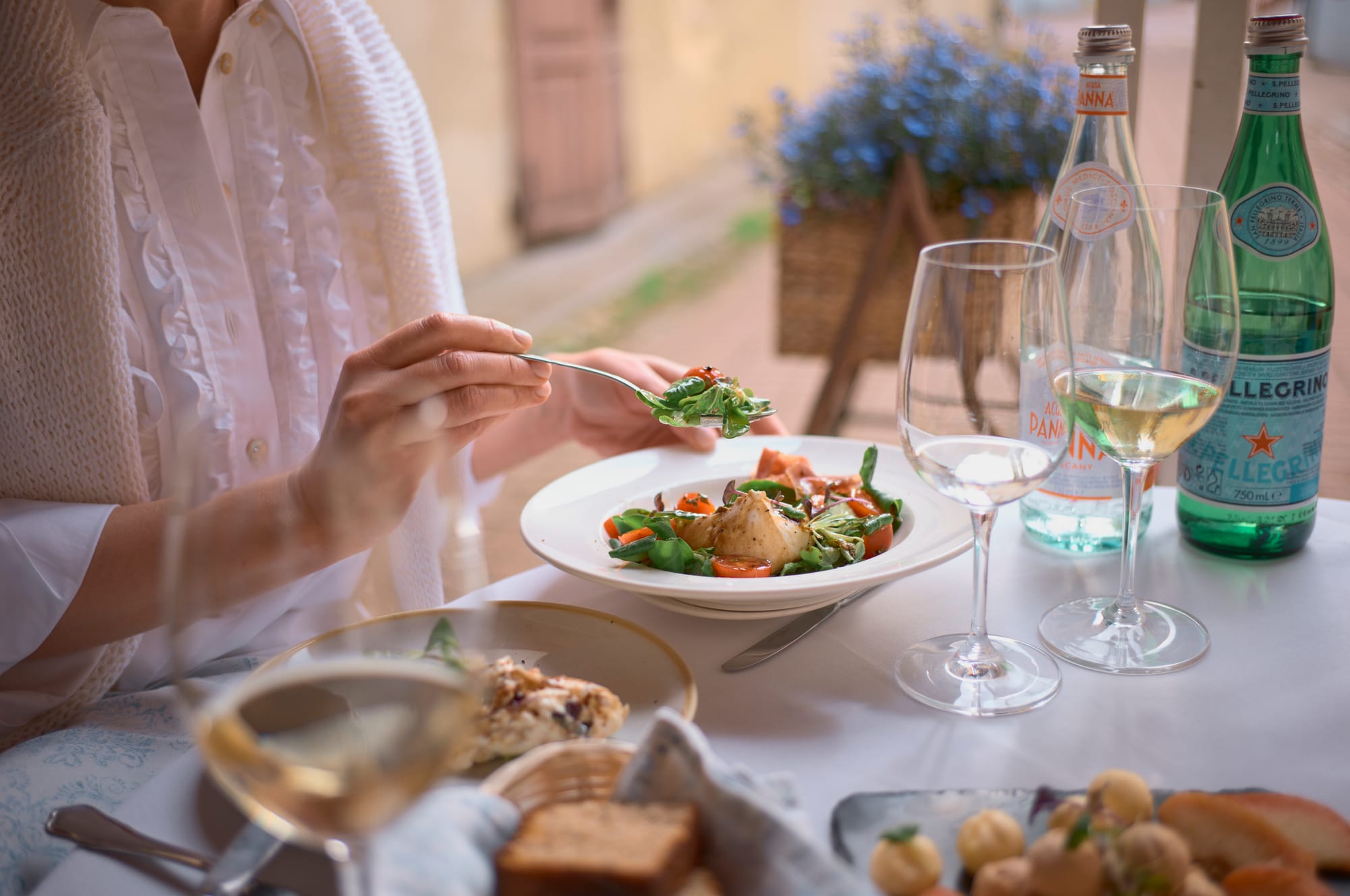
There's a freshness and refinement to Lithuanian food that I suppose traces back to people not having had the money for restaurants until fairly recently. Fast food is an imported concept within the last fifteen years. A whole generation grew up on feasts their grandmothers and mothers crafted by hand, every dish made from scratch for Easter, Christmas Eve, Christmas Day, and New Year's Eve. The baseline for what "good" tastes like was set high, at home, before money or restaurants entered the picture.
Then the economy caught up. Spices, restaurants, and an appetite for experimentation - all of it bloomed, but on top of a population that already knew the standard. The result is that a plain neighborhood café will run a full-size Italian espresso machine and be opinionated about its beans. The baked goods clear the bar by default, because baking is in the cultural bloodstream. The fast food in the food court at Paupys Market is made fresh and is genuinely good. Red Michelin stars pepper the entryways of restaurants in the narrow streets of old town.
You can find all of this in the US, but it takes a big city and usually an upscale room to hit the same marks. Here, fresh is the floor, not the ceiling.
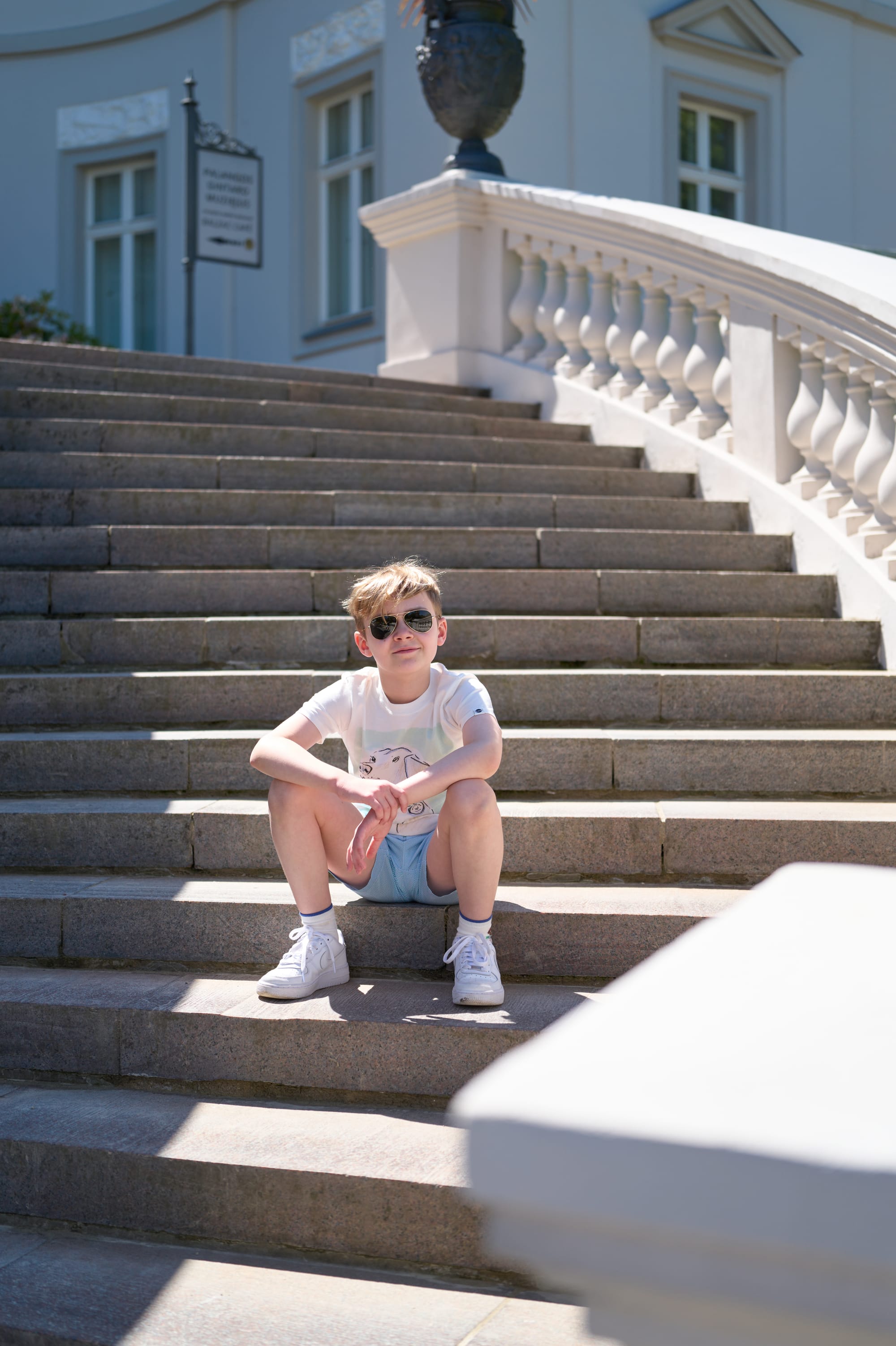
Ashton is very much a sidecar on these trips, though he's developing an appreciation for specific Lithuanian delicacies and experiences. Plombyras - a vanilla Lithuanian ice cream - takes the #1 spot, remembered fondly even when we're back home and a continent away. Karvute, a crystallized sugar candy, is another favorite, as well as spurgos - a cottage cheese donut, I mean orb. The toys stored in this unit are forgotten and rediscovered each year, awarded a few days of playtime before being forgotten again.
Case in point: the Heydekrug bakery, which sits right next to the Re-Formatas gym I walk to from the apartment. They do the traditional canon - folded flaky dough with jam tucked inside, tinginys ("lazy cake," which is cookie chunks bound with butter and cocoa), napoleon cake, spurgos, and a long bench of other goods that have held their exact taste profile since my childhood. Nothing has drifted. The napoleon tastes like the napoleon did thirty years ago.
Every time I pass it after a workout I sneak in - gluten intolerance shamefully ignored and concealed - and buy a baggie of mixed goodies to carry home to Virginija and Ashton. There is something structurally suspect about undoing an hour at the gym fifty meters later, with interest, but I have made peace with it. Ashton breaks new ground by trying and enjoying kibinai. Virginija is on a bleeding edge pastry diet for the trip, which is like Keto, but reverse.
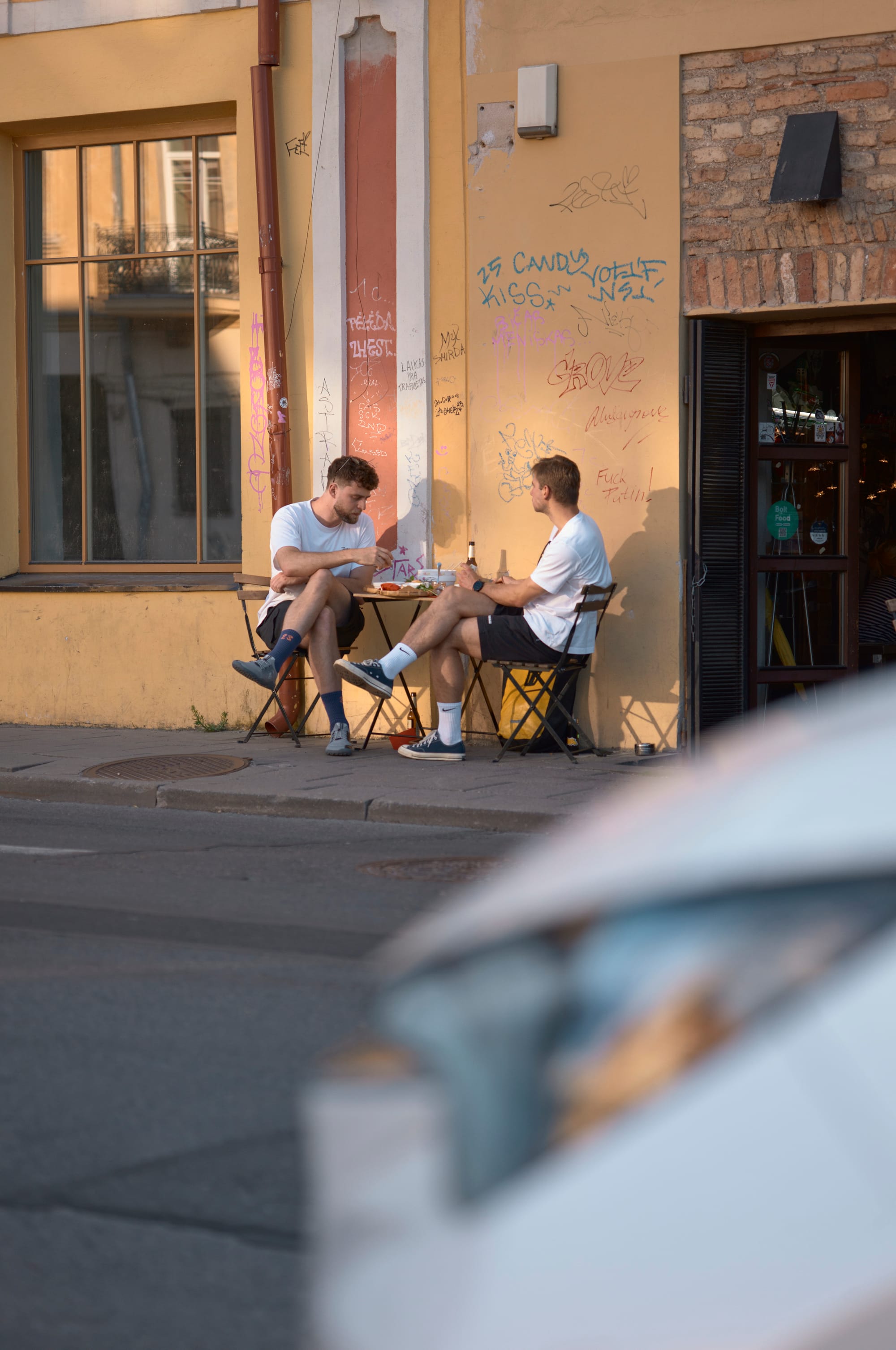
"Can your son have cold water?" A literal quote from a waitress in Palanga, the resort town, and not a one-off - I got the same question at multiple restaurants. You can catch a cold from drinking cold water. Or from air conditioners. It is known. Nobody can tell you where the knowledge comes from; it's grandfathered in across generations, load-bearing folk wisdom. All table water and juice arrives at room temperature, or, on a warm day, warm enough that you could drop in a teabag and let it steep. At one place I asked for ice to insure myself against the obvious, and they added two cubes the size of a blueberry. They were gone within seconds, having made about as much impact as the European emissions regulations.
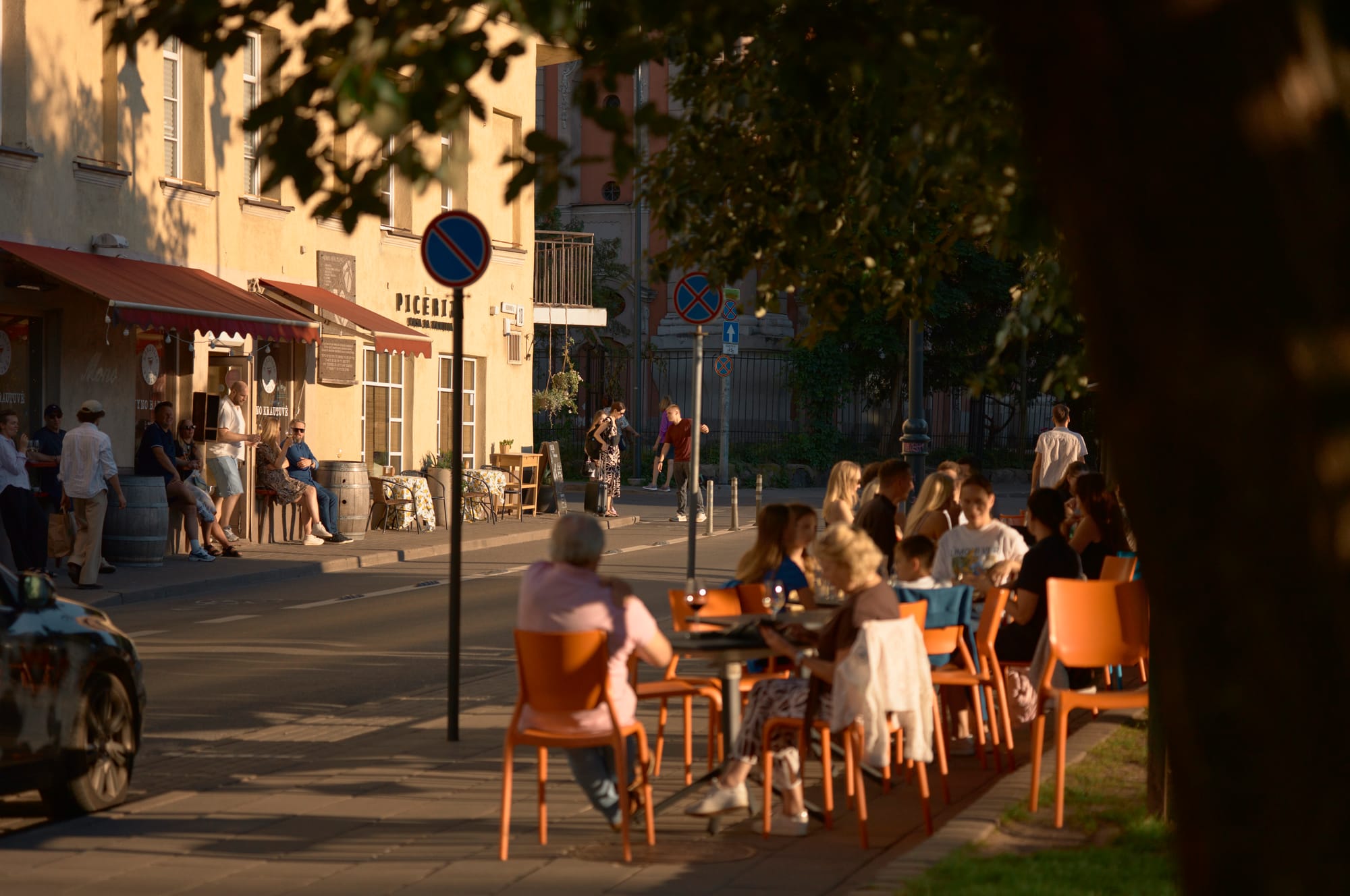
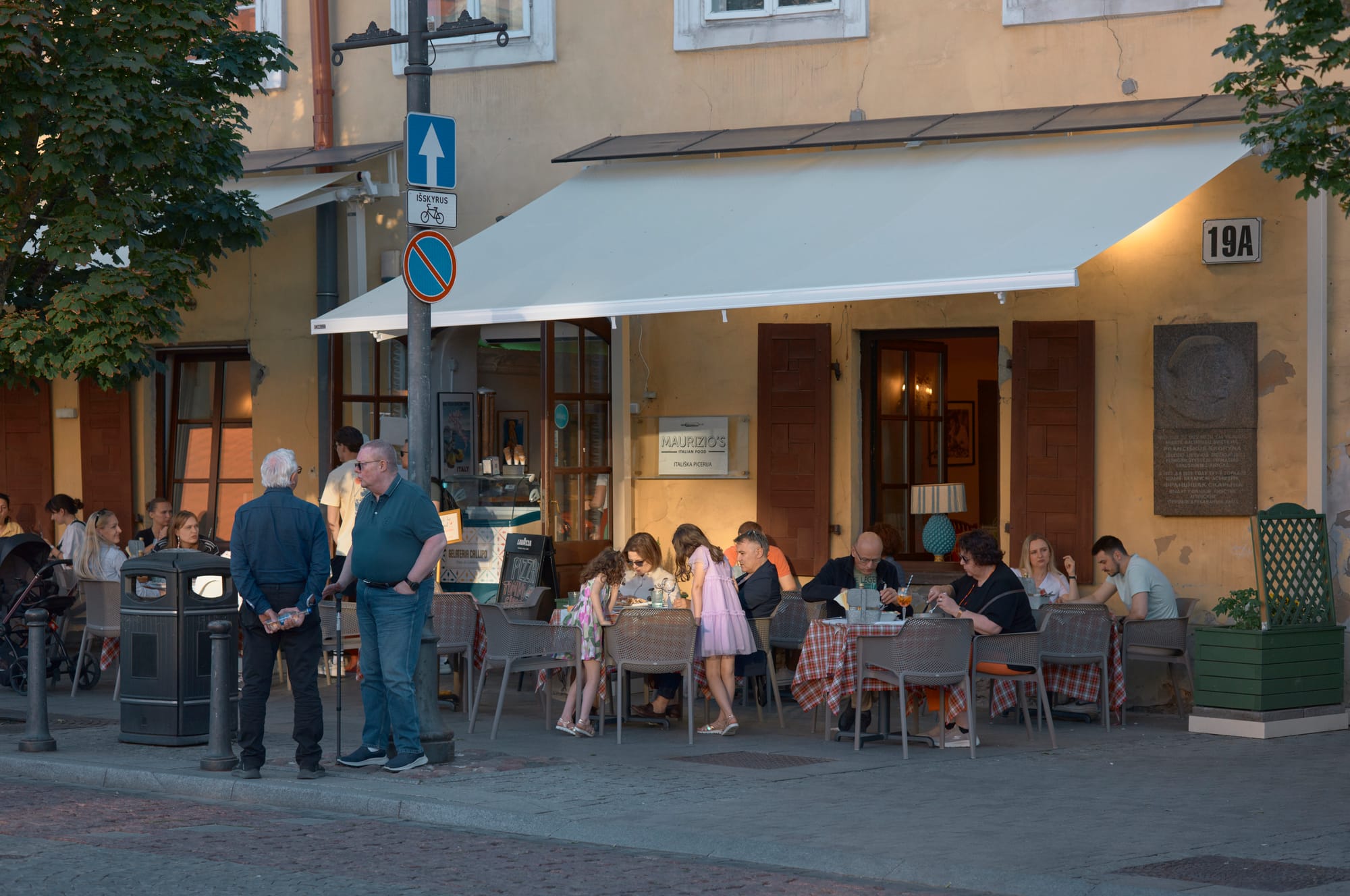
Ashton is infamous for his palate. Fruits and vegetables are, to him, literal poison. Funky cheeses, however, are acceptable - so are truffles and caviar, just to give a sense of the range. A typical restaurant order is a plain burger or plain chicken, with very little in between. On a particularly long, sunny day, all of us tired, Ashton was struggling to find anything on the menu. The waitress, in grounded Lithuanian fashion, settled the matter herself: "all kids like soup. We make good soup - broth, noodles, some vegetables." Ashton has just enough Lithuanian to translate the sommelier's recommendation in real time, and releases a full-body shudder at the prospect of soup for dinner.
The food may be fresh, but Ashton's adoption of Lithuanian culinary highlights is slow, methodical, and loaded with skepticism.
One at a time
Coming from the US, you arrive pre-loaded with suspicion of government. Lithuania got its freedom back in 1991, after decades of occupation and real atrocities. You'd expect the people to be allergic to being managed and preached to. Instead, lulled by the soothing flow of Euros from Brussels, the country has signed up for an impressive catalog of overreach - during Covid you weren't allowed to leave your city to visit your own elderly parents - and accepts it with a shrug.
But here's the counterargument I keep losing to myself: the privatization years after the Soviet collapse were so lawless, so openly corrupt, that an entire generation came out the other side with zero tolerance for disorder. People took the trade. The state knows where your car is and can find your bank account, and the prevailing feeling seems to be: good.
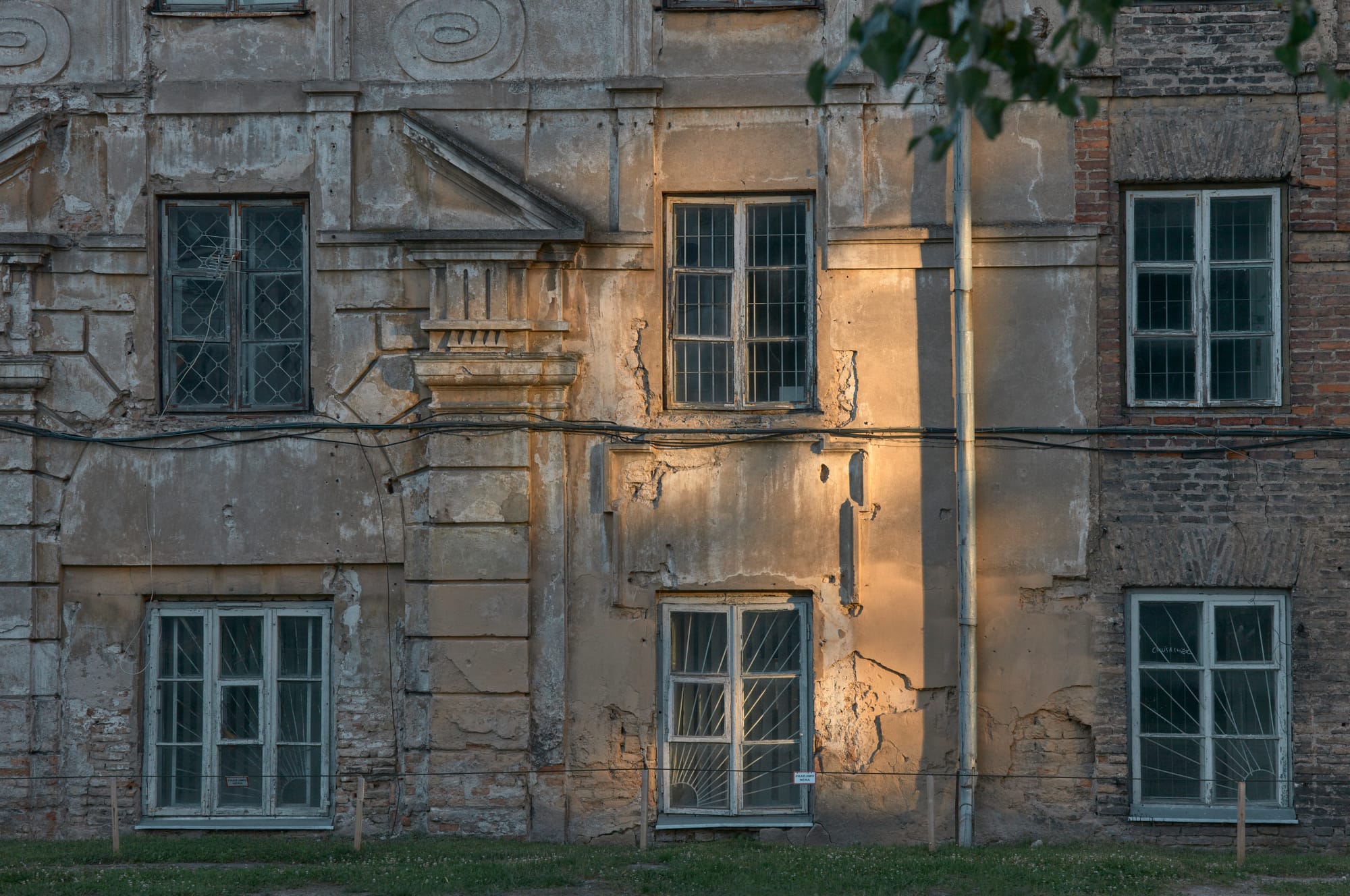
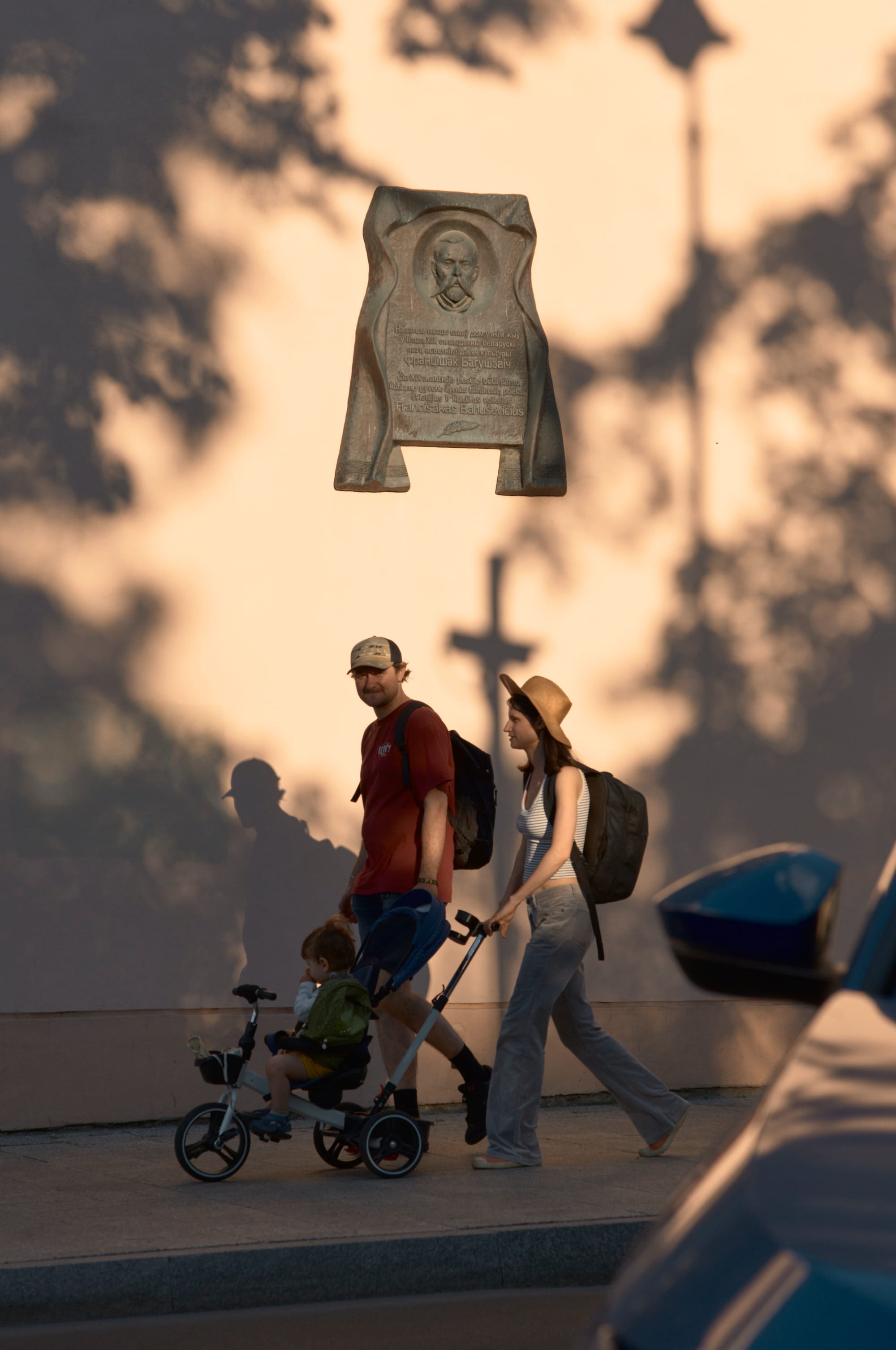
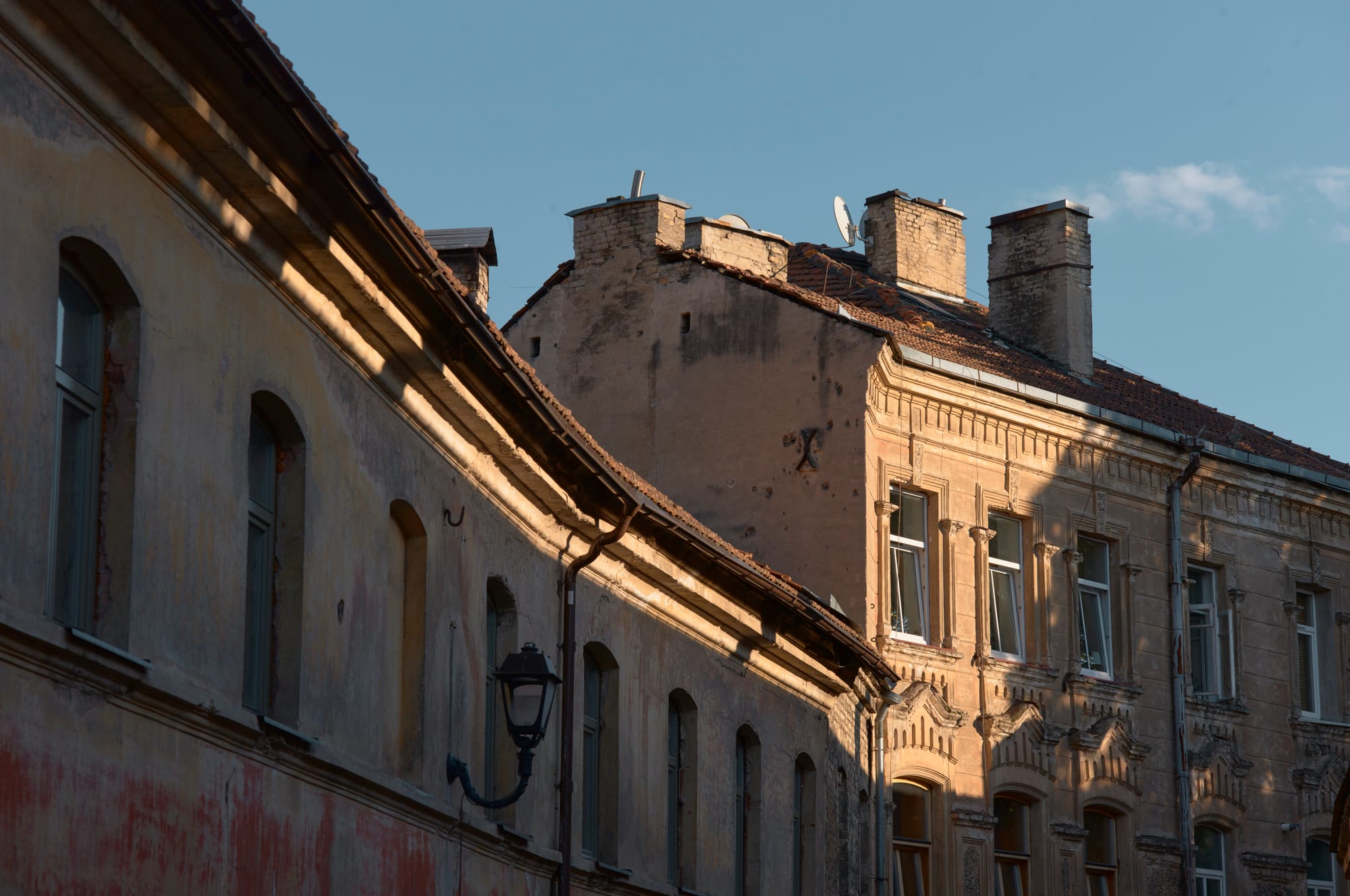
And yet the people, one at a time, keep going out of their way for you in a manner that does not survive the Atlantic crossing:
- The girl at the coffee shop intercepted my order for a cannoli to tell me it wasn't their best work, and steered me to a chocolate croissant instead.
- The manager at Topo Centras walked me through my new Nutribullet unprompted, warning me off too much ice so I wouldn't burn out the motor.
- A waiter in Palanga recommended a *different* restaurant for lunch - a competitor - because it was better for what we wanted.
In the US these are the interactions you remember for a year. Here they're Tuesday. Same country that bills you for your own license plate sends a stranger to talk you out of a worse pastry.
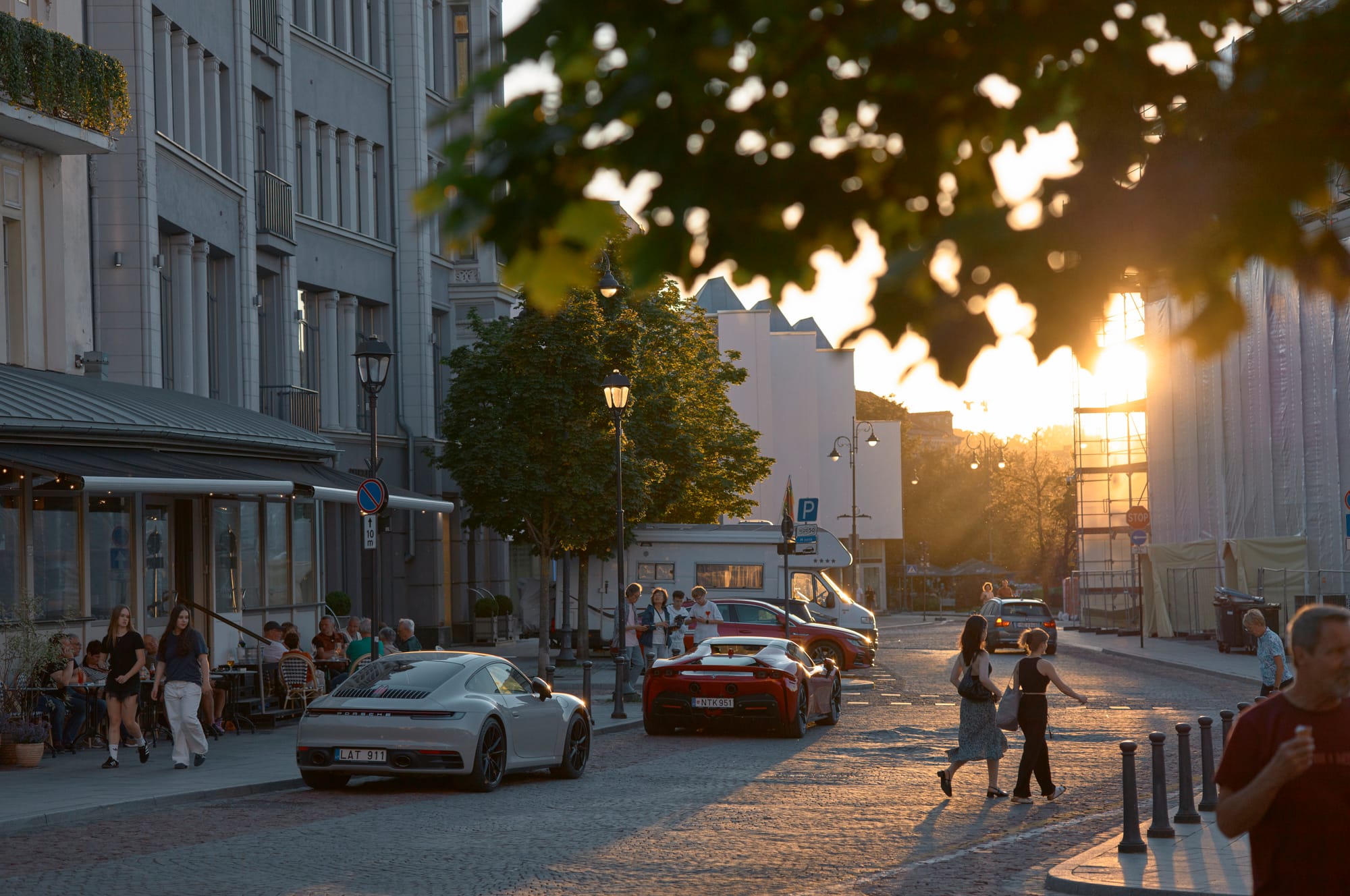
Comical signs of a people with new money are everywhere. I counted three Lamborghini Urus' during a single walk in Paupys, a neighborhood in Vilnius. Our parking garage has a fleet of luxury vehicles tucked in narrow spots, belonging to owners that live in comically small apartments (some of which may cost less than the cars). Flashy brands carry status and a distasteful snobbery can be felt by the way some of the well-off residents carry themselves.
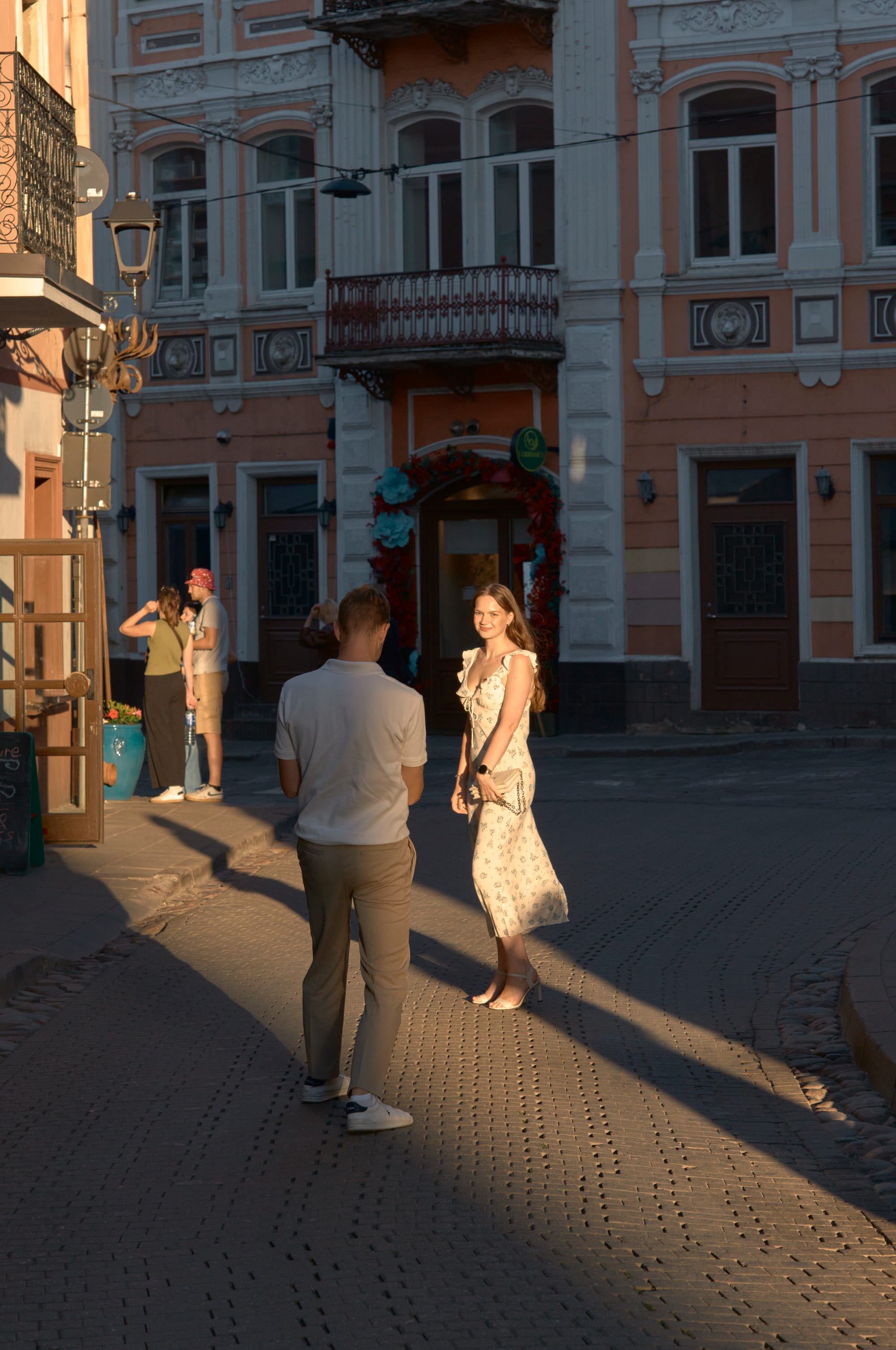
There's multi-generational trauma here caused by the Soviets, their communism, and close to 50 years of occupation. The resulting poverty and resource drain left scars that take time to heal, scars that still echo 36 years after independence was reclaimed. Not everything is cloudy, however. Just like the playful rays of sun during the summer solstice, the generations born after 1990 are a completely different breed. The faces are open, the smiles are broad, the manners are kind, and the economic freedom is tangible and exercised on a large, international stage.
Air Conditioning
The church outside our flat tolls its bells through the day, and we hear every peal because the windows and balcony stand wide open, blinds drawn against the sun. Three days ago the AC system - one of those buildings where every on-wall unit is chained to a single central brain - went dark. I've filed tickets with the management company, and for the fourth time a calm, pleasant female voice on the phone assures me a worker has been dispatched to address the issue. It's day three. The reassurance is starting to rub.
Normally the AC wouldn't matter - temperatures here drop into the high fifties at night - but a heatwave is shouldering its way up from France. I've slept on the couch the last two nights, as close to the balcony as I can get without going full native. Today our patience finally snapped, and our favorite "golden hotel" (ex-Kempinski; Ashton's working title) caught a booking for a couple of nights. Yes, yes, oligarchy on full display - but they also have the best pool in town and an excellent spa, so we'll survive.
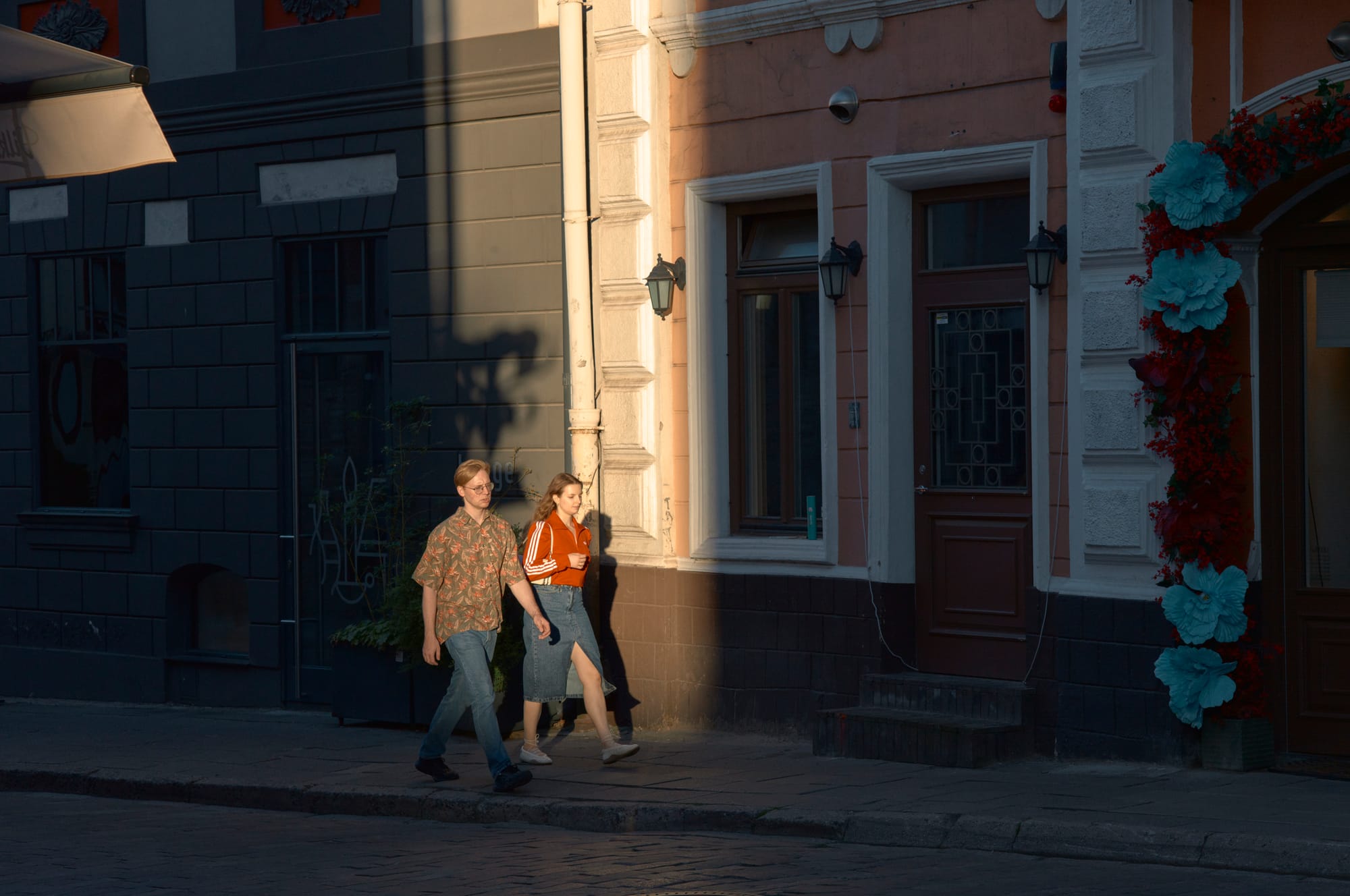
My real fear is that the technician's first visit won't be a repair at all. It'll be the opening move of a drawn-out investigative process whose resolution arrives, calm and pleasant, sometime next season. It is an understatement to say urgency during the short summer season in Lithuania is lacking.
A guy does show up, on a Friday night. He is, unfortunately, unfamiliar with our building, our equipment, and the standard operating procedures. With a sad face I'm told that "one of our guys is really sick, and the other one is traveling." My gut read was correct: this will require monumental effort. Multiple days and calls later, I manage to get *the guy* to visit our building. Virginija has her phone in hand, ready to call in a full-scale invasion from a US fleet parked somewhere in the Arabian Sea.
The solution is about the same one I use when I'm fixing my mom's Mac. Turn it off, turn it back on. Two times in a row, no less. The digital ghosts clear up their indigestion across the freon pipes hidden in the walls of our building, and crisp cold air starts shooting out of all three units.
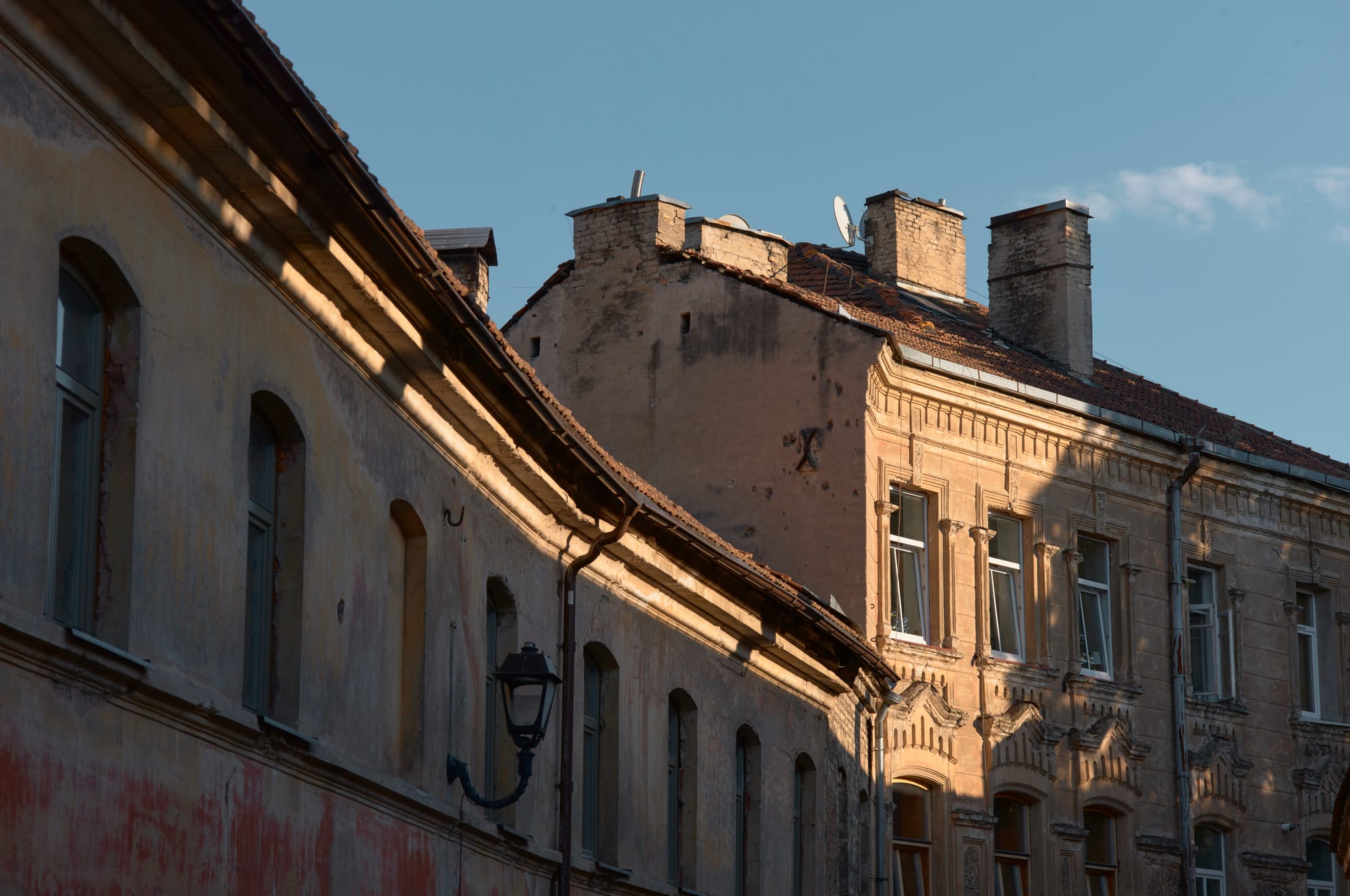
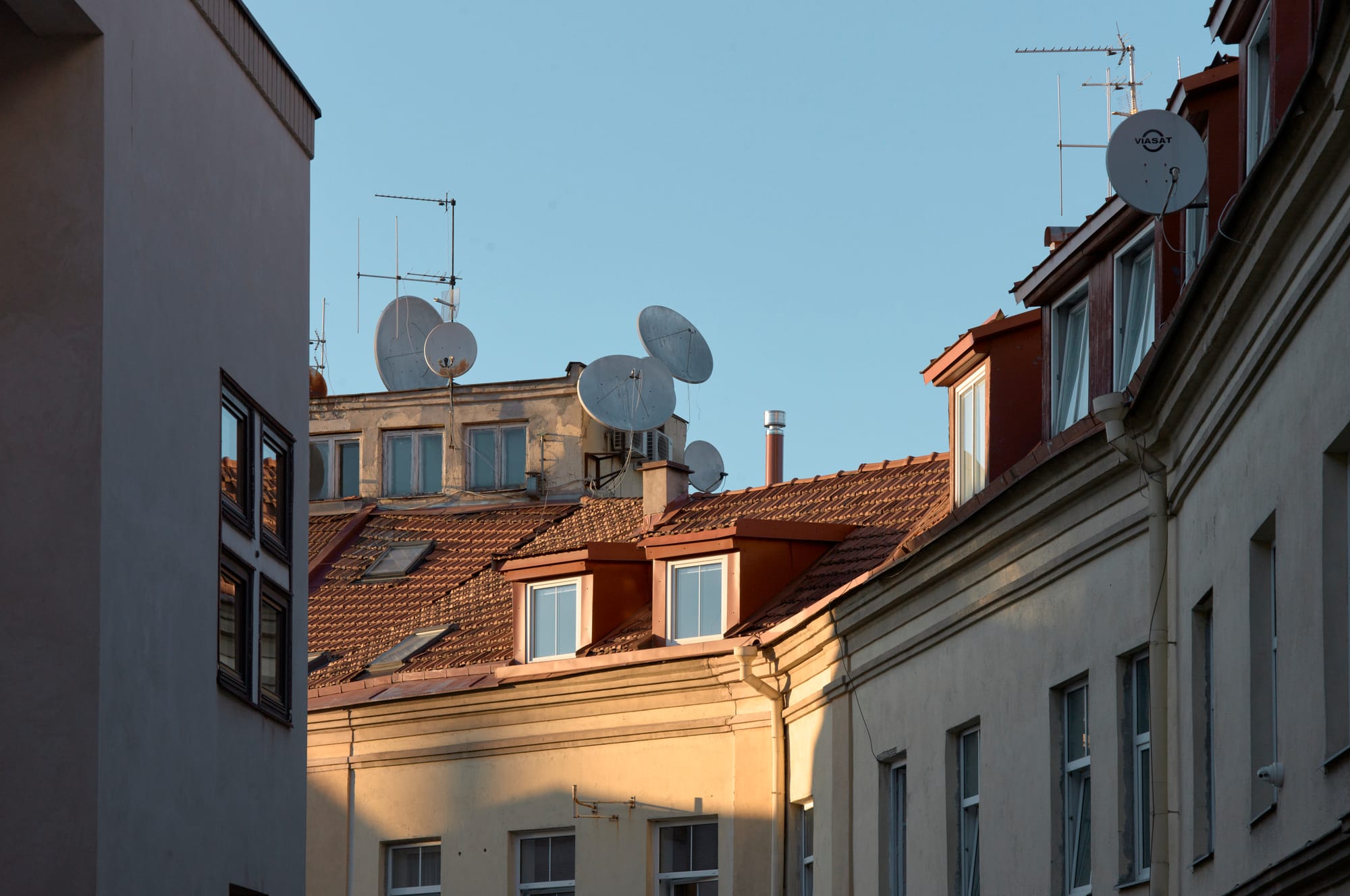
By the end of this saga I know more about the design of the air system in our building than I ever wanted to. I have access to the main fuse box in the basement. And I know how to flatline the brain of our AC system, should it ever misbehave again. Some of the charm of our condo dies with the anatomic familiarity of its digestive system.
I try to slip the guy a twenty-euro bill - letting the capitalist culture seep in through the cracks, hoping to build an incentive structure for future engagements. The large, calm Nick-Offerman-lookalike skips a step and almost levitates away from my folded bill. This man takes pride in his work and needs little affirmation. I give him a solid handshake instead.
The unpredictable weather tests my newly acquired AC skills a few more times during the stay. I trip the fuse with a steady hand, sending the budding Skynet AI into oblivion, reminding it of its purpose as a glorified heat pump.
An ode to tennis
Last year I developed a deeply seeded, expensive, and time-consuming obsession with tennis. So this trip got quietly reorganized around it. Still jetlagged, barely off the plane, I scramble to SEB Arena and splurge on full kits for all three of us - me, Virginija, Ashton. Almost certainly more gear than the number of times we'll actually get on a court justifies, but I'm betting on future returns to amortize the purchase. I'd lined up coaches before we even boarded the flight. The honest accounting is that I'd booked a tennis camp and was serving Lithuania on the side. The country I grew up in, the language, the bakeries, the family - the side dish.
The surprise is how well Vilnius is built out for it. SEB Arena and Bernardinų sodai, the outdoor option, have immaculate courts, plus restaurants, gyms, and shops for gear.
The Bernardinai courts sit right in the center of Vilnius: pristine clay, an observation deck, a bar, a big screen running the latest football match, and old oak trees throwing restful shade over the players. Open to anyone. But it feels like a scaled-down version of those romantic European clubs you see on TV when the championships are broadcast across the continent - the kind of place with a soul.
Chicago is a city of three million. We have nothing comparable. Hard courts scattered here and there, sure, but no infrastructure around them, no service, no shade and a screen and a bar - nowhere the act of playing is treated as something worth lingering over. And the insult underneath it: Chicago's outdoor season is *longer*. Lithuania gets two, maybe three months of acceptable weather at the very best, and has built the better club anyway.
My method for assembling a traveling tennis team was to message every coach listed on the SEB Arena website and try to bolt down three of them in parallel - concurrent slots, three courts, a logistics problem I'd invented for myself. It was blind fire. Whoever's calendar happened to line up was who we'd train with.
At 8am I meet my sensei on the clay, an oversized bag of smacking instruments in tow.
Two hours on a sweltering, glowing red clay court. I come off it caked in dust to the knees, drenched through, and convinced I'd learned more in that one session than over an entire season back at Midtown. One correct observation. A couple of spartan comments. And the forehand, the backhand, the serve all quietly clicking into place - the geometry of them, finally, in my head.
A few hours later, sweaty and wrecked and marginally better at tennis than we'd walked in, we agreed that bolting a sport onto a vacation is the most reliable way we've found to feel like the trip was earned.
The calendars that lined up belonged to Lukas, Diana, and Rimvydas. All ex-professionals. Lukas the son of Rimvydas Mugevičius - a legendary Lithuanian player and coach, which I did not know when I sent the message. Diana a multi-year Lithuanian national champion, which I also did not know. I had spam-emailed my way into being coached by the closest thing this country has to tennis royalty, and found out who they were afterward. At this point I have three legendary coaches, which puts me somewhere in the ranks of Sinner or Alcaraz.
The cruelty is that my poorly coordinated body has no interest in cooperating with my newly enlightened mind. Understanding arrived; the limbs did not get the memo. I've been doomed since childhood, by genetics and by nurture both, to play the stork in the china shop. I hit my full 6'3" at twelve, and the signals from brain to limbs have been arriving late ever since - perpetually a beat behind, a body too long for its own wiring. My dad, a libertarian science professor, did not believe in physicality. Sport, in his house, was something I caught on TV when nothing better was on. So I came to athletics the way you come to a foreign language in middle age: late, self-taught, and badly accented.
Virginija still laughs to my face at my graceful moves on the court. Her standing theory is that the only reason I've survived this long is an overinflated self-confidence and ego doing the structural work my coordination won't.
A correction. There was, in fact, one sport. I was hopelessly enamored with the kung fu movies of the eighties, and I'd drag my dad to the theater after he'd already worked two jobs. I followed every chop from the edge of a hard wooden seat; he was asleep before the title sequence finished. One day, around age six, I announced that I had to acquire these mystic ways of the East and learn karate. My dad, never one to say no to me, signed me up at a co-worker's dojo, and training began.
What I remember is a lot of running, followed by stances with frequently funny names - "Shiko dachi," which to a Lithuanian ear lands somewhere near the word for "pooping." The romance of fighting black-clad ninjas curdled fast once it became clear no ninjas were going to show up to our dojo. I dropped out. My first and last sporting activity of childhood, retired by age six on the grounds that the enemy never materialized.
Ashton's first exposure to tennis was a group class, which, to be honest, was less tennis and more an excuse for a pack of kids to run around. So when we proposed coaching, he greeted it as a hostile takeover of his iPad time by physical activity - and tennis, of all things.
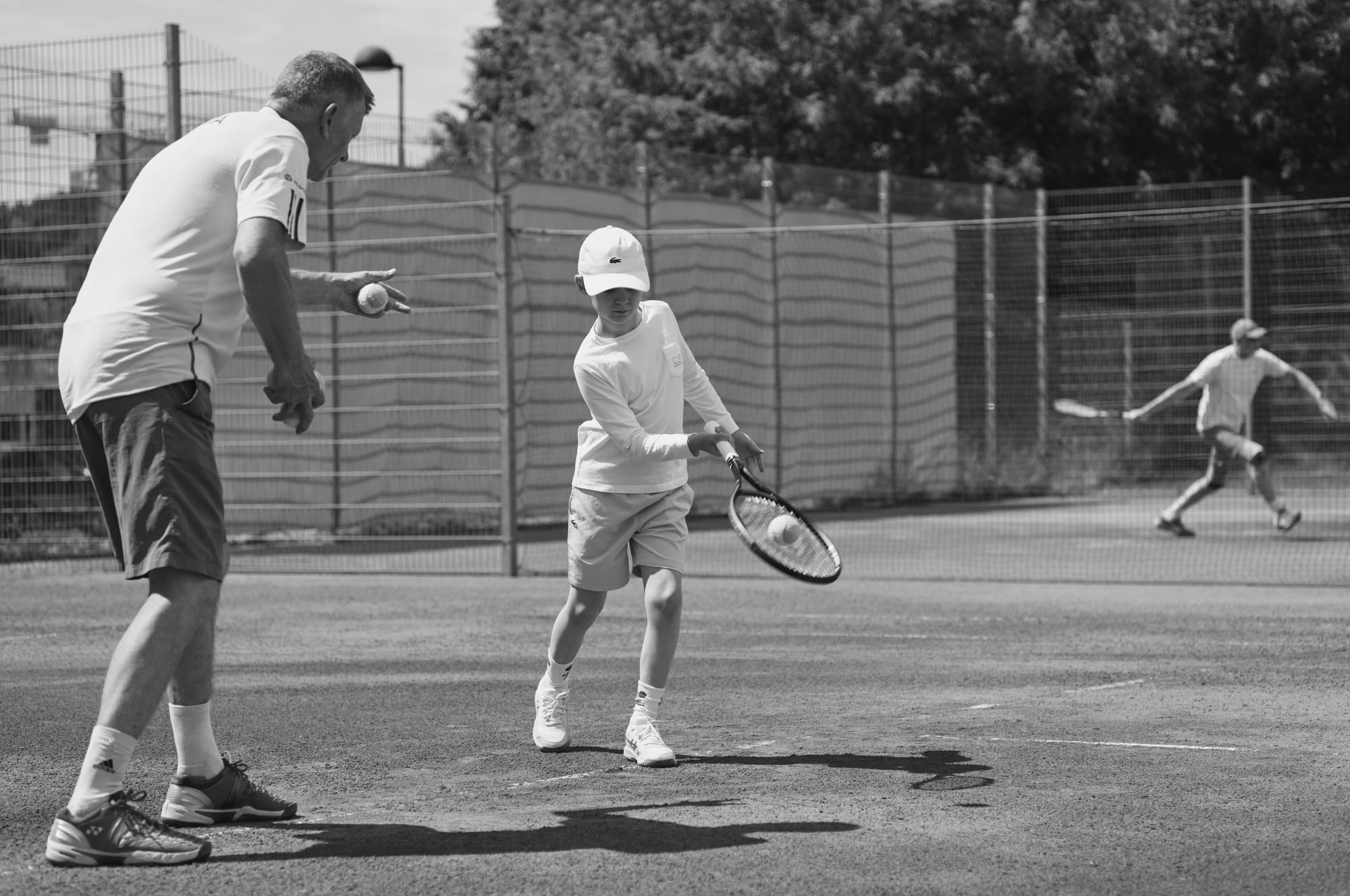
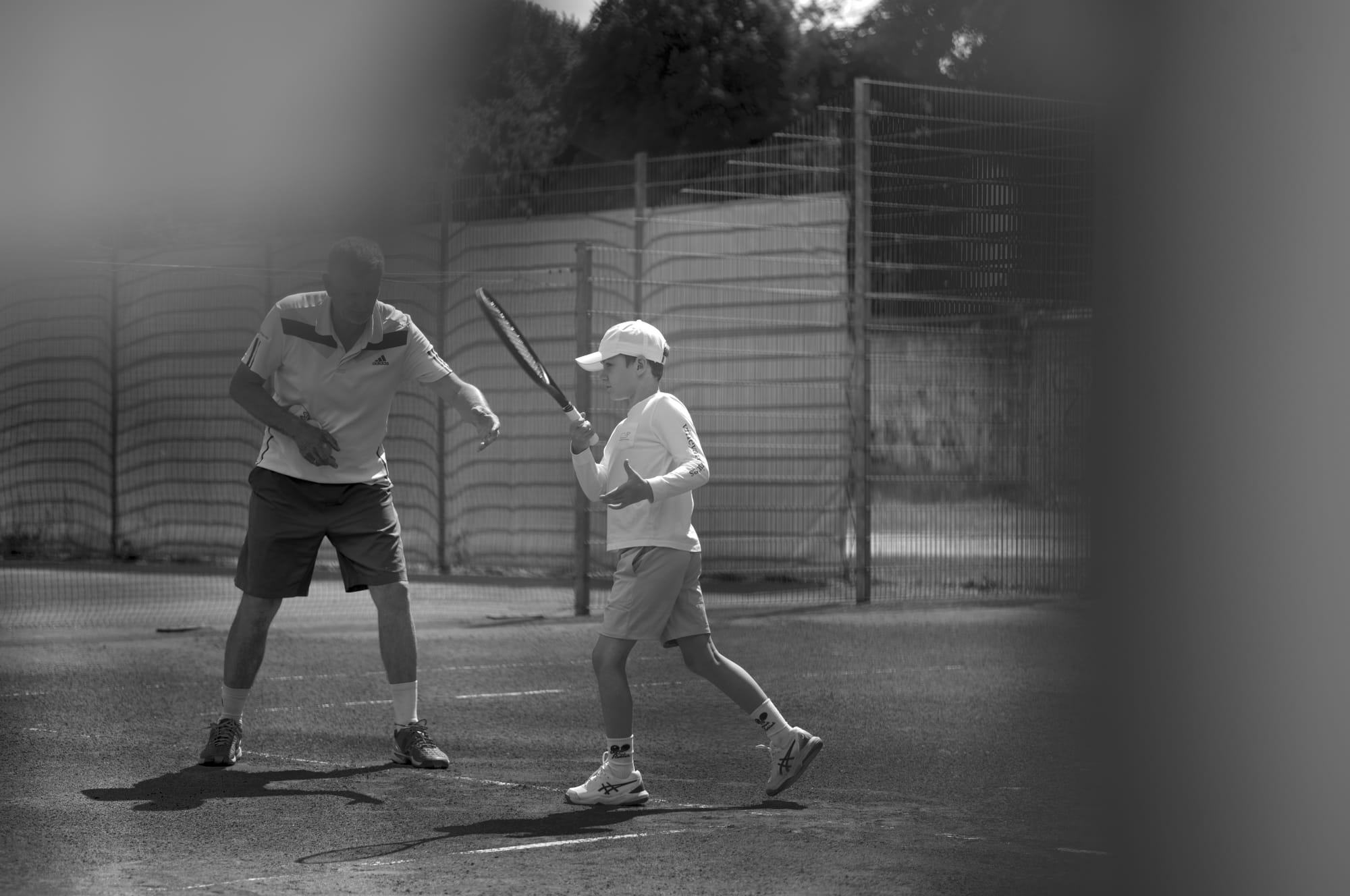
On court, though, he finds the one-on-one version with Lukas' dad much more to his liking. The drills are calibrated so he can actually succeed at them, and he can sustain a real rally with the coach, which tips the whole thing over from chore into game. After the session he runs through a few shadow-boxing sequences on his own, off to the side, replaying the strokes - which, in my experience, is the most reliable evidence available that a kid is hooked.
I sit in the shade that affords little protection from the blistering sun and watch Ashton drill with Rimvydas. The old tennis legend has just enough English to bridge the gap with Ashton's knowledge of Lithuanian. Our shoes are ruined from the clay, red dust seeping into every crevice, sticking to the sweat, the socks, the water bottle. The air is buzzing with flies, bees, an occasional wasp, and the addictive pop of a stroke well placed on a tennis ball.
Ashton has no idea who he's training with. Neither did I when I sent the email.