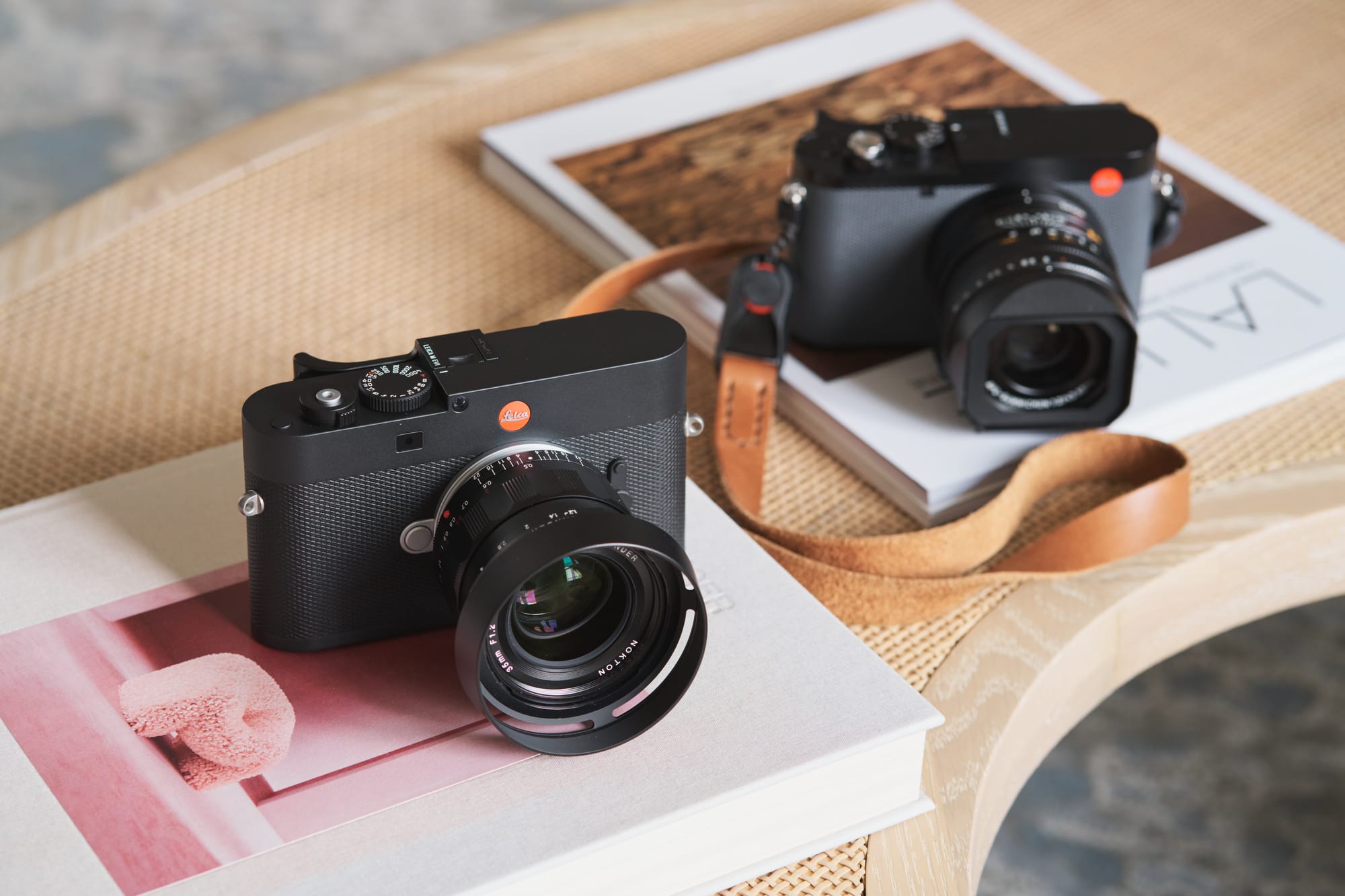
The ritual of the Leica M EV1
A slow instrument by design.
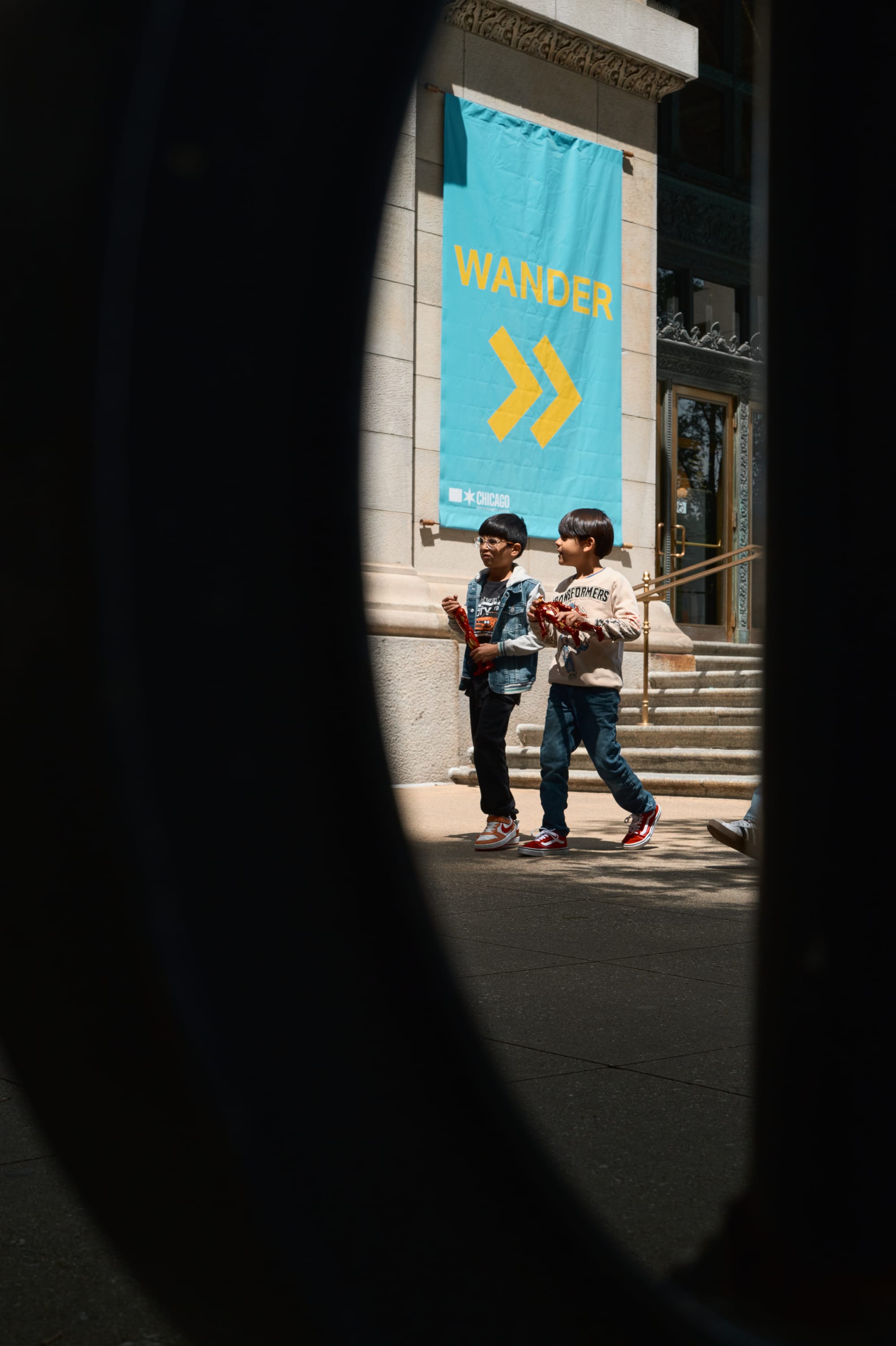
The magnesium camera rides in my hand at chest height, an artisanal strap of green paracord curling around my neck. A 28mm Ultron on the M-mount, stopped down to f/8, zone-focused — I can ignore focus entirely on this hunt. ISO is parked high; shutter locked at 1/500. Every decision that could be made has been made, blocks ago. Somewhere between State and Wabash a ray of light pierces between two high-rises and a woman in red on a bicycle is about to dart through it. I don't raise the camera so much as tilt it. The picture is the only thing left to happen.
The curtain shutter snaps and, much like in the John Wick shootout at the Oculus, not a person in the Loop notices the silenced round I just squeezed off. The ghost of Henri Cartier-Bresson nods solemn and restrained approval. I'll discover later the image is mediocre.
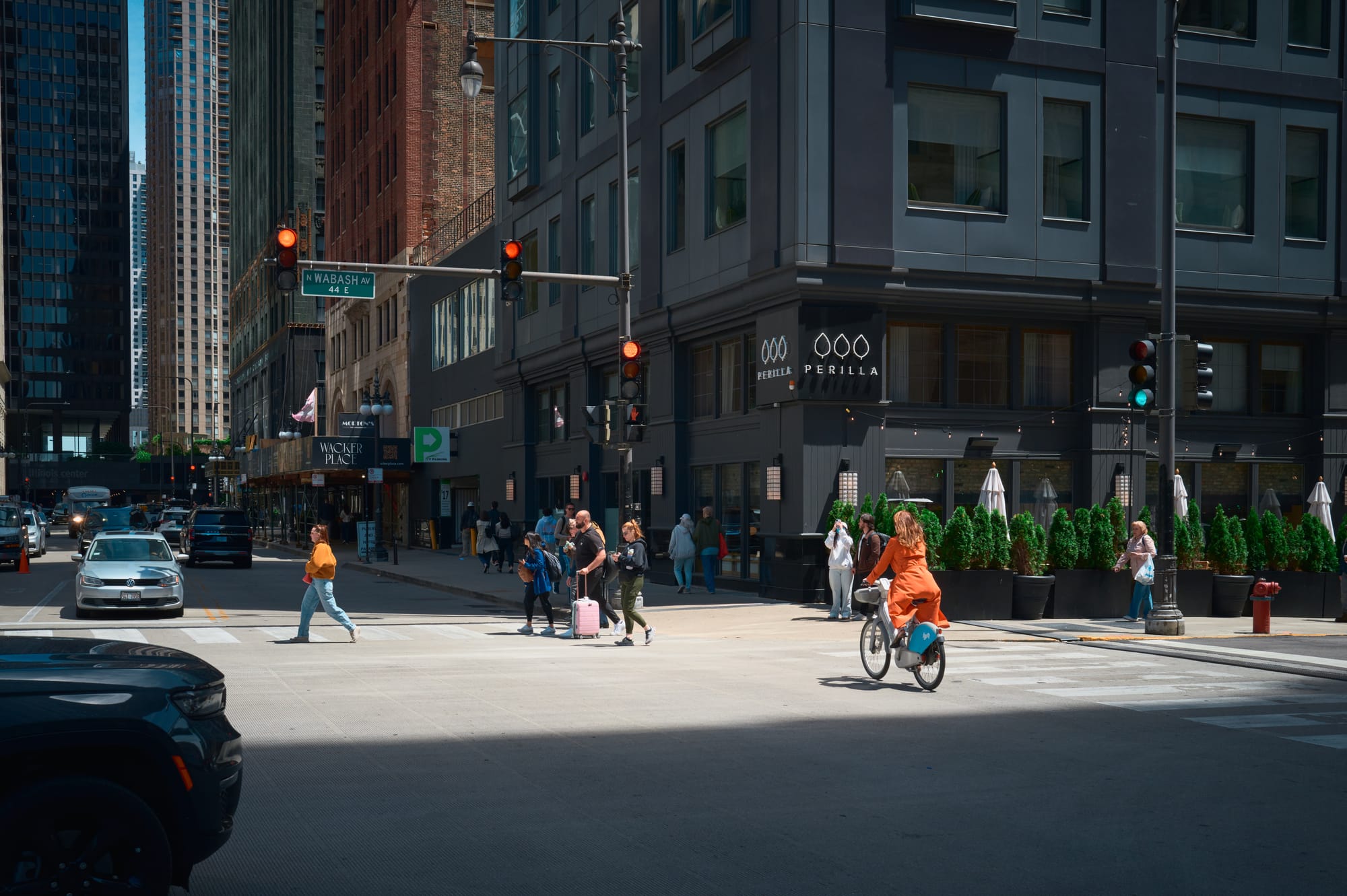
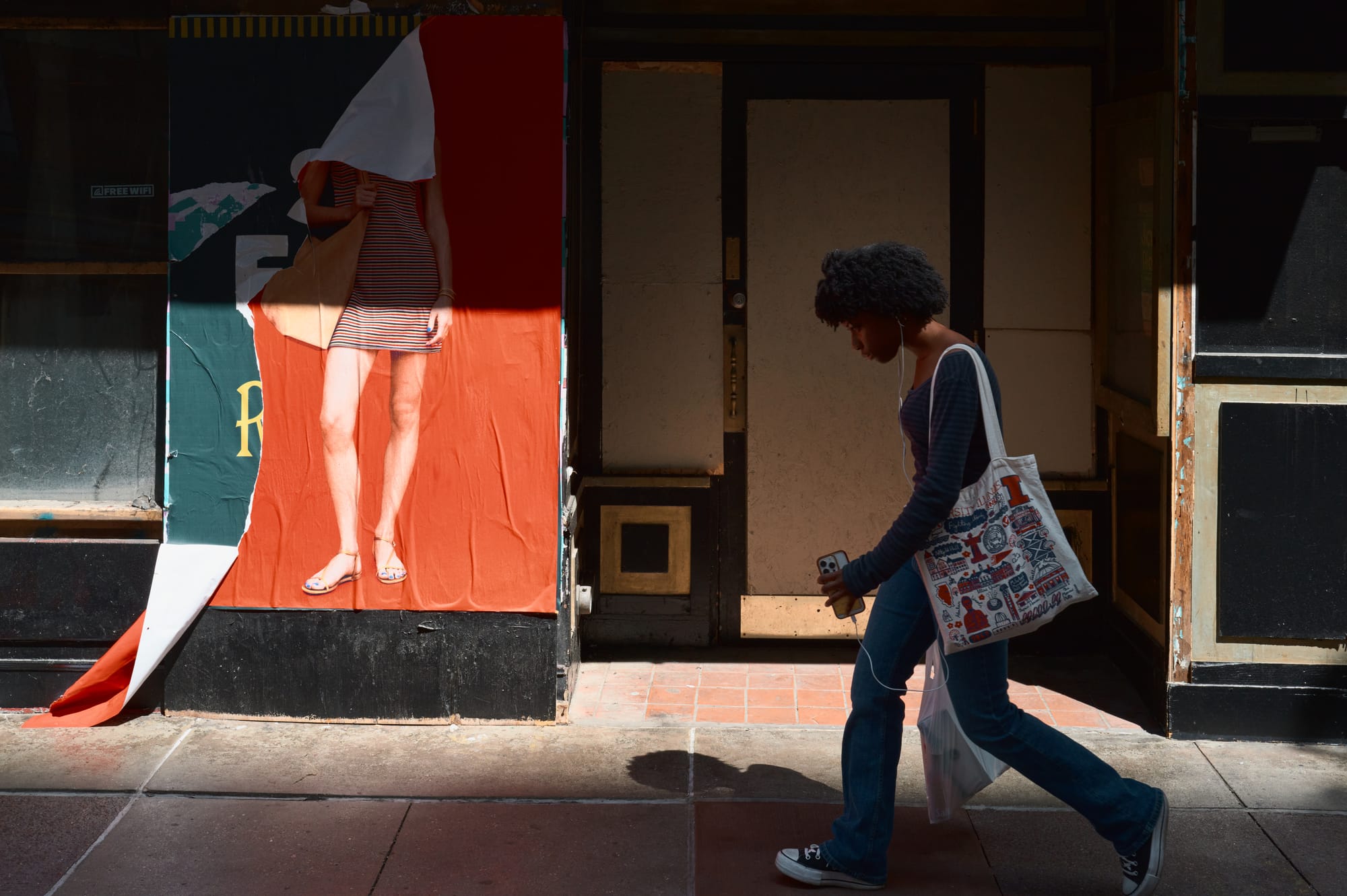
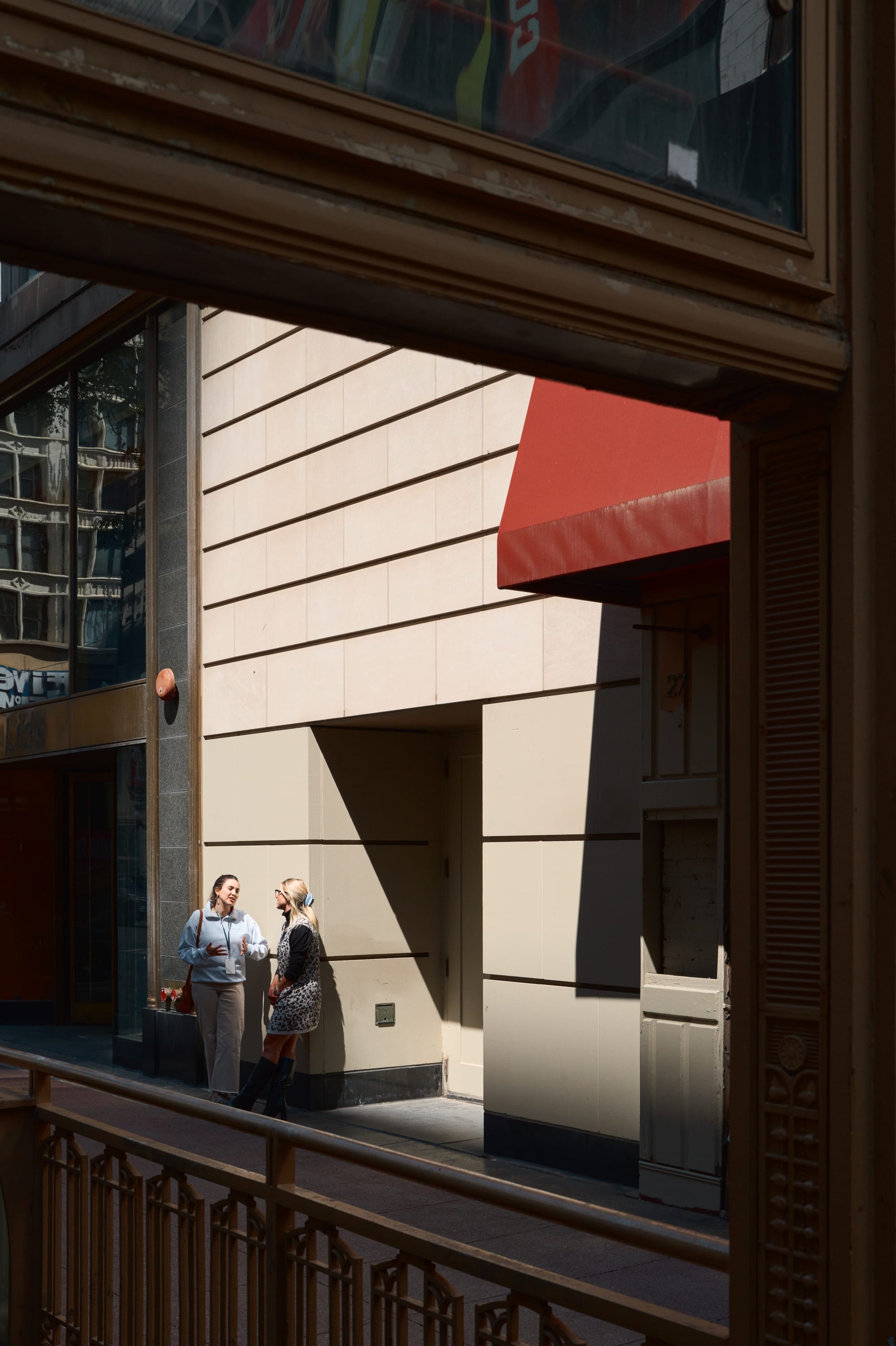
The most spontaneous-looking street photographs come from the most predetermined setups. You front-load every decision so that at the moment that matters, there are none left to make. It took me twenty-some years and tens of camera bodies to learn this, and the lesson finally arrived in the most backwards possible package: a five-figure German box with no autofocus, no stabilization, no lens, and an instruction manual that could fit on a napkin.
I should be upfront about something. I am not a Leica guy.
The route here ran through a lot of cameras. The Canon 5D and the EOS R — full-frame, full-size, the serious-photographer starter kit with RF glass heavy enough to exert its own gravitational pull. Then multiple Fujis, where I fell for mechanical dials on the surface of the camera and a bag of three lenses that weighed nothing, until the sensor showed me its ceiling (fake GAS reason, still use them). Then Sony, and Sony cameras mean business. They are tools. You don't love a tool, you operate it. Then the Leica Q2, where the fit and finish finally got me excited about the red dot — except the Q2 is a fixed lens, and a fixed lens is a wall you eventually hit. I've written about that one already.
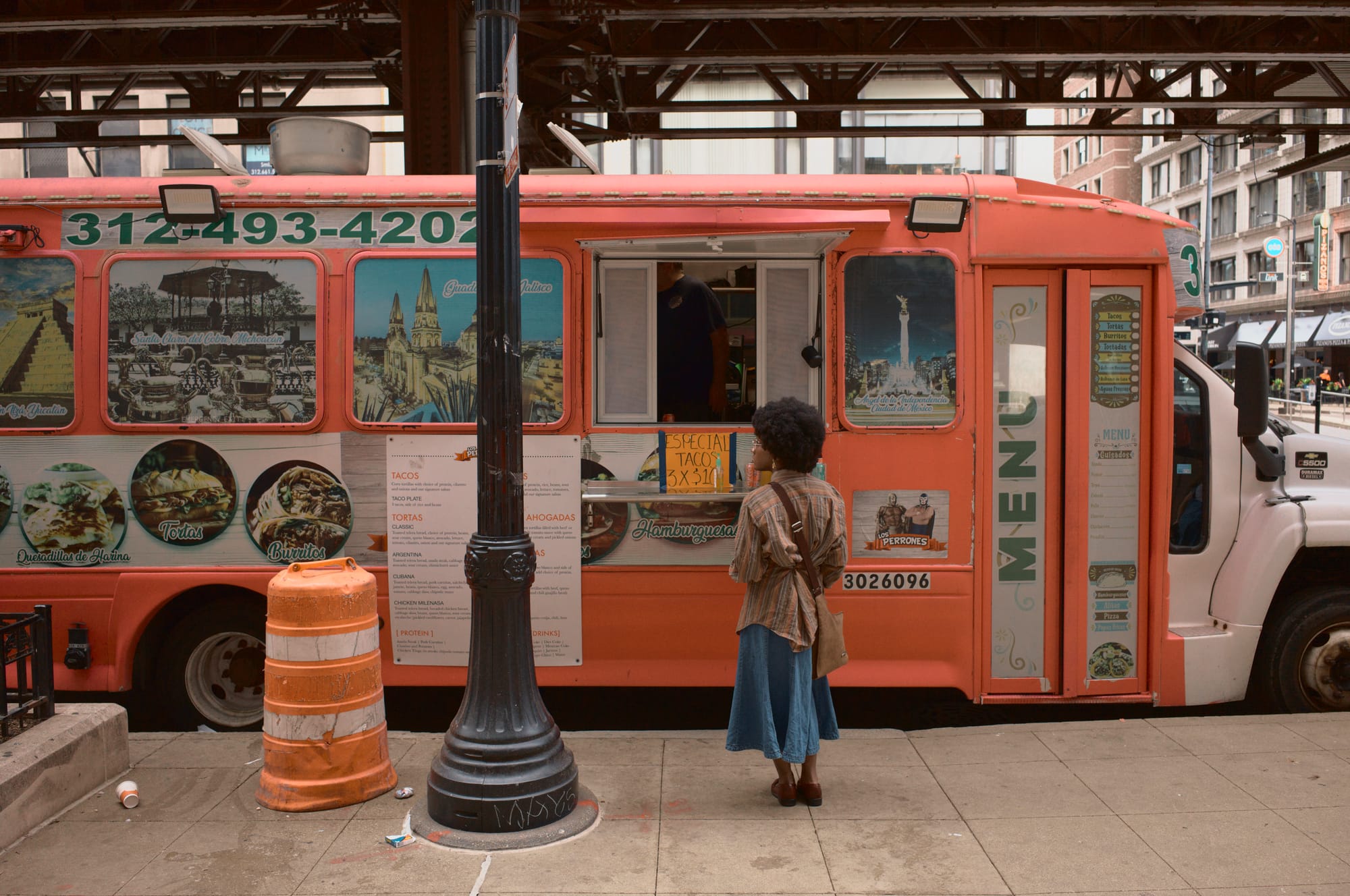
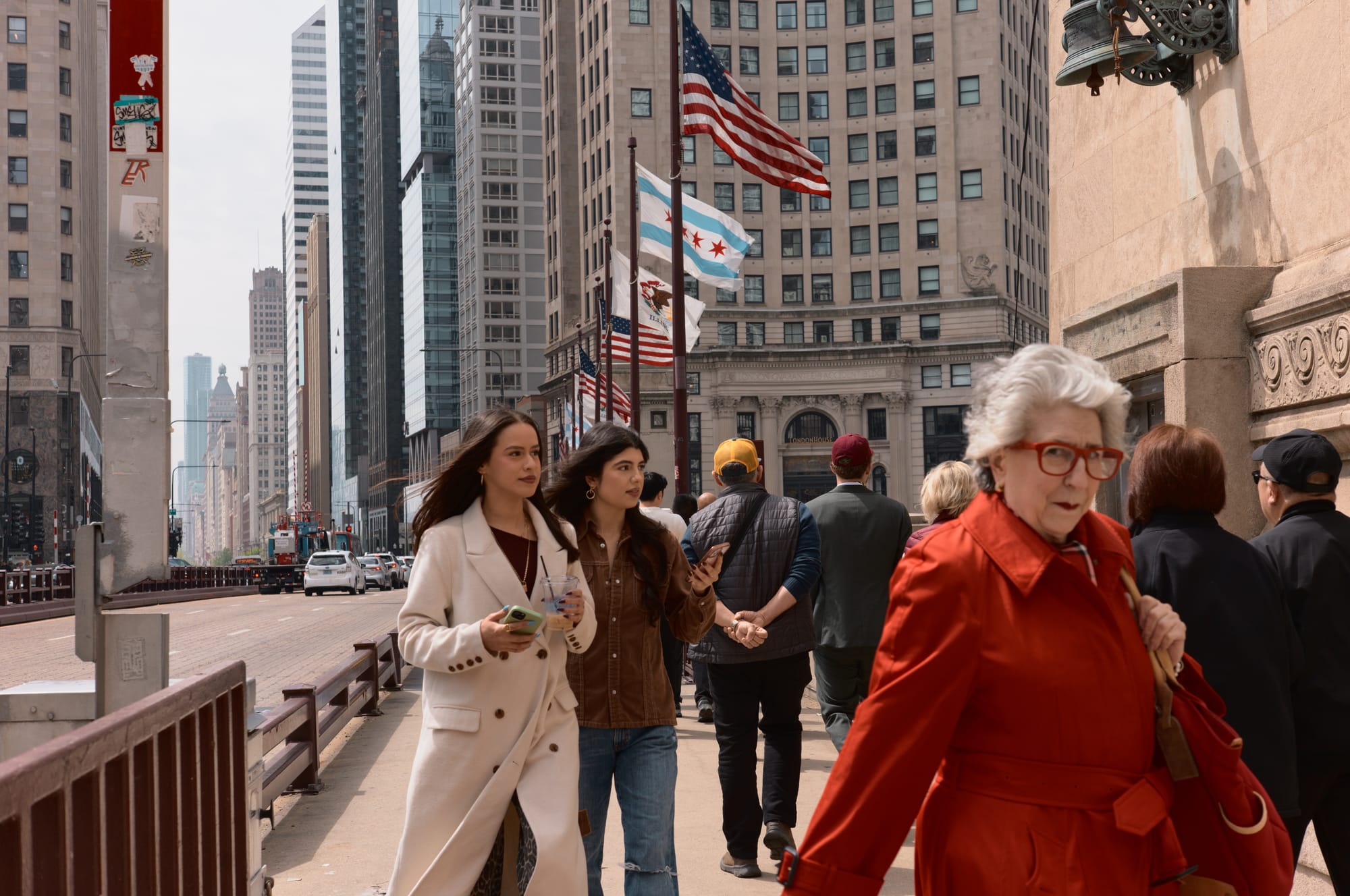
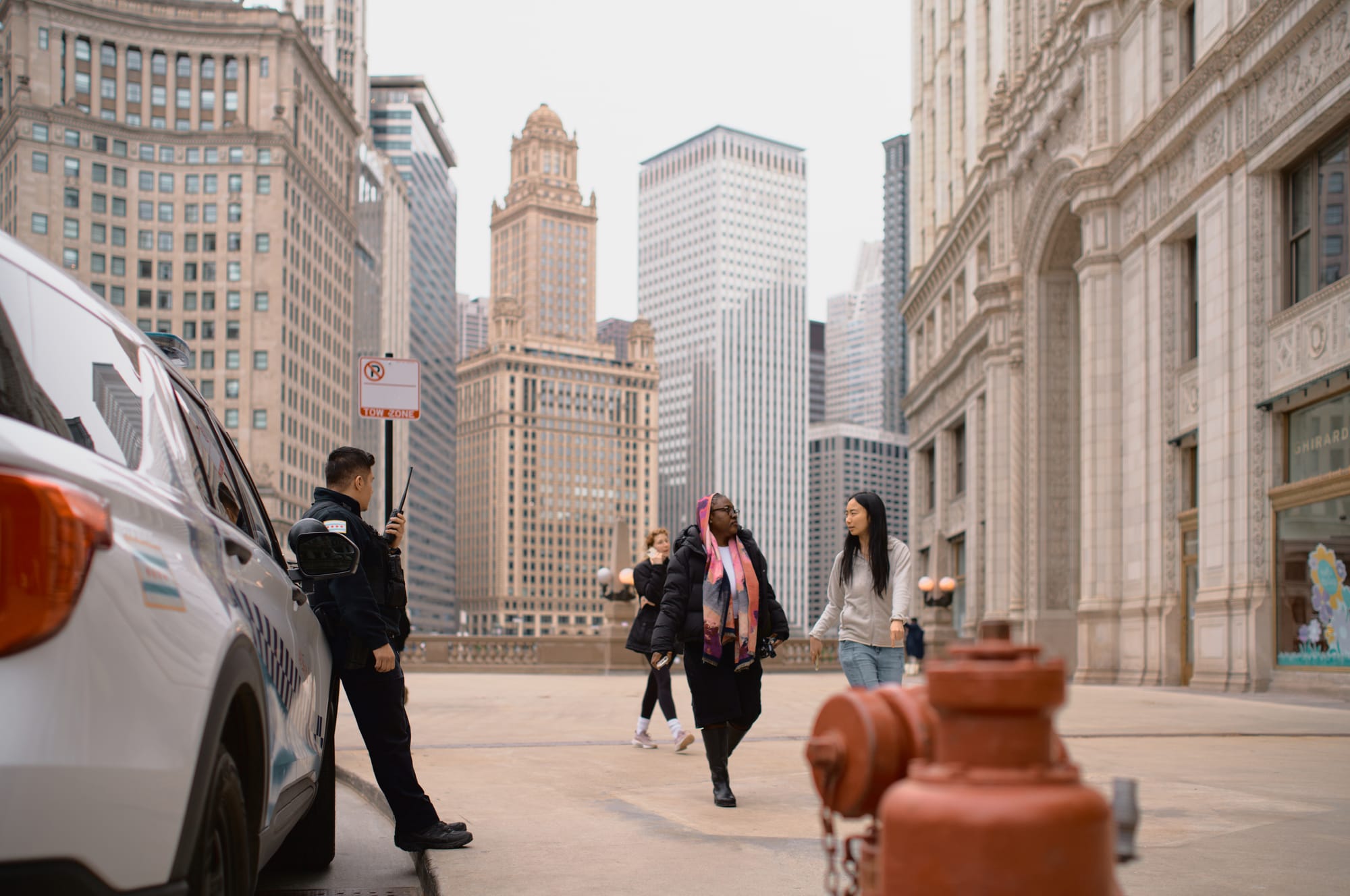
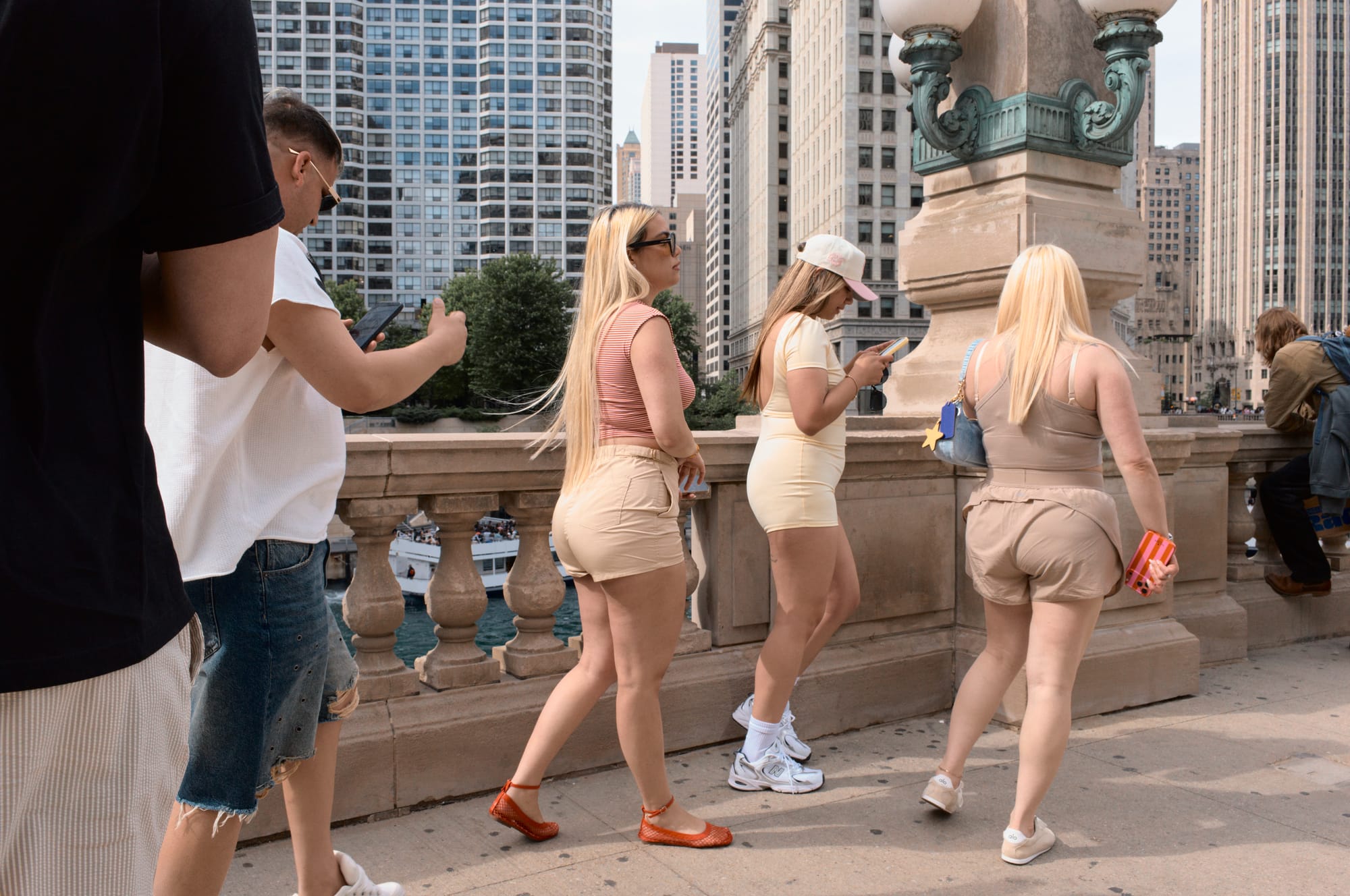
What I never had was the religion. My first proper camera was a film Canon Rebel 2000, around the year 1999, and then the digital floodgates opened, and I've been shooting sensors ever since. I didn't come up genuflecting at the rangefinder. The whole mythology of the M — the patch, the guesswork, the faith — was never mine. I want to see my exposure with my one good eye before I take it. So when Leica released the M EV1, an M with the rangefinder ripped out and an electronic viewfinder dropped in, the purists declared a funeral. I bought one.
And here is the heresy, stated plainly: the EVF is better than the rangefinder. Not a compromise on it. Better. Longer lenses don't black out half the frame. Nailing focus on a face at f/1.4 is trivial instead of a séance. There's less to go wrong inside the body and nothing to fall out of calibration. The pearls are being clutched on forums as we speak. I came to take pictures, not to defend a mechanism.
While I'm committing crimes against the brotherhood, let me empty the whole clip. I see no optical or RAW-file benefit to the Leica. None. The megapixel race is finished, as well — there's so much resolution now that the depth-of-field scales engraved on lens barrels promise a sharpness the pixels won't forgive. Modern files carry so much latitude that output from any camera can be pushed to look however you want it to look. The forums full of fanboys reciting "Leica colors" and "Leica pop" get genuinely flustered when someone mounts off-brand glass on an M body, like a Corvette V8 dropped into a restomod 911. For the record: I don't own a single Leica lens. I wasn't ready to marry one focal length for the price of two kidneys, especially given how I shoot the thing — at f/8, where almost any lens cleans up its own imperfections anyway. I'll buy a Summilux one day, but that decision won't have an essay to justify it away.
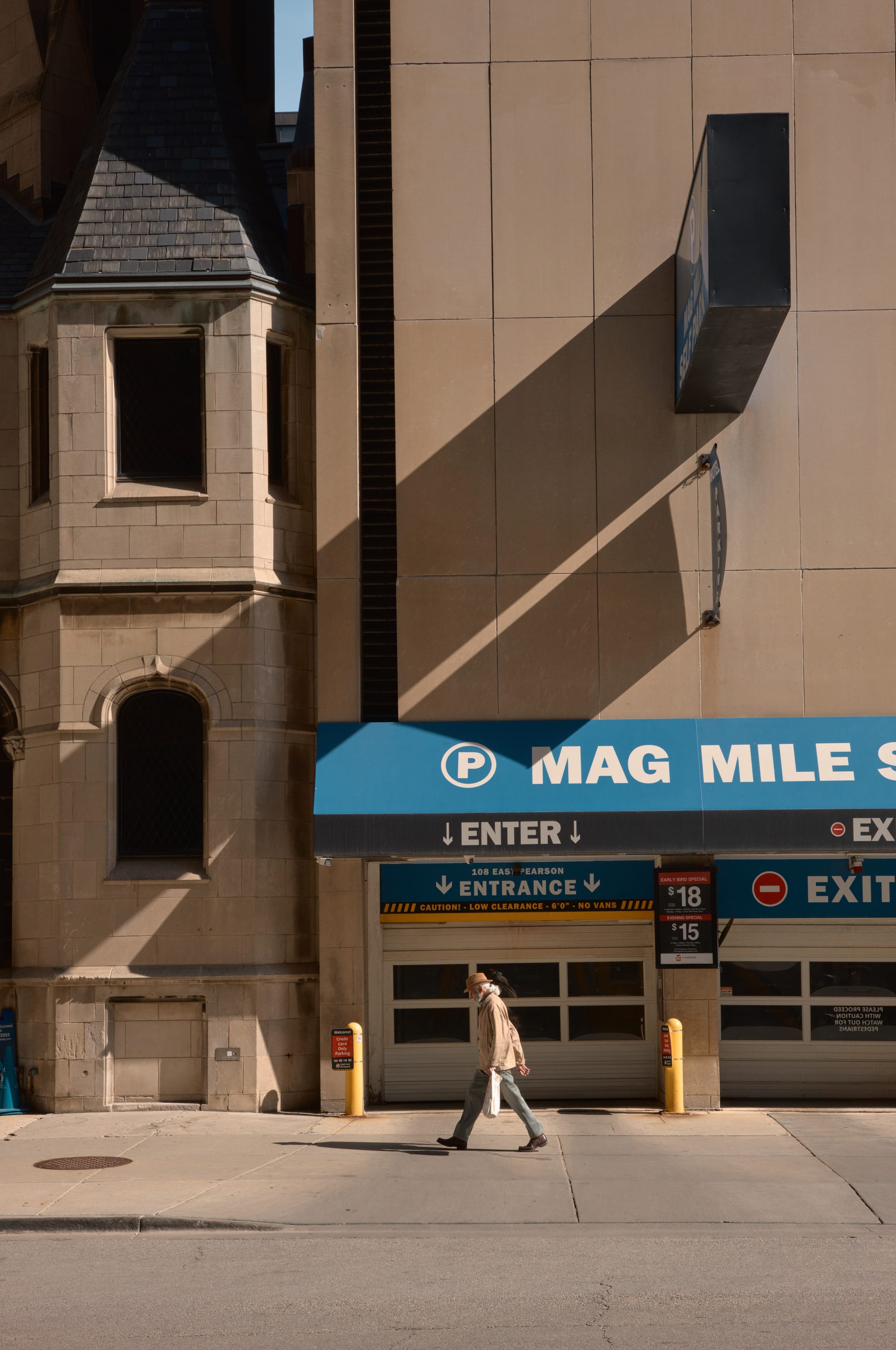
So. No religion, no magic glass, no secret sauce in the files, missing features that a $900 Sony has had for a decade. A reasonable person would ask what exactly I paid for.
I paid for the checklist.
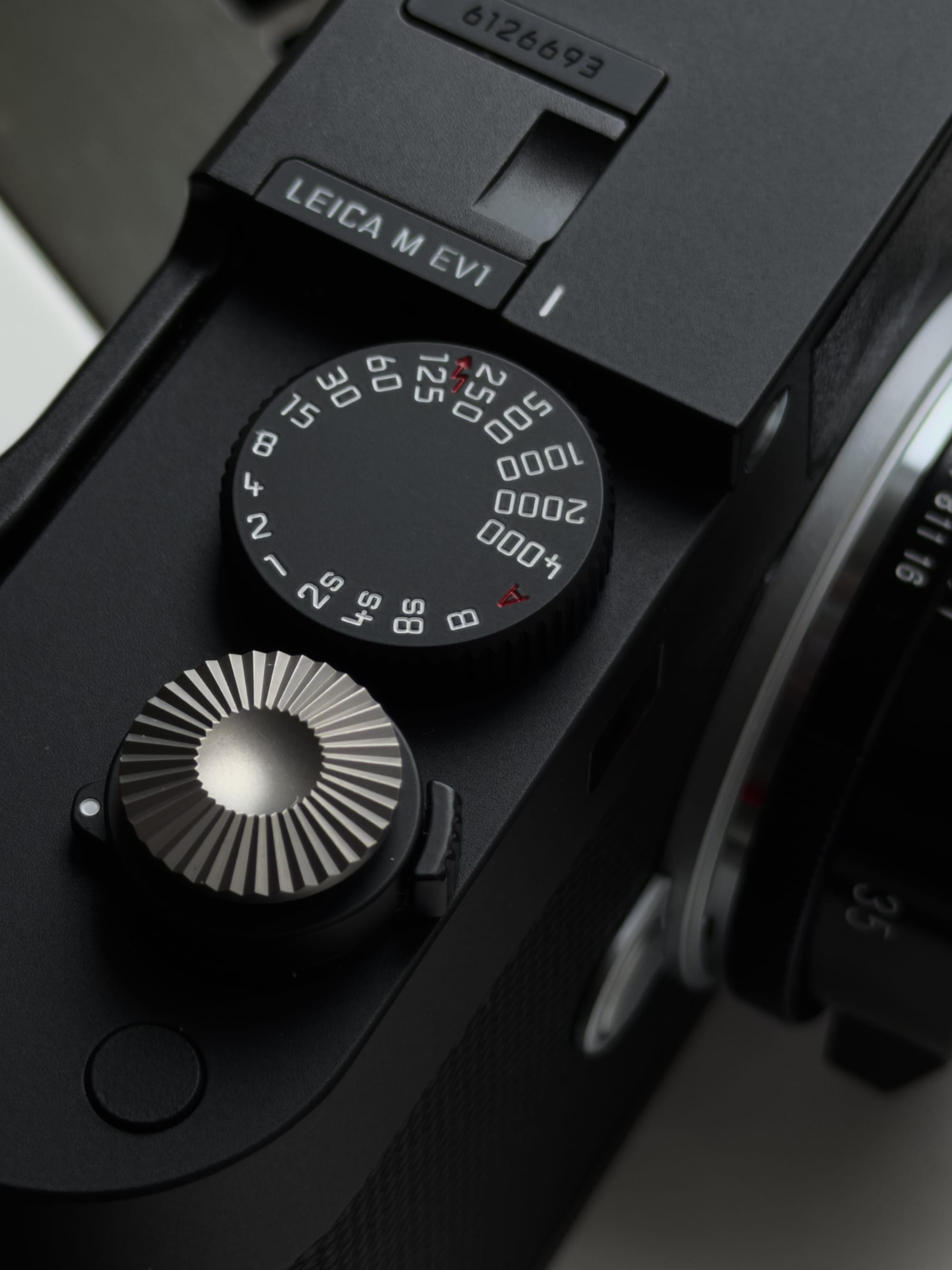
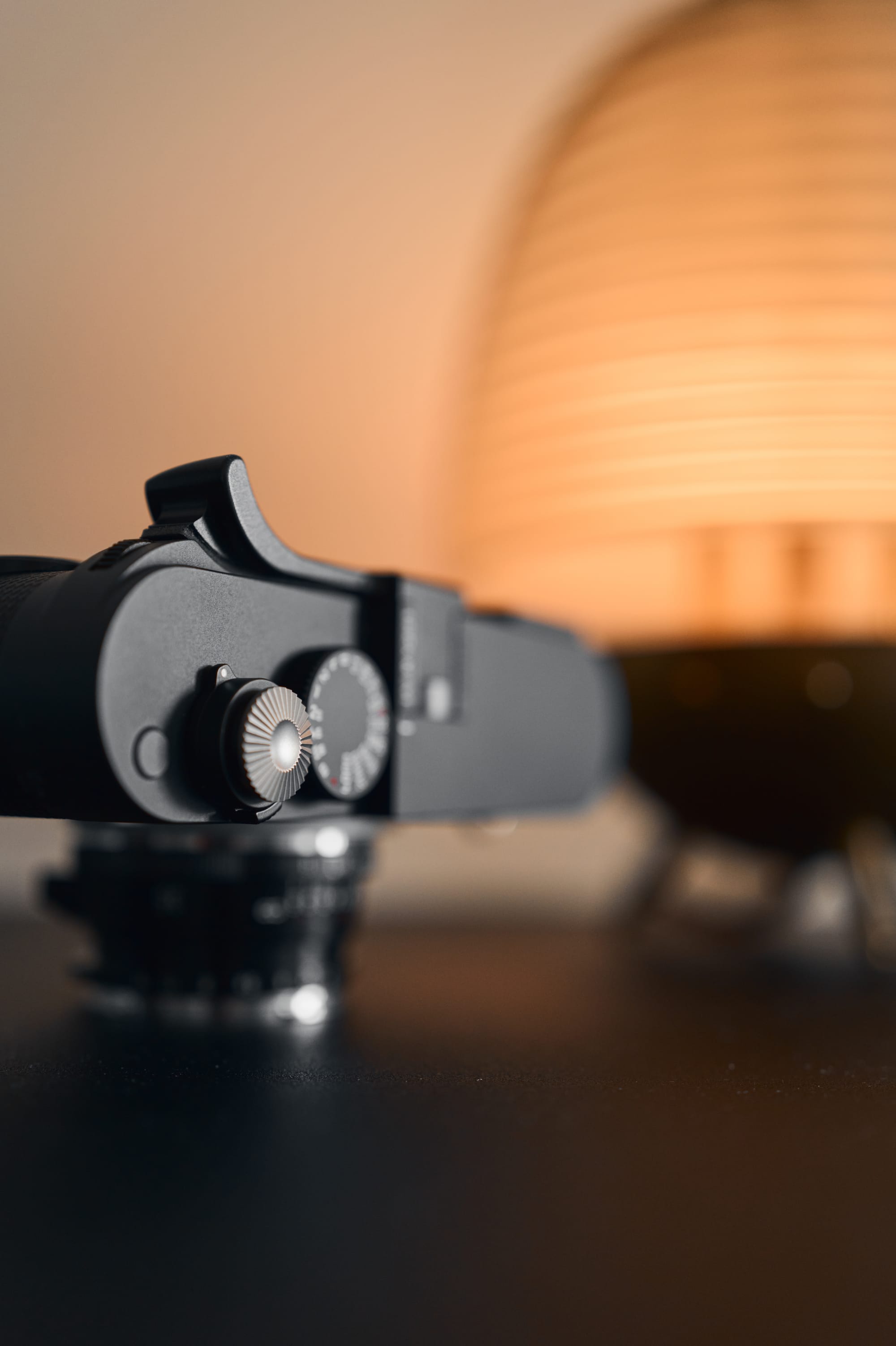
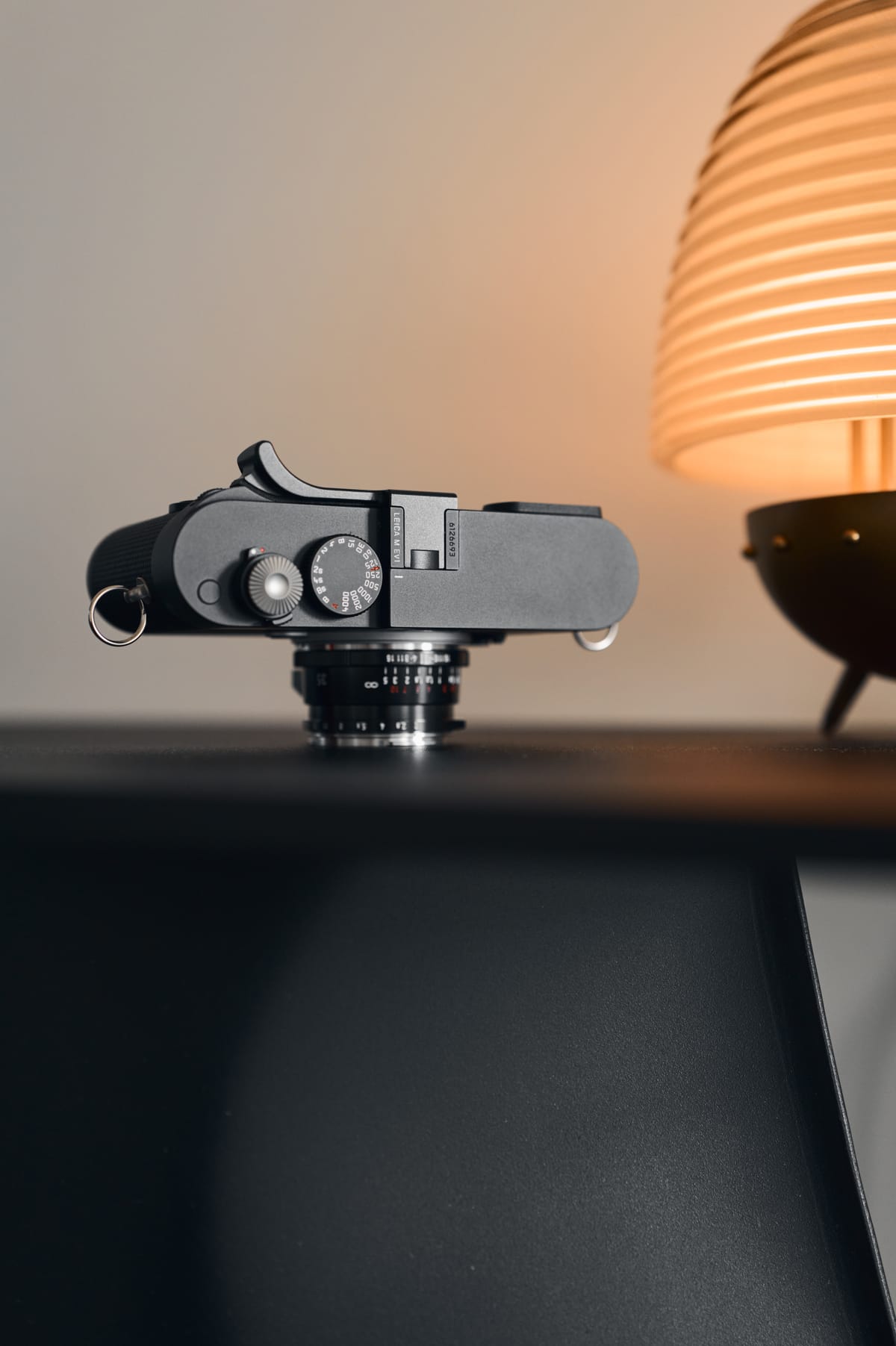
The EV1 is completely manual, and the workflow is a ritual. ISO stays at 1600 — that decision is made once, in the morning, like coffee. Noise is minimal on the full-frame sensor, and nobody likes clinical files anyway. Shutter sits at 1/500 or 1/1000 to capture gesture. The f-stop is the one variable I keep my hand on — working the depth I want, balancing the exposure as the light shifts. Three decisions, made deliberately, and then they're done. Once the exposure is set and I'm confident in it, all the work that's left is the only work that matters: composition, subject, gesture.
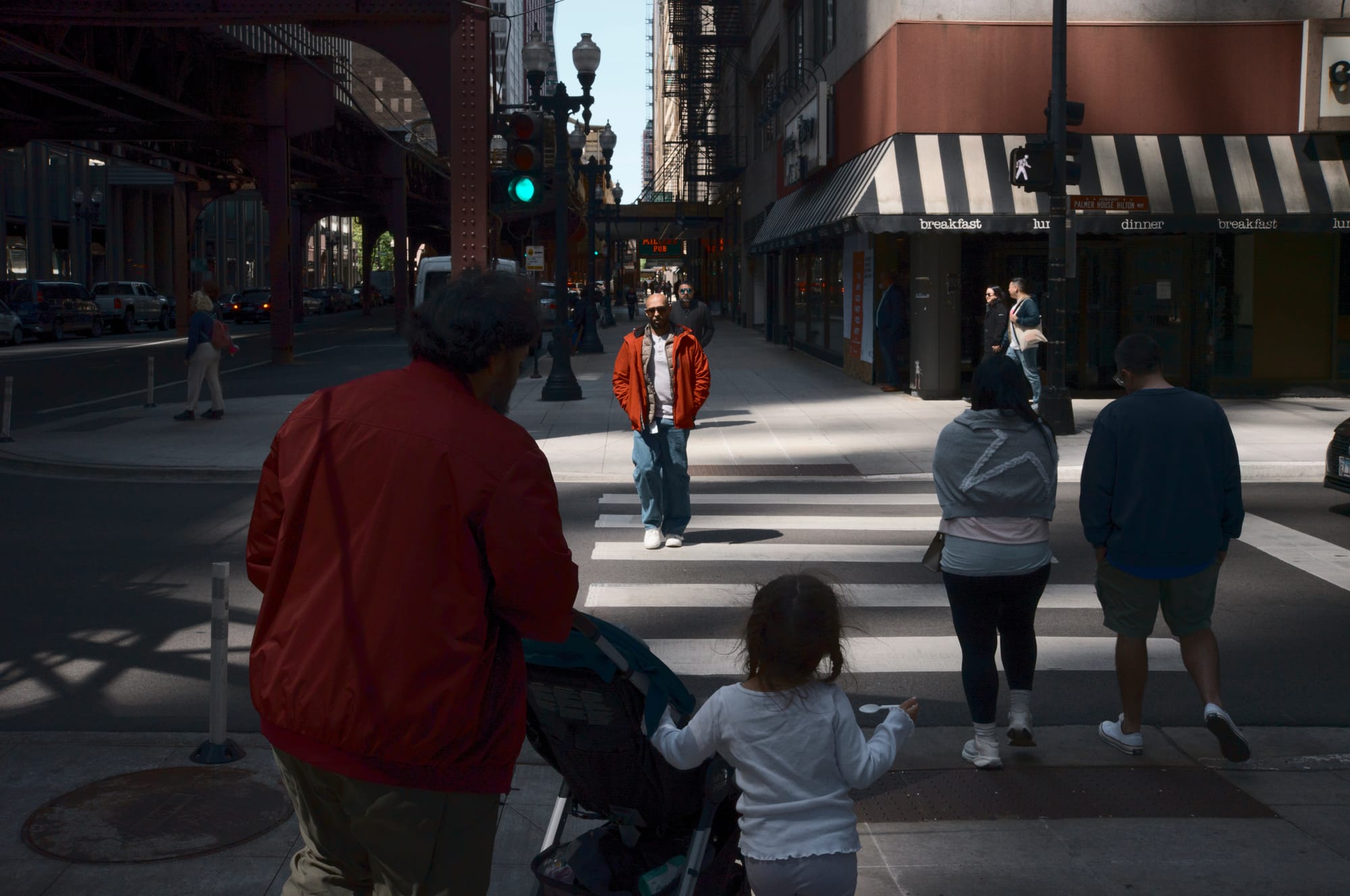
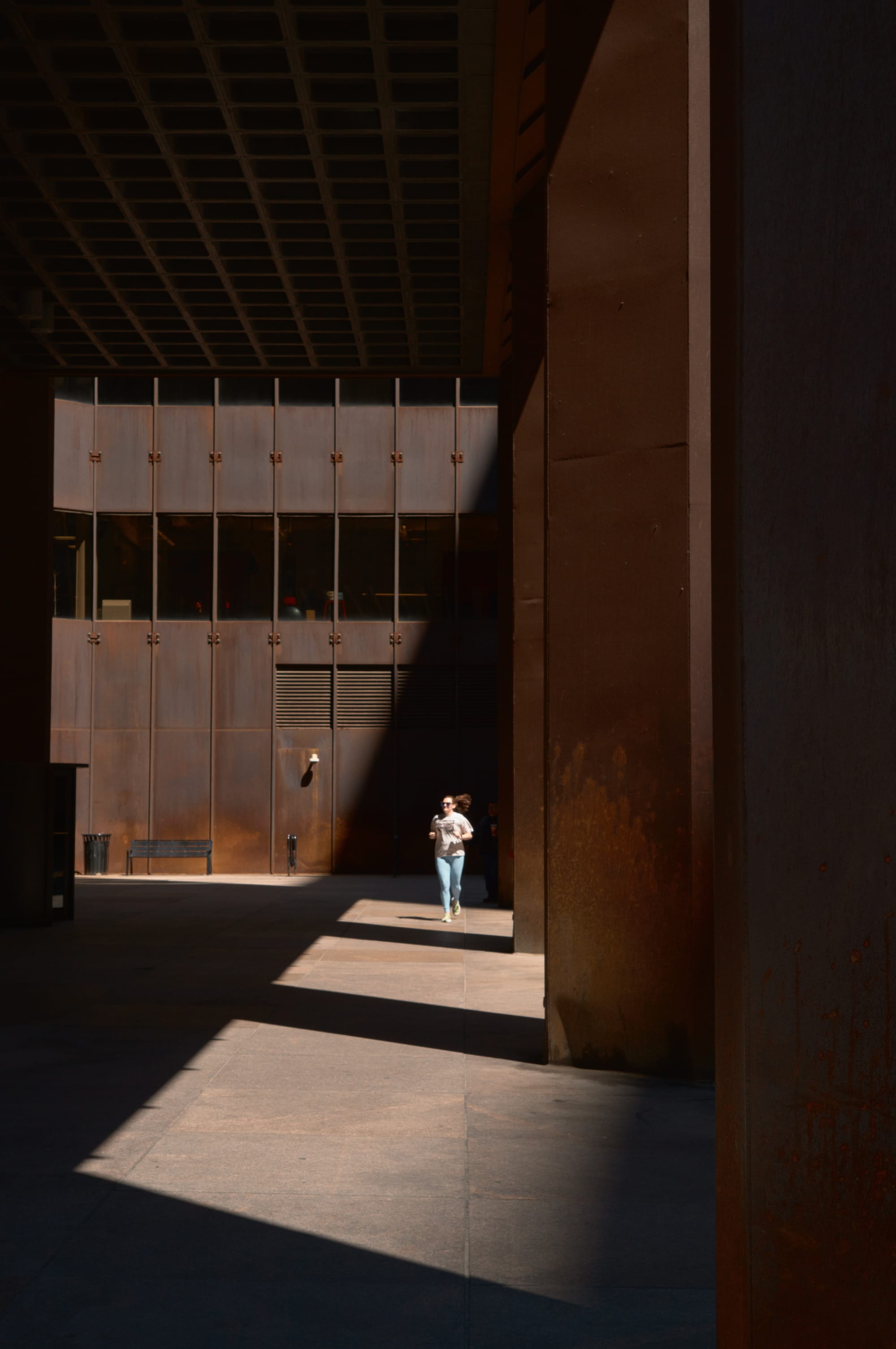
Could I do all of this on the Sony? Probably. But there's no dedicated shutter dial, and half the lenses don't even have an aperture ring. The variables are in there somewhere, buried three menus deep in a plastic interface from Japan that obfuscates the fundamentals. On the Leica they're under my fingers, machined out of aluminum, always visible even if the camera is turned off. The camera doesn't let me be deliberate. It leaves me no way not to be.
It's the manual 911 with every assist switched off. The vibration of the engine sitting behind you, the whine of the transmission, the road arriving through your hands. The 911 does not make me a better driver. Maybe a little. But it makes me feel like I'm the one doing the driving — and that, it turns out, is most of what I wanted.
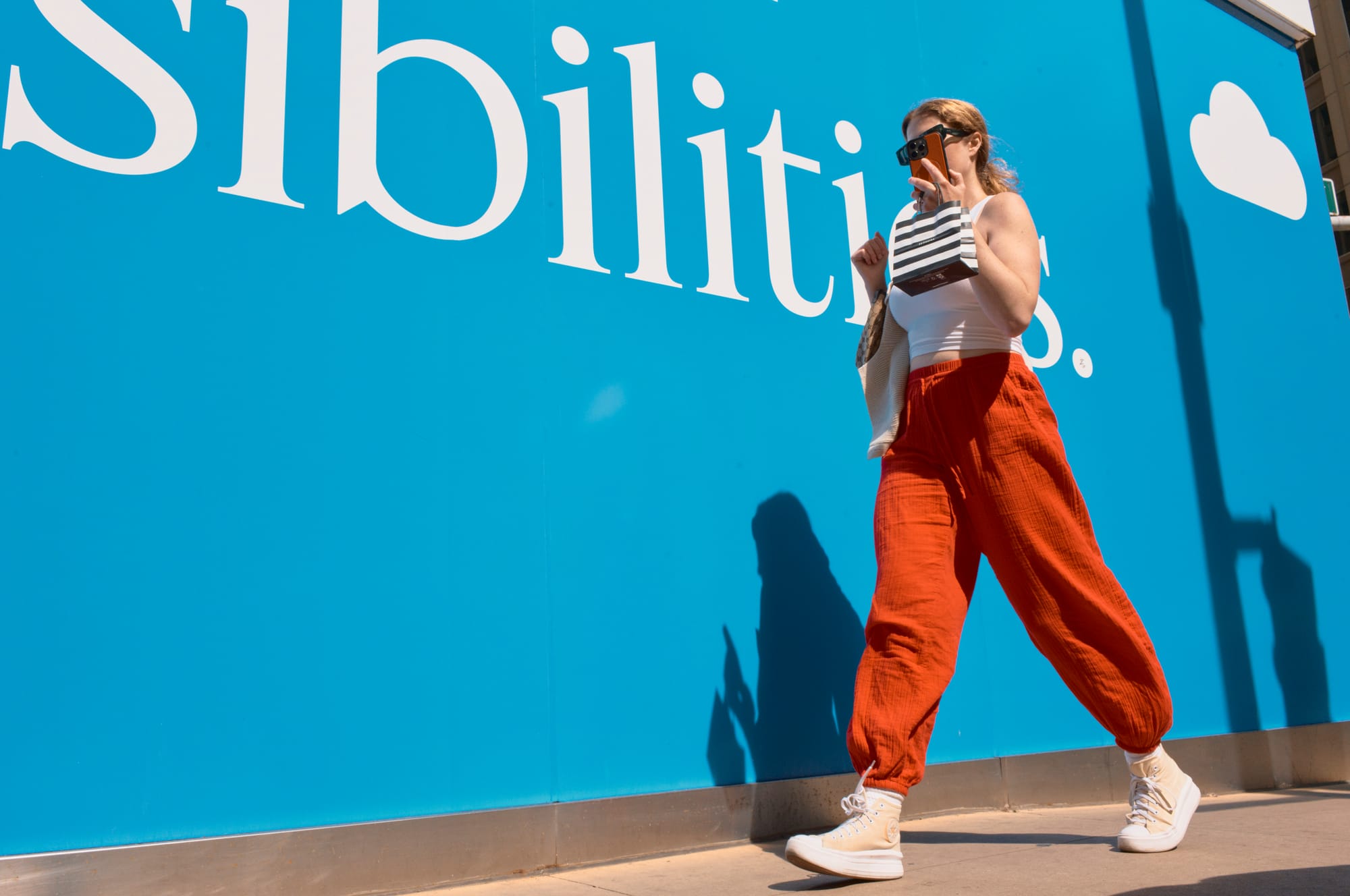
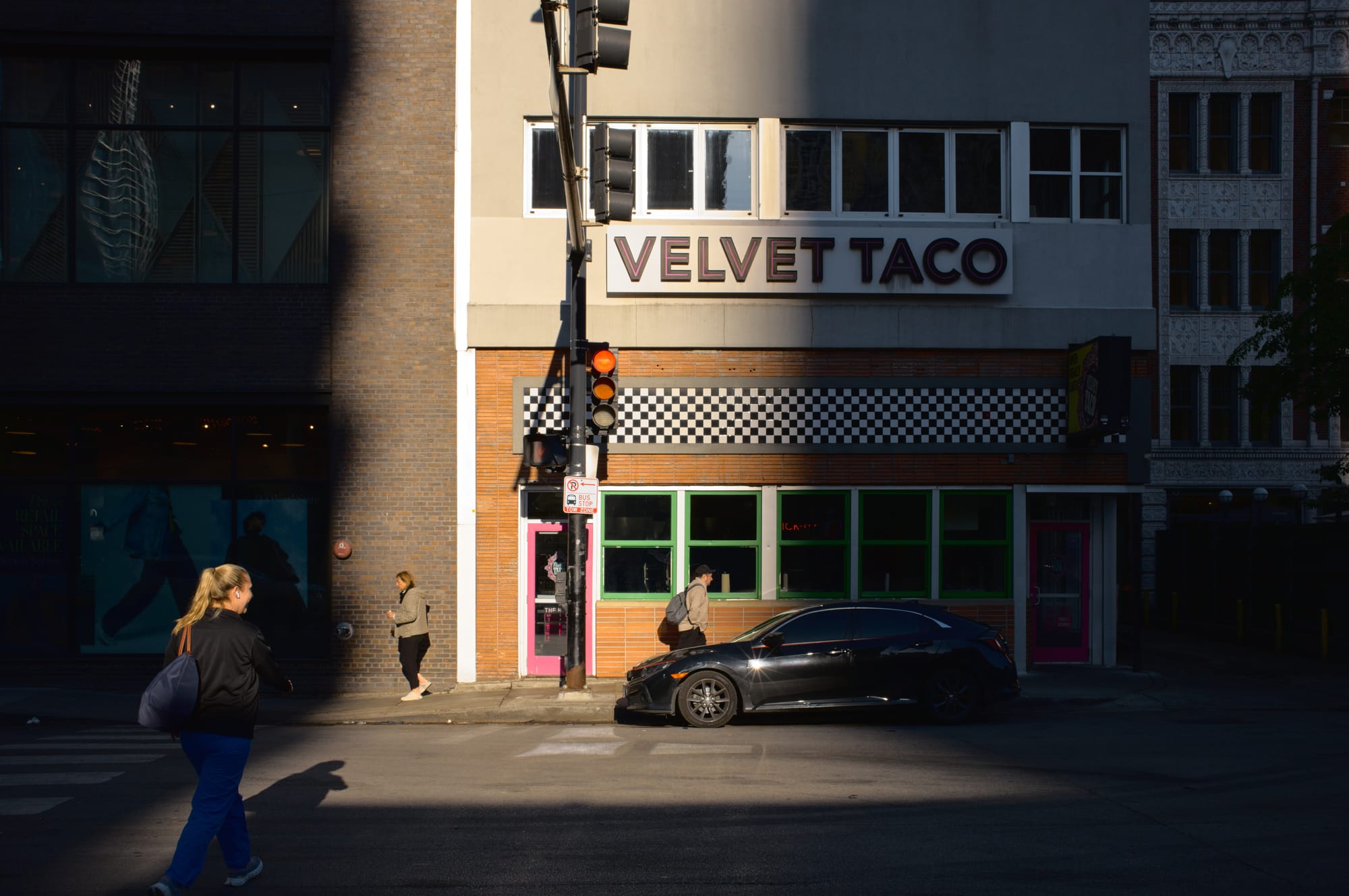
Chaos unfolds on State Street as you walk south from Wacker. Tourists, locals, vagrants, pigeons, and unidentified urban critters play out their theater scenes in front of vacant storefronts while sunlight drops in shifting pools from the towers looming overhead. The light meter inside the Leica sweats profusely at this cacophony of data, recommended exposure flickering multiple stops back and forth. It's useless here. I find myself learning the rule of sunny 16. I'm dialed in to expose correctly for the actor stepping onto the stage of light, then a quick turn of the aperture ring for the shadows. There's no reliance on a light meter, no guessing, and the only failures are mine to own.
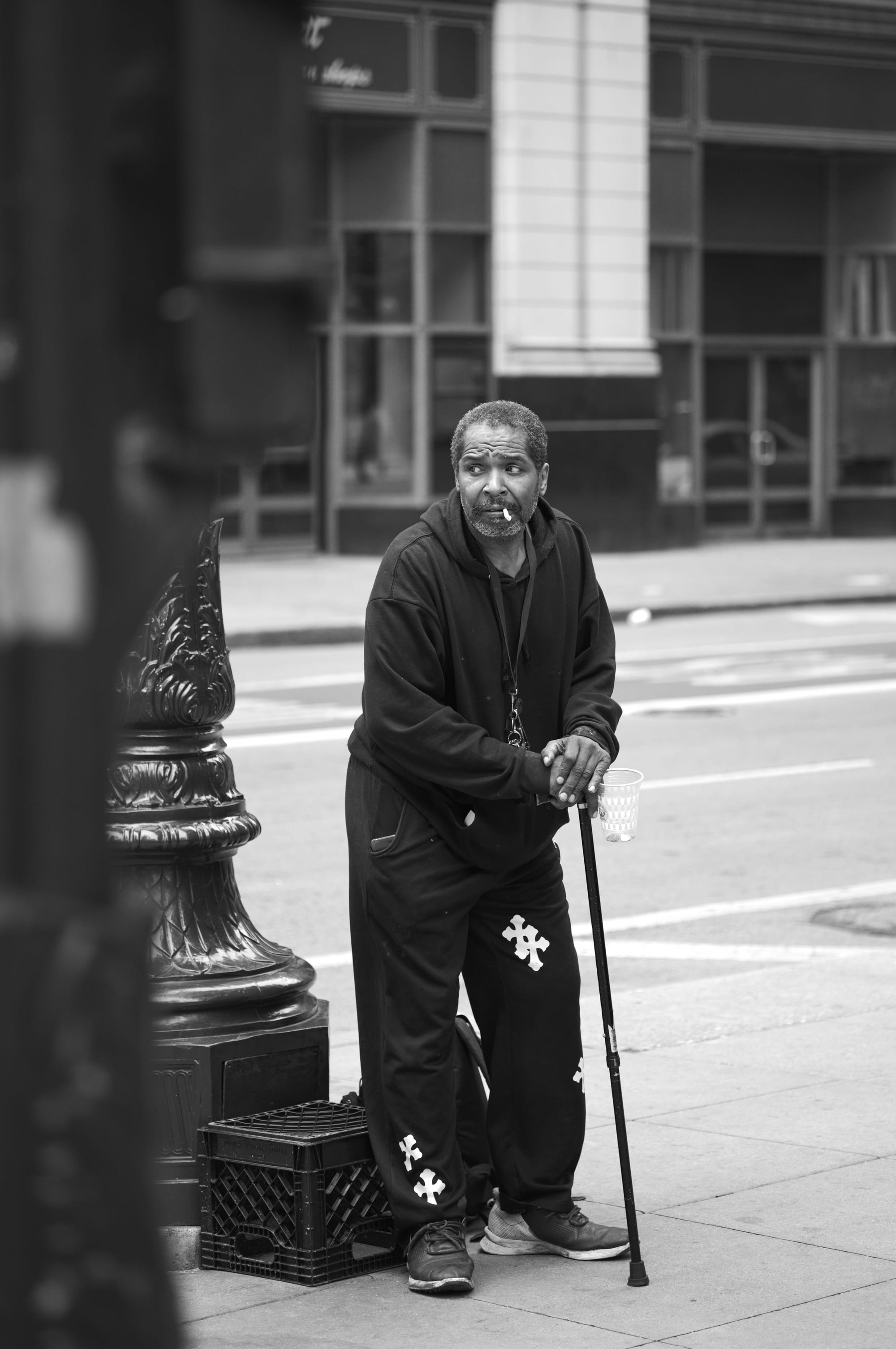
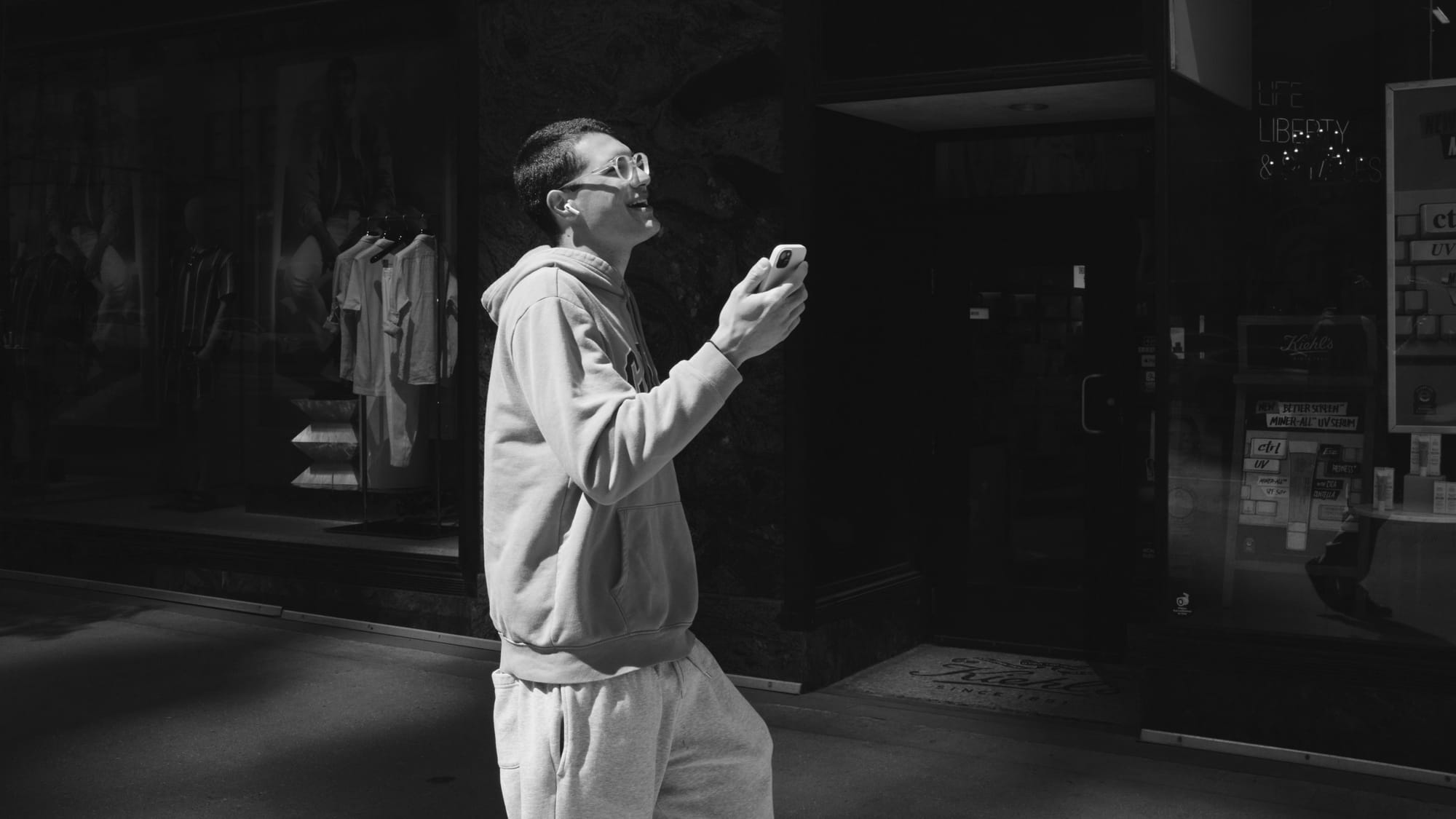
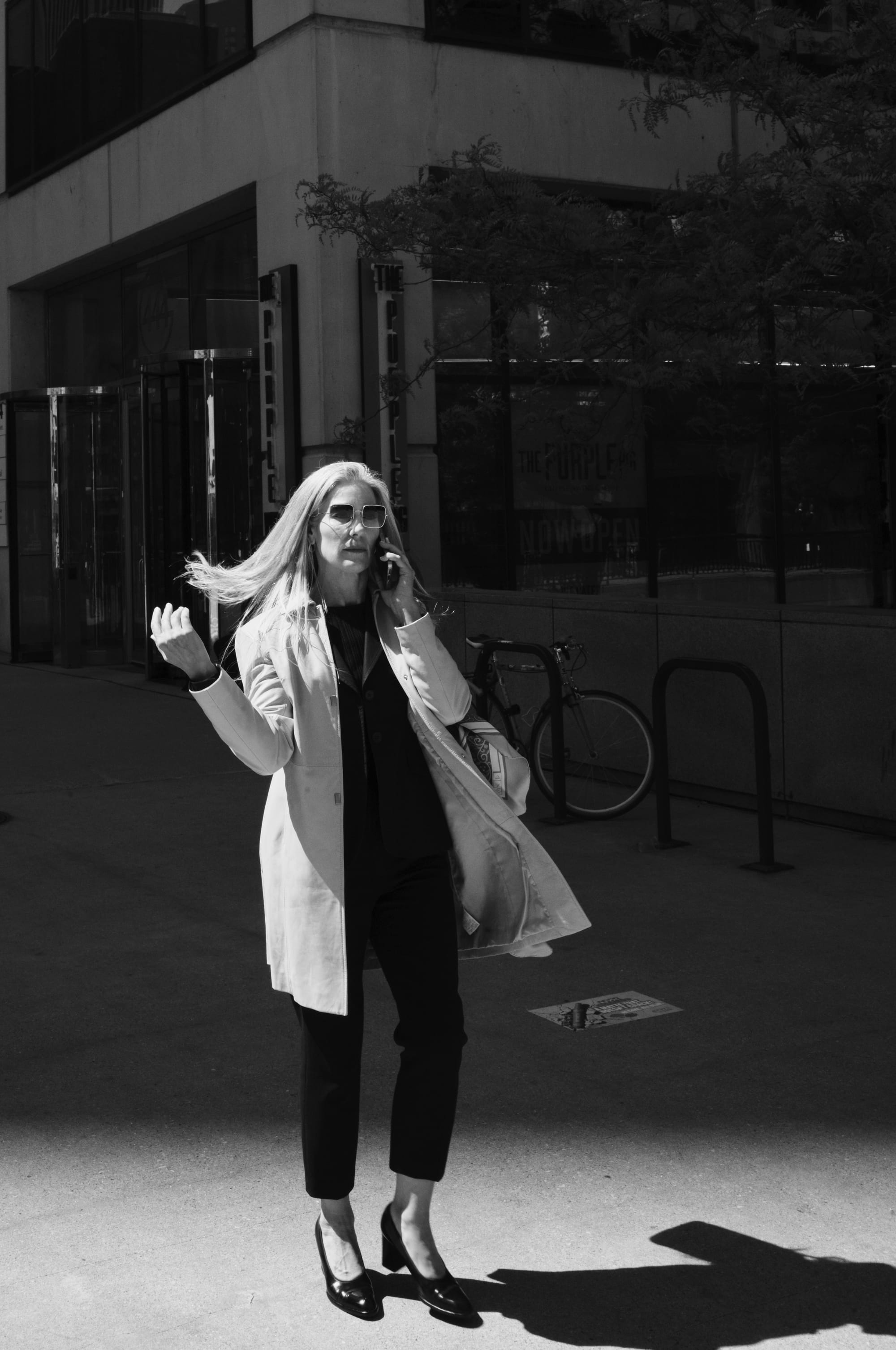
I know how this sounds. A man pays a luxury price and then writes two thousand words explaining the purchase was actually about intentionality. But I don't think pleasure needs an alibi. The long street walks. The comfortable weight of the thing. The tactile feel of a body assembled by hand in the elf village. The superior ergonomics of the body and the fast, tiny lenses. That's not a distraction from the work of making an image — it's part of the conversation.
And if luxury has become the only shelf where things made in good taste and built to last still sit, then so be it, I'll buy from that shelf. The status is the toll. The craftsmanship is the thing.
Here's what the iPhone gets wrong, since the phone is the obvious counterargument. I don't like taking pictures with my phone. Ever. Not because of image quality — I've already admitted that war is over. It's that the phone is the perfect forgetting machine: infinite, instant, frictionless, unfelt. Apple has decided what the image should look like before I ever see it, the act costs nothing, and the moment is offloaded so smoothly that I never actually look. Soon the phone will reframe the shot for me with generative AI, and the last decision I had will be gone too. The camera that asks nothing of you gives nothing back. The Leica makes me remember by making me work. It doesn't photograph the memory. It manufactures it.
And the phone itself is disposable. I have never once felt sad about an old phone.



But I feel sad about cameras I've sold. I sold the Leica Q2 28mm a few months ago. It had little flecks of sand stuck in its seams from a day on a beach with Ashton. There were dents on the base from knocking against the doors of a metro car on a trip that got more adventurous than planned. That camera recorded Ashton for over seven years, saw our business get sold, captured multiple adventures and trips. The marks were the journey, written on the object. Sell the camera and you sell the evidence. Sure, Leicas hold their value well, but I would argue they should never be sold. It's a relationship for life, says the man who just told you Leica colors are a myth.
Which brings me to what the EV1 is genuinely bad at.
It is not the best camera for photographing my ten-year-old son. The Sony is better. Even the Q3 is better. The moment the subject is moving, and I've got one hand free, a faster, smarter instrument wins, and it isn't close. The Leica M is a slow instrument. That's the whole truth of it, and the spec-sheet people are correct.
And I love having the M with me. I have one set of aspirations for learning to see better in the street, a completely different set of objectives to document my son growing up and traveling through life. Ashton lounging on the sofa at the hotel, brushing his teeth in the morning in his skivvies, buying a corn dog from a kind man at a Halal stand, eating caviar at Kaspia on the Upper East Side (this newfound taste for fish eggs may end up costing more than the Leica). These images will not see the light of day beyond my own repository and require no critical approval.
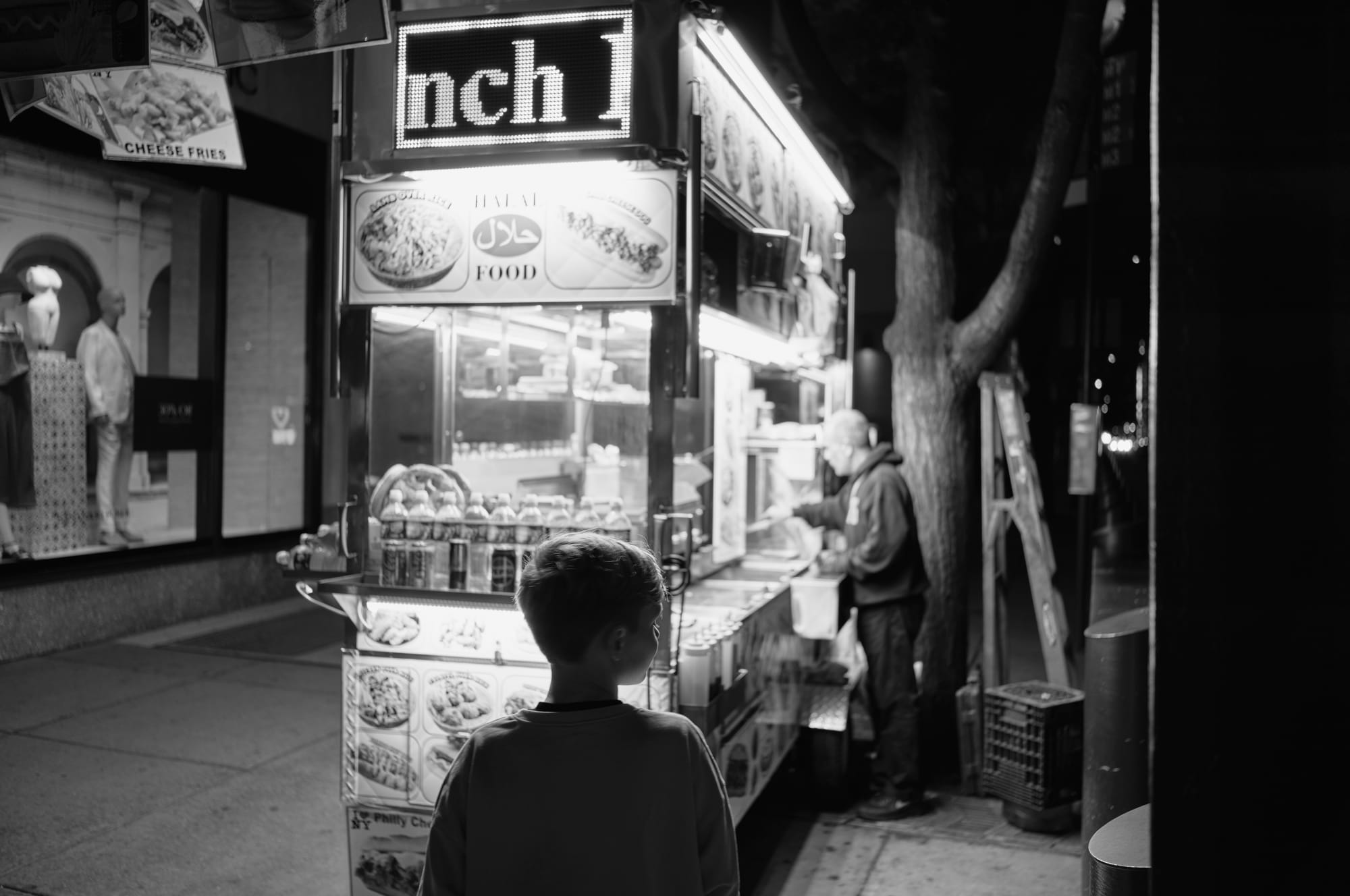

And yet the photograph of Ashton I keep returning to wasn't taken by the smart camera. Midnight on Fifth Avenue, Ashton in front of a steam pipe, the EV1 not quite nailing focus. The Sony's eye-autofocus would have rendered every eyelash. Instead I have a slightly soft frame of my son in the steam and the dark, and it matters more for the miss, not less.
A camera that serves the subject, and a camera that serves the photographer. The Sony takes the better picture of my son. The Leica gives me the better hour of my life. I'm no longer sure those are the same hobby — and I'm increasingly sure I don't have to choose, because I'm at six cameras now and the question was never which one is best. It's which one was in my hand when the thing happened.
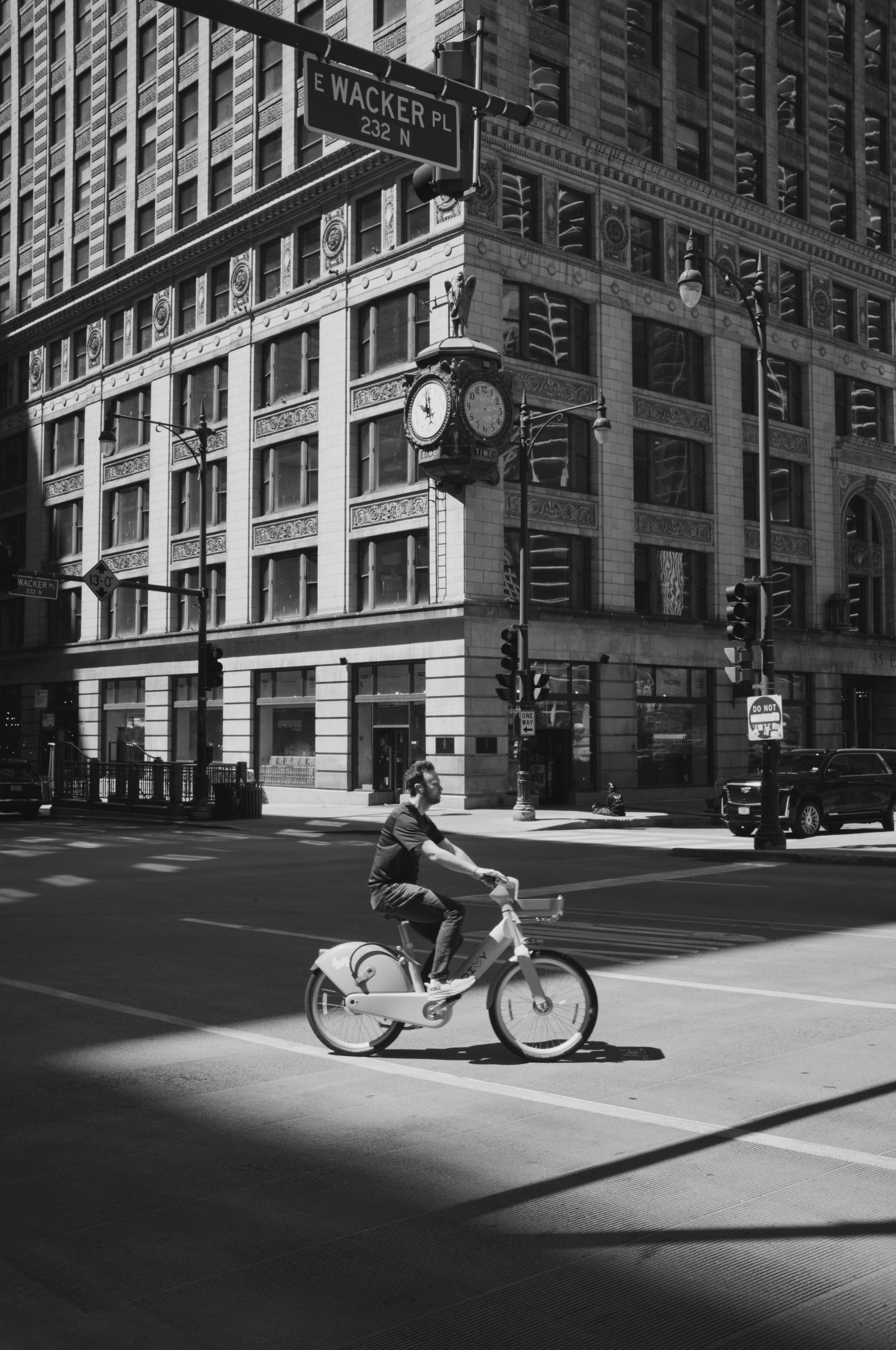
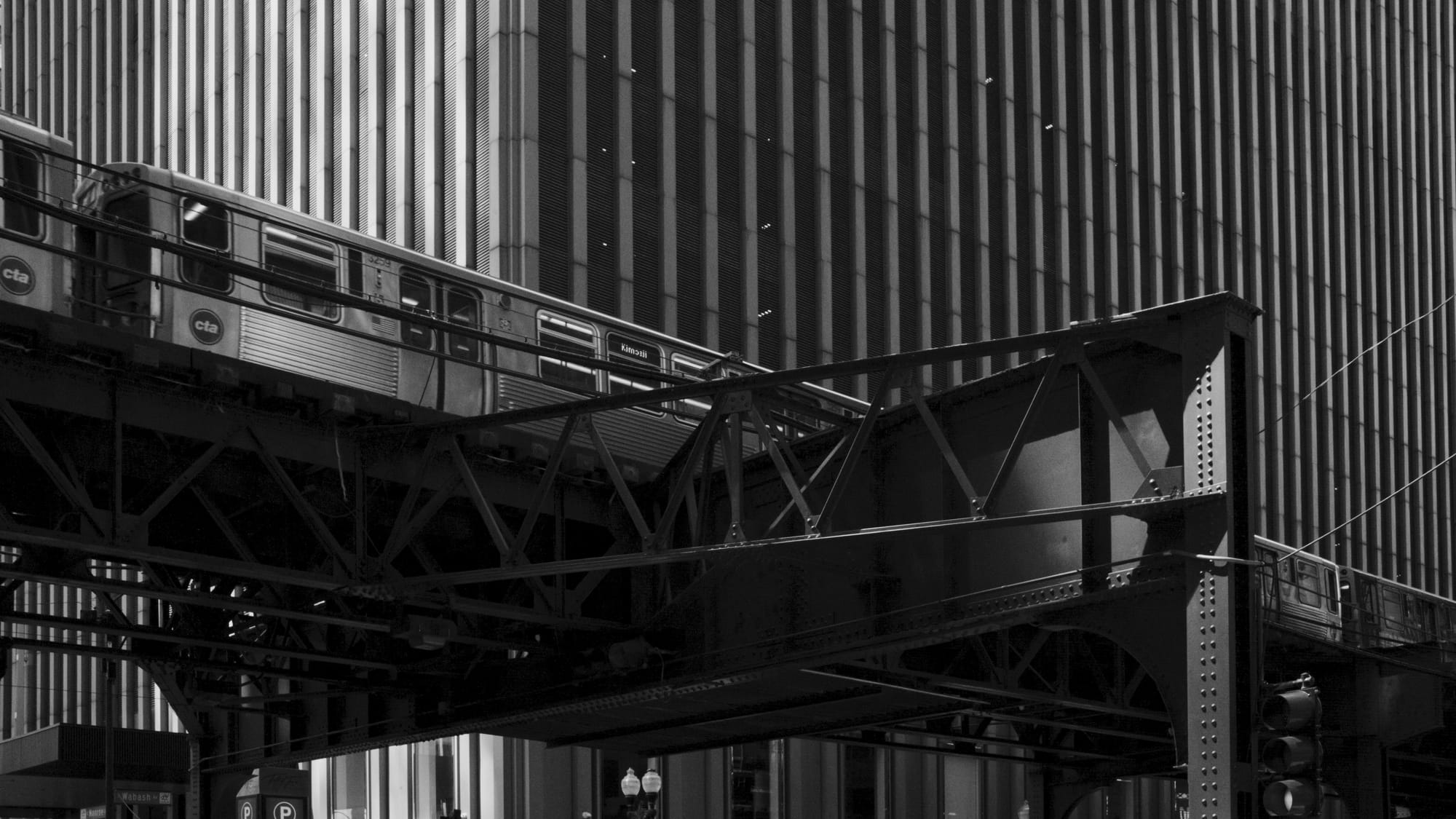
Would I still shoot the EV1 if no one ever saw a single frame? Yes. Easily. The largest part of photography, twenty-plus years in, is a conversation with myself — the noticing, the seeing, the slow education of the eye. Sharing is the byproduct. I can look back across two decades of photographs and feel happy and ashamed in the same breath: ashamed at how bad some of the old ones are, happy because that's the measure of how far the seeing has come, and how far it has to go.
Here's the part I didn't expect, the part no review will tell you because it doesn't fit on a spec sheet. The EV1 made me more intentional with my other cameras. I pick up the Sony now and the ritual comes with me — the slowing down, the what am I actually trying to do here before the thing even boots. The worker bodies still do the work. But the photographer holding them came back from the Leica different.
Not the frames it takes. The photographer it quietly rebuilt. That's what was in the box.
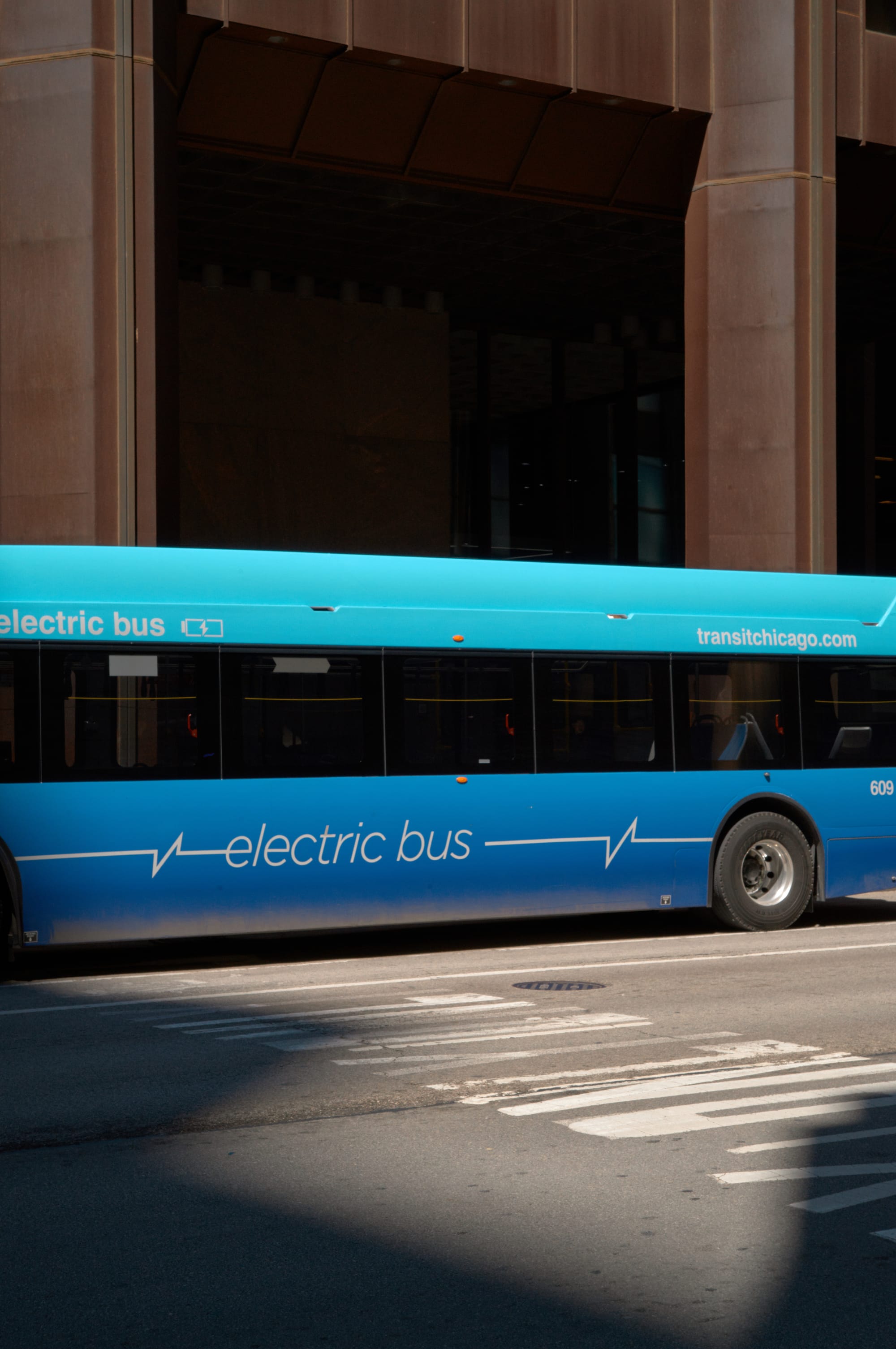
All images taken with the Leica M EV1 and various Voigtlander lenses: 28mm, 35mm, 50mm, 90mm.