The unintentional camera
Decisions that are made on hardware level affect intentions.
Repetition bores me. There's a honeymoon phase at first, but eventually the patterns settle and my mind disengages. I've been aware of this for a good chunk of my life - I'll go through a focused, obsessive stint of illustration only to eventually burn out and switch to photography. I'll iterate, refine, learn and then eventually step away for a month or two. Even in business I've put myself in situations and responsibilities where change was part of the role. Fitness is the same - a goal keeps me engaged for three months, but then I need to shuffle things up. More of a sprinter than a marathon runner.
The upside, reflecting back, is that I never quit any of my pursuits. They're either in sharp, obsessive focus or dormant and within reach for when I get bored. And making things is the best antidote to boredom. The downside is that it takes me longer to improve than it should. Lo and behold I'm in one of my renaissance periods with photography and, having too much money and time on my hands, I've decided to sell cameras, buy cameras, and write an essay about the madness within.
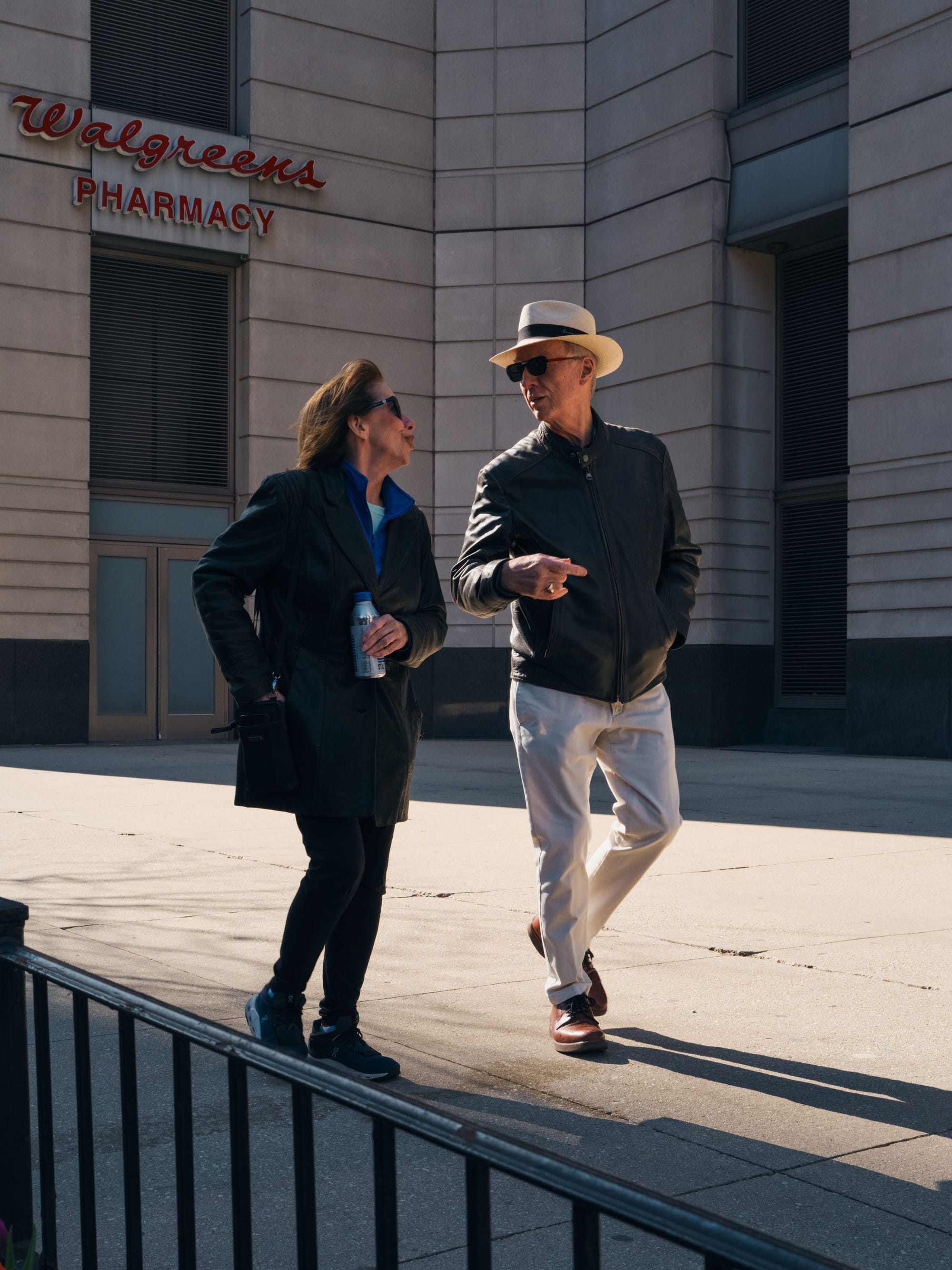
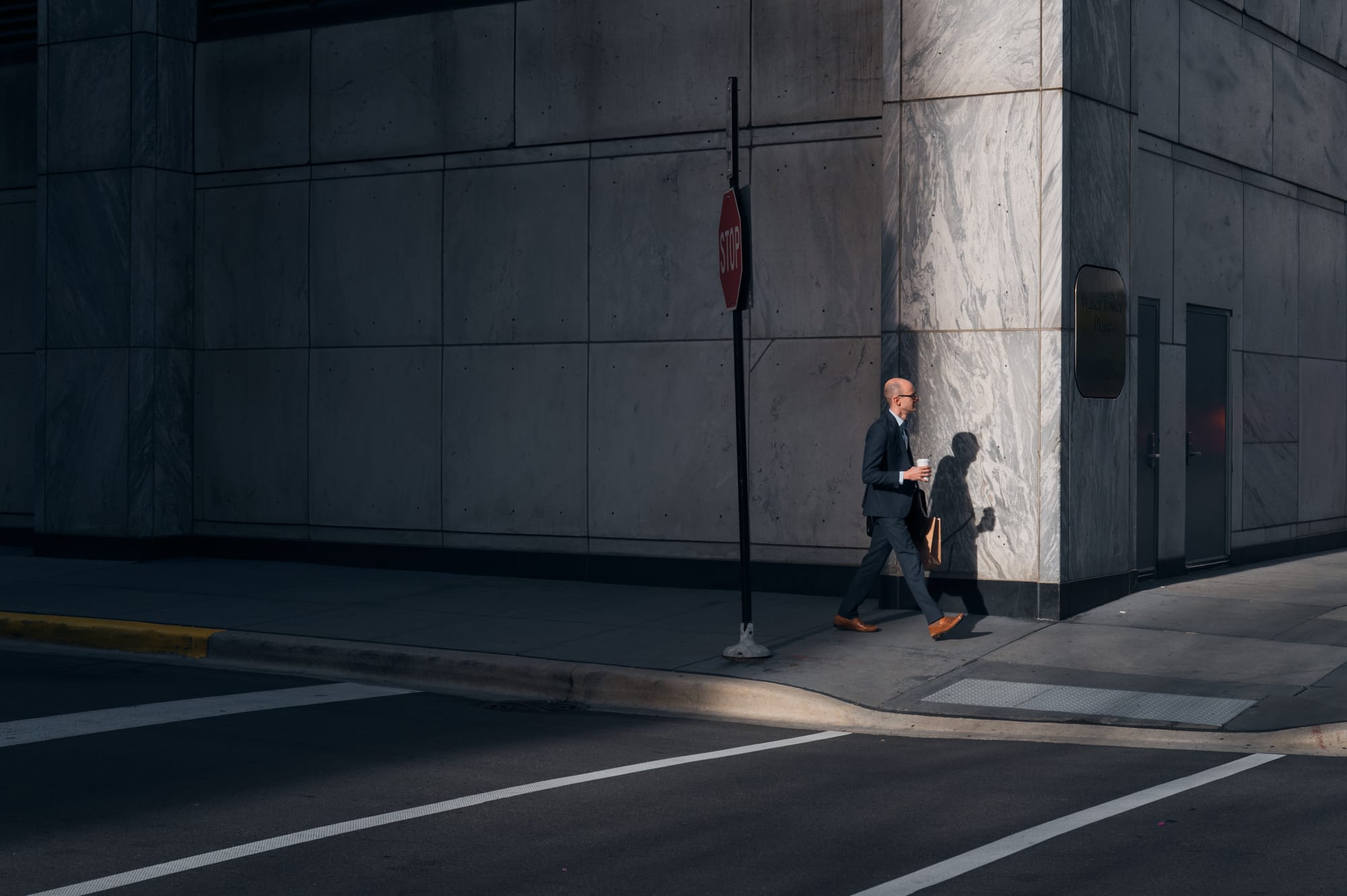
Chasing light.
The thesis for this essay is the purpose of photography. No small topic.
We need to start at the beginning. Every trip we make I obsess over the equipment I take with me (see title of website). At first, I worry about utility - do I have the focal lengths I'll need for what I envision the trip to require? I think about ergonomics - how large will my calves get after the twenty-mile hike with the 135mm F1.8? And lastly, I've discovered that I lust for well-designed tools. Frustratingly, I'm happier with pictures I take outside of travel, but we'll go back to that subject later. Travel is still an inspirational catalyst, and one does not diss the muse.
When I got into the Fuji system a decade ago, I discovered the pleasure of small, metal, manual cameras that had physical controls for all exposure settings: shutter, aperture, ISO. I sold all my Canon bodies and glass on eBay.
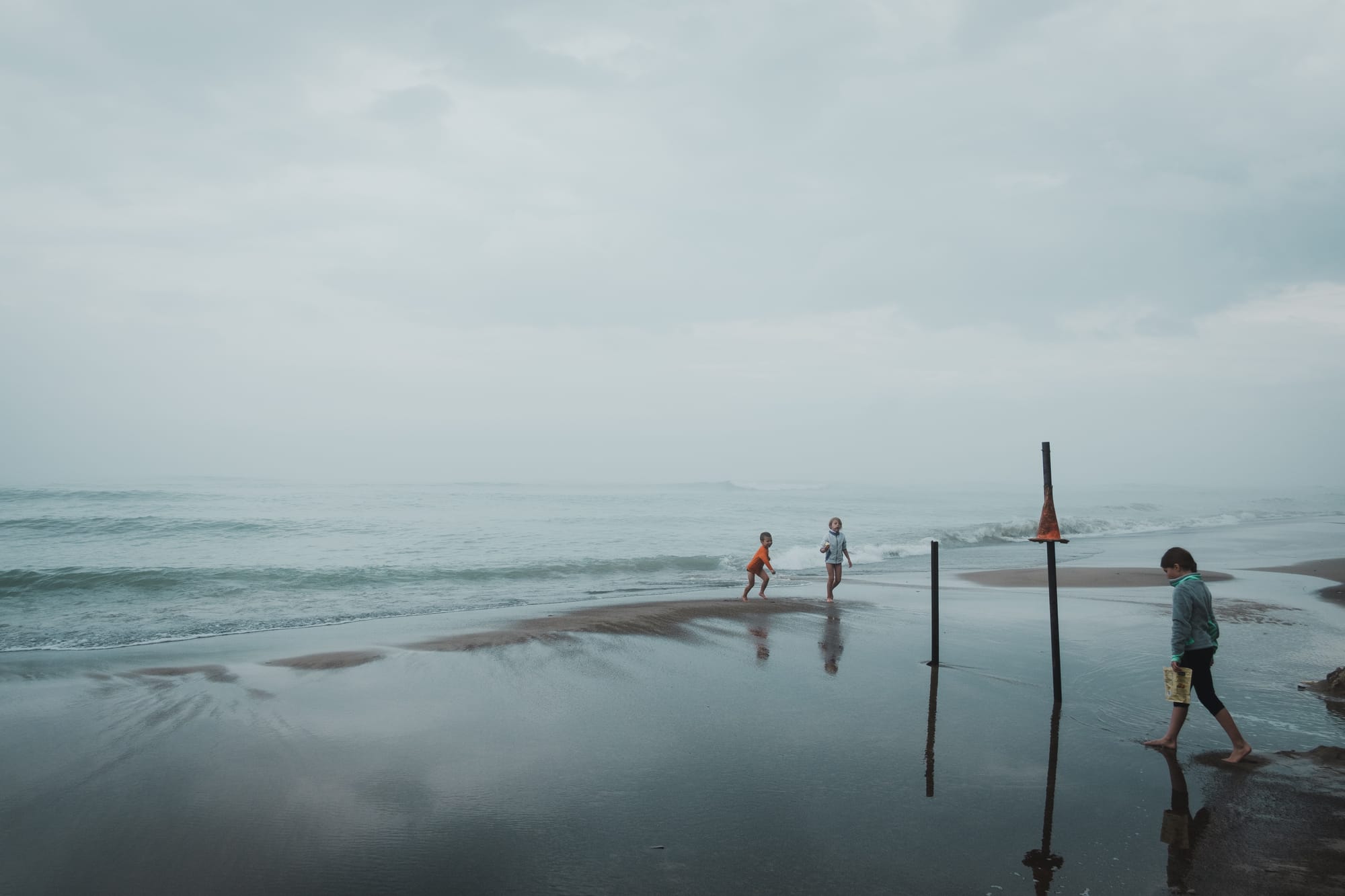
I clearly remember the shift in mindset as I used the small X-T2. On an early morning in Michigan Martin and I shepherded our kids to the beach for a quick walk. The water was calm and reflective, fog crept over the dunes, and the light had an interesting, diffused quality to it. As the kids rampaged down the beach, I was able to hold the Fuji with one hand and snap wide-angle shots of these careless moments. There was less gravity to having a camera (because it was lighter, hah!), there was less worry about nailing a structurally perfect shot. Is this particular memory amplified because I was taking pictures or is it a coincidence?
Photography has a lot of rules. My personality is the same. Breaking out of either, occasionally, is the whole point. Martin had this picture of his kids framed in his office after we got back.
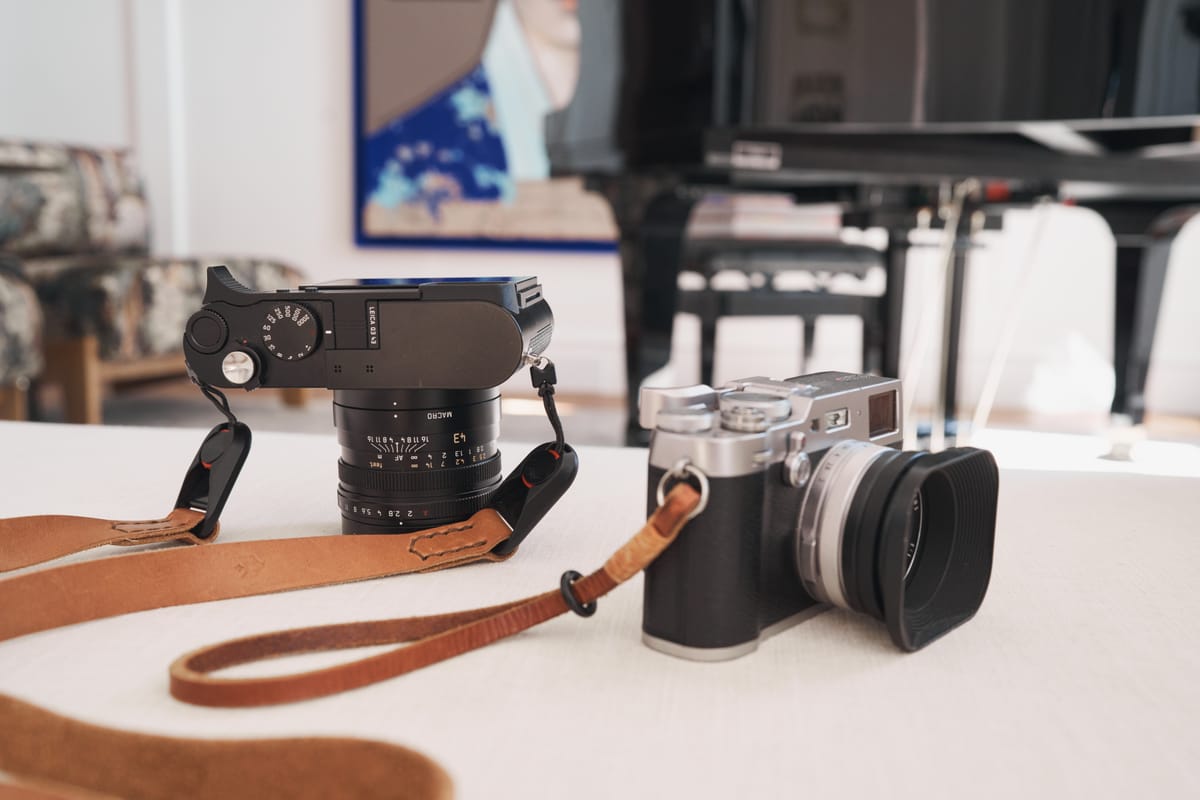
Mirrorless continued to evolve and I dove back into full frame with the Leica Q2, still compact, and the Sony A7RV, less compact but with a growing library of manual lenses that were close to Fuji in terms of use and feel. Somewhere along the way I also purchased the Ricoh GRIIIx as the ultimate subcompact daily carry camera with a 43mm focal length.
I just sold the Ricoh. The Q3 43mm took care of that focal length, but the real reason for our separation is that I've realized there is such a thing as an unintentional camera. This is where my thesis integrates the idea of photography equipment and the purpose of photography.
Decisions that are made on hardware level affect intentions. The poor Ricoh was intentionally designed to be a very capable sensor packed into a package that's slimmer than some people’s wallets. It's conceptually a fantastic camera. But the ergonomics, the lack of EVF made it an iPhone on steroids for me, and I already have an iPhone. I'm consciously aware that the iPhone can take exceptional pictures, but my relationship with it and how it sits in my hands dictates that it's not a serious tool. The Leica and Fuji cameras evoke the complete opposite feeling.
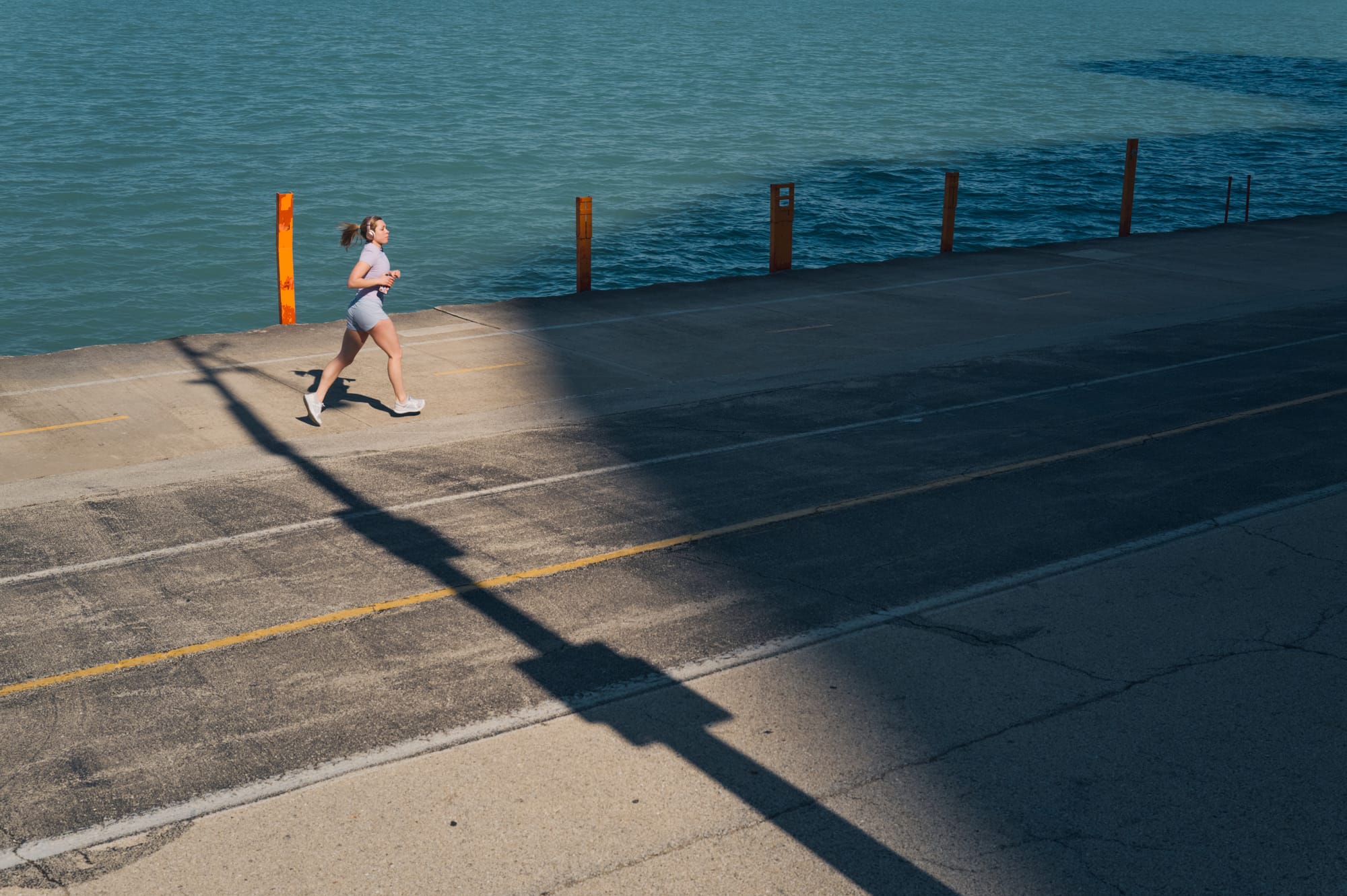
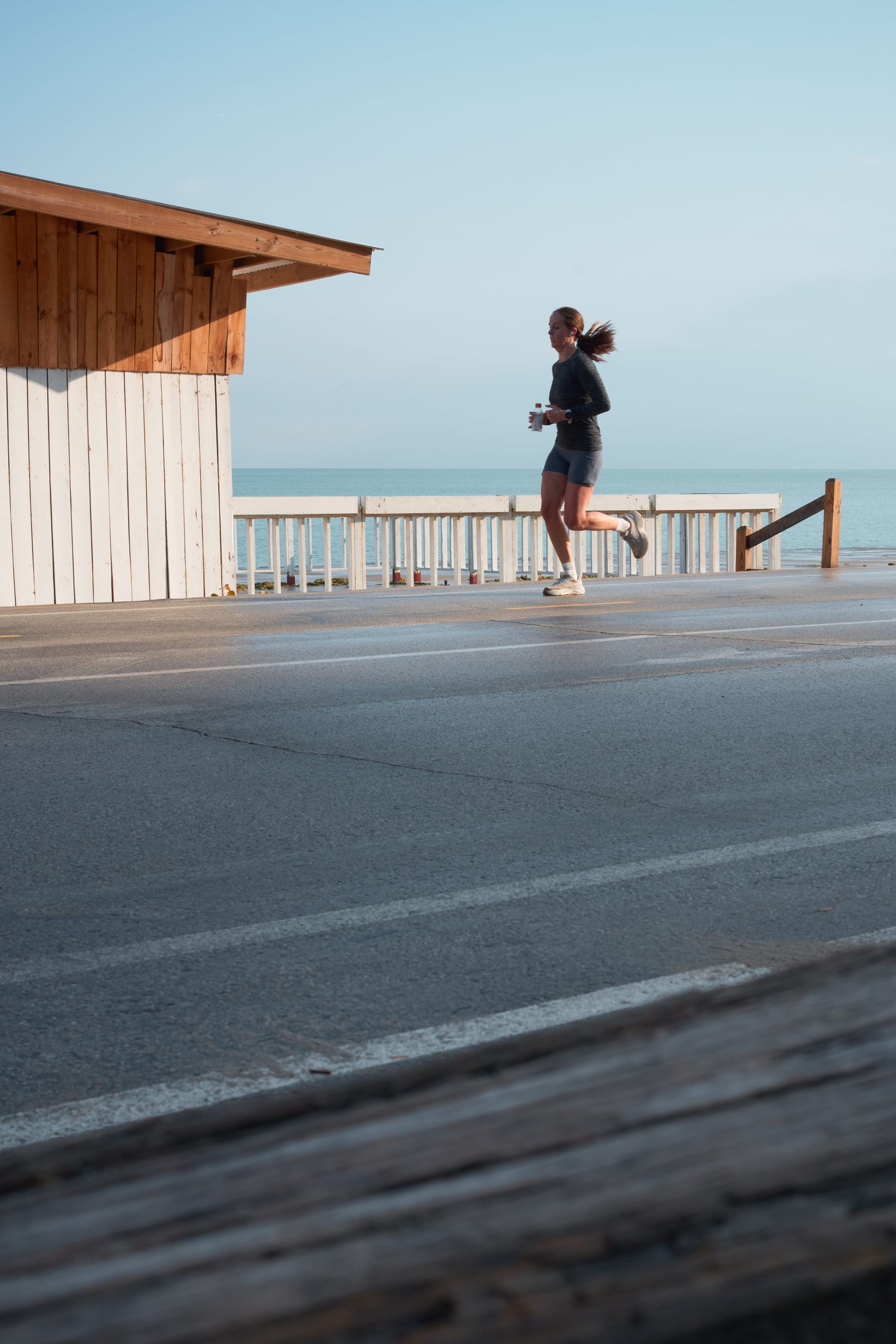
I find there are two modes in which my mind works when I take pictures. The first is the travel/documentary style which prioritizes capturing the mood, location, and story of an adventure. All our overlanding trips put me in this mood - camera at the ready, always thinking about storytelling, contextualizing the adventure, and so on. This mode does not afford too much time to plan or think - I'm often cooking with one hand while taking candid portraits of my friends with the other. Or chasing Ashton around the beach while trying to get his expression as he antagonizes a crab. I like the bigger guns for this task. I can use eye/face tracking, the glass outrenders the sensor, flippy screens to go for weird angles, and so on.
The other mode is a photo walk in solitude. The walk is the objective and continuity between the shots is not as important. The pleasure I get out of photography is much higher on these walks because I'm usually in a flow state and just let my mind look for beautiful ways to arrange light, patterns, objects, and colors. Sometimes it's the city, sometimes it's the people, sometimes it's just a play of light on a gritty building wall. These shots are also much more "structured" and "designed" because I have the time to play with composition and wait for the right stranger to step into my frame.
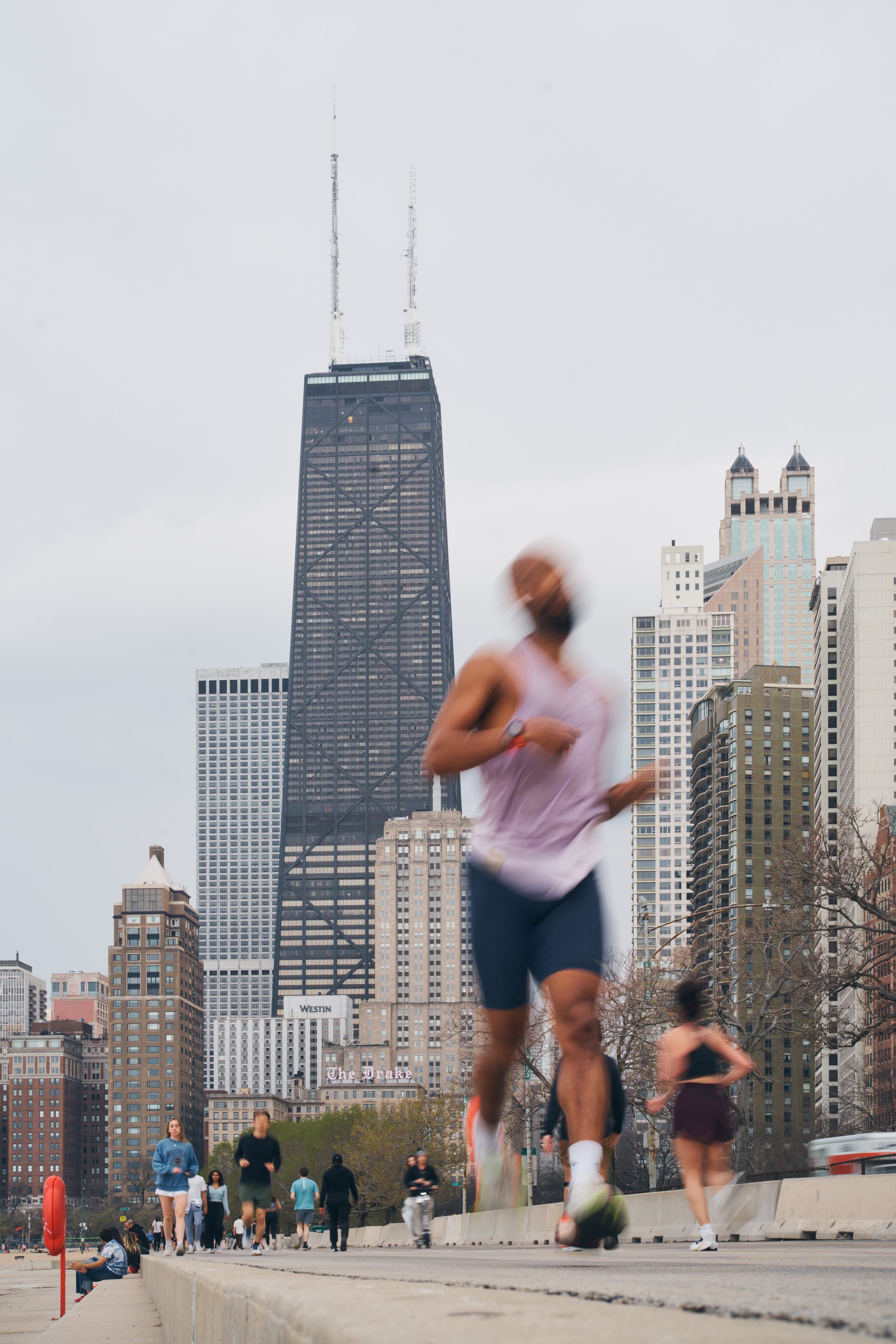
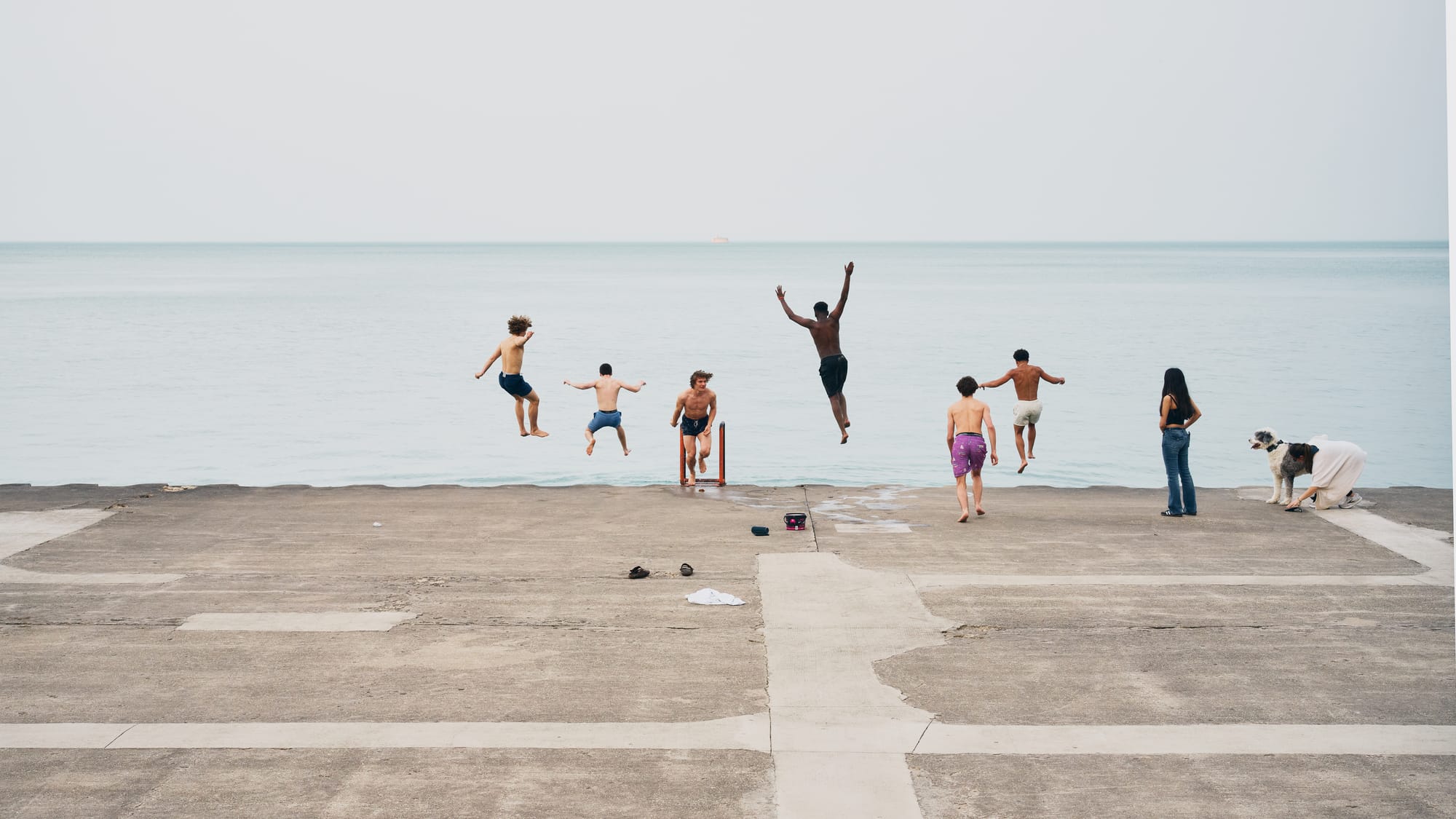
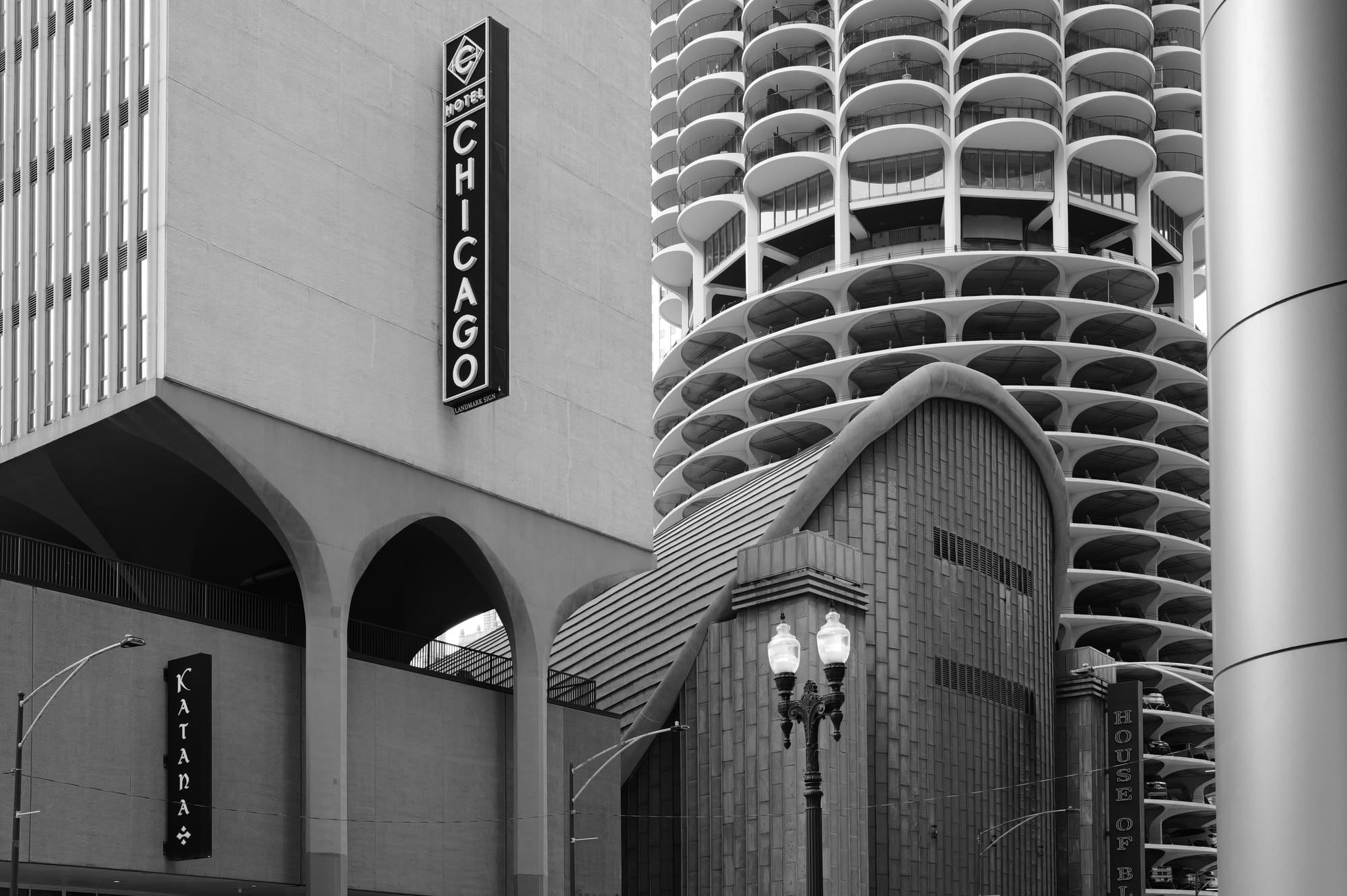
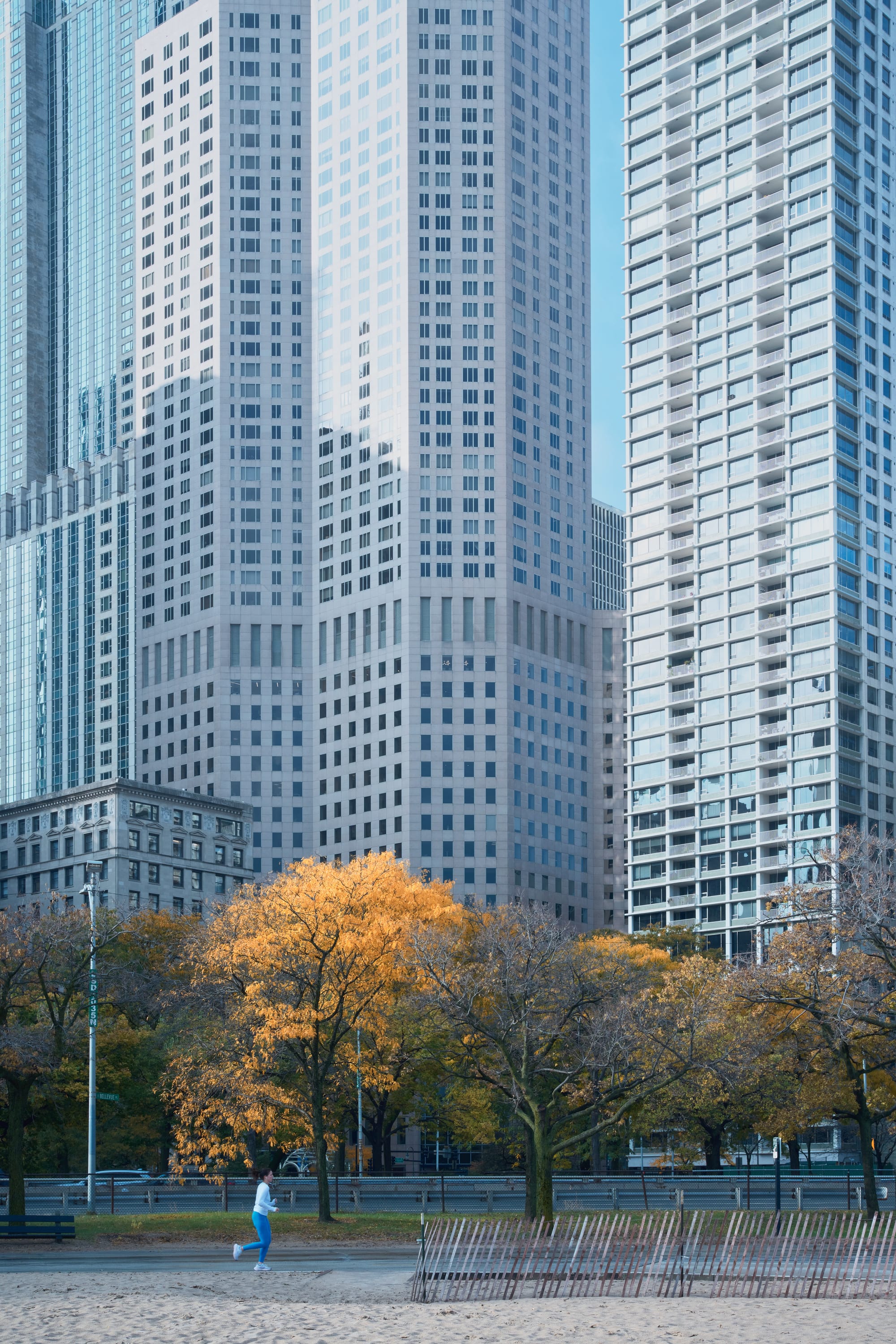
The lakeshore in the summer, Chicago.
The Ricoh wasn't great at either of the above. I love shooting in bright light in the city and that makes composing on the LCD inconvenient. The interface/hardware also changes how I use the camera, and I would find intentionality going out the window and "point and shoot" taking over. The limitation is very likely a problem of the operator and so the little Ricoh is now in the hands of a happy new owner in Texas. But selling this camera made me think of being intentional.
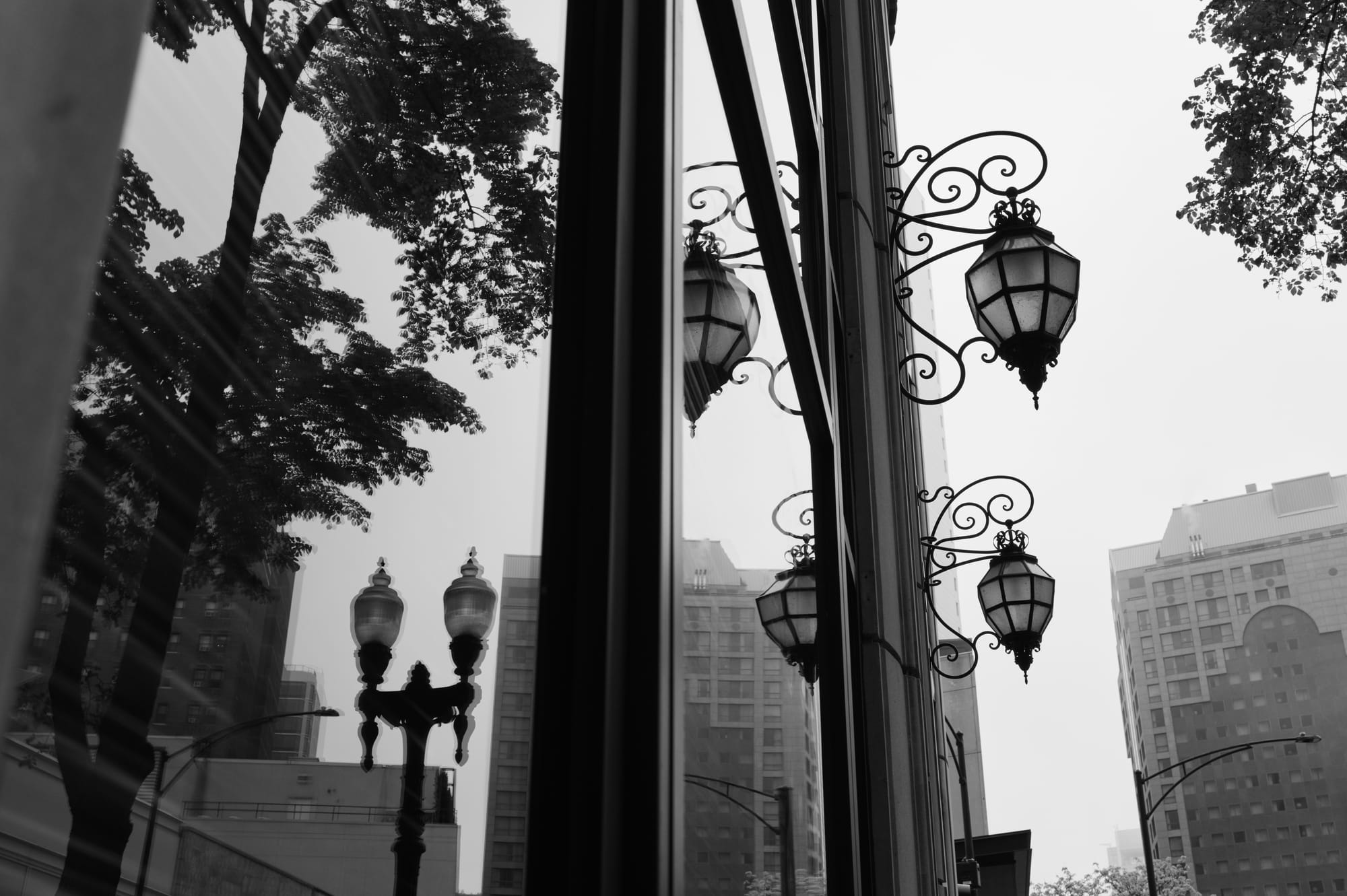
Reading photography blogs is still my favorite way of learning. A static web page with a high-resolution image is a great way to not only read the perspective of the artist, but to also see the output of their vision and the tools used in a high(er) resolution medium. It drives me crazy when the photographer takes unintentional photos to articulate their point. These include but are not limited to a flower in their garden, a squirrel in the zoo, a closeup of an uninspiring still life where a label of a liquor bottle is intended to document the resolving power of a lens. If you're going to review a piece of kit... why not go out and photograph something intentionally?
Had to get that out. Intentionality in photography changes through time and I respect that we're all in different stages of our optical arrangement journeys. I distinctly remember early phases where I was obsessed with fast glass and a shallow depth of field. At the time it felt professional - something that wasn't available to a regular mortal with a point and shoot. Then came a phase of overprocessing and overmanipulating raw files into surreal colors. HDR was a thing, as well, but I never liked the look of it, so my library is absent of those abominations. I went through a complexity phase where my objective was to arrange many objects in the best possible way using a wide-angle lens. It's all very amateurish and I'm fine with my slow personal growth, as long as it continues.
When we got married, Virginija became my sole subject. She's a grounded, quiet person and I was very effective at annoying her with my oversized glass, at every hour of the day. When Ashton was born, I wanted to freeze the experience of the world through his eyes, through the context of him now being a part of said world. I still do it and these are some of my favorite pictures of all time. I'm comfortable with only me enjoying them. The intent is to make them because it matters; the intent is not for others to praise them.
It's an interesting exercise to browse through one’s own photo library. I don't particularly like any images from over ten years ago. They're all inconsistent. All different subjects. Landscape, portraits, studio, macro, still life - grasps at seeing, repetitions to get technically correct shots... but there's no voice across multiple images in sequence. It's clear to me I wasn't sure what I liked or what my intention was when taking those images. I may feel the same in another ten years, but we'll have to wait and see.
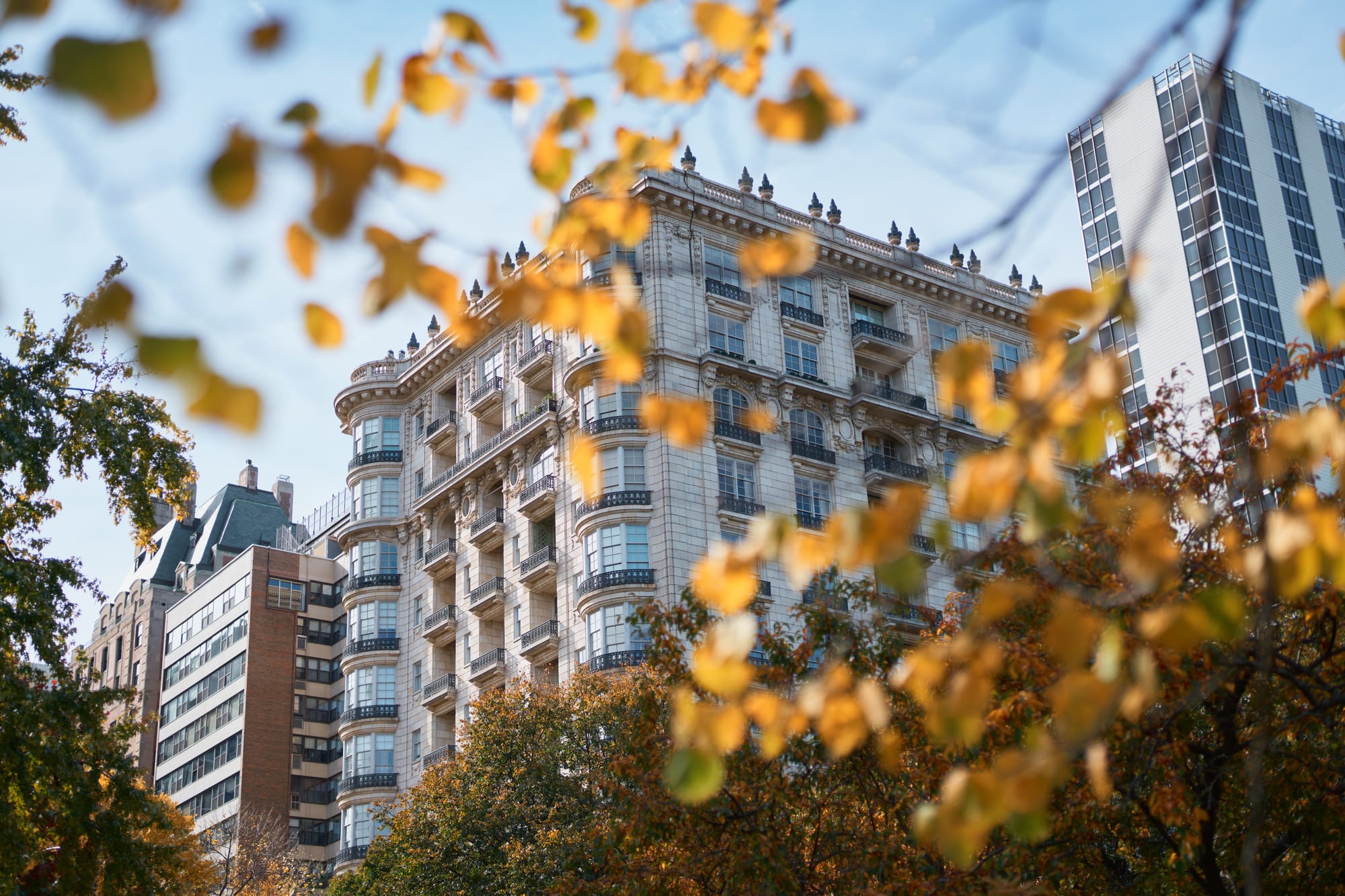
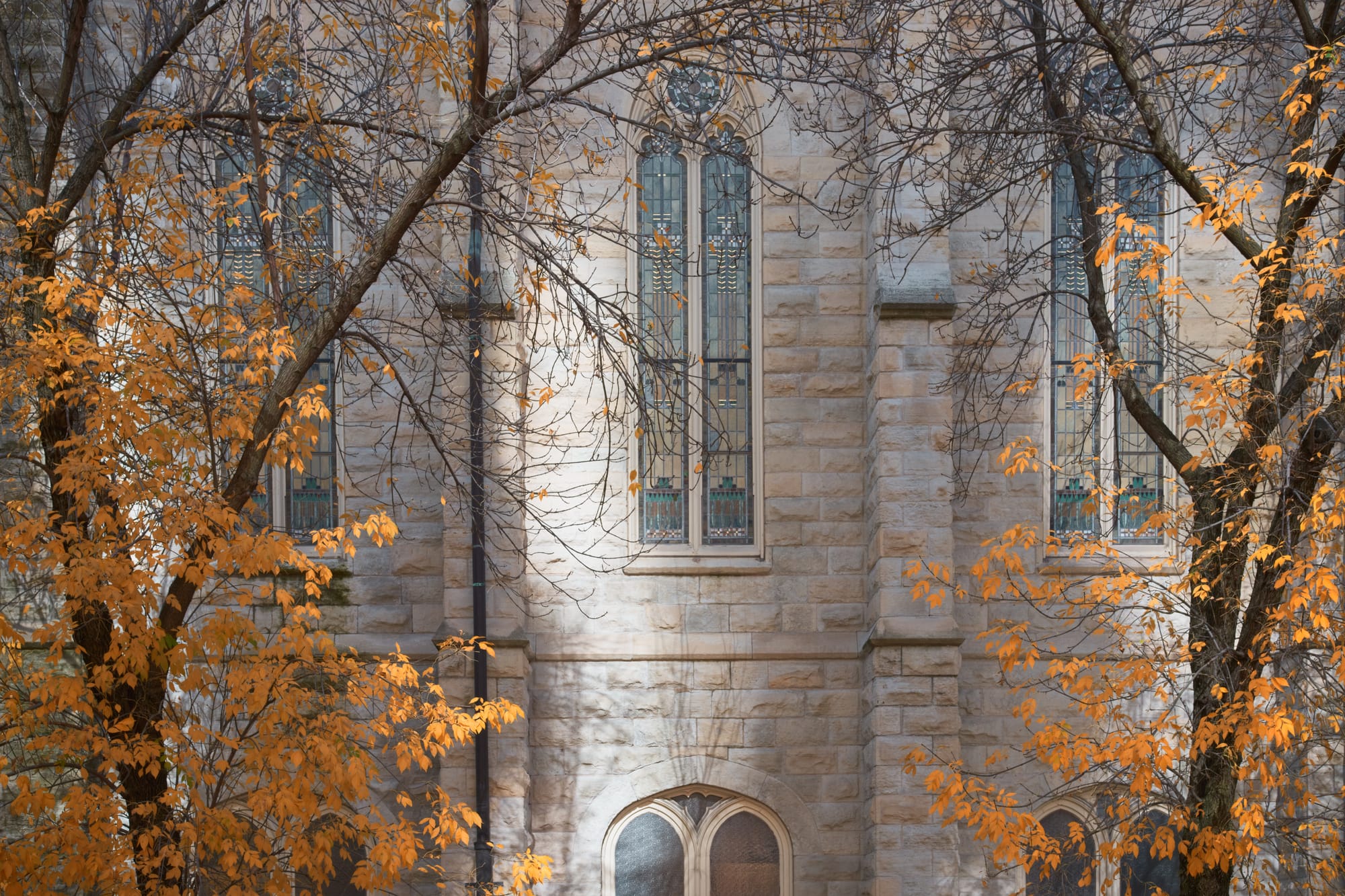
As I browsed through the library, I was trying to quantify what qualities made an image "good". I don't mean technically sound, but an image that I stay fond of beyond its documentary or aesthetic value. An image that ages well. It's not as easy as it sounds.
One common theme is that I don't like saturated colors. Or maybe too many saturated colors. Simplicity of the color spectrum in a shot is usually a good thing. Less is more. I really don't like saturated greens. Maybe my eyes are weird, but no sensor on the planet renders green the way I see it in the real world. Green should be muted. It's the color of calmness, of nature. An out of camera jpeg of a lawn is a criminal offense. I like when a scene has complementary colors that follow color theory. All is well with the world then.
There’s always a battle that rages in my mind between the structural and the creative. One arranges the verticals and horizontals perfectly in every shot – that 1% tilt in the horizon makes my skin itch. The other tries to create music in an image where the eye breaks out of the structure and follows a story, a hierarchy of elements.
The other pattern of "good for my eyes" photos is when there are associated memories of the moment when I took the shot and they are crisp and intense. I have a picture of Ashton in his room where he's in his most relaxed, playful state. There's a sharpness to the memory, an amplification - I hear his voice, I remember what games we played right before taking that shot, the light and time of day. Being present. This also applies to other subjects. A few images south of the Loop in Chicago remind me of exact time of day, the weather, the angle of the sun - and this was years ago.
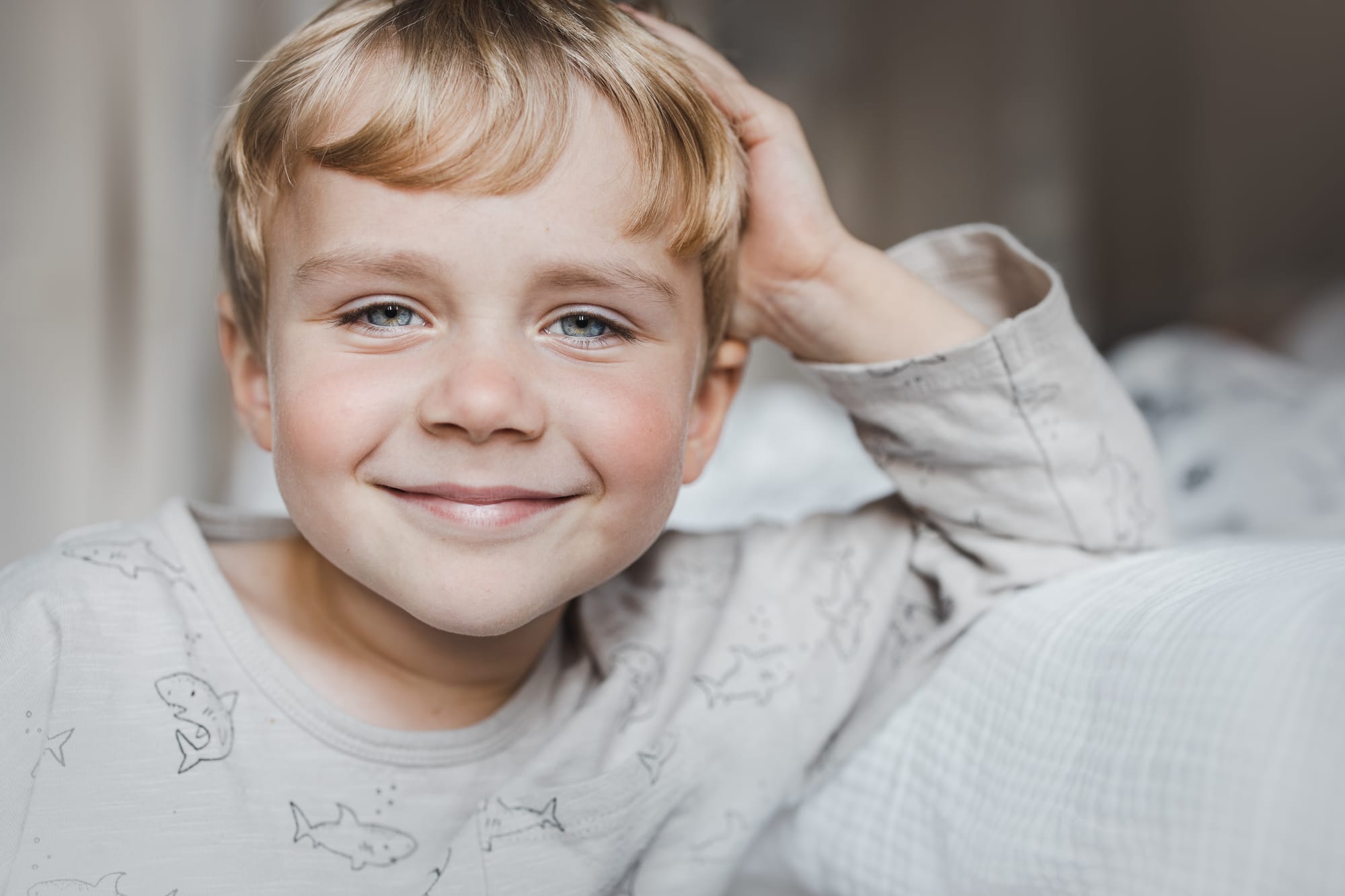
A good photograph is a memory amplifier.
There are a few traps in being intentional. In seeking purpose in photography I'll naturally fall back to sourcing approval through blogging, posting, tweeting, reeling and so on. I'm compulsively objective-oriented and it is hard to give up measuring things. But it's hard to measure something that's meant for oneself, not others. The other trap is realizing the banality of photography - tens of thousands of dollars spent on equipment, tens of thousands of images sitting in some data center in South Carolina. Sure, I print the occasional print and make the occasional photo book, but both feel trite, like hanging a self-portrait in your own bedroom. The trap is trying to monetize, give value to something that has already paid back with interest in those moments of Zen, in the snapshots of time flowing around us, in the intimate portraits of loved ones that remind us we're temporary.
Photography is a puzzle. It's a puzzle of romanticizing the world, of carving beauty out of random patterns, of recording a version of reality that is better than reality itself. I know darkness exists. I just don't think there's purpose in documenting it. As time slips through our fingers the only weapon is to act with intent. To be present, to really see, to buy the stupidly expensive camera if it's beautiful, it feels good to use, if that's what gets you out into the street.
Have nothing in your house that you do not know to be useful, or believe to be beautiful. - William Morris