New Zealand: helicopter adventures in the land of the kiwis
A difficult country to get to, a very easy country to enjoy and love.
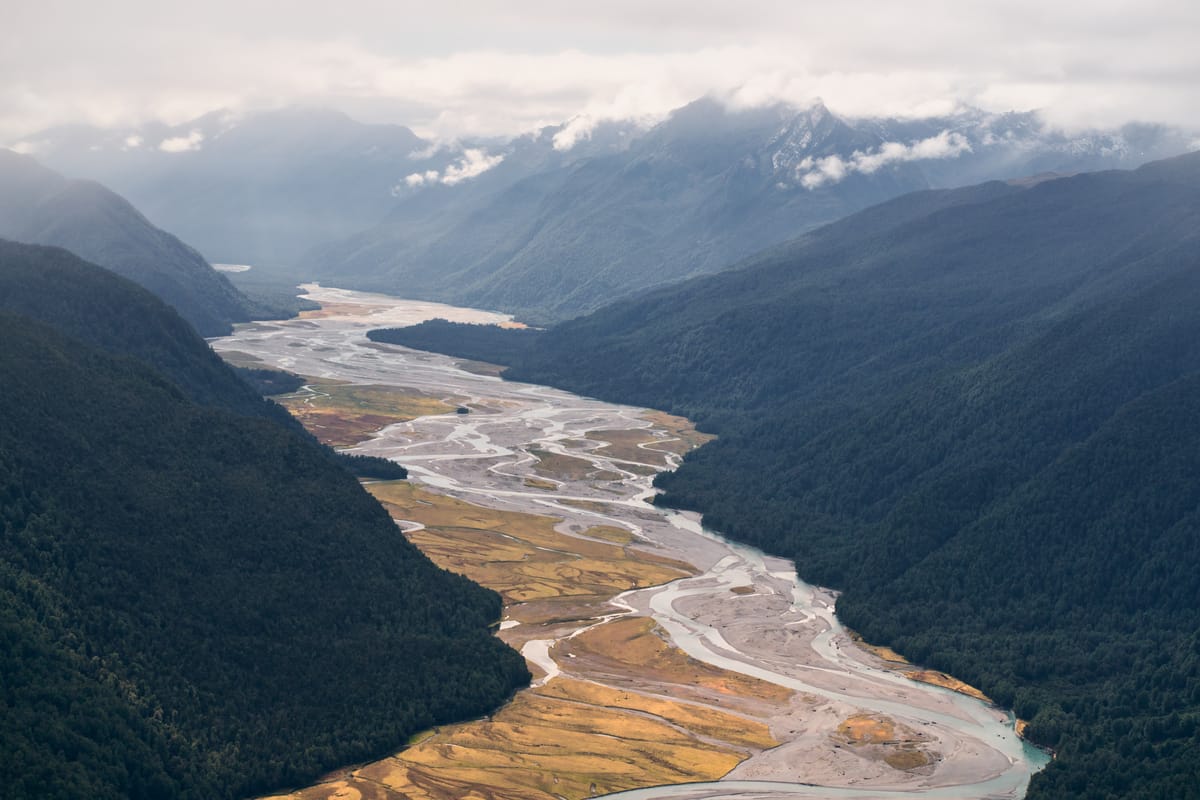
New Zealand is a magical land of flightless kiwi birds, jagged alp peaks, and hobbit conservatories. The size of Colorado and with a population of only five million people, and twenty three million sheep, it's a place that shouldn't exist. Alps give way to tropical beaches peppered with seals, fiords are carved by glaciers that rival Norway, and rolling farmlands are home to millions of sheep and Hollywood wizards.
This sprawling wilderness is not a host to a single predator or poisonous critter. New Zealand, like a disillusioned Californian en route to Florida, decided to split away from the ancient supercontinent of Gondwana and isolate itself from all things that creep, crawl, and nibble by 2,500 miles of shark infested Tasman Sea. Virginija rates it a ten out of ten for this alone.
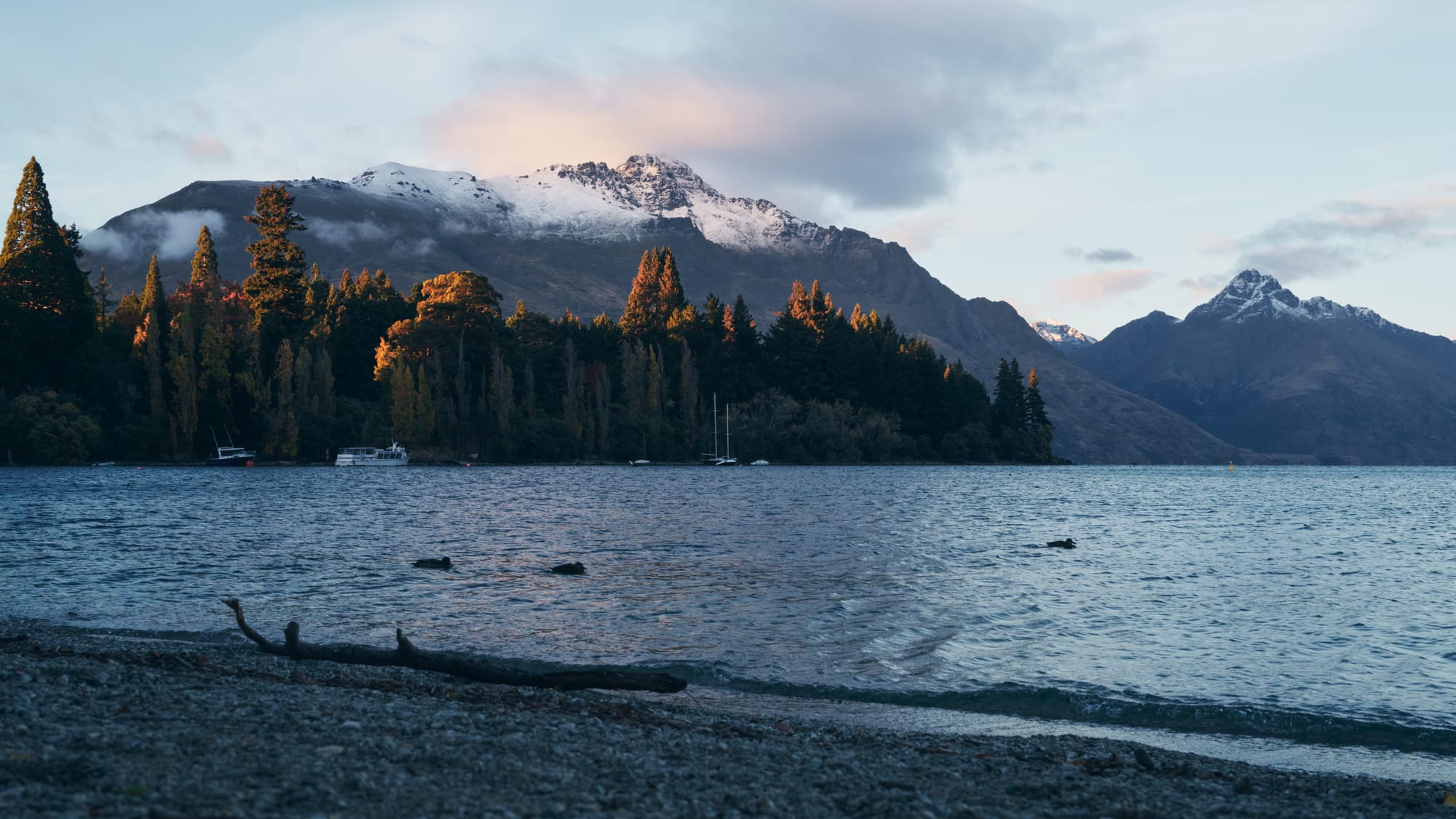
Lack of evolutionary pressures on the local bird population has resulted in multiple flightless bird species that wouldn't survive a day in a coyote-ridden Chicago suburb. The most famous, and the symbol for New Zealand, is a nocturnal bird called the kiwi. Ashton and I weren't lucky enough to see one in the wild, but the internets are full of this fuzzy meatball creature. Look it up, it's worth it.
Auckland, North Island
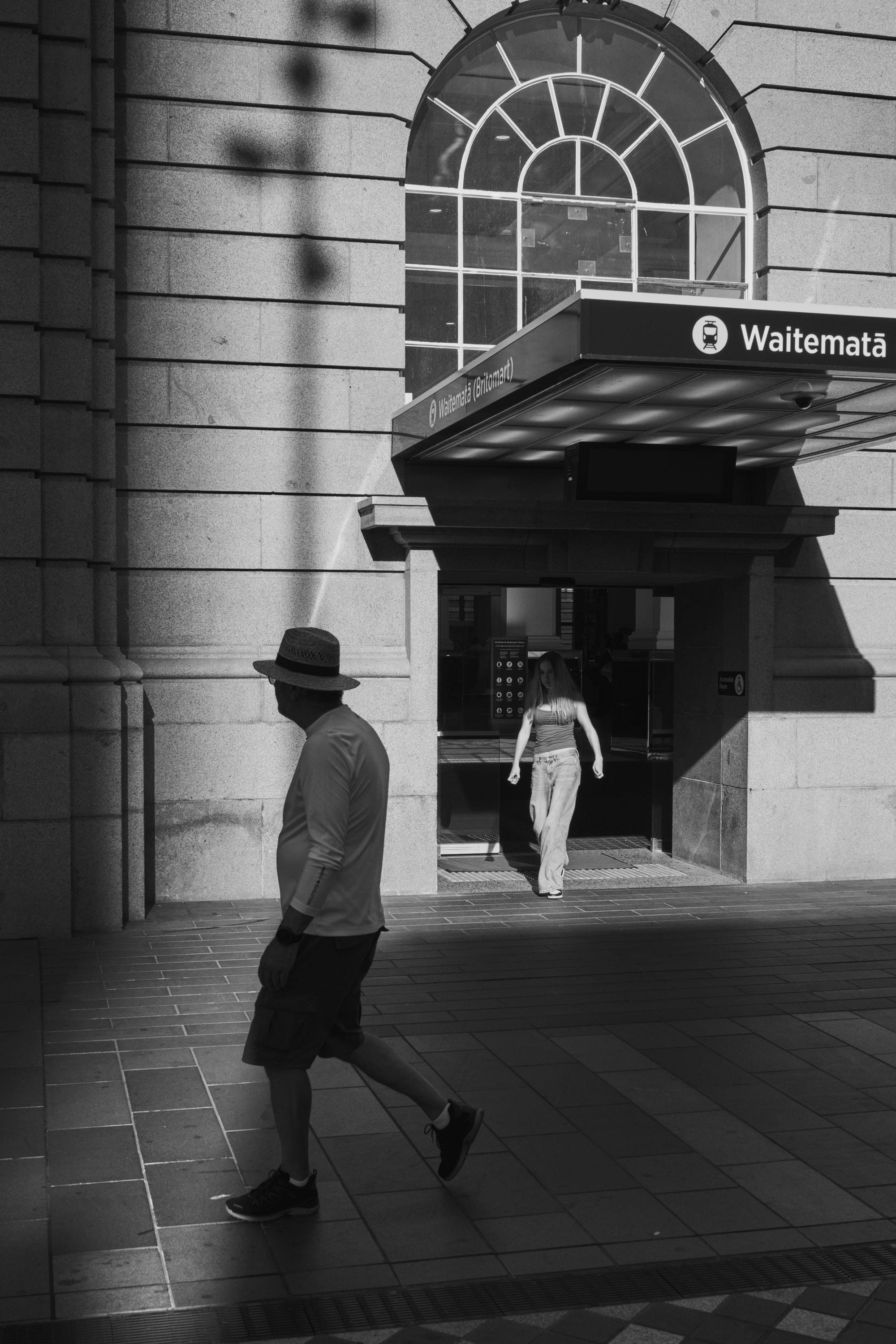
We land in Auckland, the largest city of both islands, home to more than 1.7 million kiwis. Please note that we're now using this noun for fruit, birds, as well as people. It's fall in April, cars drive on the left side of the road, and we're in a timezone that is a full day ahead of the US. Time travel is expensive - we lose two full calendar days for transit, but we'll get a refund on our way back.
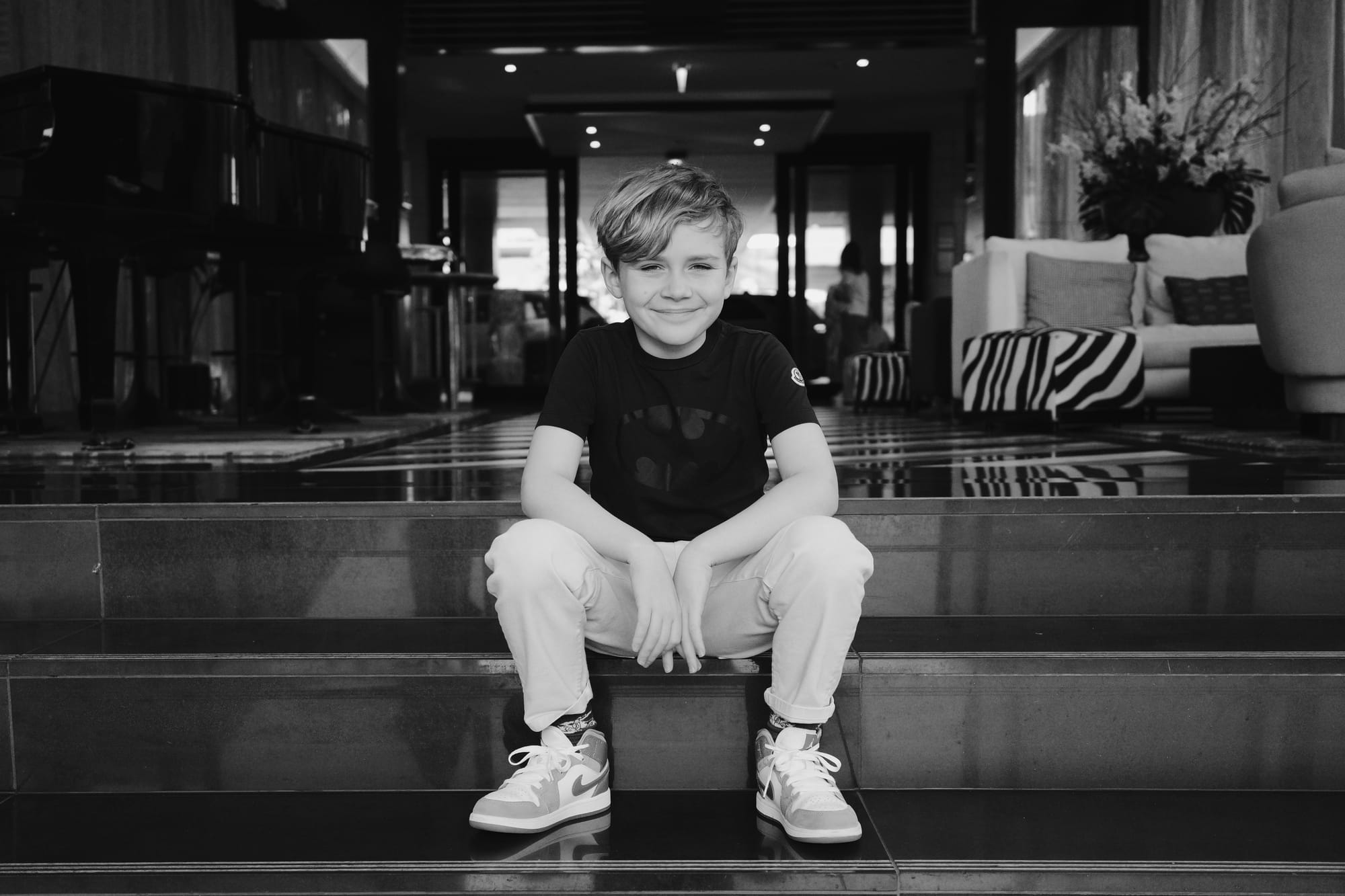
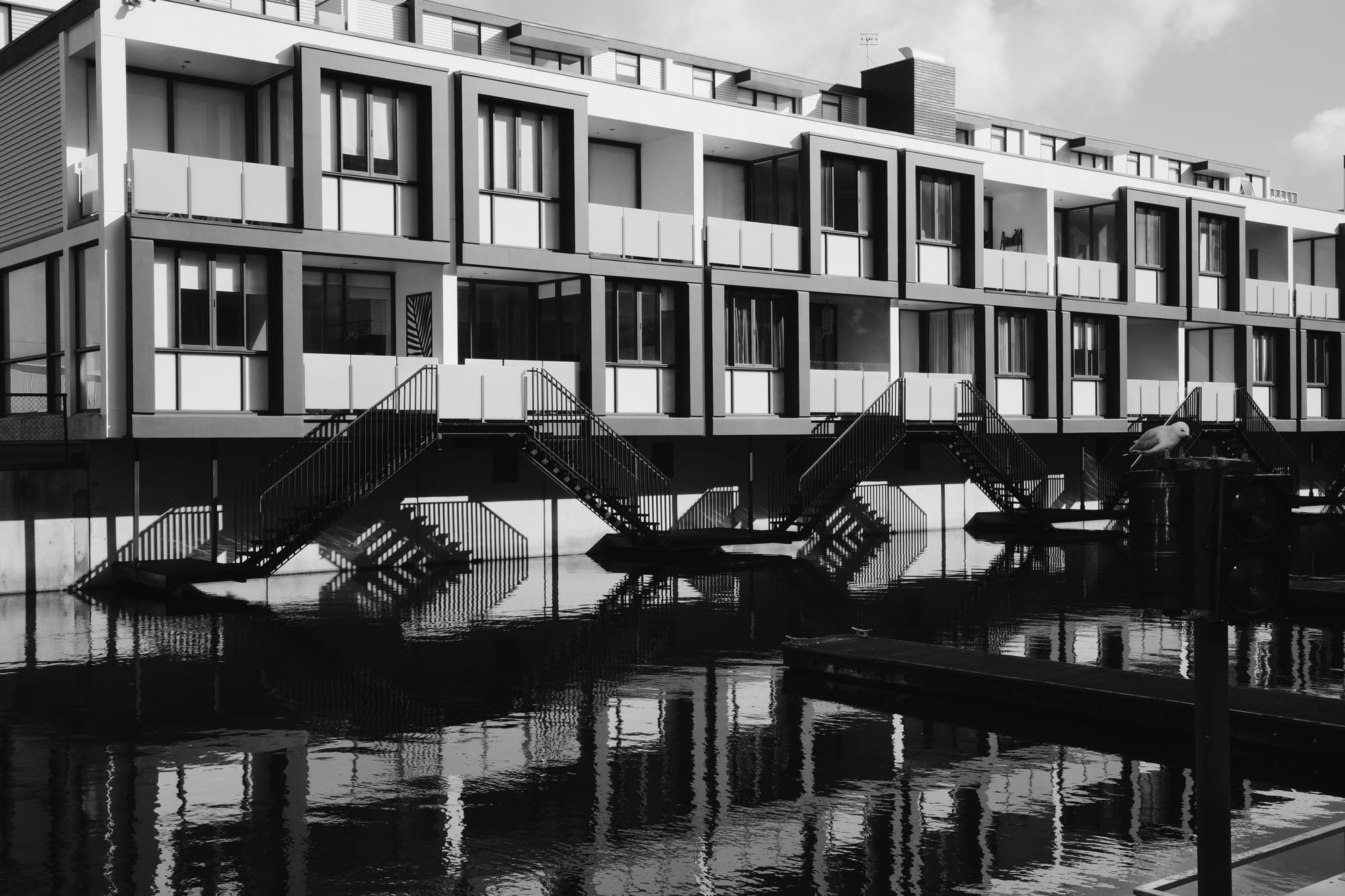
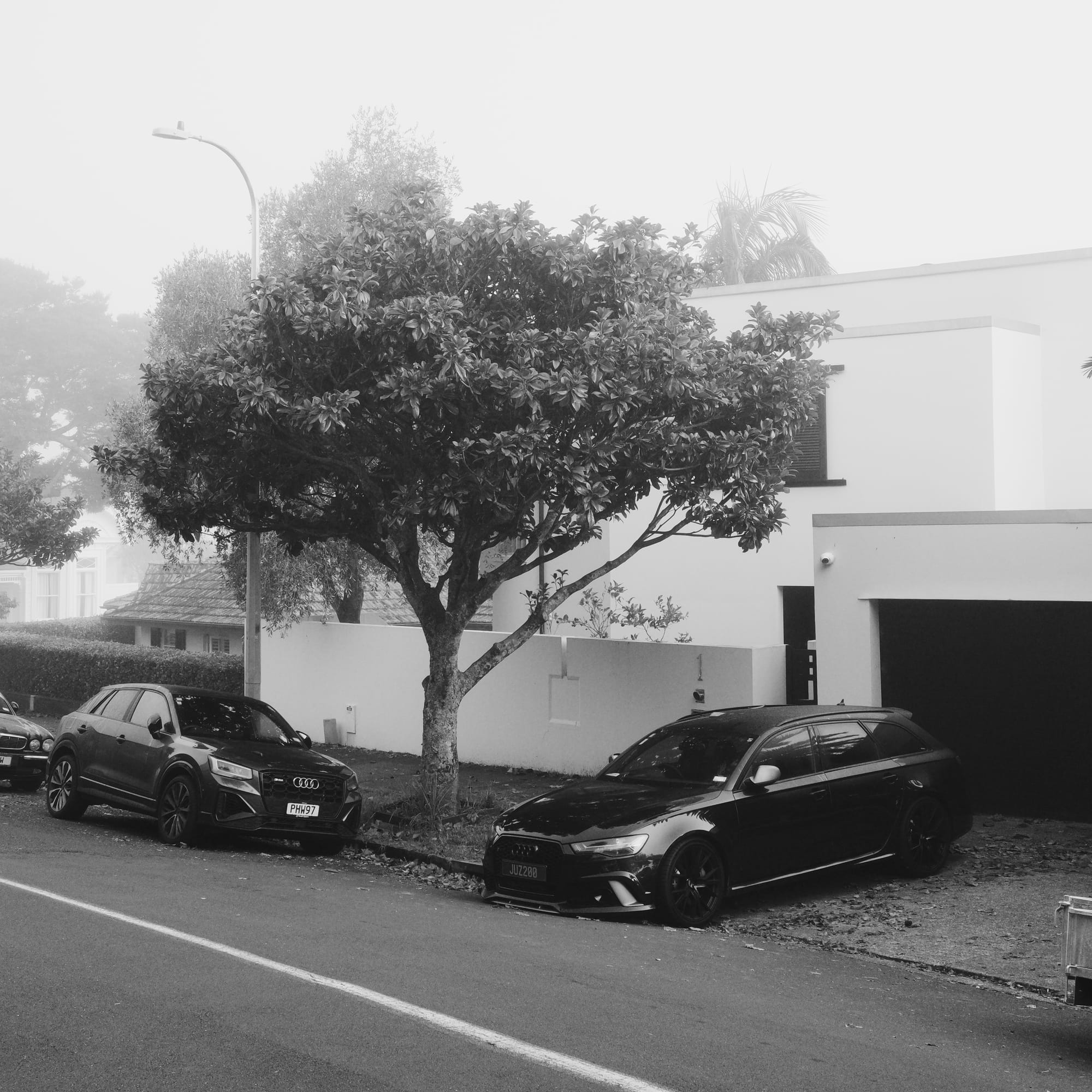
If San Francisco and Sydney had an offspring they would call it Auckland. Younger, smaller, and with a patchy beard of a prepubescent. Foggy residential neighborhoods with English victorian architecture connect to a bustling, metropolitan downtown. A well developed ferry system shuttles tourists and locals across an expanse of bays, inlets, peninsulas, and islands. While generally very clean and orderly, my rosy perception is shattered when I go on a walk down Queens street and see the familiar vagrants, drug use, and urban chaos that could fit right in on State and Randolph in Chicago. A pro-Palestine protest takes place in the center of the main plaza and leaves piles of trash and discarded posters in its wake.
Hobbiton
We're in Auckland for one night only - cultural observations of urban grit will have to take a back seat. Our primary objective for North island is Hobbiton, which is a couple of hours drive south towards lake Taupo. Ashton and I watched the trilogy not that long ago and Gandalf's "You shall not pass" is circulated in our daily dictionary. So it's a must.
In 1998 Sir Peter Jackson was scouting the rolling hills of New Zealand for the iconic look of the Shire in a helicopter (we'll come back to those, they're a thing in New Zealand) and found the Alexander sheep farm. A full movie set was built within the farm reconstructing Bag End. After "The Hobbit" the owners of the farm and the studio struck a deal to preserve the little hobbit village and turn it into an attraction that would allow nine year olds to wonder the magical hobbit holes and rolling green hills. For the record, most of the visitors are adults in our group.
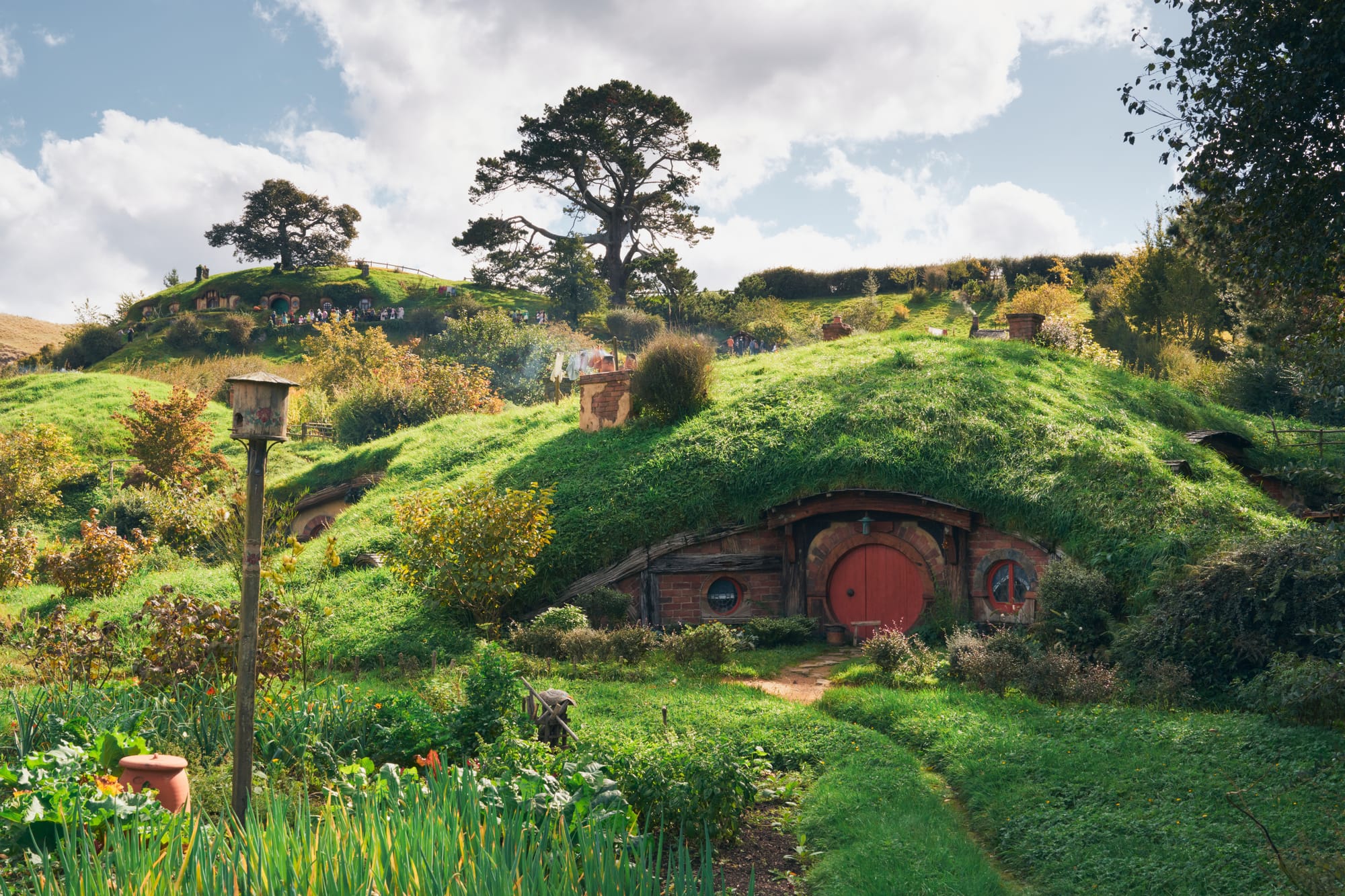
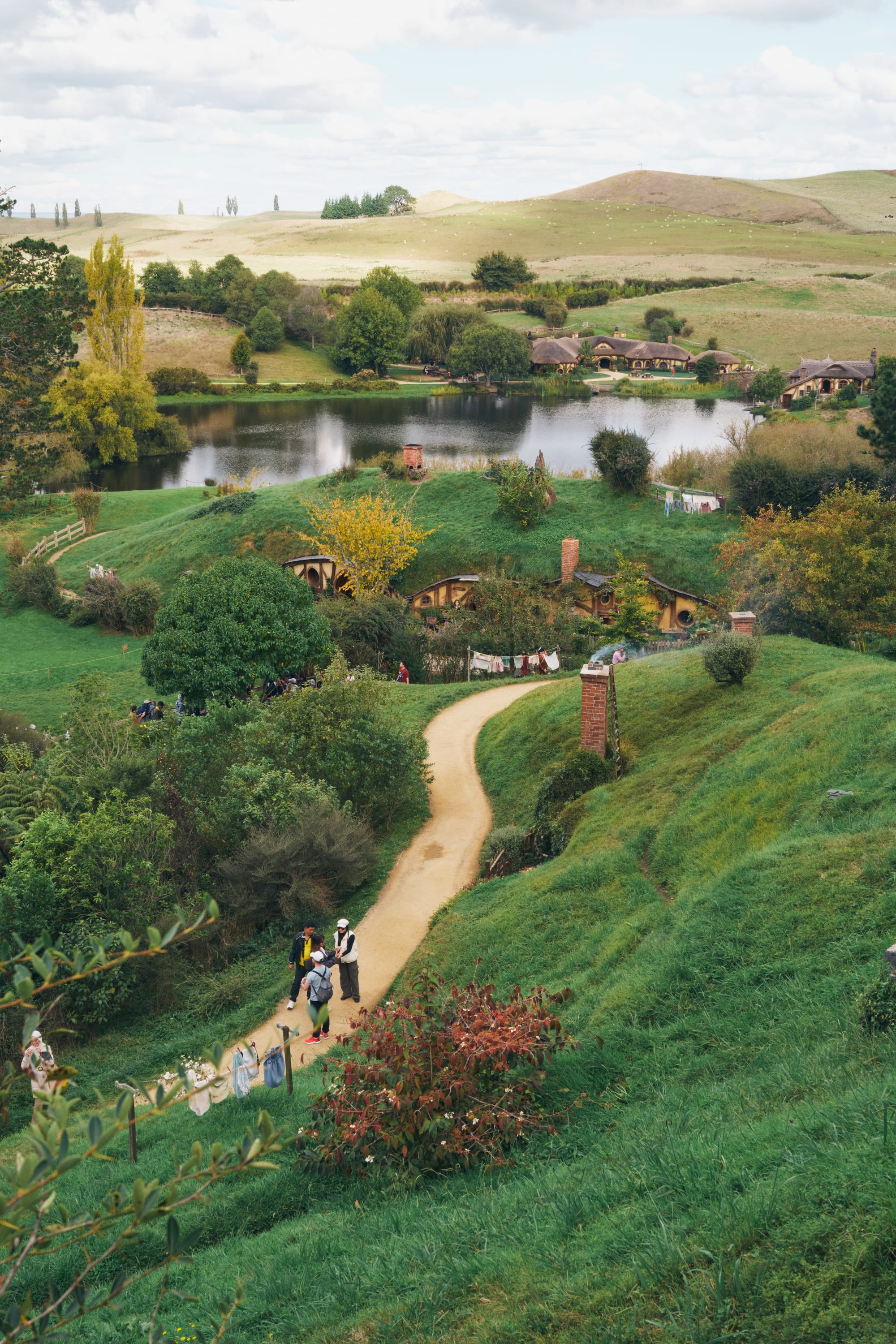
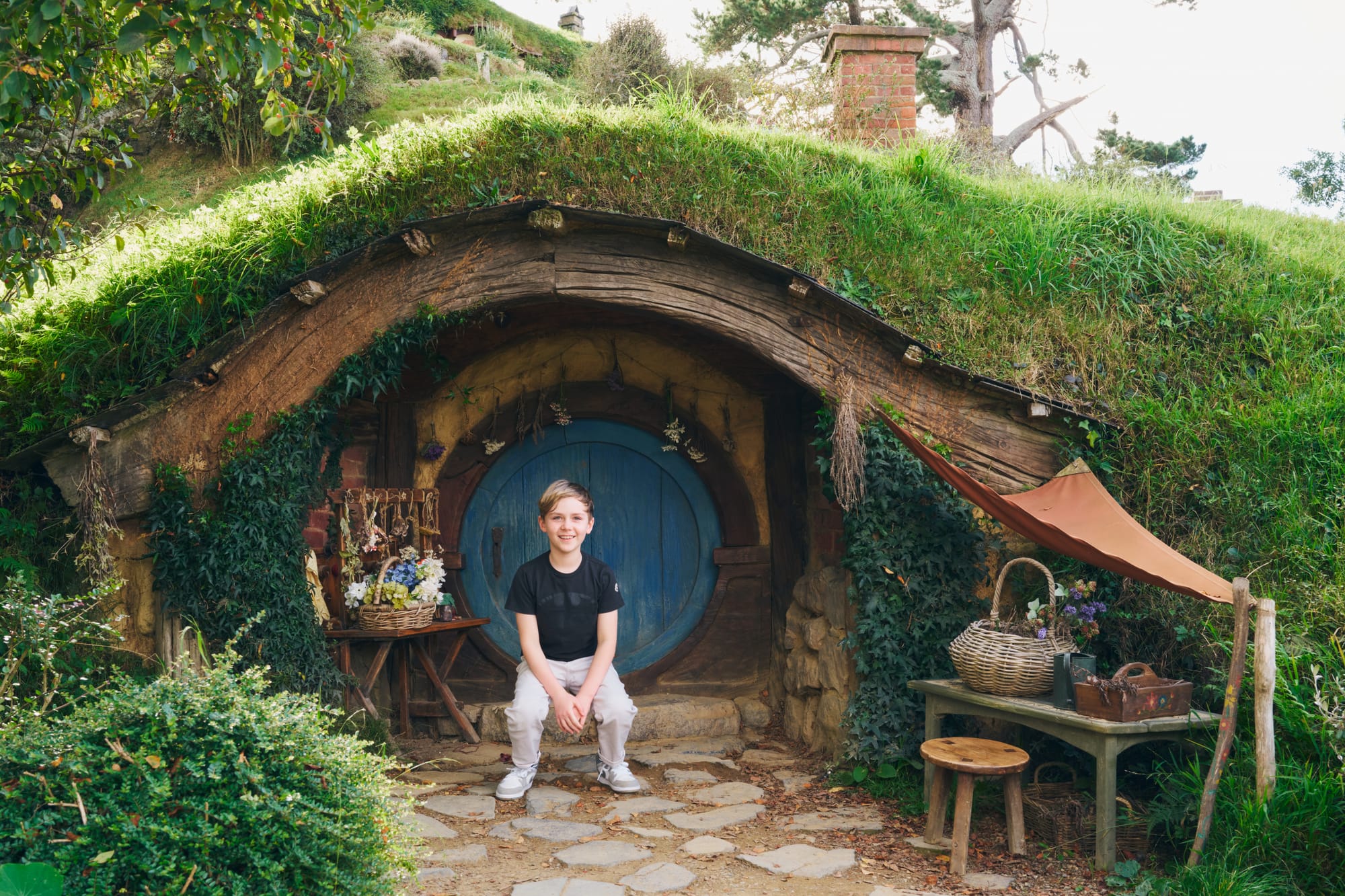
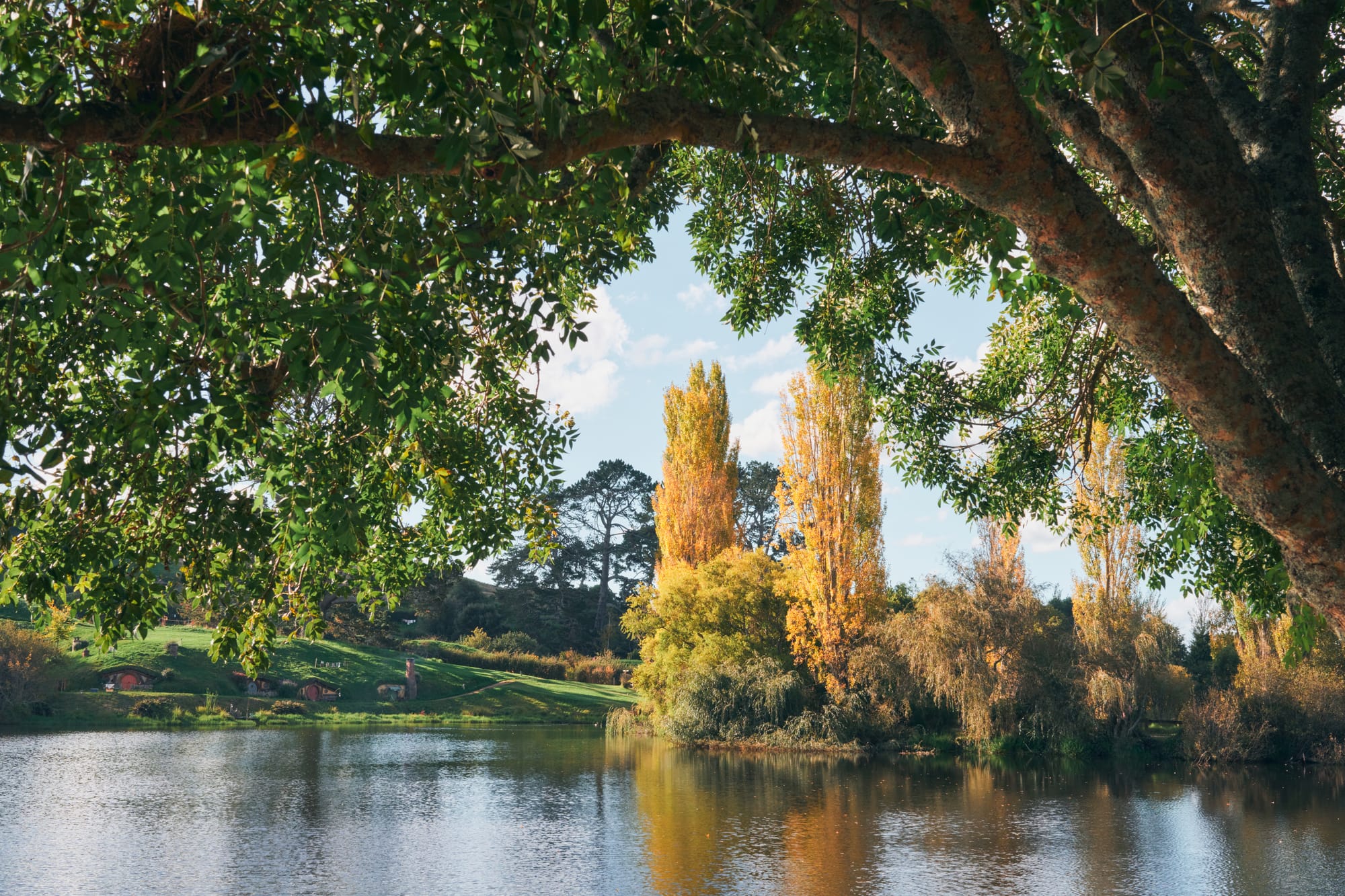
Virginija hasn't seen the movies and even she enjoys this exceptionally built, well run, idyllic hobbit museum. Outstanding and passionate tour guide helps Ashton reenact specific scenes across the tour and we wrap up with a pint of hobbit stout, and ginger beer for Ashton, brewed locally at the inn.
Lake Taupo, North Island
It's left hand drive all over New Zealand because a certain Captain James Cook from England waddled onto the shores of these islands in 1769 and kicked off a familiar colonial journey. The population today is primarily of European descent with Maori (indigenous) and Asian being the two second largest. The Europeans did as the Europeans do and political undercurrents can still be felt today between the Maori and the Europeans.
We spend a few nights at a lodge in Kinloch, a small village nestled on the shore of lake Taupo, and explore the surrounding area. The north island is of volcanic origin. Geothermal power is common and we see multiple plants, tendrils of pipes penetrating the earth, venting hot steam through turbines to generate up to 20% of power for Auckland. Should have looked for a tour of the one of the plants, I reflect now. The south island, however, is of tectonic origin - two plates humping each other and creating the island and a jagged, young strip of alps.
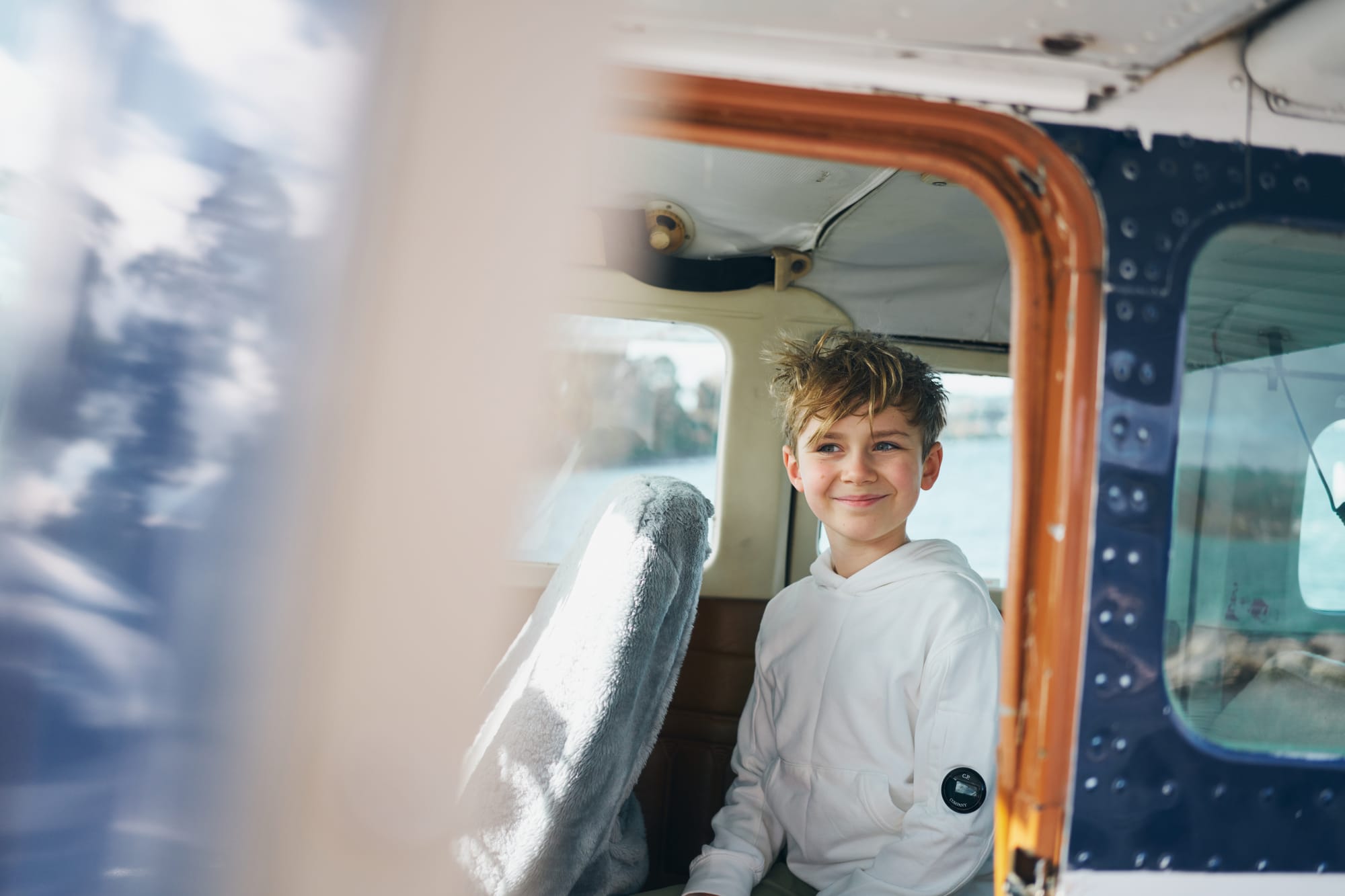
We have a flight in floatplane today. It takes off from lake Taupo and the idea is that you can do a few water landings along the route and quickly see volcanos, geothermal activity, explore the lake, and so on. We get to the pier (not a place I typically expect planes) and wait for our sky chariot Cessna to arrive. Lake Taupo was formed as a result of a super-volcano eruption twenty five thousand years ago, one of the largest on earth. Unlike typical lakes, the edges of the lake are vertical cliffs that can be seen stretching below the surface through crystalline water. While Ashton feeds and then chases around local ducks a prop plane buzzes the shore with two banana-shaped floats attached where the wheels are supposed to be.
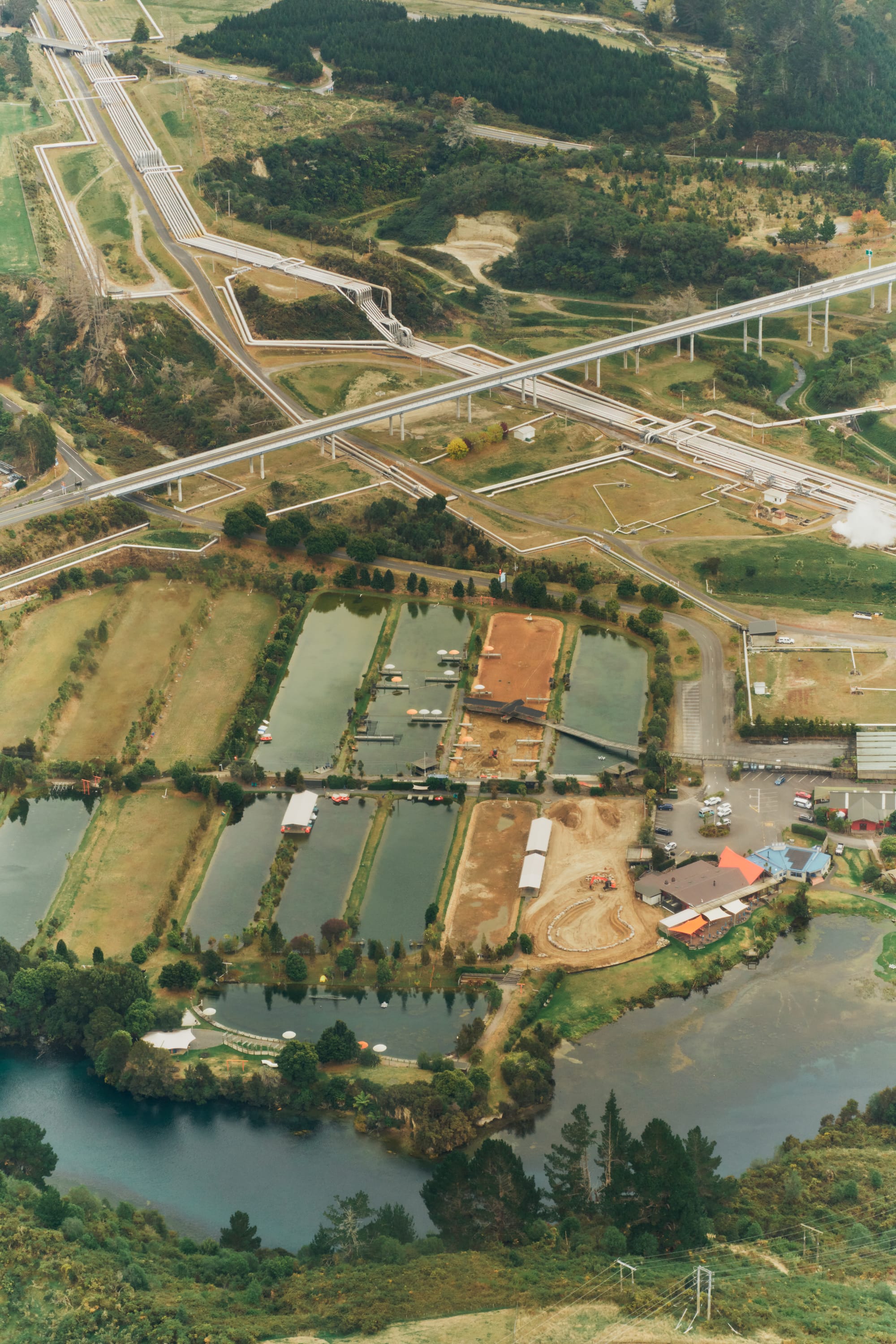
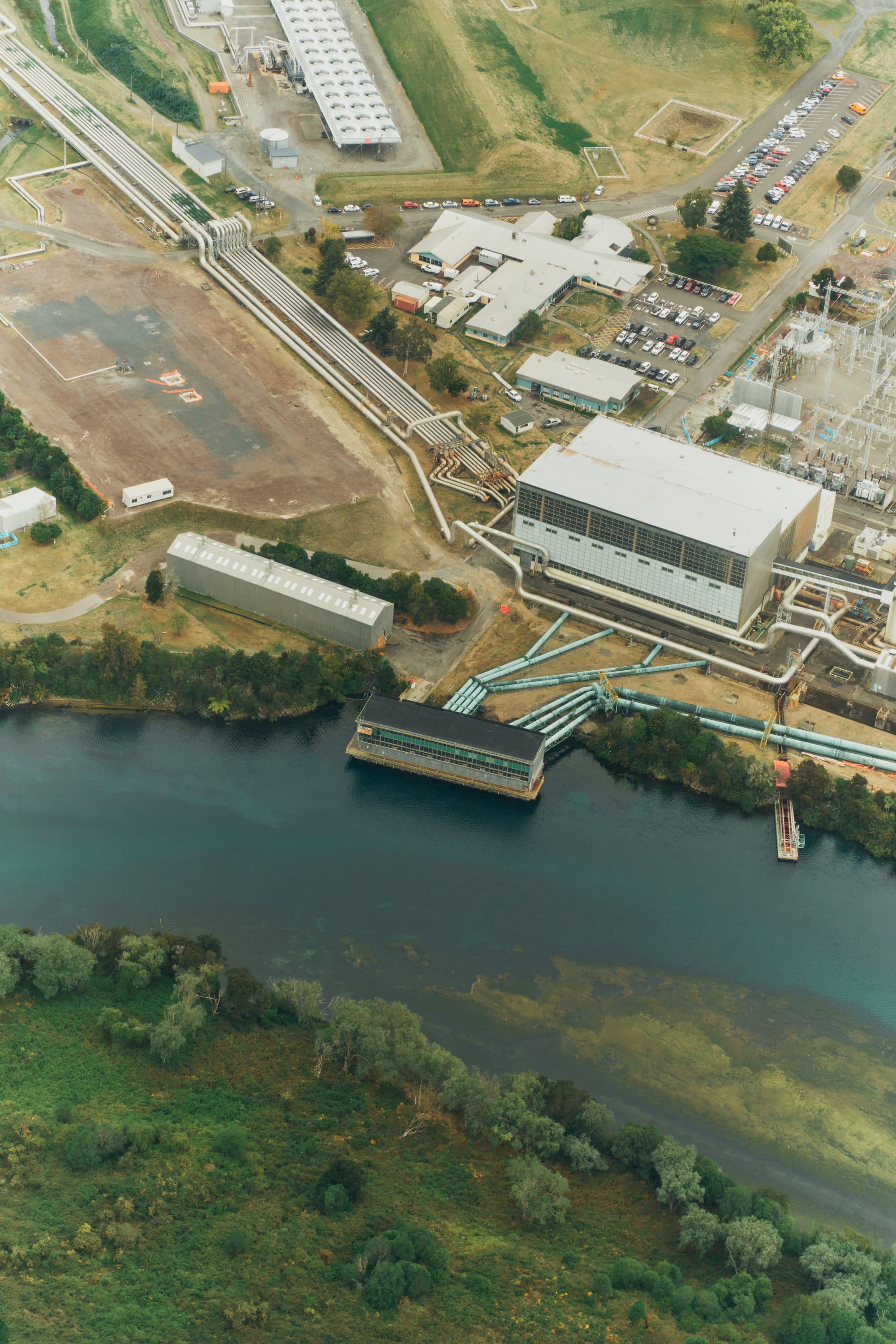
Those pipes - all of them are collecting steam 4,000 feet below the surface.
The windshield of our rattling floatplane starts collecting droplets halfway through the flight. I've been trained by Dominic to trust pilots when they warn me about weather systems, and am glad we chose an alternative tour for the day. The volcanos to the east are hidden in dark rain clouds as we splash down for our landing.
We head West in our rental to explore the Waimangu Volcanic Valley. Yet another volcano failed to manage its stress and blew its lid at the end of 1800's. A few original photographs remain of the event and the aftermath: ladies and gentlemen with elegant parasols over their heads observing the resulting geysers and smoldering chaos. It's a pleasant two hour hike downhill. We walk by bubbling hot lakes, steaming fissures in the rock bed, pools full of emerald and cyan water (from the minerals), and finally emerge in front of a lake that is the epicenter of the eruption.
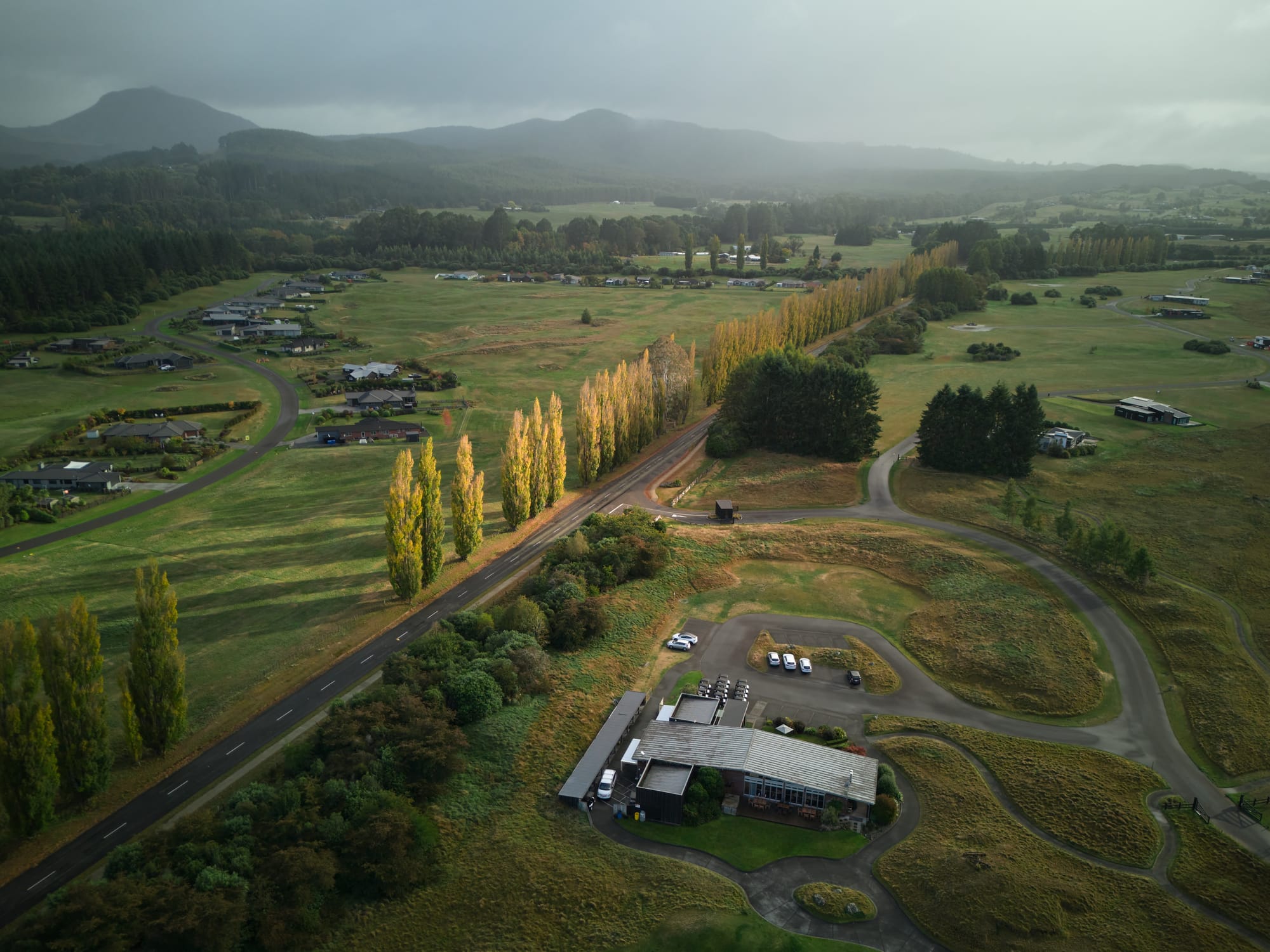
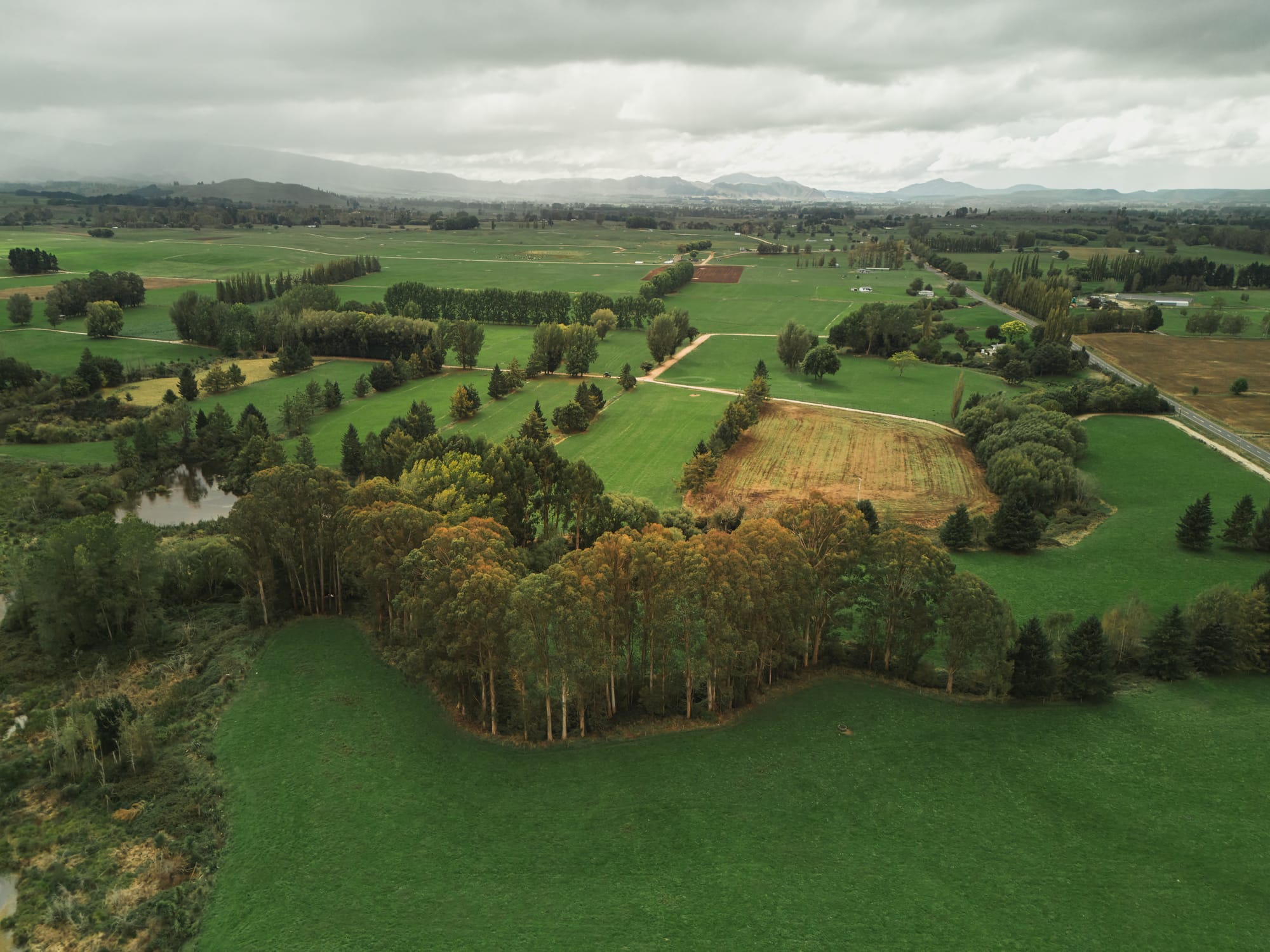
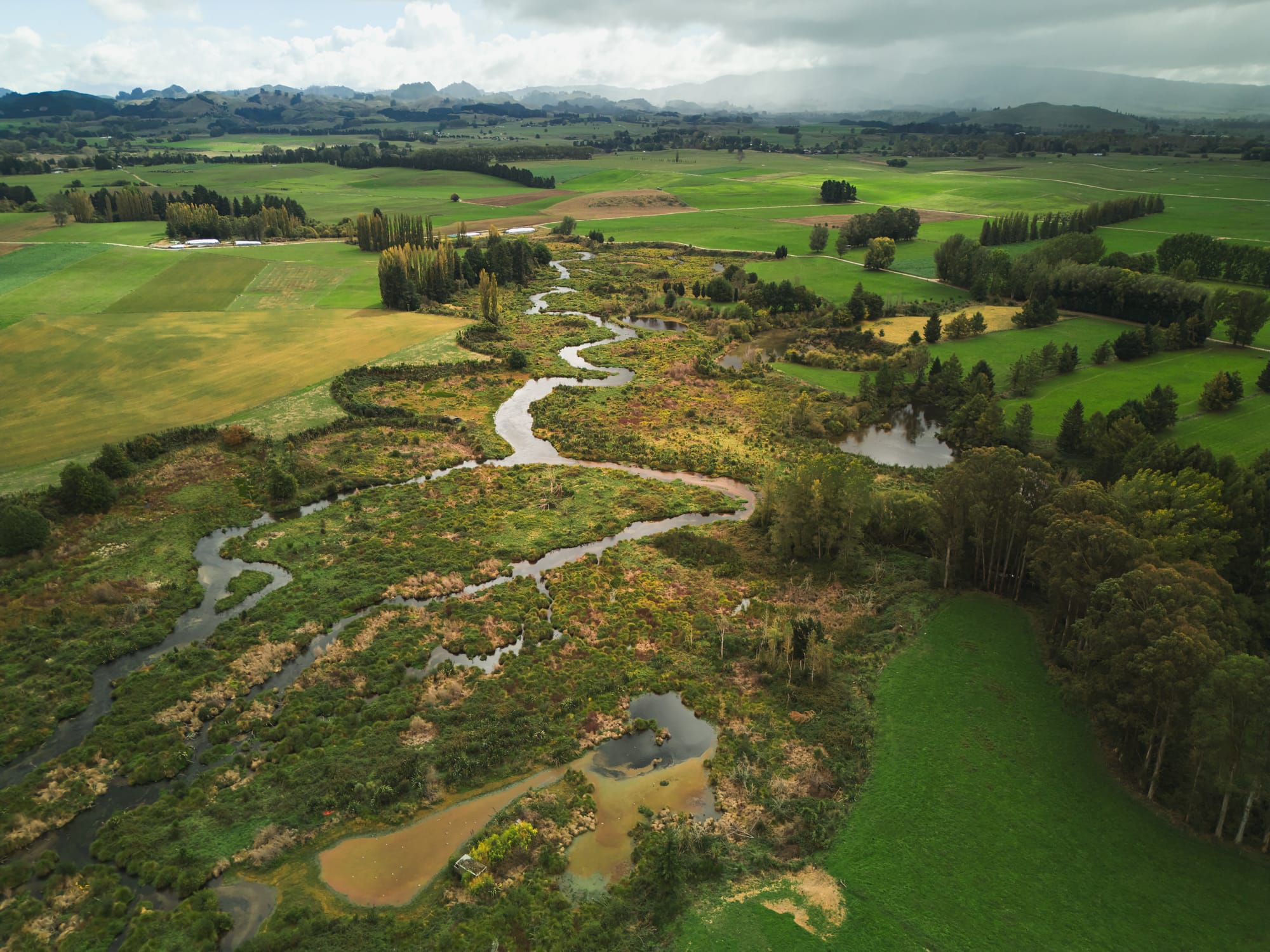
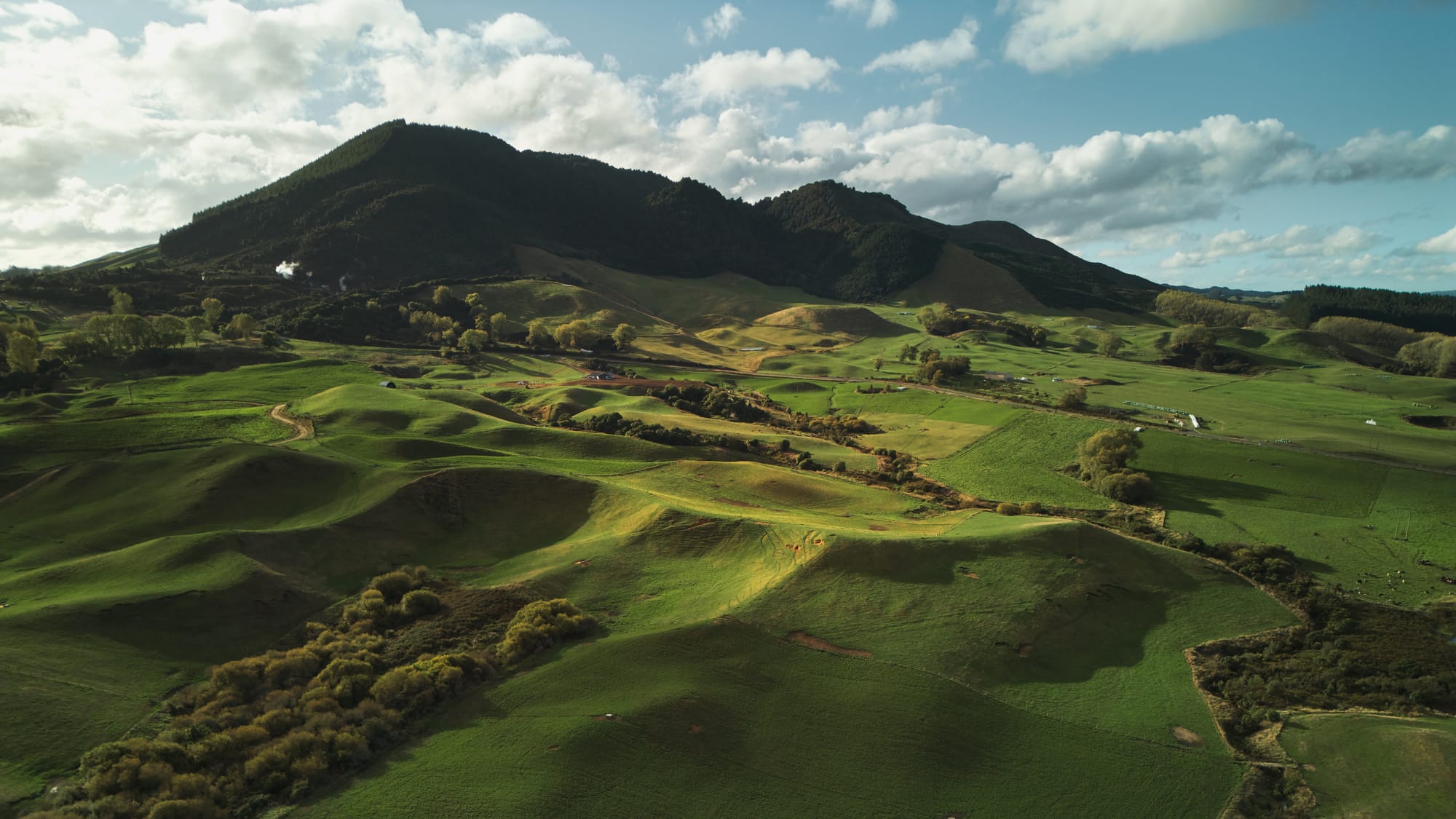
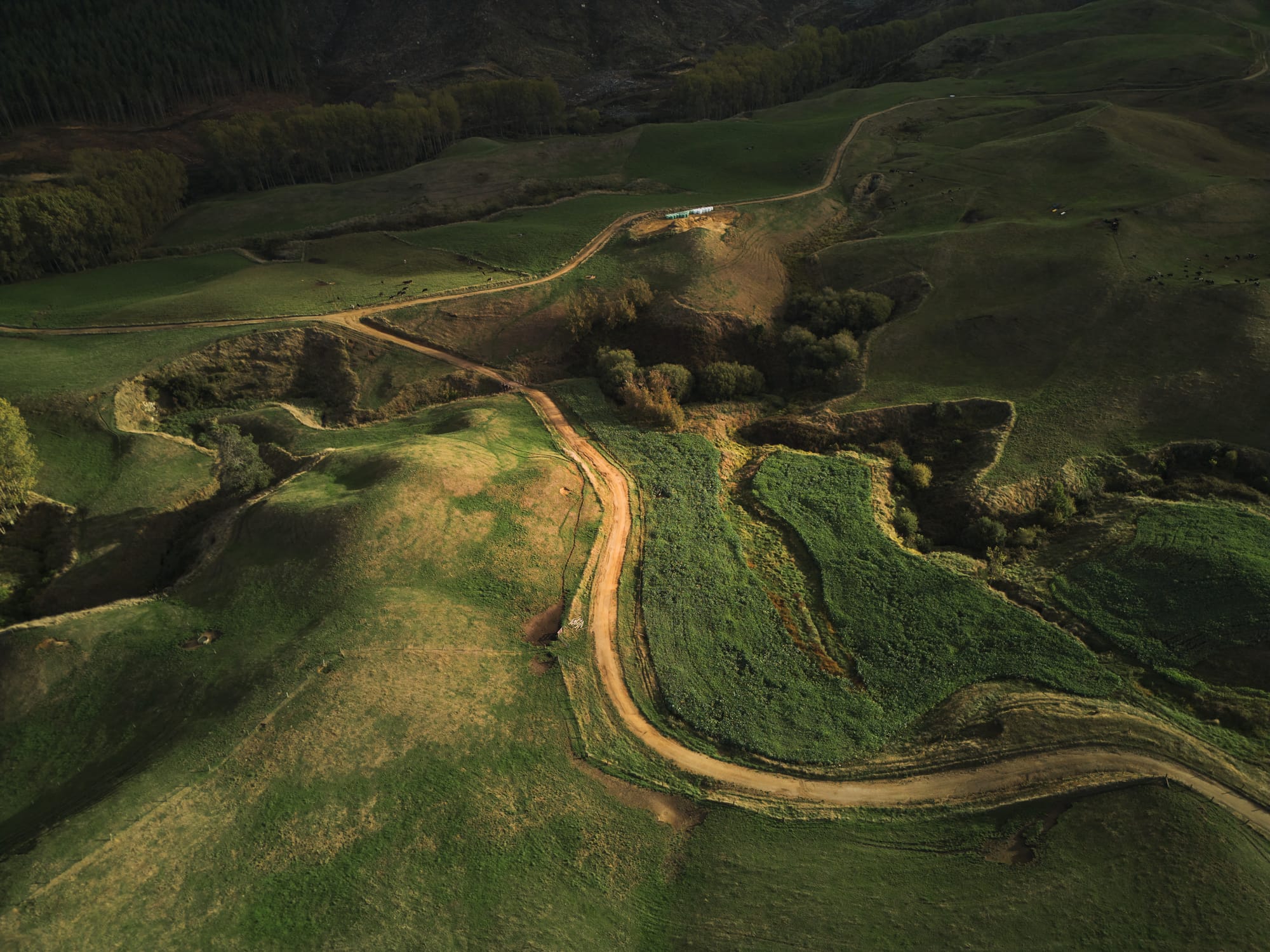
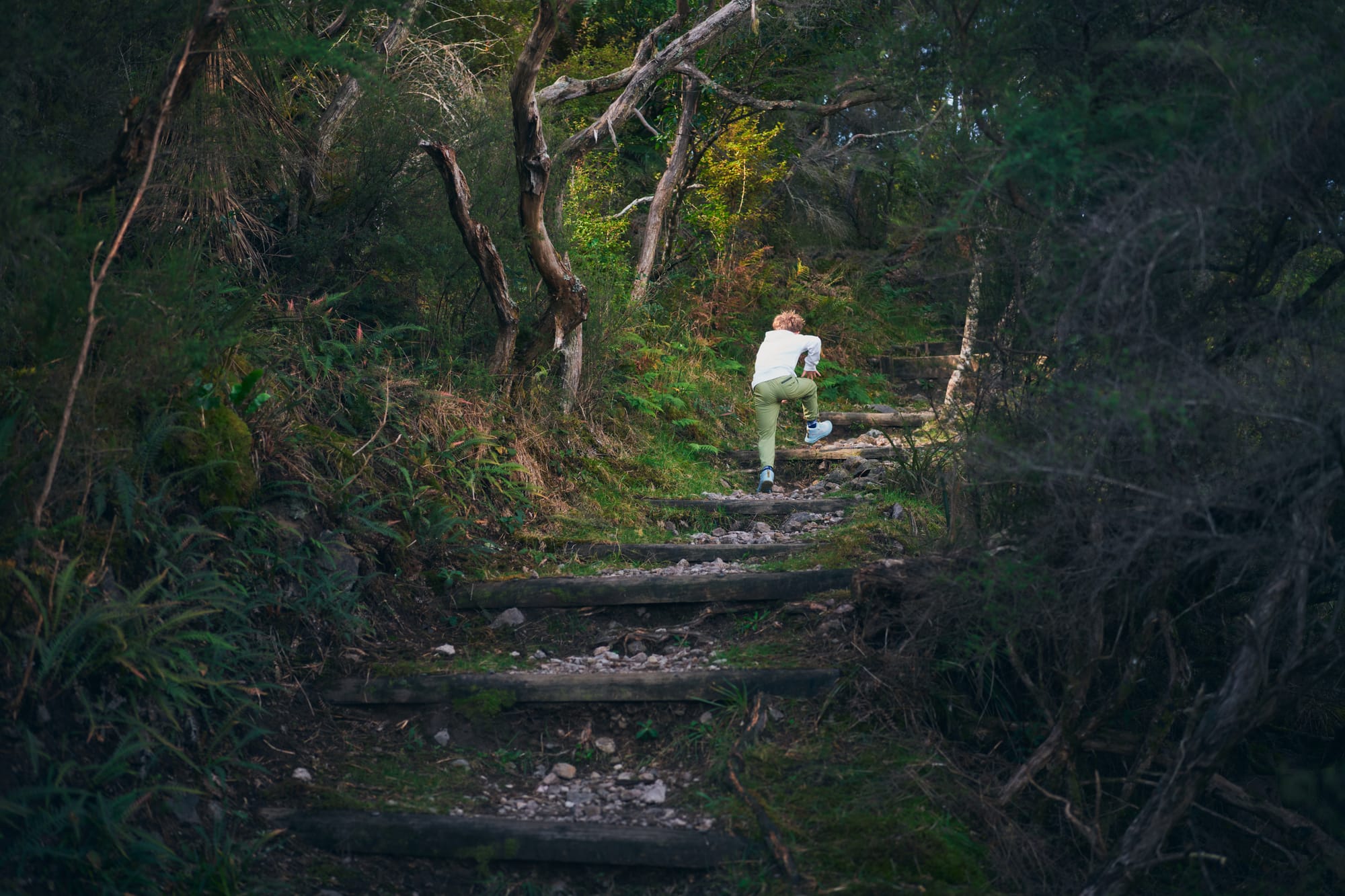
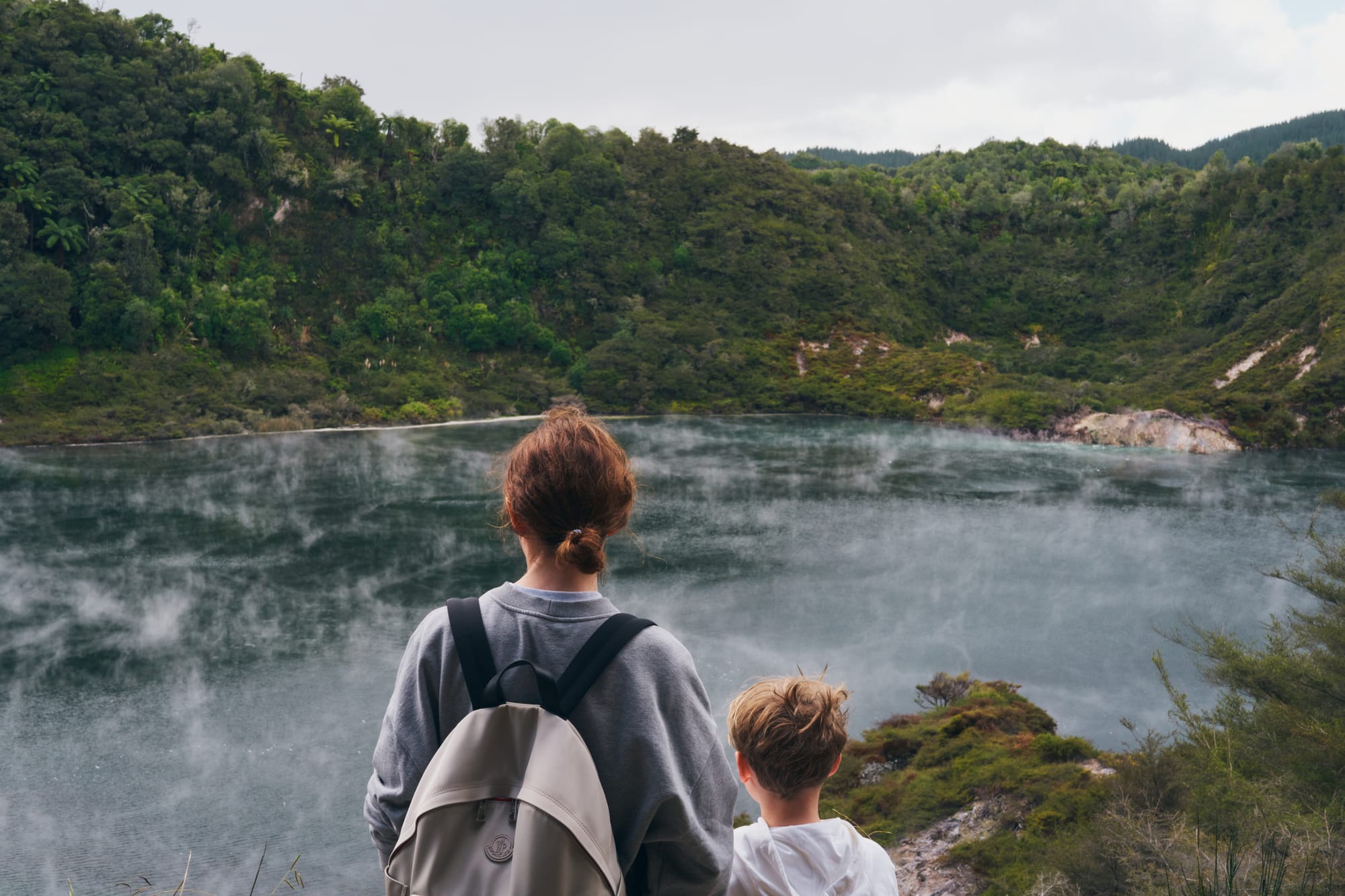
It's ridiculously green everywhere. My Aperture One desaturation slider got a workout trying to make these look reasonable. Also, I brought a drone and didn't use it enough.
The rain we ran from catches up and, not listening to Virginija's request to turn around, I lead us all into a jolly sprint to the end of the trail where we can find shelter. Foggy and rainy is my favorite jam and Ashton giggles as Virginija makes high pitched noises behind us, hopping through puddles, hands above her head, as if that would help any. Also blames me, naturally.
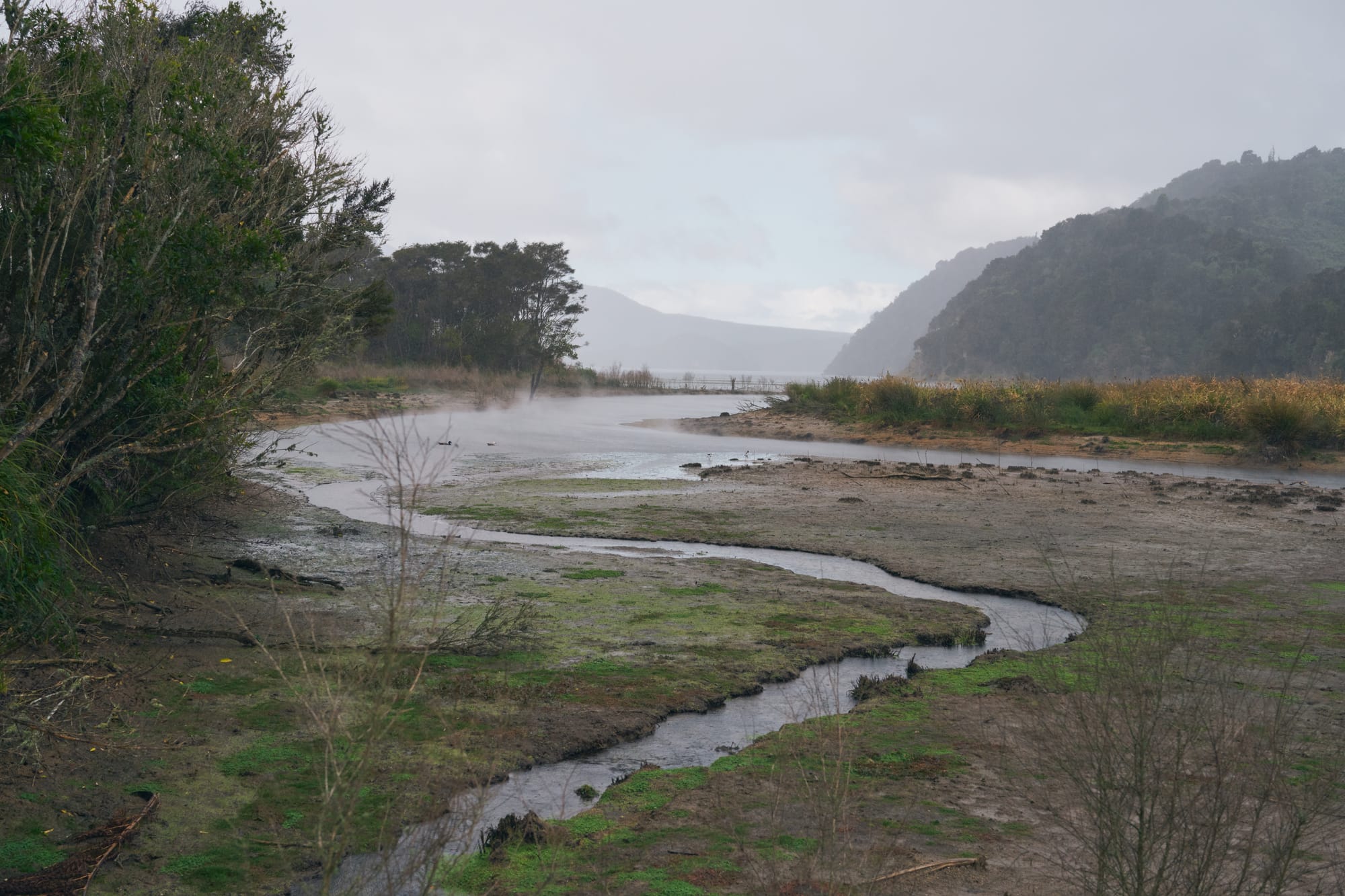
The rain was worth it.
Queenstown, South Island
We've intentionally scheduled only a few nights in North Island. Queenstown is a short flight away, but the world here is different. Cold, empty, rugged. We've been many places, but the descent through the Southern Alps makes even the weathered traveller pull out their camera and stick it close to the window. While the peaks of the Alps top out at 12,218 feet (and the Rockies in the US break through 14,440), the appreciation for the sheer size of these young mountains is fundamentally different. The base of the Rocky mountains is at around 5,000 feet, and the base of the Southern Alps is at … sea level. Witnessing the full 12,000 feet of vertical cliff is a first in our lives.
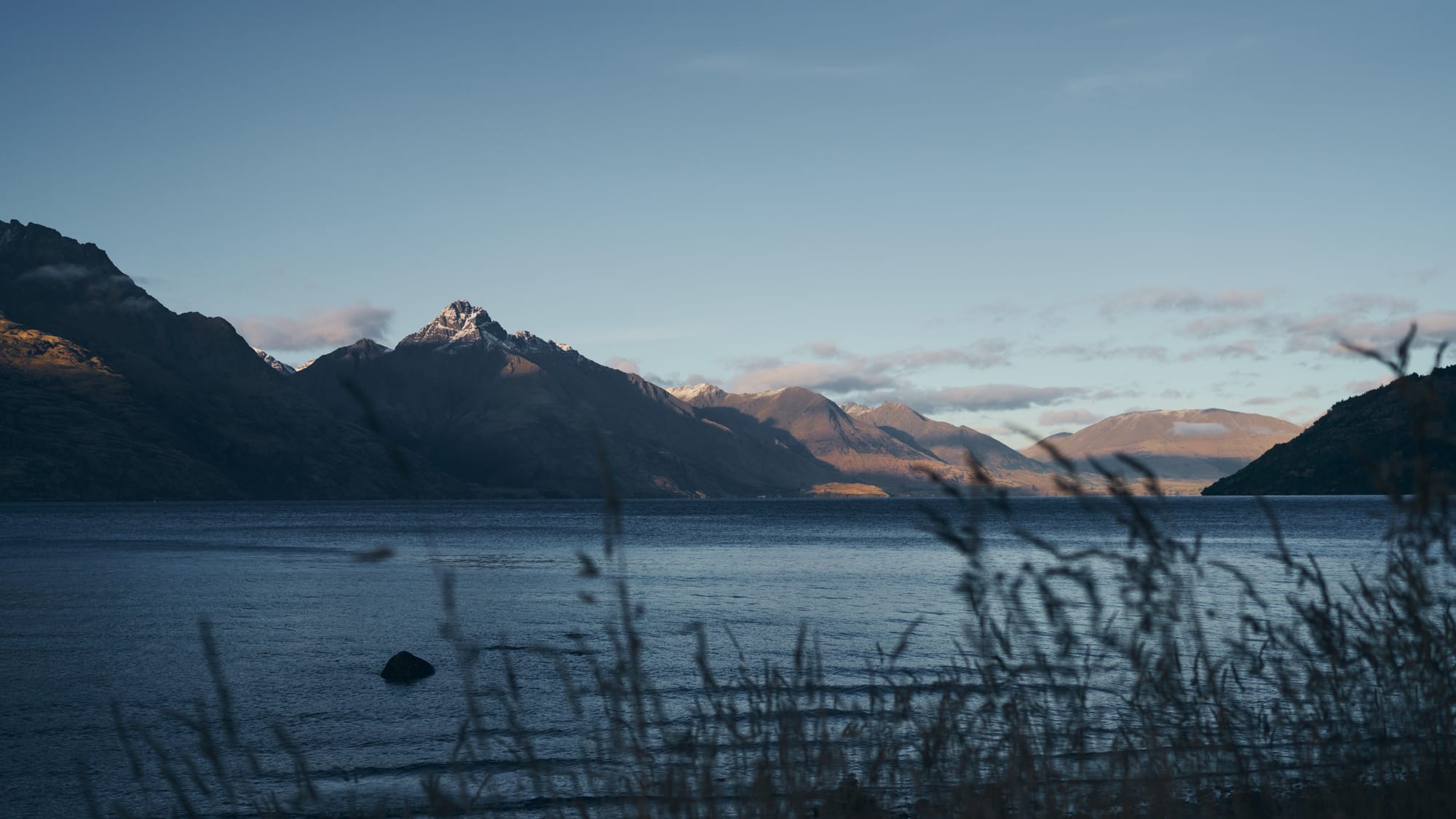
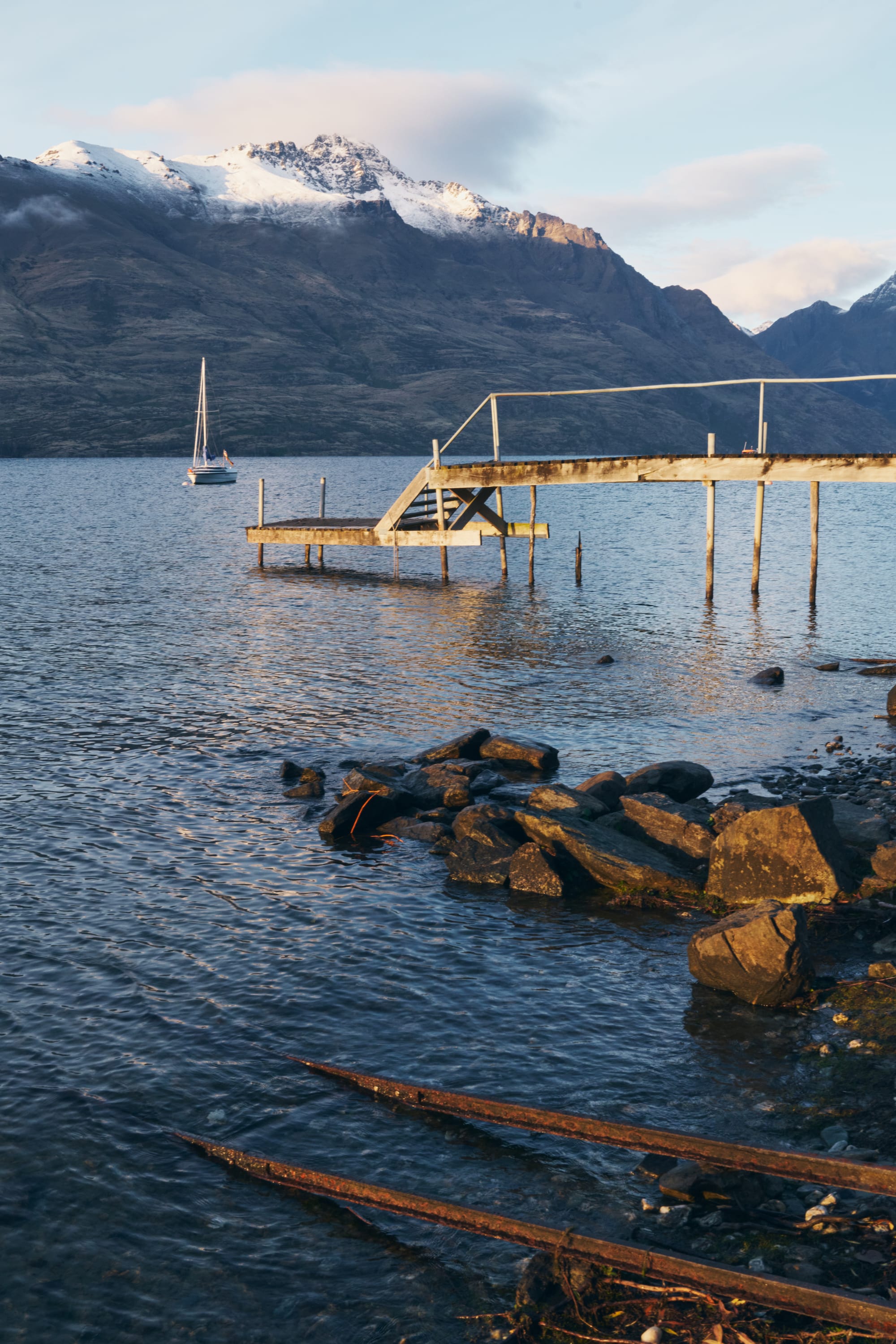
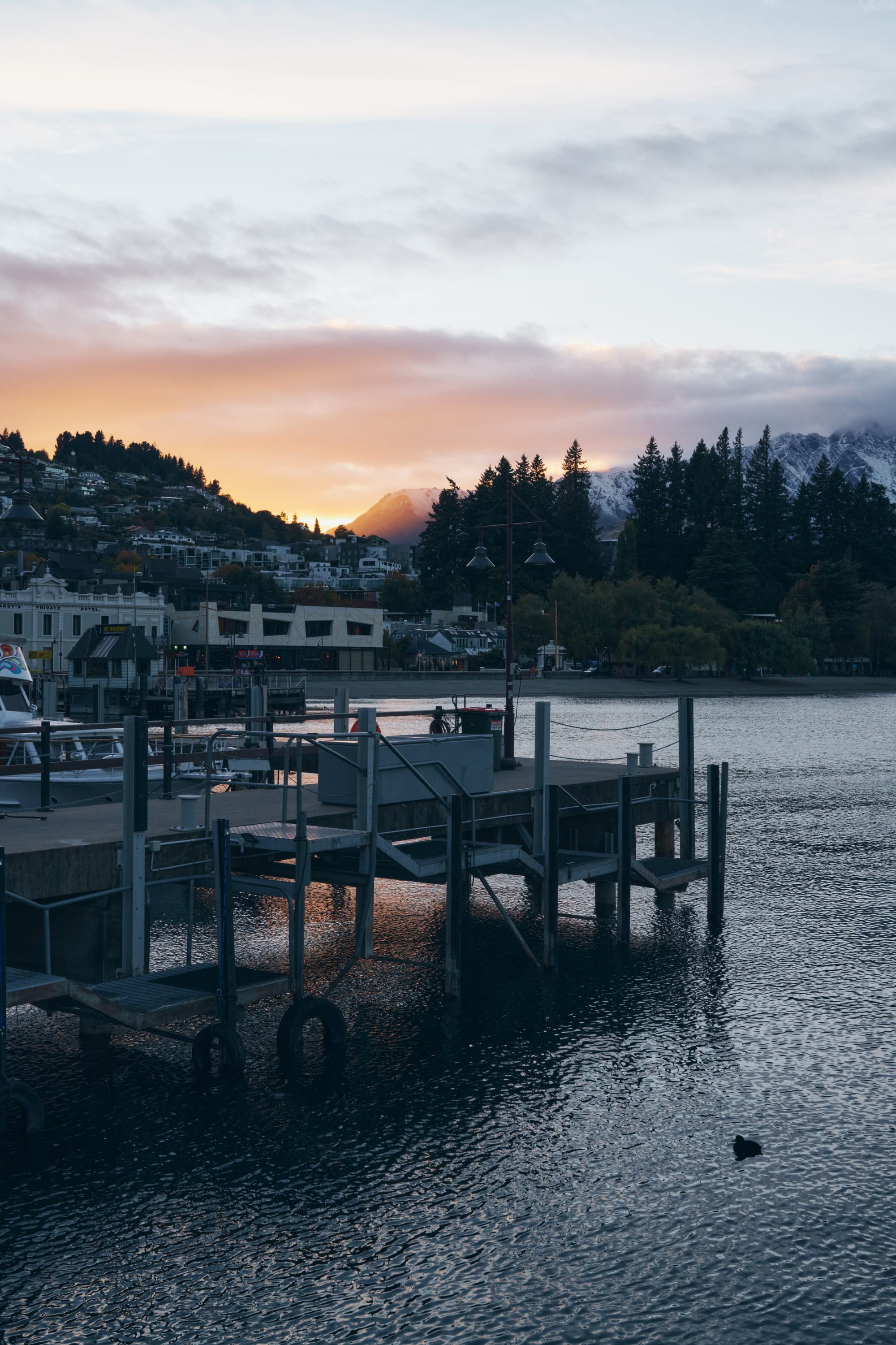
Queenstown has a vibe of a bumping ski village set by a picturesque lake, surrounded by craggy, snowy tips of the Alps. There's even a gondola operating in town, alas no trails to ski down on this one. Restaurants and shops line pedestrian-only streets and young backpackers stand in lines at Fergbaker for their taste of a native meat pie or a Boston cream pastry. It's dark and cold now and we stumble down one of the alleys and into the Bunker, a speakeasy-like restaurant tucked away in a basement. Strong cocktails, jazz music, and soft glow from midcentury sconces washes away our road dust as we sink our teeth into fine New Zealand provisions.
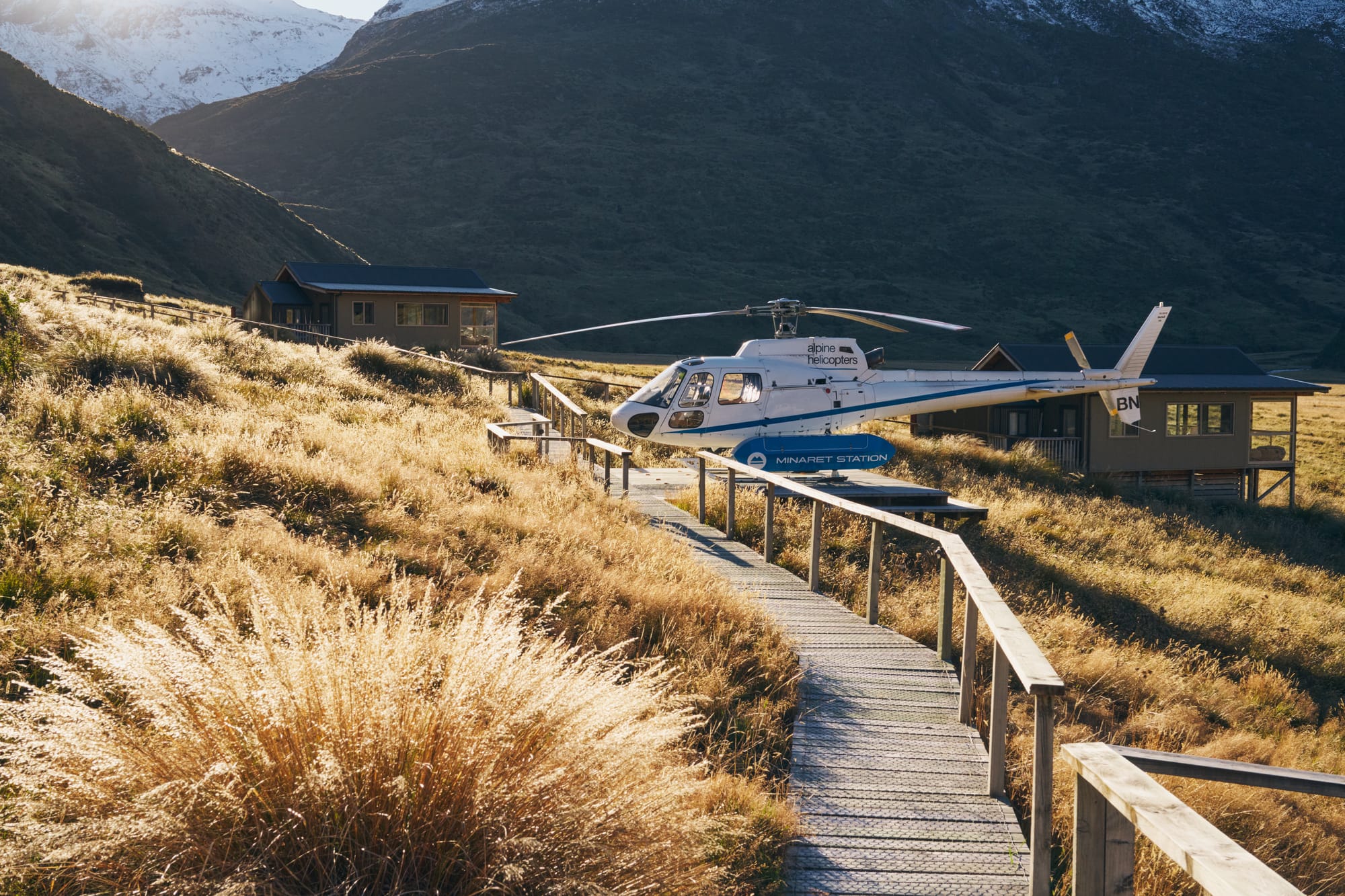
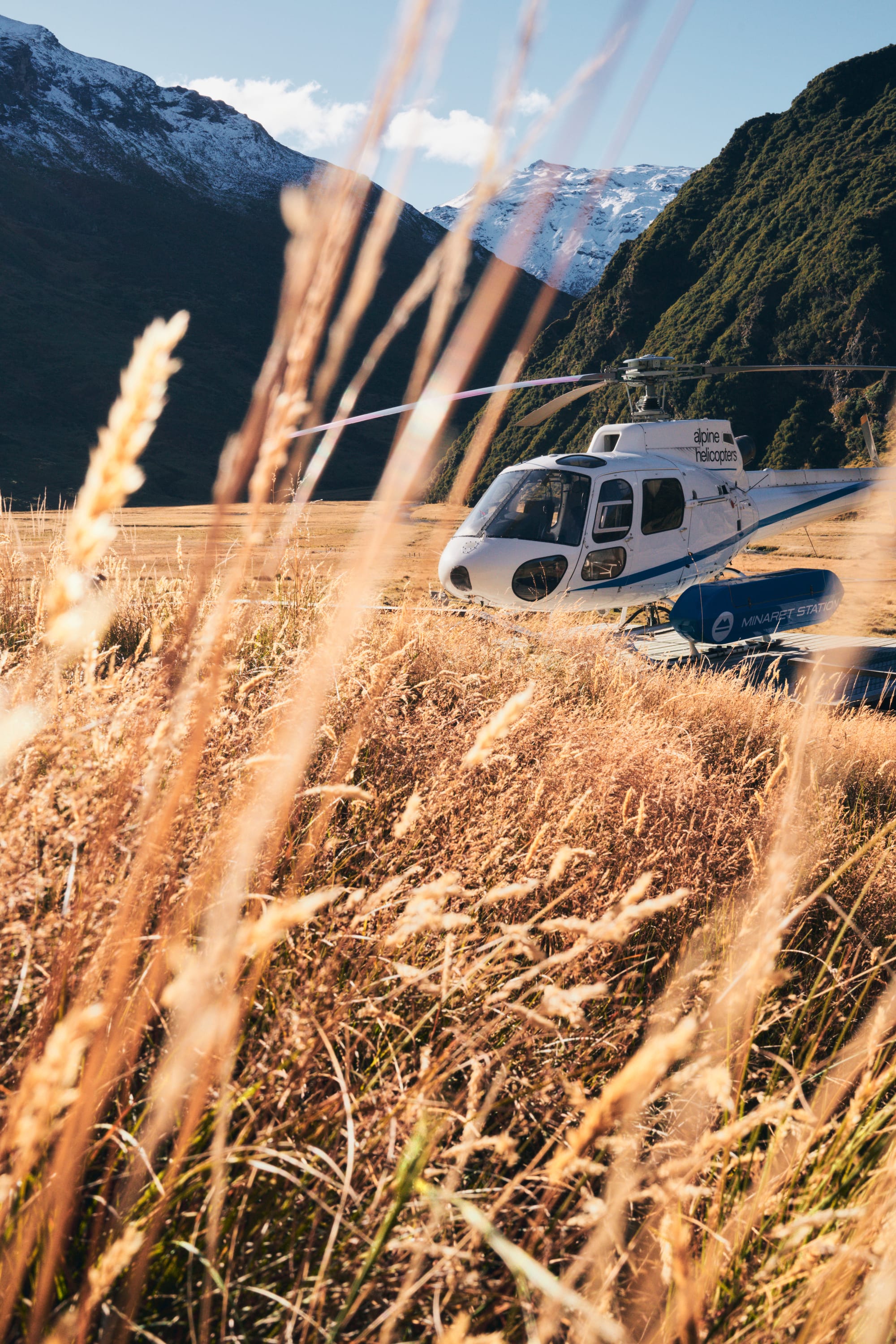
Our next stop is the focal point of the whole trip, the highlight, the peak of both hospitality and adventure. In fact, it may be one of the most memorable experiences we've had in the history of our travel. We're staying for three nights at Minaret Station, an alpine lodge that can only be accessed by helicopter.
Minaret Station, South Island
The history of the lodge is even wilder than the adventures they put up. It was founded by Sir Tim Wallis, an aviator and entrepreneur in New Zealand. Looking to introduce international visitors both to the beauty of New Zealand as well as the pleasures of aviation, Mr. Wallis created the luxury lodge on a functioning 50,000 acre alpine farm that could only be reached by helicopter. Sir Wallis' story is worth exploring on its own (it involved multiple crashes, near death experiences, recoveries, and continued adventures in restored world war 2 planes), but suffice it to say that it's been a family run business for the last fifty years. Sir Tim Wallace has passed, but his two remaining sons and wife are still involved. In fact, we had some delicious preserves made by Mrs. Wallace.
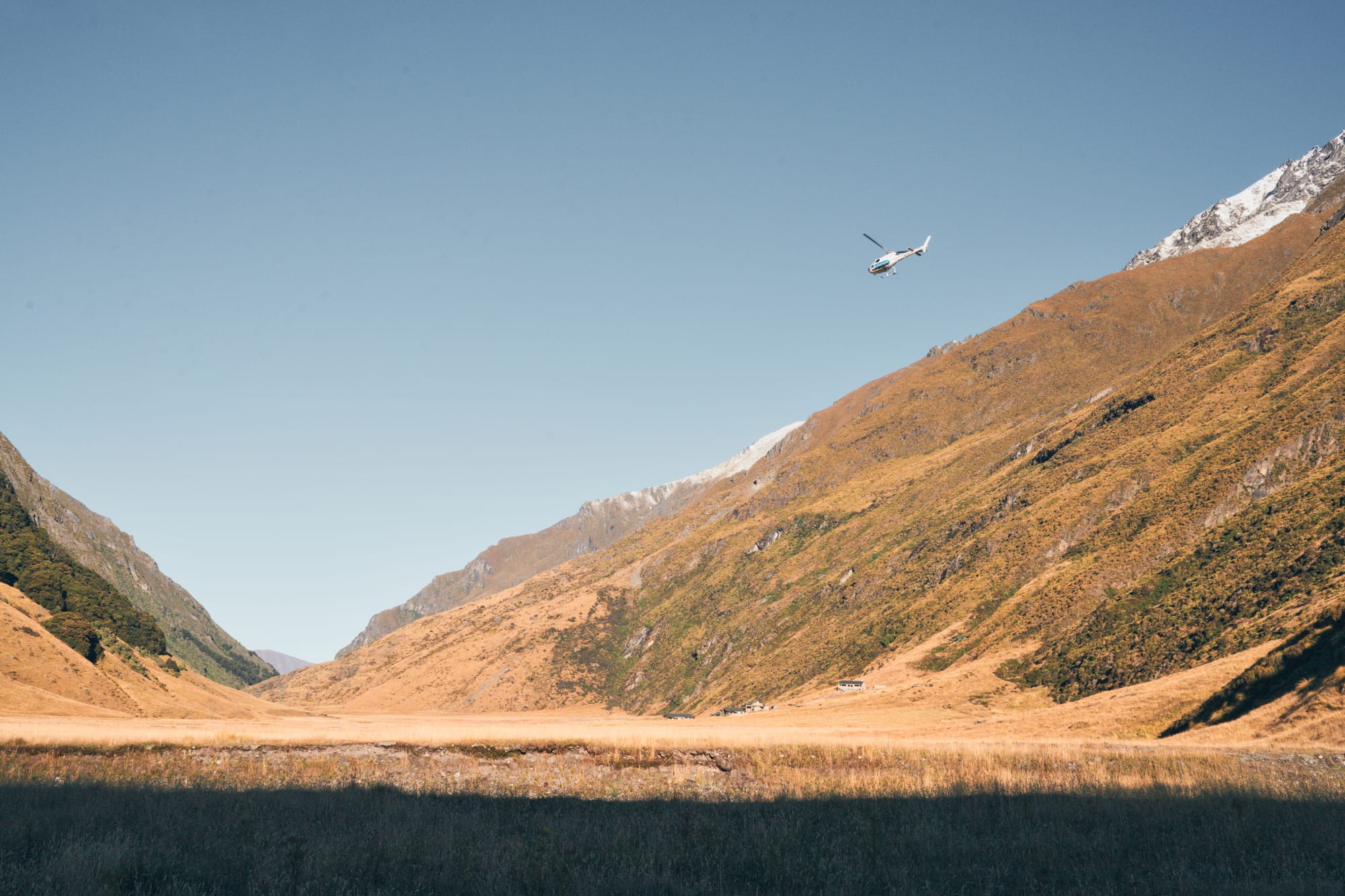
The first surprise of flying a helicopter is how gentle the takeoff and acceleration is. Virginija and Ashton are buckled in the back and I'm sitting next to the pilot while the Queenstown heliport slowly backs away from us, we swing to the side, and float upwards to the Southern Alps. This is the first time flying a heli for all of us. Virginija is not a fan of flying, so I twist in my seat to check on the drama in the back. She's smiling ear to ear and tells me over the radio that she could get used to this.
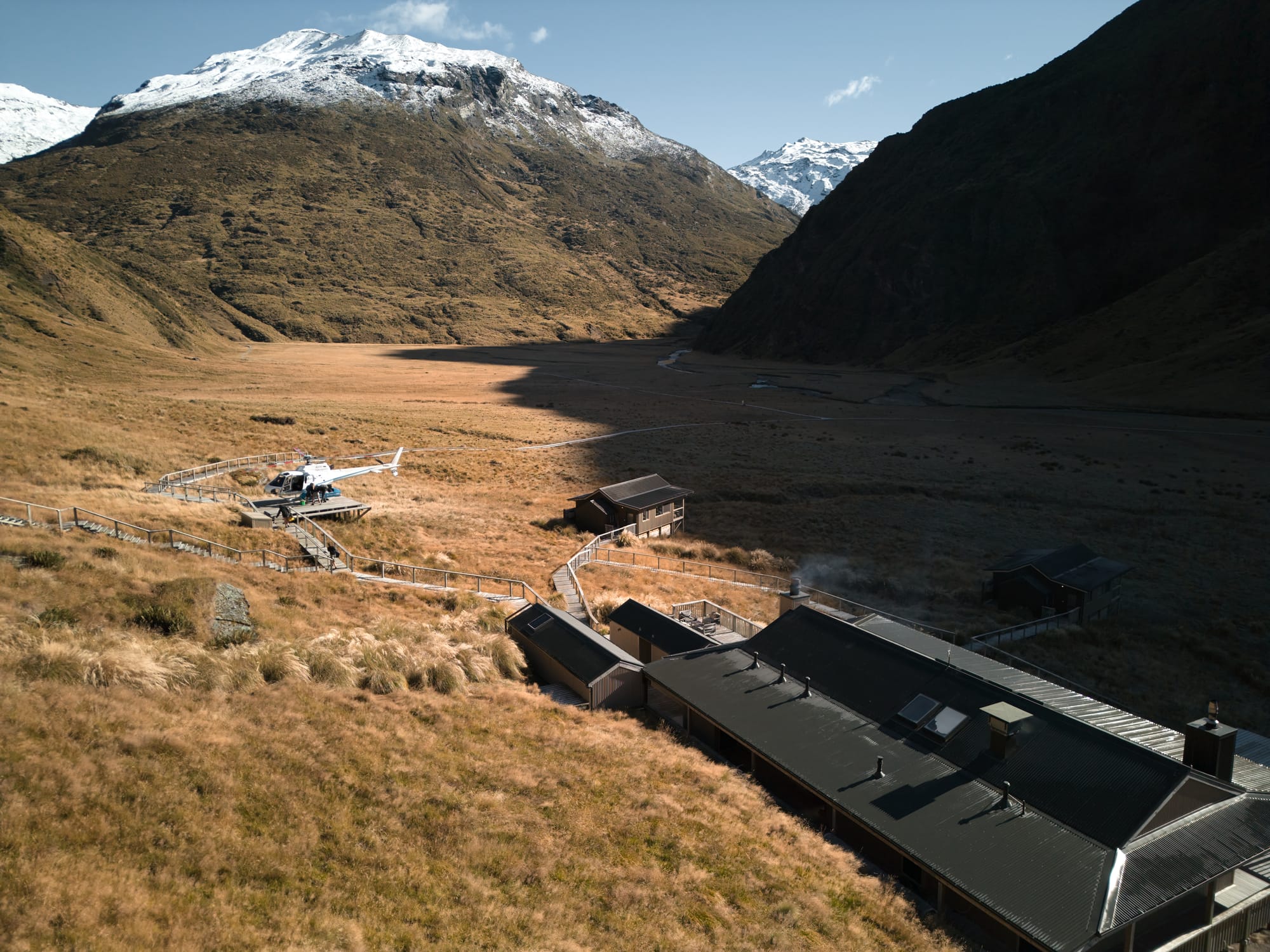
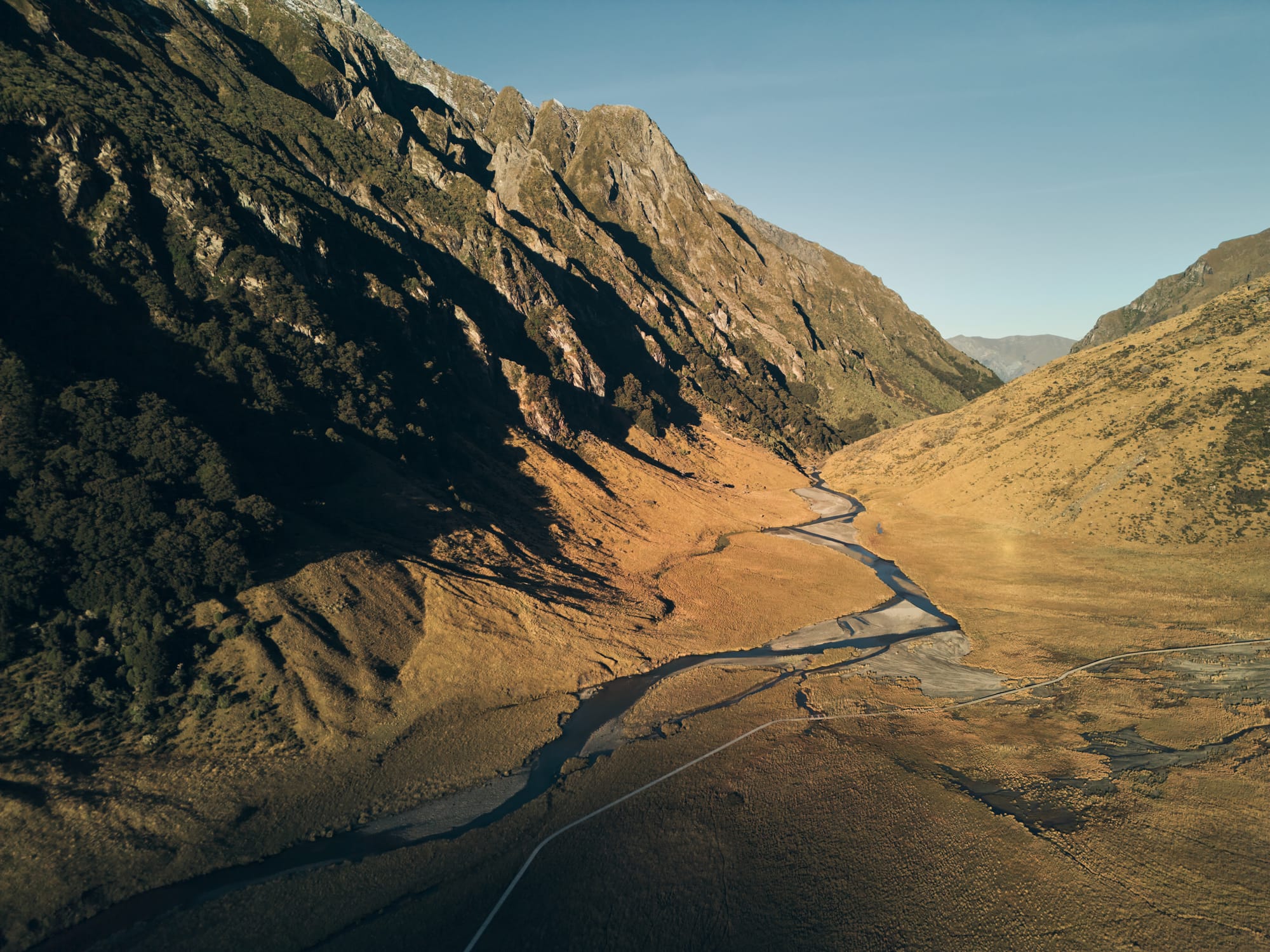
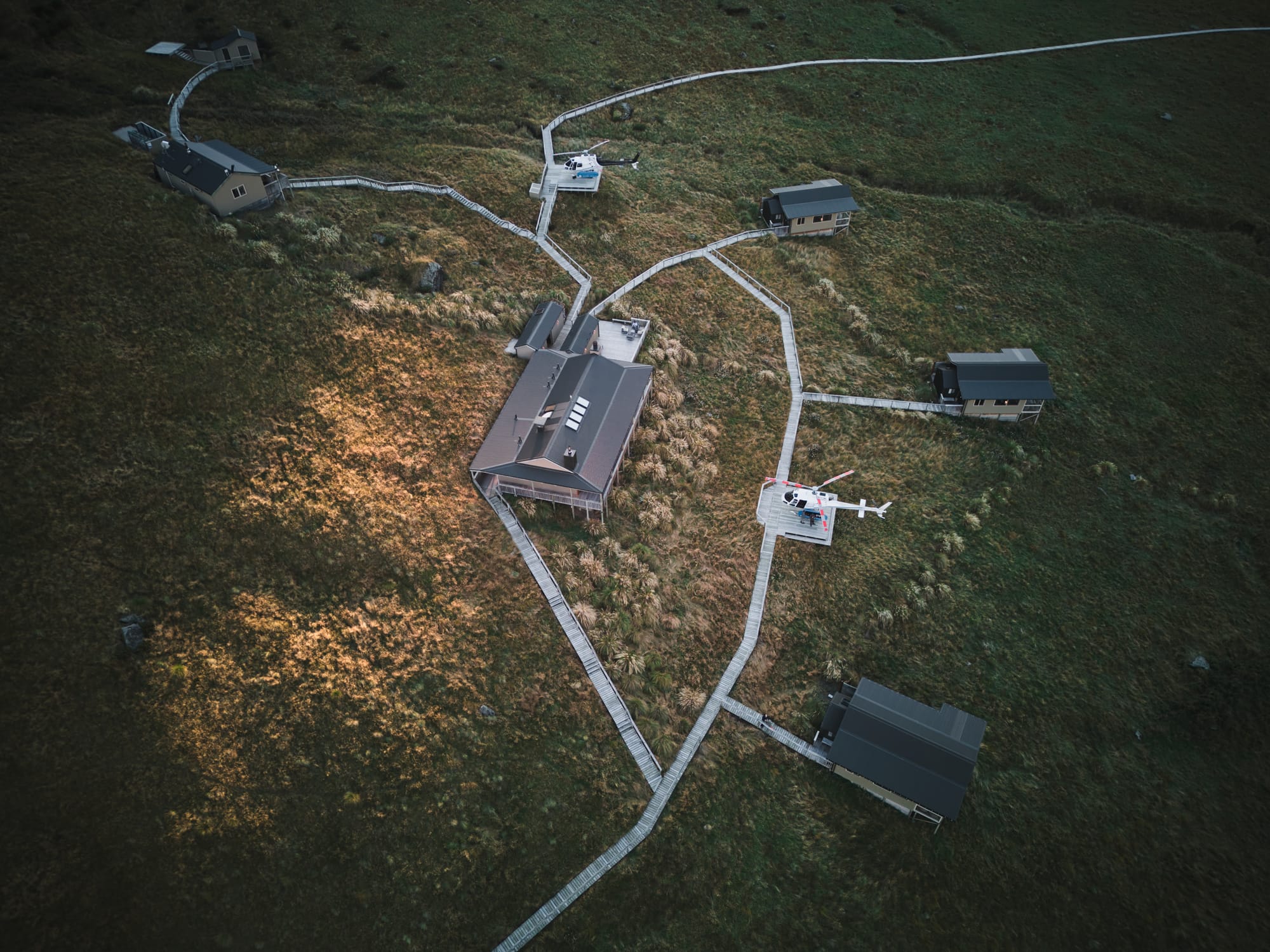
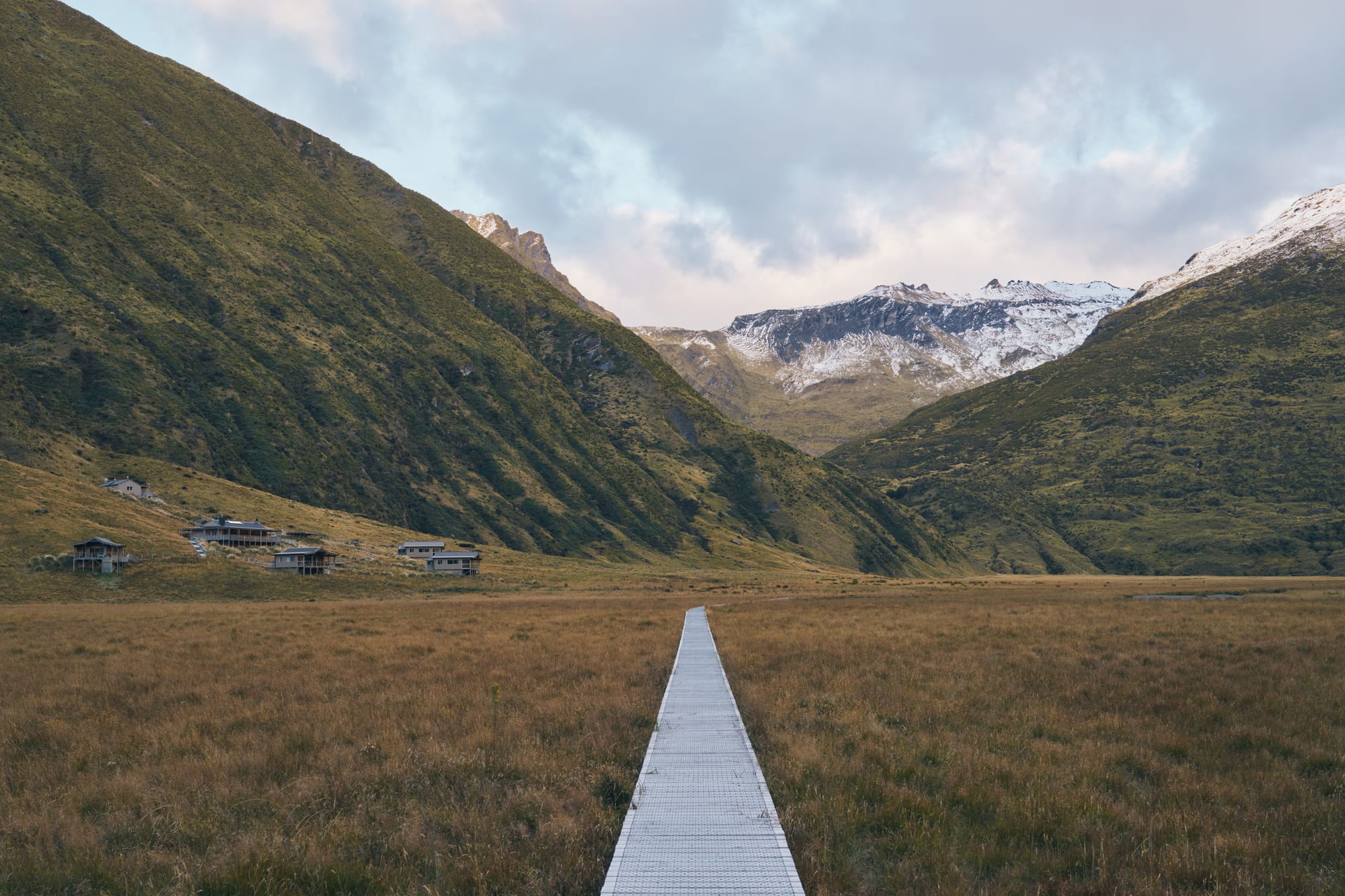
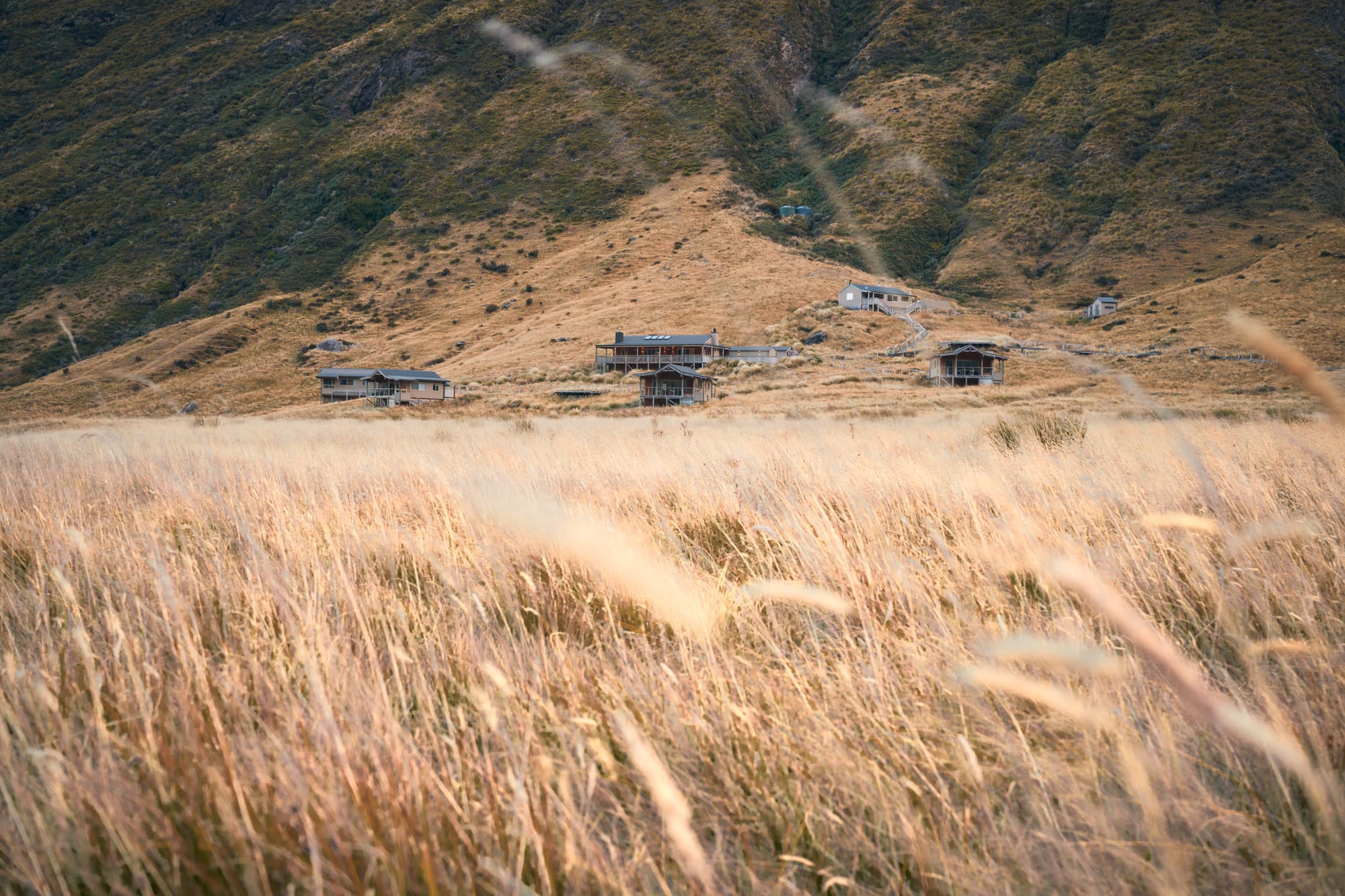
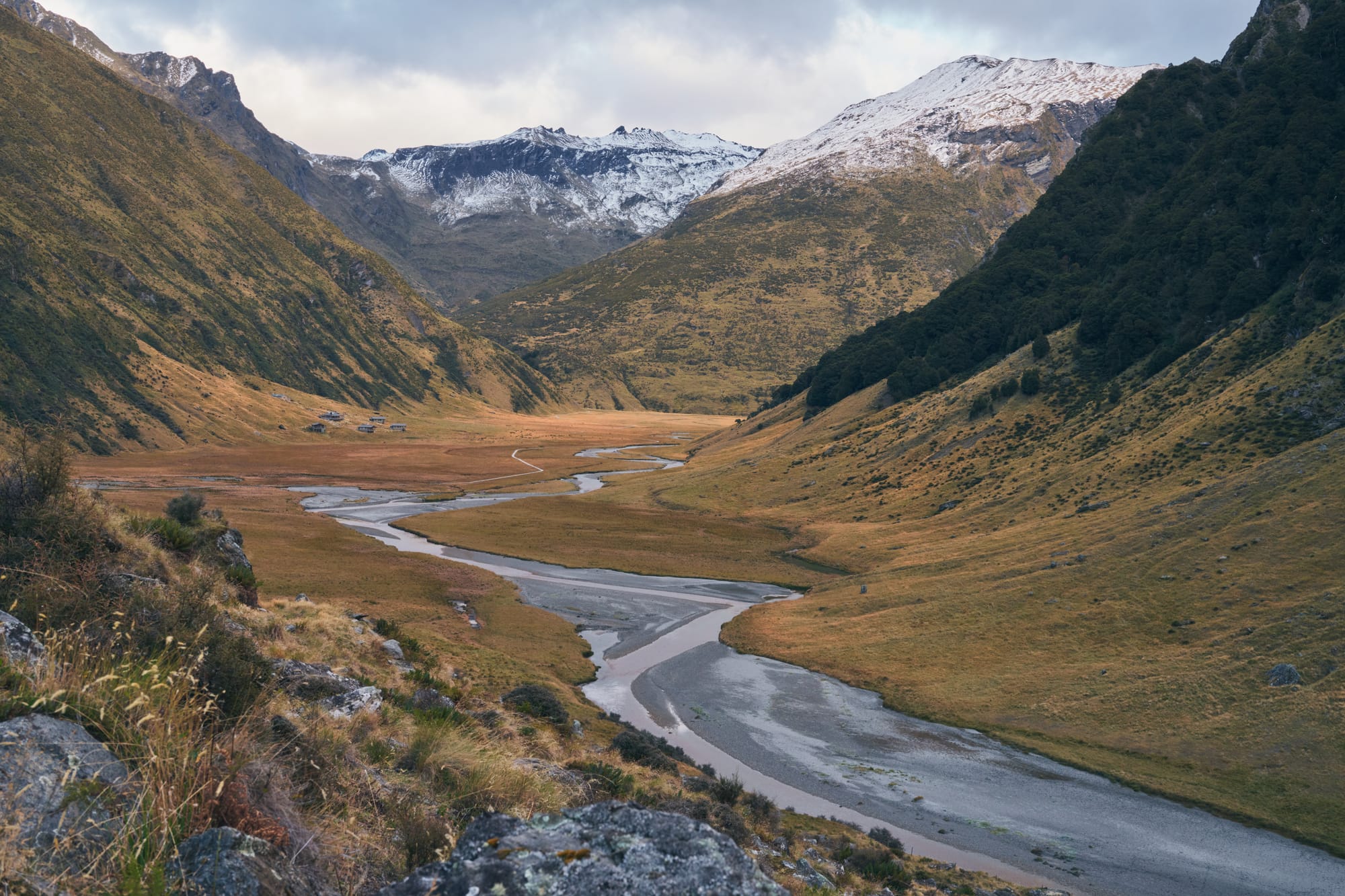
I hiked up and down the valley, lodge can be seen on the left.
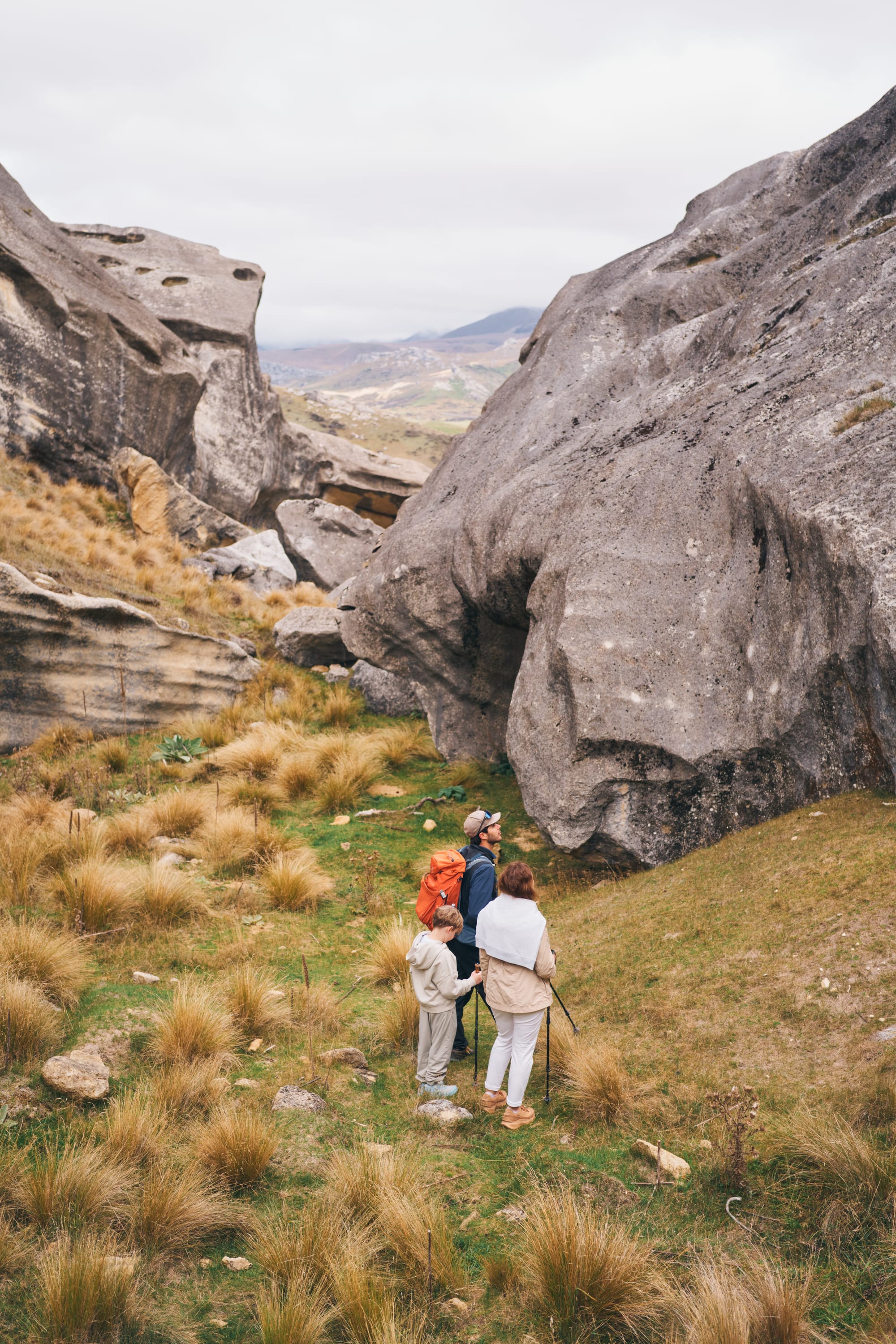
Pictures don't do justice to the grandeur and scale of this island, but I'll try to do my best over the course of the next few days. We're greeted at the lodge and shown to one of four chalets that stretch out in an alpine valley carved by an ancient glacier. The valley rises to the West, descends to the east, continuing to the working farm and Lake Wānaka. A central lodge sits behind and above the chalets where a fire crackles twenty four hours a day, four guest families (including us) gather from day adventures to sip on cocktails, share stories, and a world class chef prepares outstanding tasting menus each night. It all feels incredibly detailed, precise, but also warm and down to earth. It's luxurious in the best sense of the word, without any pretense or snobbiness.
We're sharing the property with a few members of the staff, two older couples from Australia (the Aussies), and another young couple and their daughter from Hong Kong. It takes me a while to get used to the Australian accent and dry sense of humor, but a solid vintage of Chablis breaks down international barriers of communication and soon we're in a jolly discussion on best adventures, favorite foods, and American politics (not something you can run away from these days).
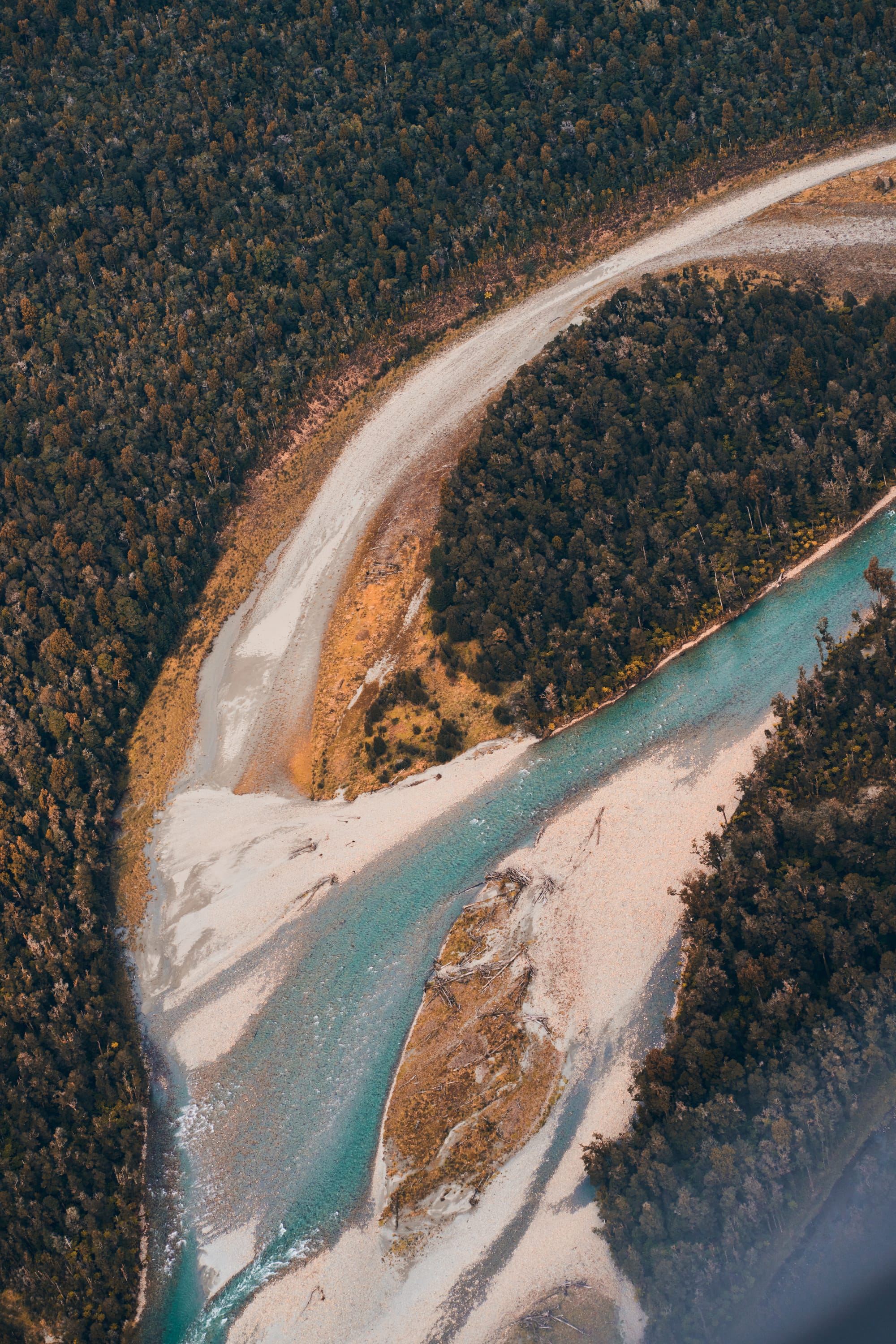
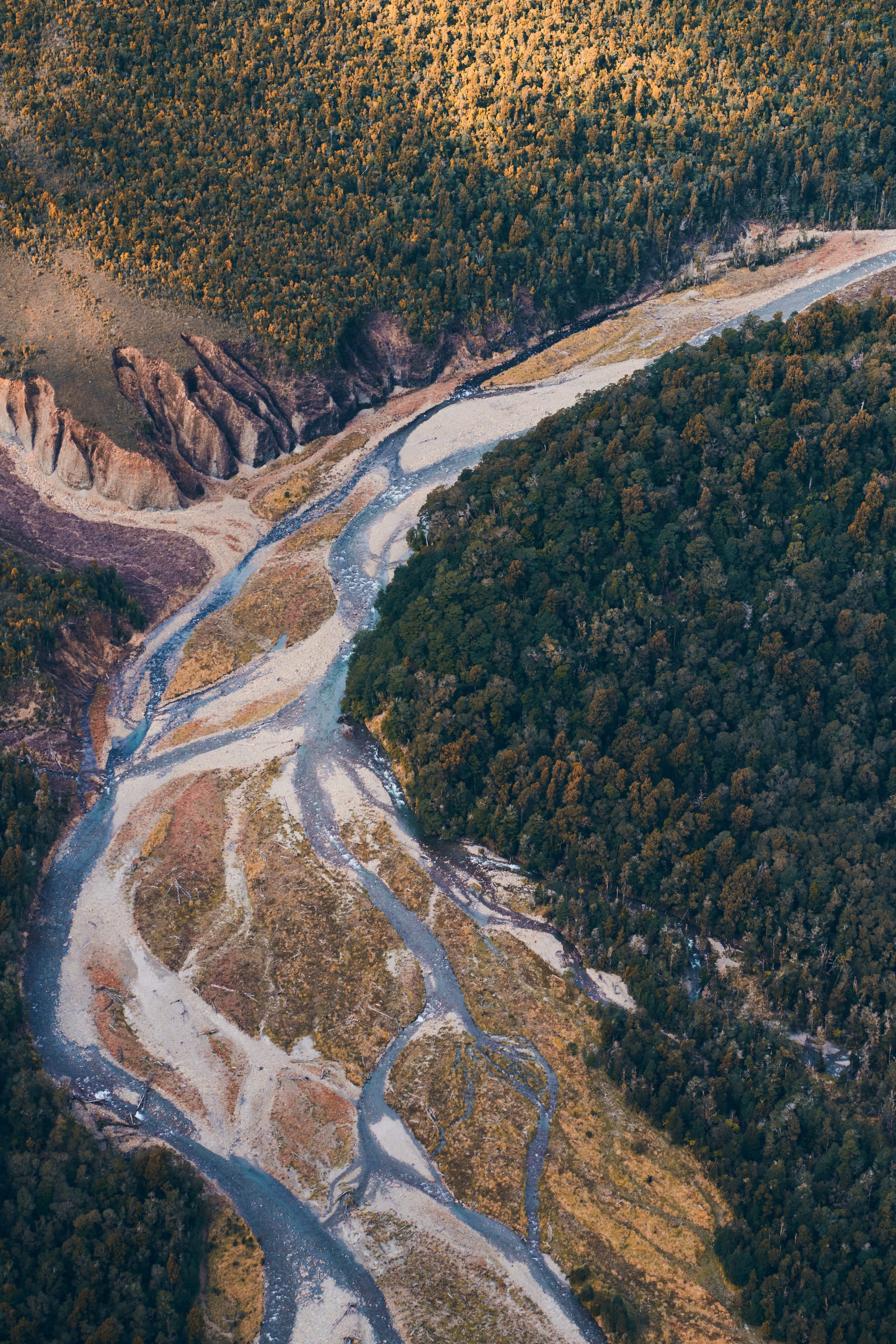
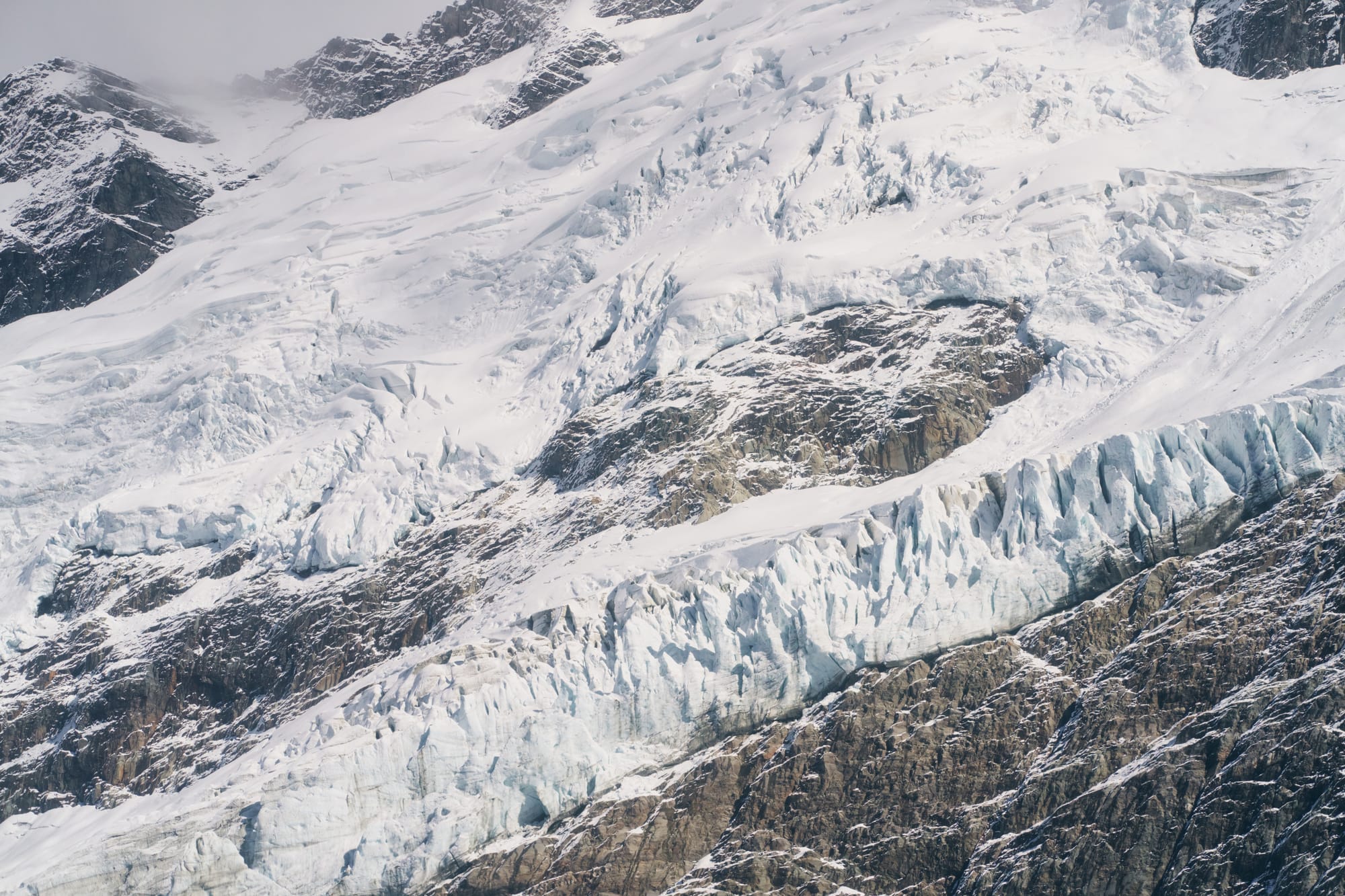
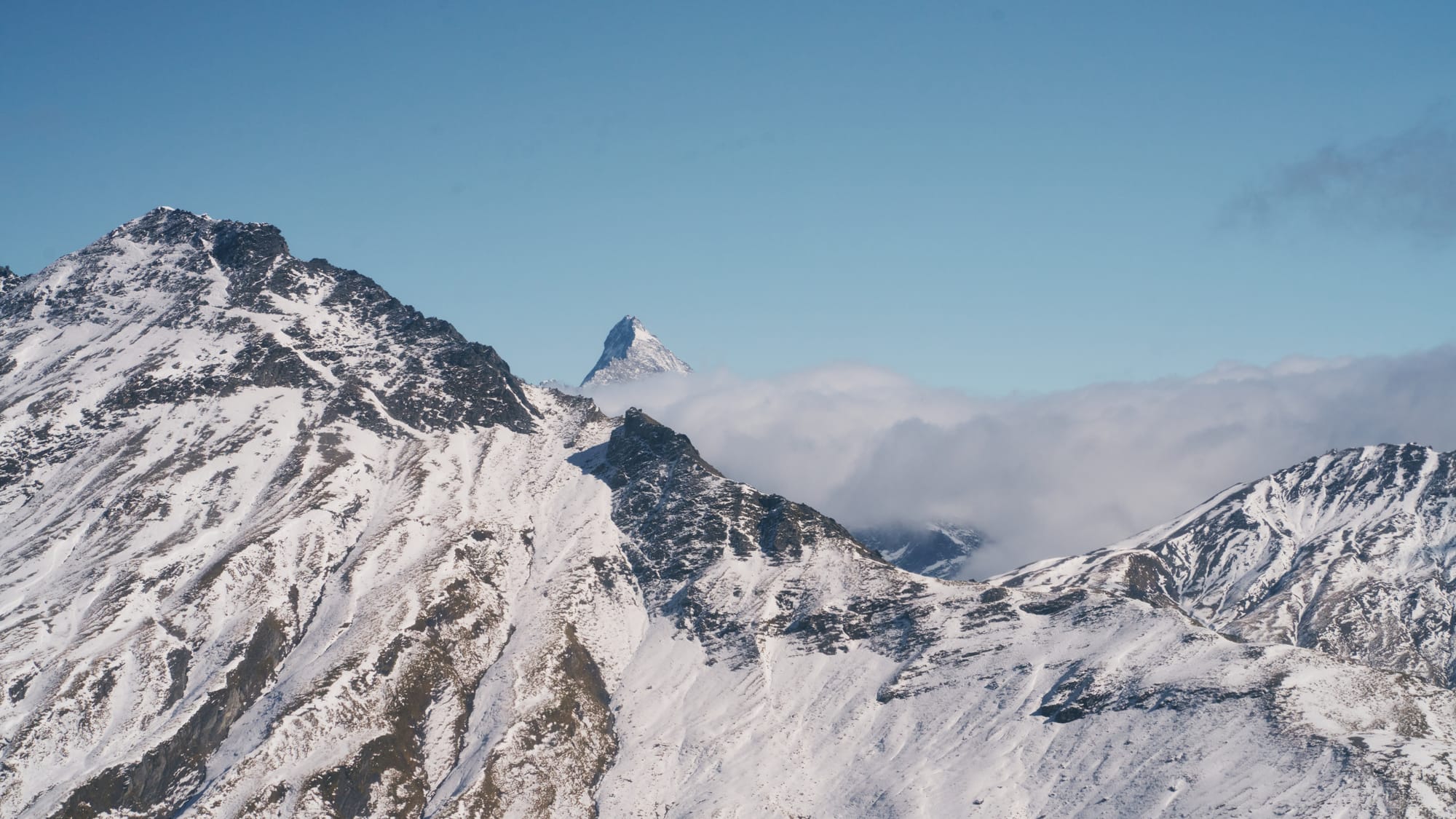
There is a herd of deer grazing in front of our chalet the next morning. The horizon is starting to light up from the sunrise, but we won't see direct light in the valley until around ten thanks to the mountains around us. I bundle up in my technical layers (for the record, I packed just the right amount of hiking gear - I don't care what Virginija says) and, camera in hand, head out for a walk. The staff at the lodge advise me that under health and safety rules I'm allowed to venture up and down the valley, but I must stay in sight of the lodge. Silly kiwis, my American exploratory spirit and Eastern European distrust of authority are in direct opposition to these communist rules. There's zero chance my family will wake in the next two hours so I brave the alpine wind and scamper off exploring the vast range of this property. The trail is easy, the air warms up with a few uphill climbs, and the only moderately dangerous obstacle along the way are sheep turds. I run into a flock of said offenders along the trail, give them a disapproving look, and decide to leave them to their breakfast and recycling functions.
Our whirlybird buzzes into view shortly after breakfast. I'm given a stink eye by the hosts for flying my drone and, in retrospect, that may not have been the smartest timing on my part. We meet our guide who has flown in from a nearby town and are told that the route we take may change once we have visual on the weather system that's clinging to the peak of the alps. The plan for the day is to explore the peaks of the alps, cross over to the tropical West side, see the beaches of the Tasman sea, check out the glaciers, and continue with the adventure as we see fit.
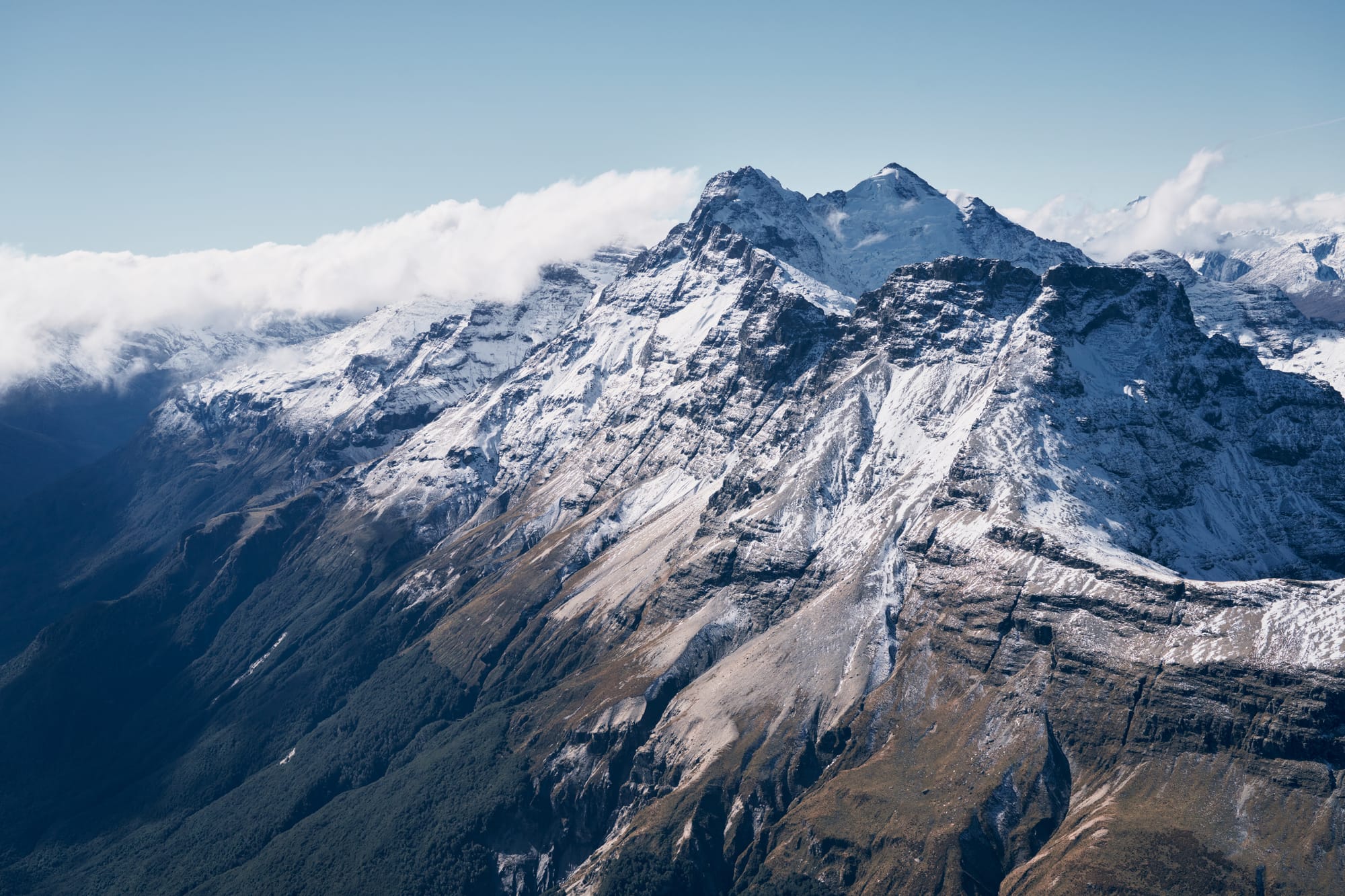
As we snake our way West through valleys, glaciers, and mountain rivers Ashton speaks up through the radio and tells the pilot that he can see animals on a cliff. I haven't brought it up yet, but there's an intimacy to flying a helicopter - the ability to slow down, hover, turn, and shift direction effortlessly is so unlike an airplane that our family is awestruck by the next maneuver. Our young pilot dips to the side and we're circling back to the spot where Ashton saw movement. The next thing we know is we're hovering in place only fifteen feet away from a sheer rock wall, a pack of goats scampering from rock to rock right in front of us. It's surreal and we all instantly become fans of heli adventures. Ashton gets credit from the guide for his spotting skills and we continue West, climbing above icy ridges of the alps, 10,000 feet above sea level.
A turquoise glow becomes visible on the horizon. Our pilot announces that weather conditions have stabilized and we're able to cross over to the ocean. As a side note, we're flying the heli in VFR (Visual Flight Rules). Yes, there's a synthetic horizon on one of the screens, but I would't want to navigate these alps in a fog. We're flying over a wide sandy beach with no signs of civilization or infrastructure. There is no road access to this part of the island and the only foot traffic comes from heli adventures. The landing is soft and our guide informs us that we're going to try and find some New Zealand fur seals.
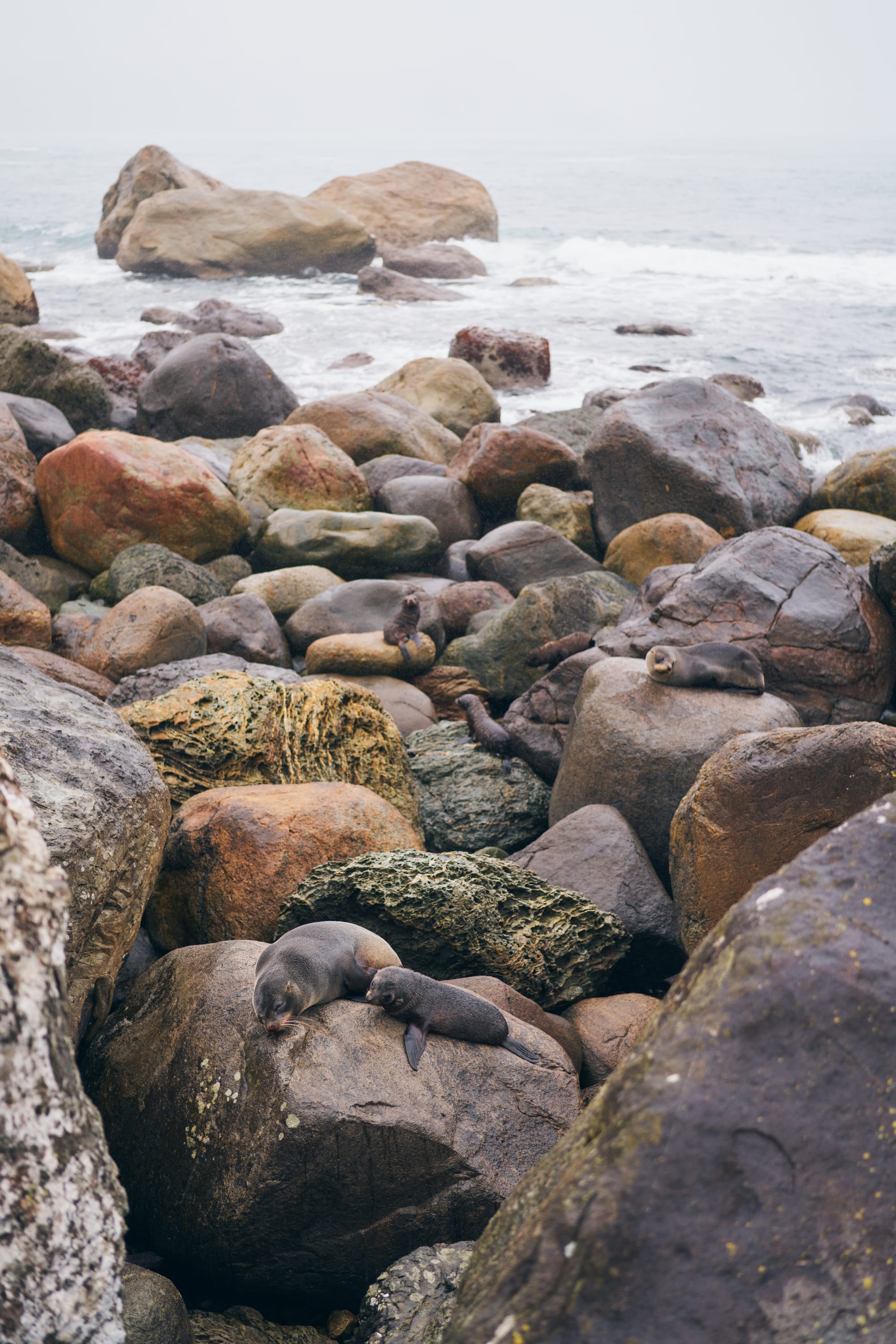
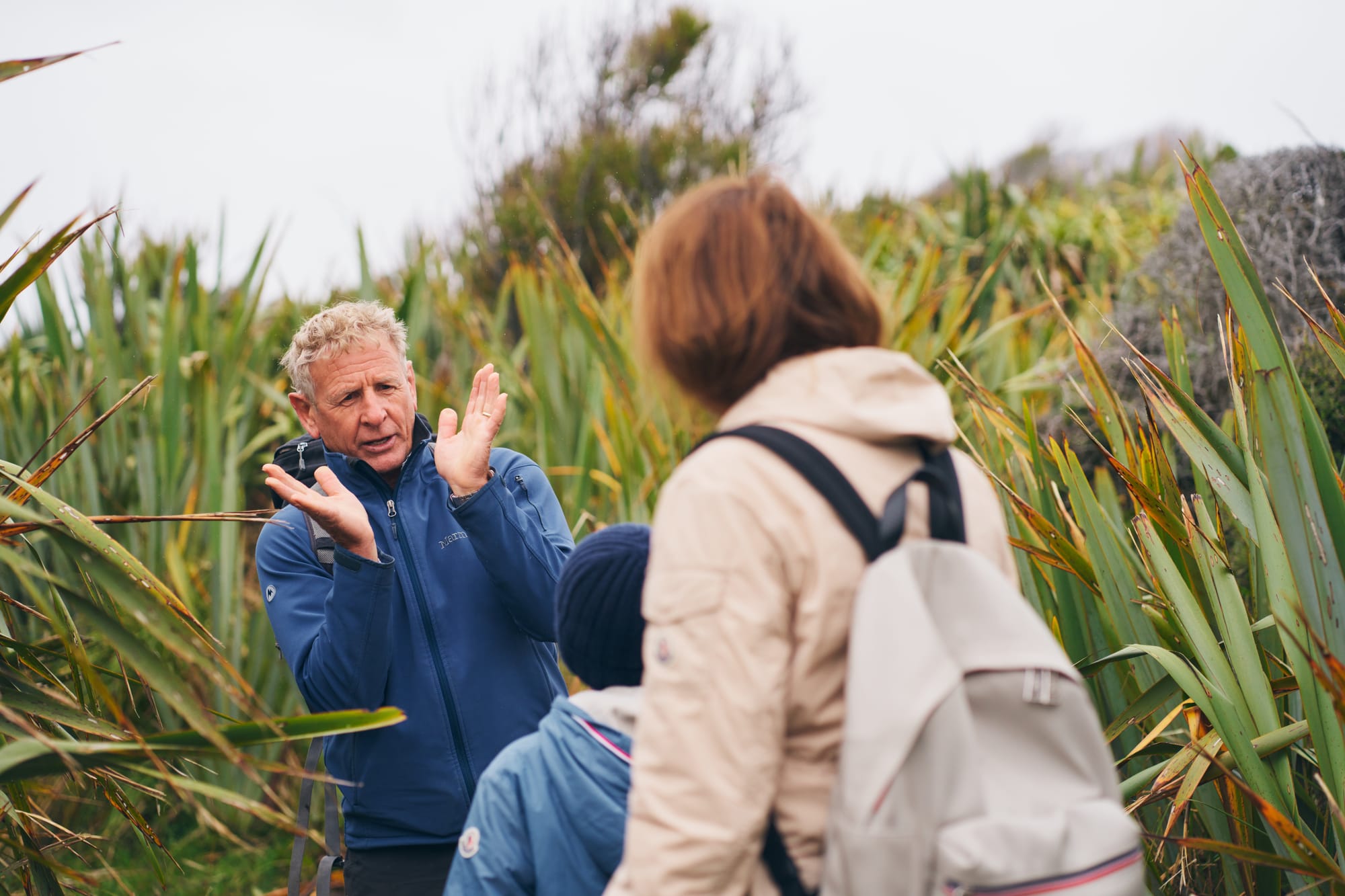
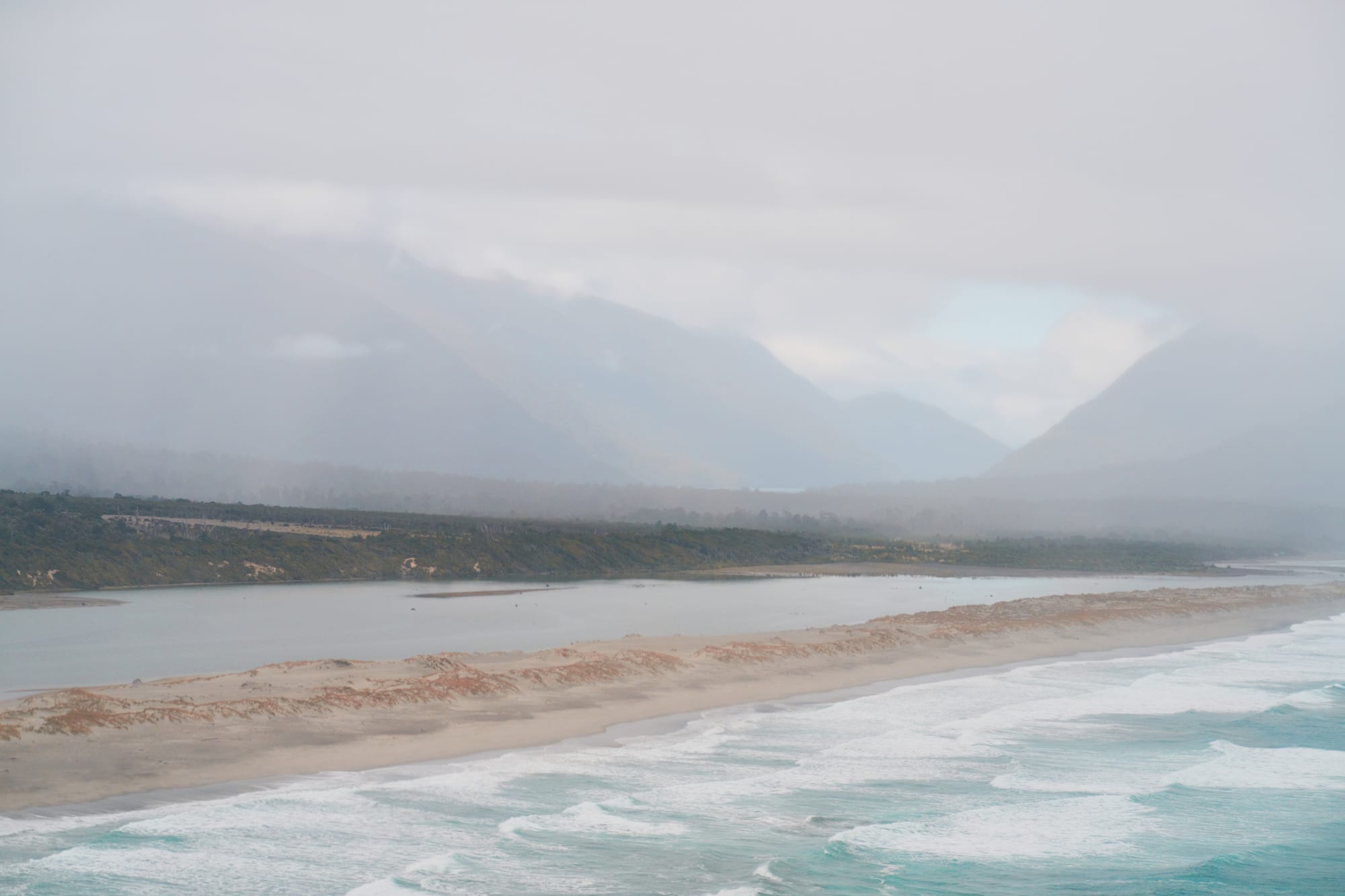
The fur seals hunt for squid out in the Tasman sea and then undulate themselves onto the large black rocks for some rest and recovery. We're closing in on them after a half hour hike through the leafy coastal forest, but they pay little attention to Ashton's squeaks. The lounging seals make the rocks look as soft as down pillows, their bulging forms contorted every which way, collecting the few rays of sun breaking through the fog. Males are much larger and typically more aggressive, but all we find are females and tens of active pups that make the funniest noises when they spot us. The females raise their heads lazily to investigate, but that seems to exhaust their remaining energy and they flop back down. Every parent can relate.
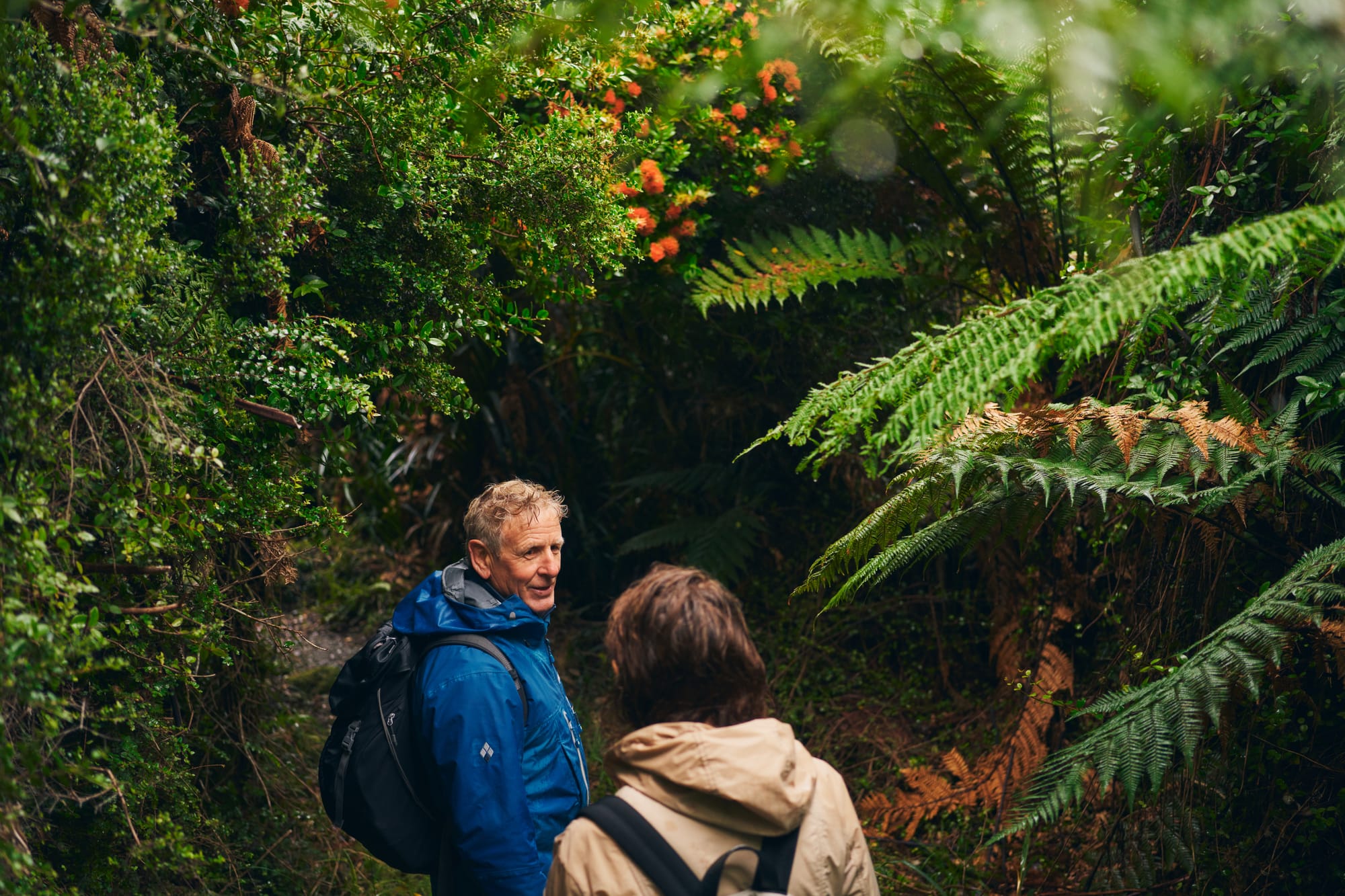
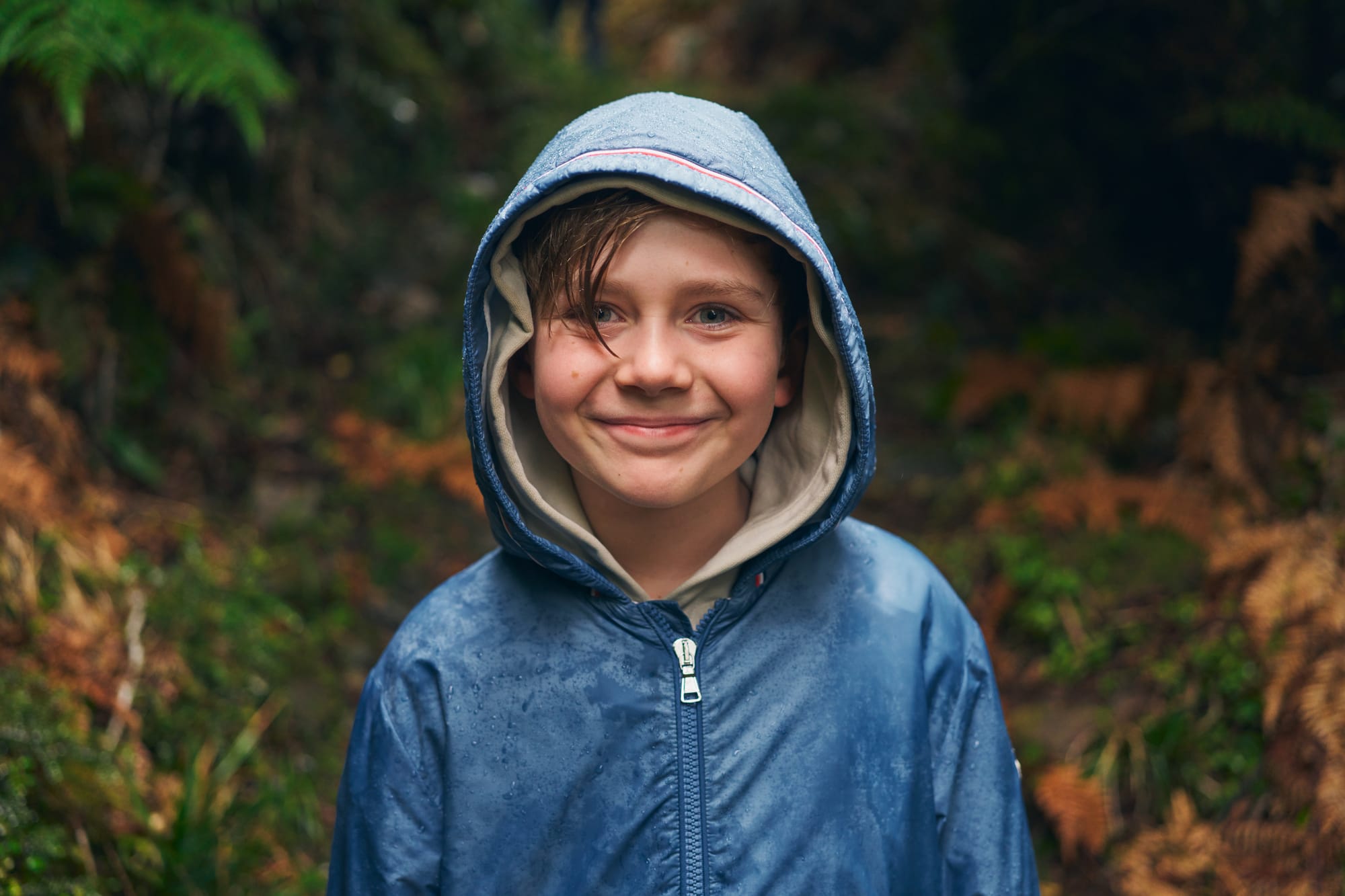
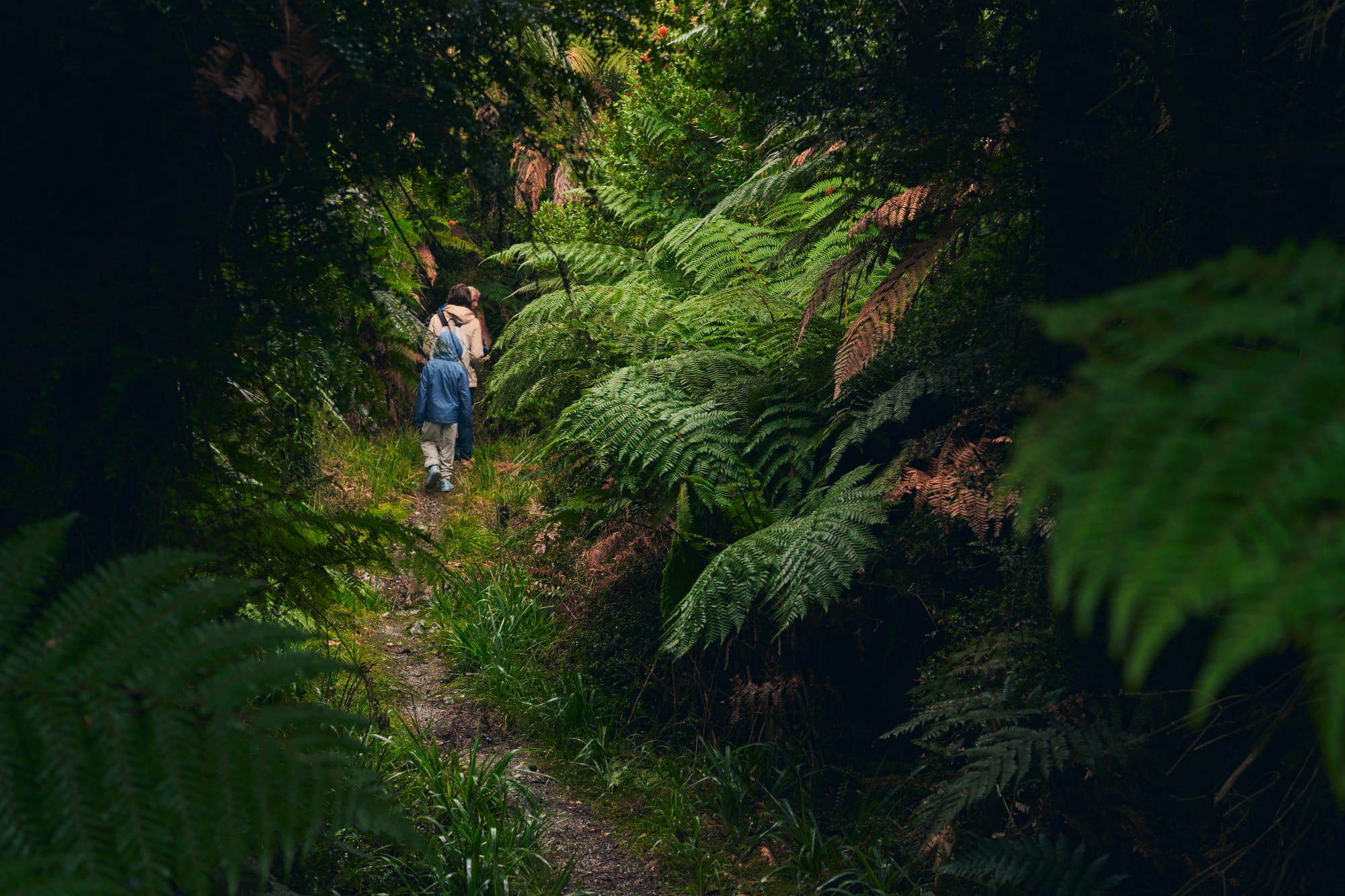
Did you know helicopters can be used for fishing? Neither did I. Seal watching has gotten us all hungry and we're told our helicopter comes with a kitchen. Or maybe a grill. We're told we have some lamb chops onboard, but we'll attempt crayfish fishing in the heli to add some surf to our turf.
The pilot unloads us on the beach and we watch as the guide attaches a hook to the heli. The chopper hovers above the water, slowly moving the weighted hook, trying to latch onto a float that identifies a crayfish trap that sits on the bottom of the ocean. Soon a metal cage is dripping water from fifty feet in the air and is being delivered to the shore. Upon inspection we find that the cheeky bastards have evaded our ingenious lunch traps and we'll just have to rely on the overpopulation of sheep to sustain us. Ashton assist resetting the trap and we lift off in a plume of sand.
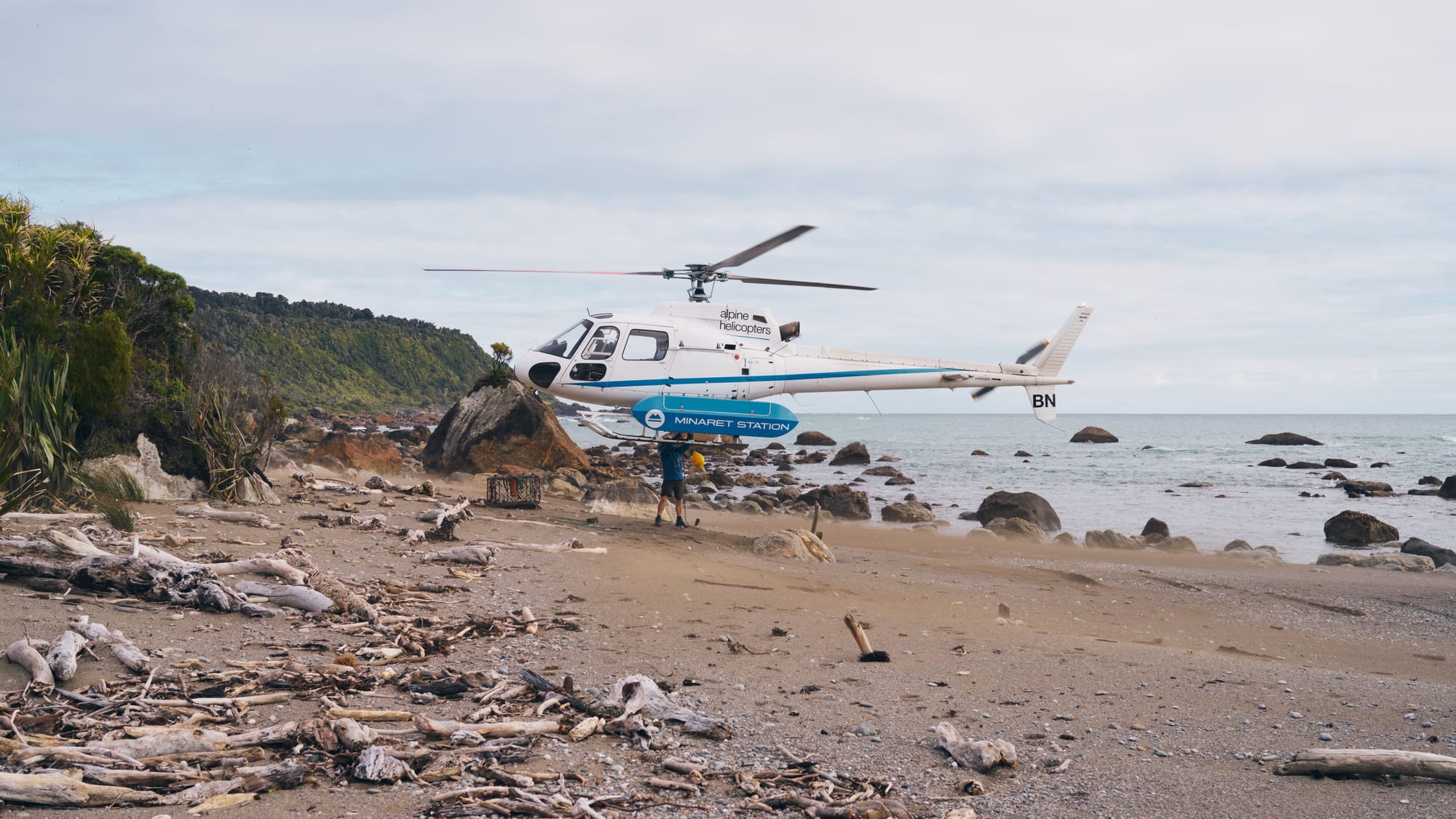
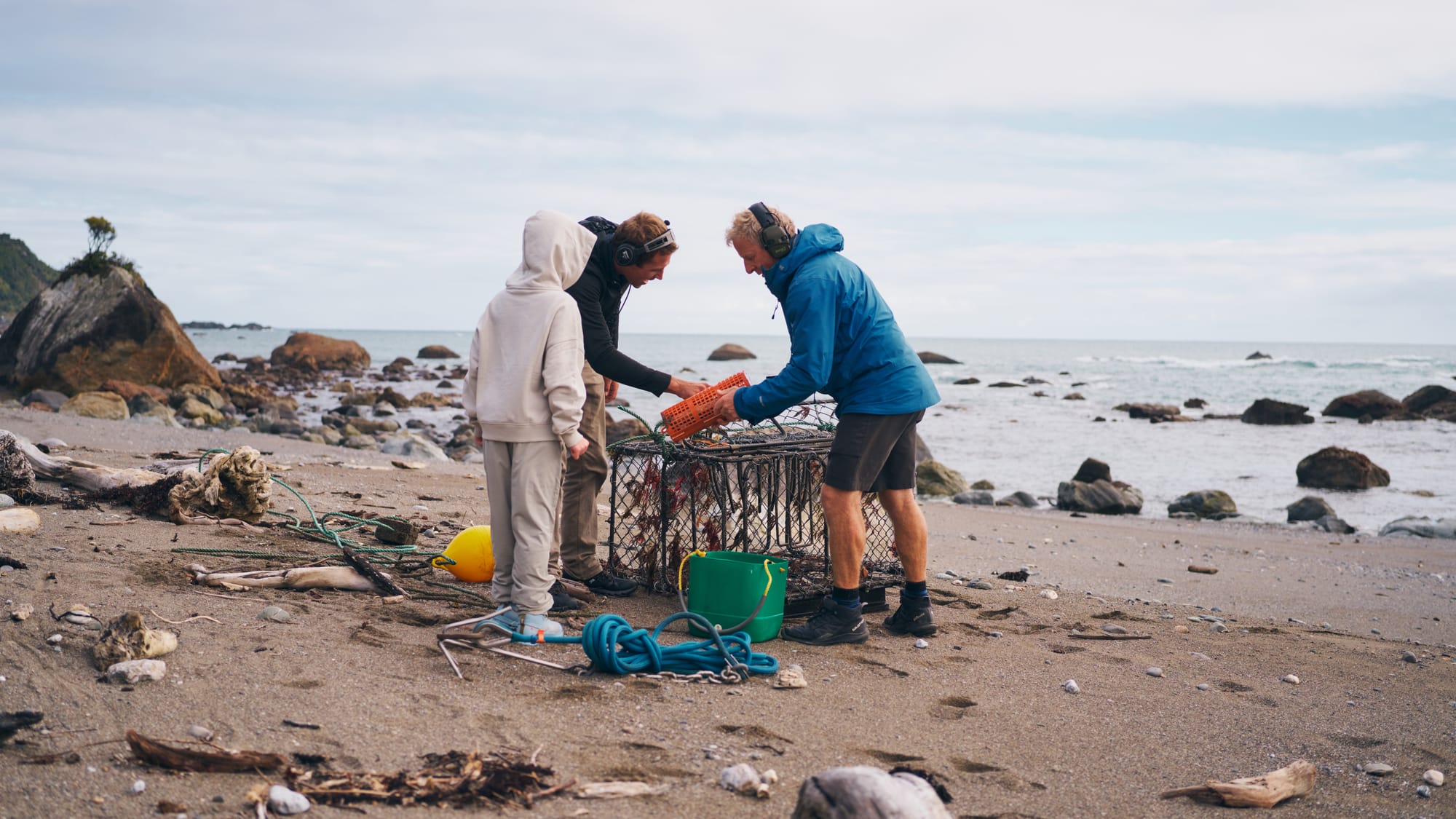
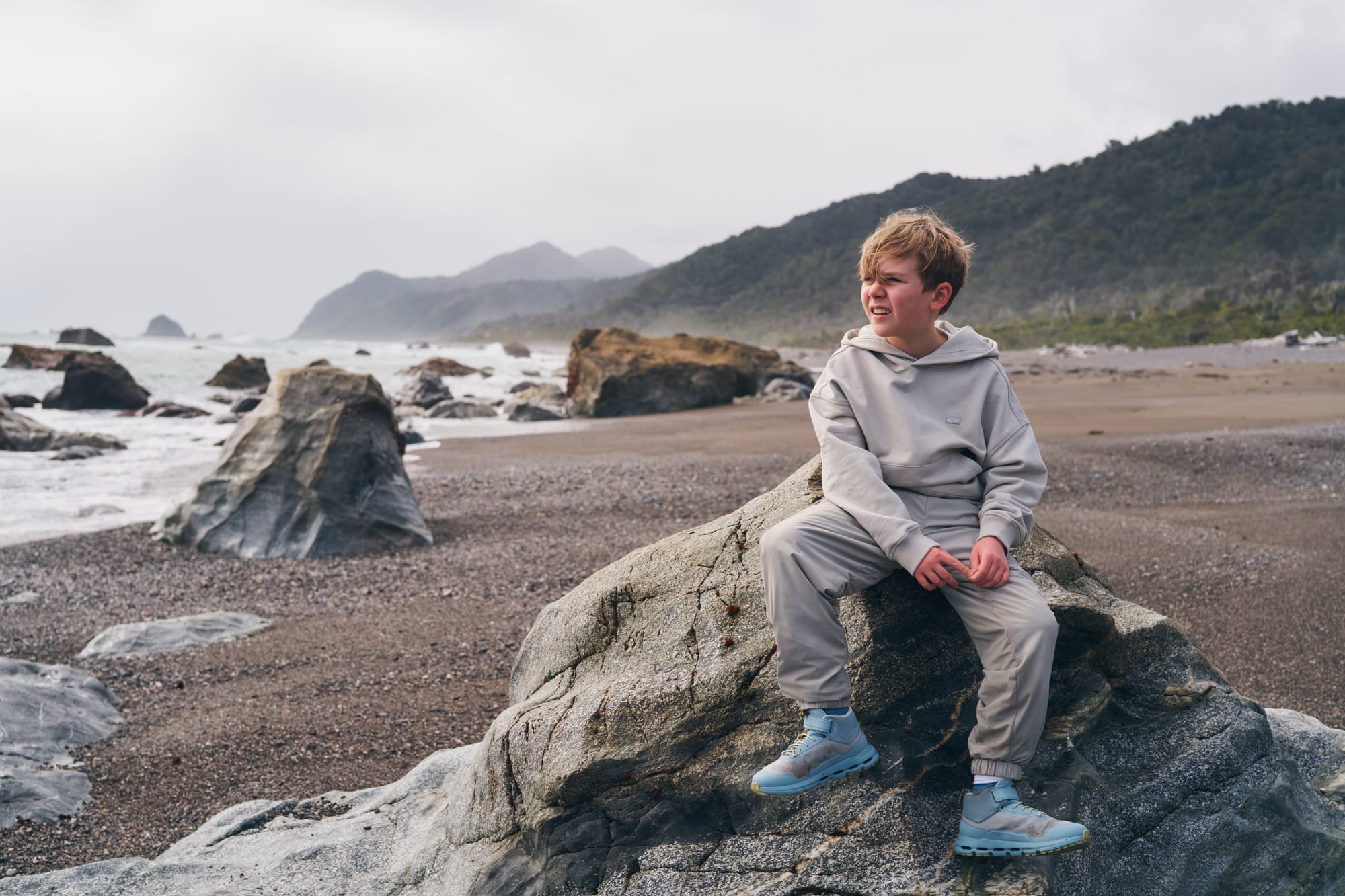
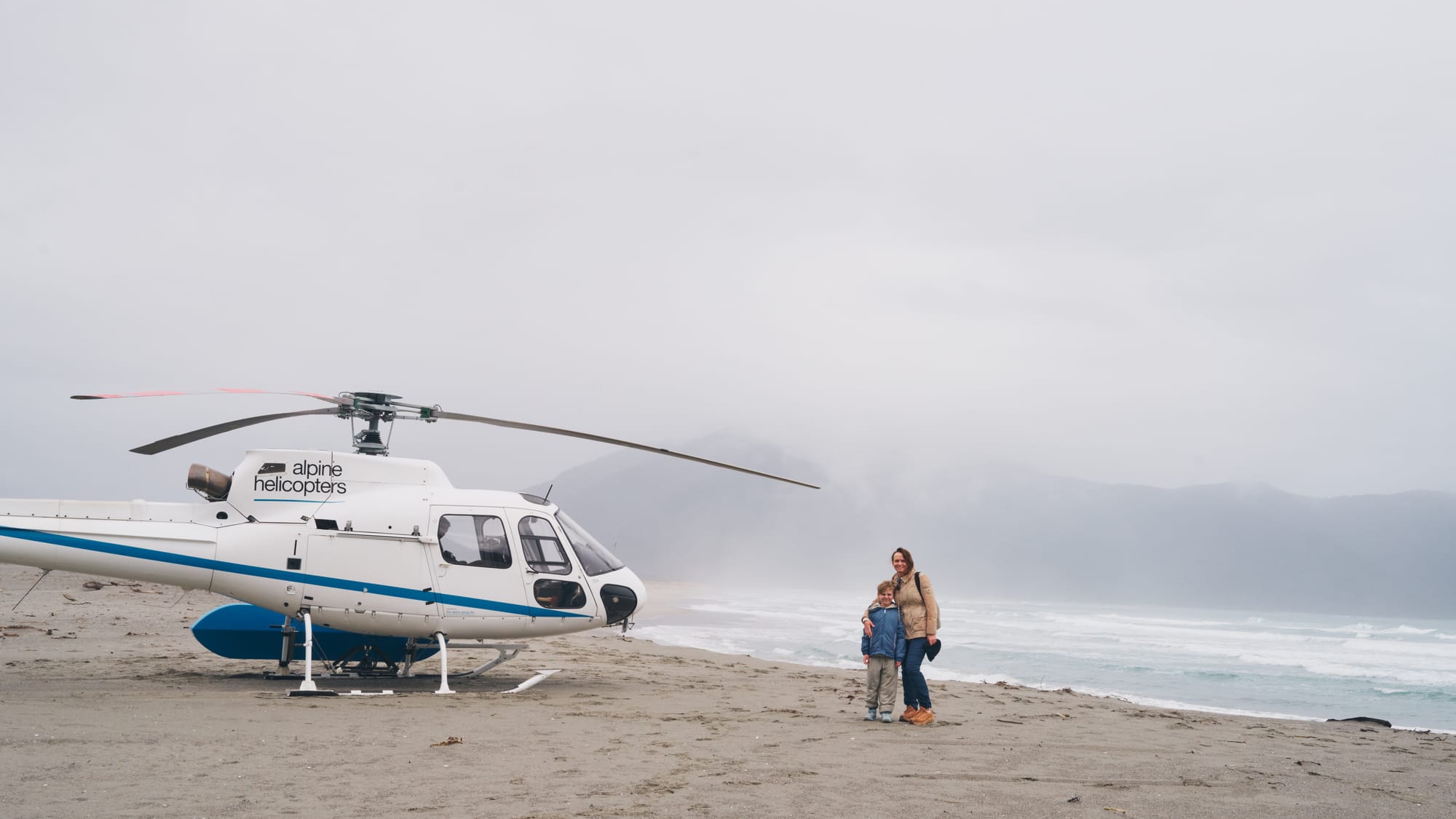
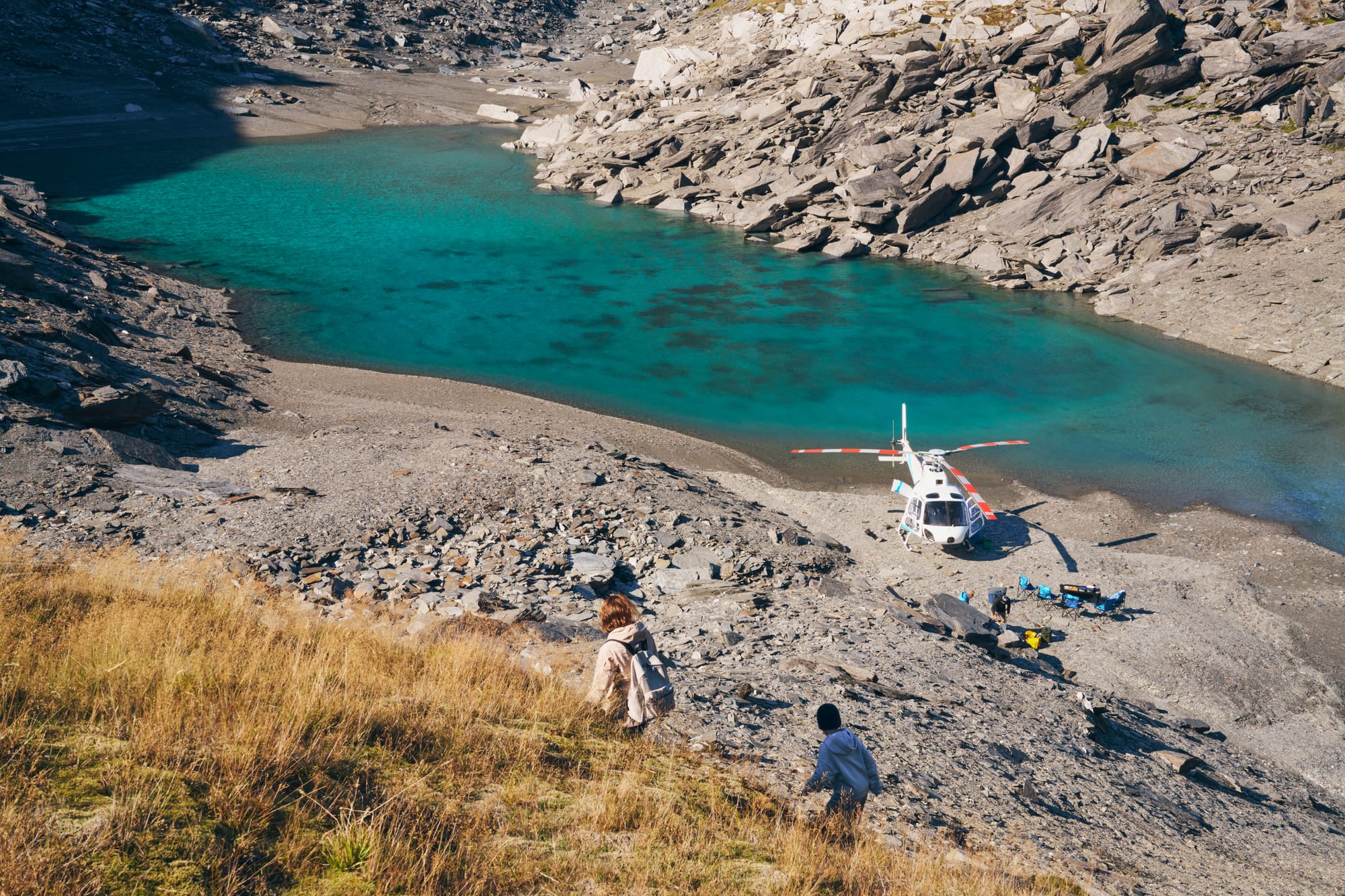
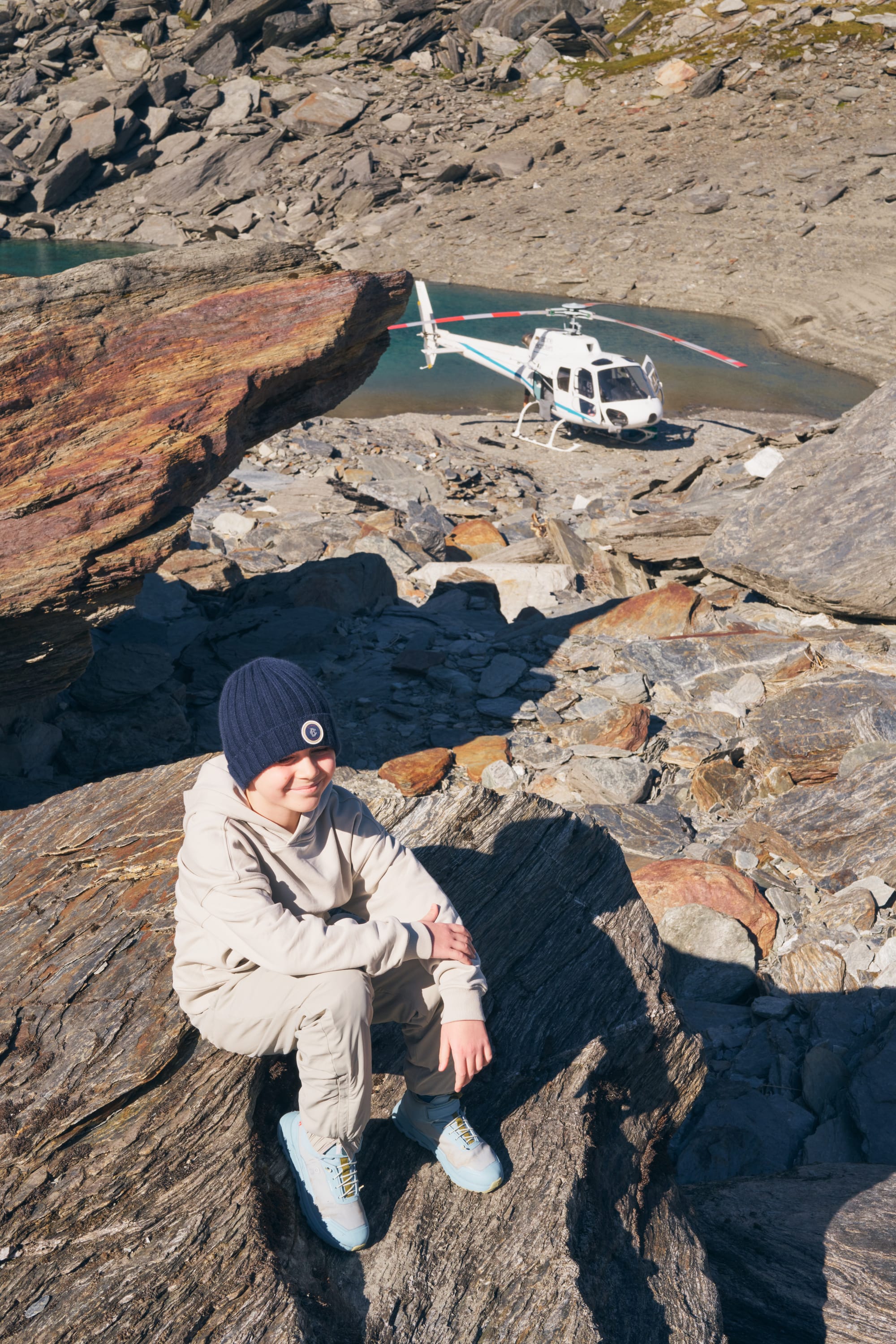
As we're flying over the alps and hundreds of high altitude lakes our pilot spots a valley sheltered from the wind and announces "I haven't landed here before" prior to setting us down on the shore of a brilliant cyan lake that's fed by a stream ten feet away. Shortly a small camp is erected, the coal grill is making pleasant crackling sounds, and we're sipping on chilled wine while basking in the afternoon sun. We joke around that everyone on the crew has multiple jobs as the pilot, ahem, our chef prepares delicious seared lamb chops and shrimp.
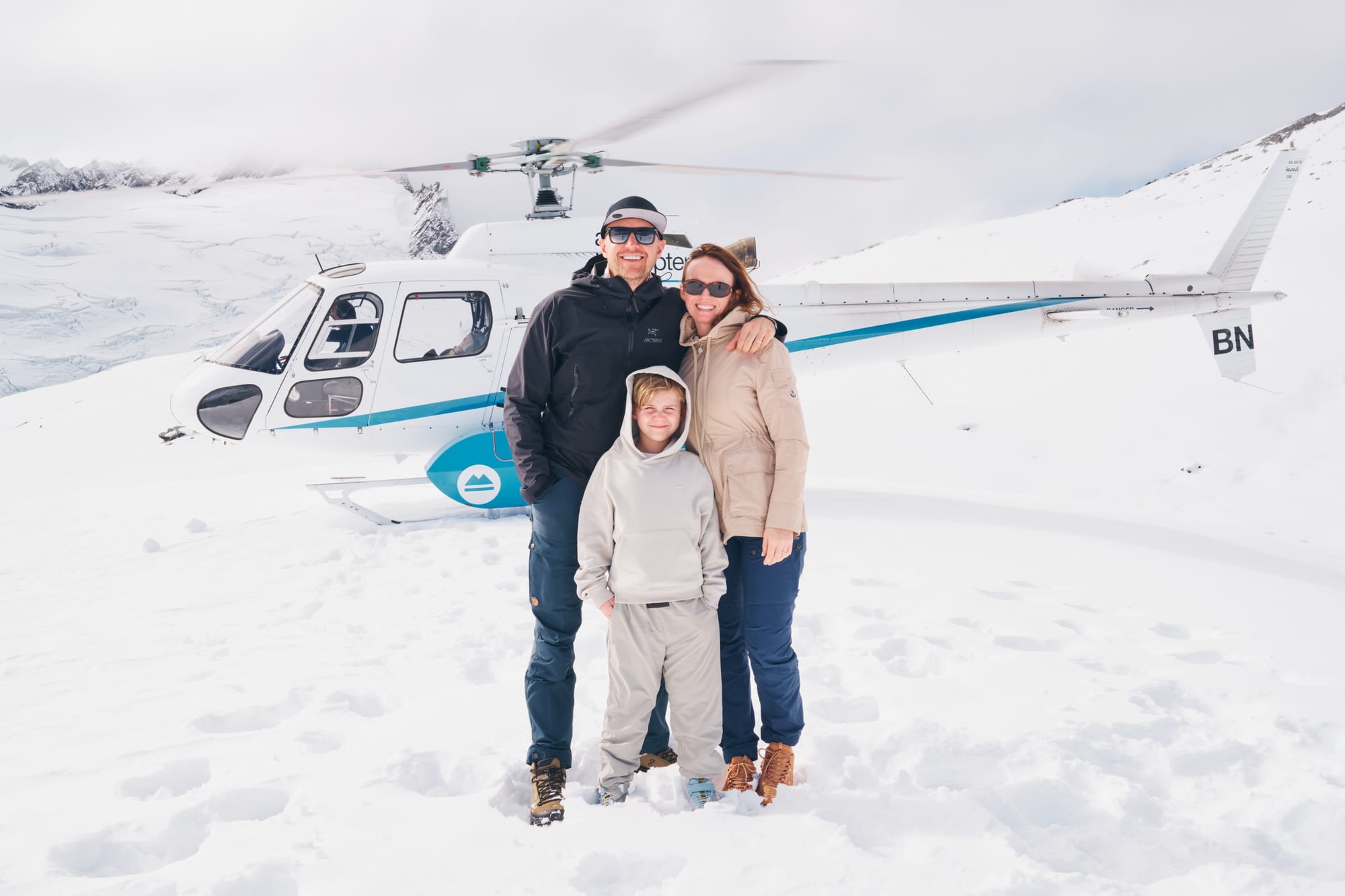
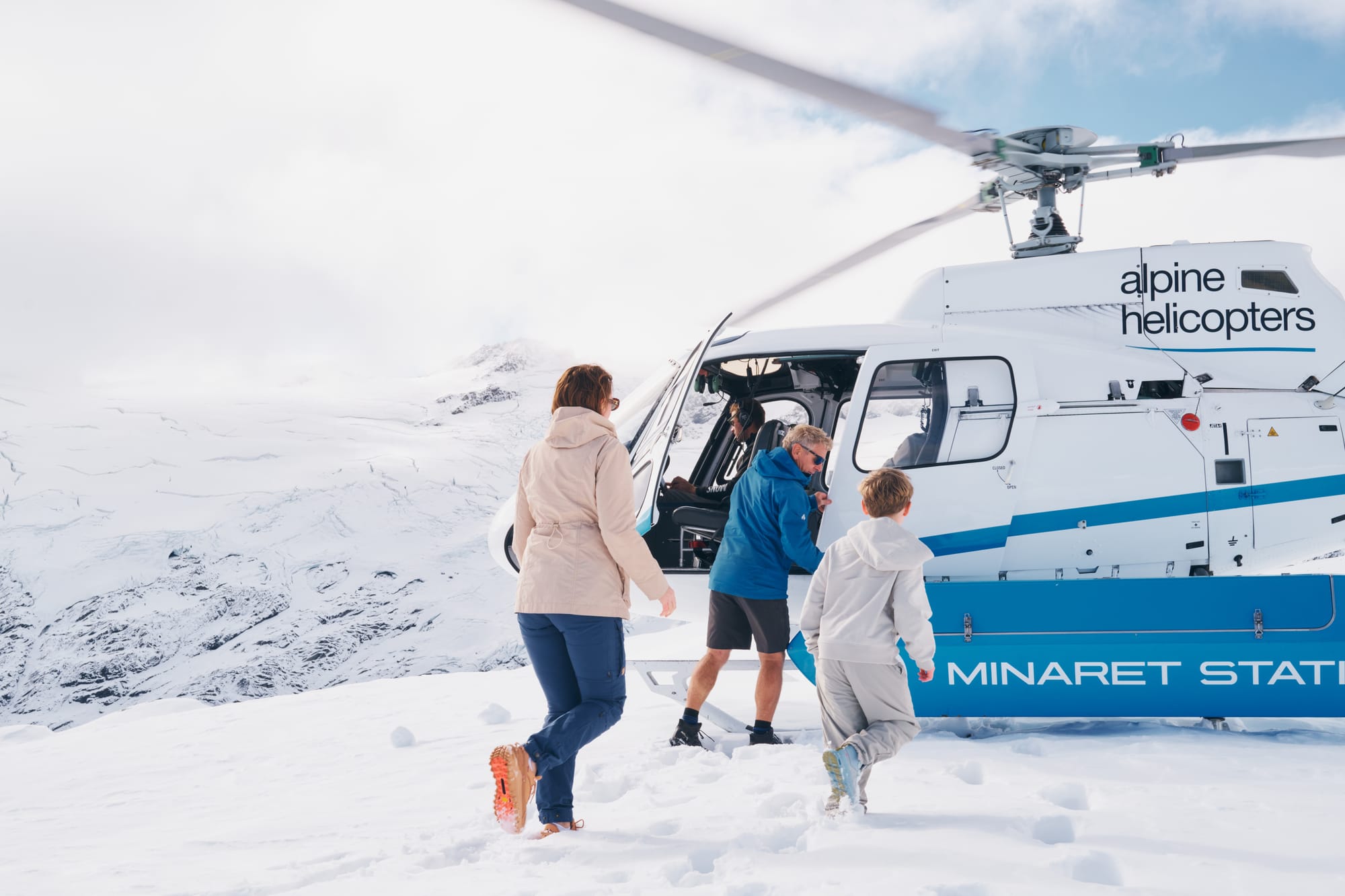
We spend the afternoon flying around, visiting Milford Sound from the air, and landing on a snow capped mountain for family pictures and an impromptu snowball fight. This has been an absolutely magical day that we'll remember for the rest of our lives.
Milford Sound
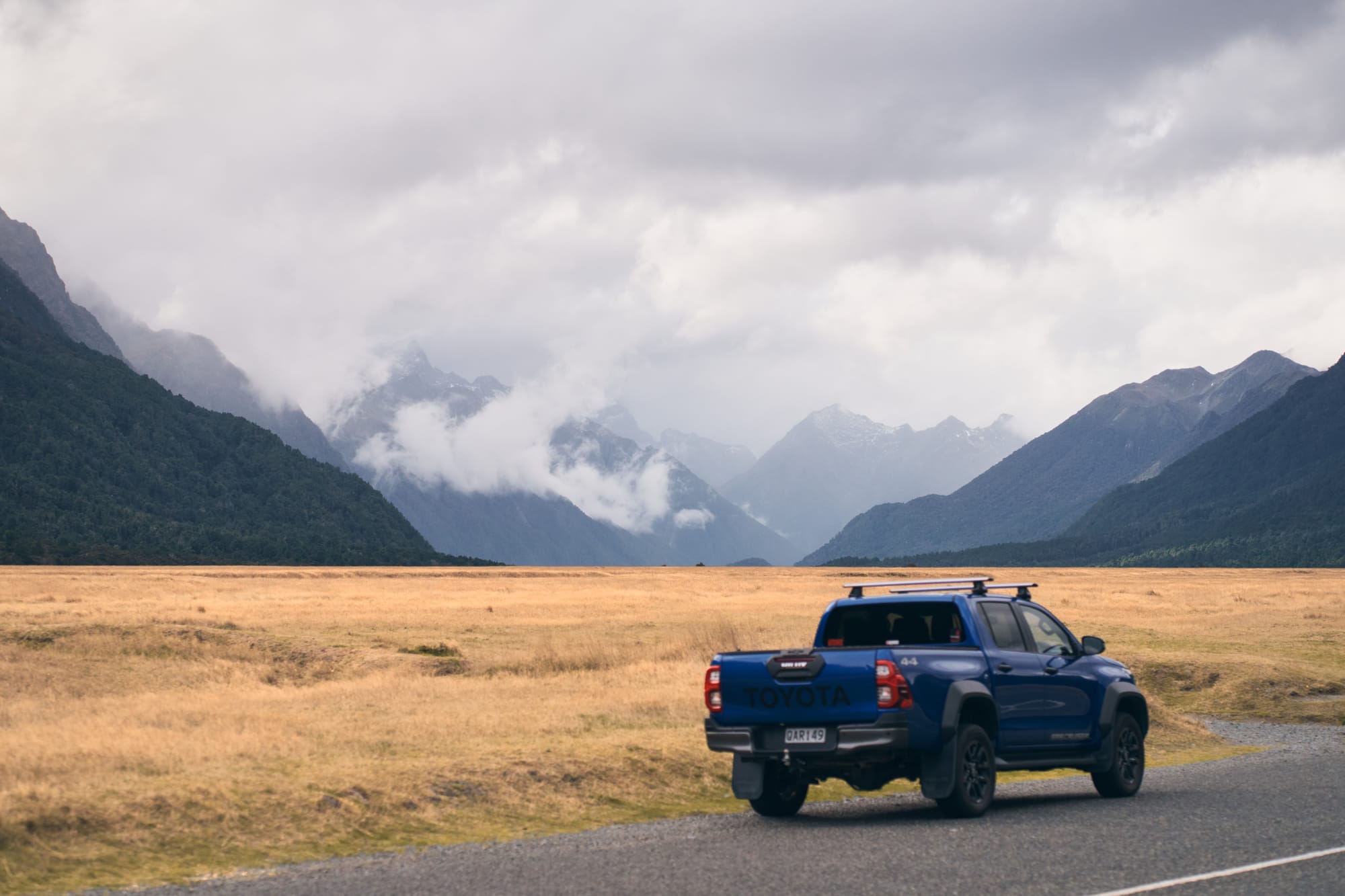
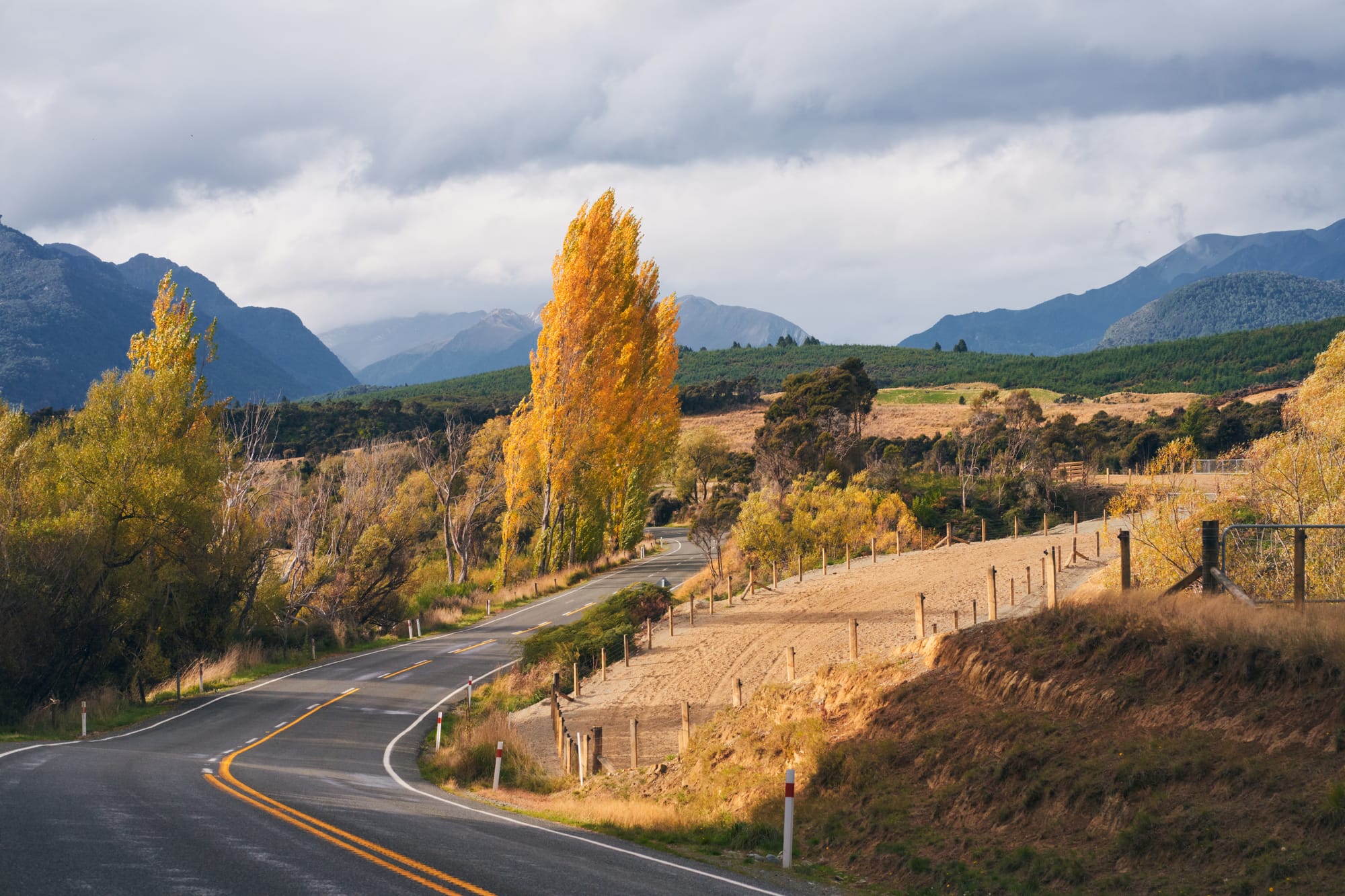
The next day we're kicked out of our alpine heaven and are picking up a rented Toyota Hilux. It's a proper blue pickup with knobby tires and my overlanding compatriots send me congratulatory texts while Virginija rolls her eyes so hard that all I can see is her whites. We're driving to Milford Sound today through what is often called the most picturesque road in the South Island. Storm clouds in the distance make for a nice backdrop in my landscape shots, but I'm a little muffed because it's in the general direction where we're driving.
A valley etched by a receding glacier ends in a traffic sign and a sheer vertical cliff wall. The traffic light controls who gets to enter the Homer Tunnel first - a single lane, 1.2 kilometer long shaft etched into granite that took over twenty years to complete. The work started in 1935 and was largely done with manual labor, dynamite, and work crews camping in risky high altitude alpine conditions throughout the year. Which reminds me - the cooling in our bedroom is constantly off by, like, half a degree. Need to get it fixed.
It's foggy and raining by the time we emerge from the Devil's rectum. We check into our lodge that sits next to a mountain river, pop over to their restaurant, and wrap the day up with a delicious meal at Pio Pio. The ambiance, drinks, and food are all outstanding. It's confusing, because we're effectively in a national park, but the lodge and the food "smell" private to me. I interrogate the lady that brings us the food and am proven correct. The owners of the lodge lease the land from the national park, but the institution is privately run. I reflect that it is a clever way to blend private and federal resources - something we don't do in the US at all when it comes to national parks.
Another realization strikes us. There's really not that much to do here. We have a boat cruise scheduled for tomorrow, but outside of a few hikes Milford Sound is a "day trip" destination. And we saw it out of our rotary sky limousine, so, you know… We shuffle a few of our bookings around and decide to check out after our boat trip.
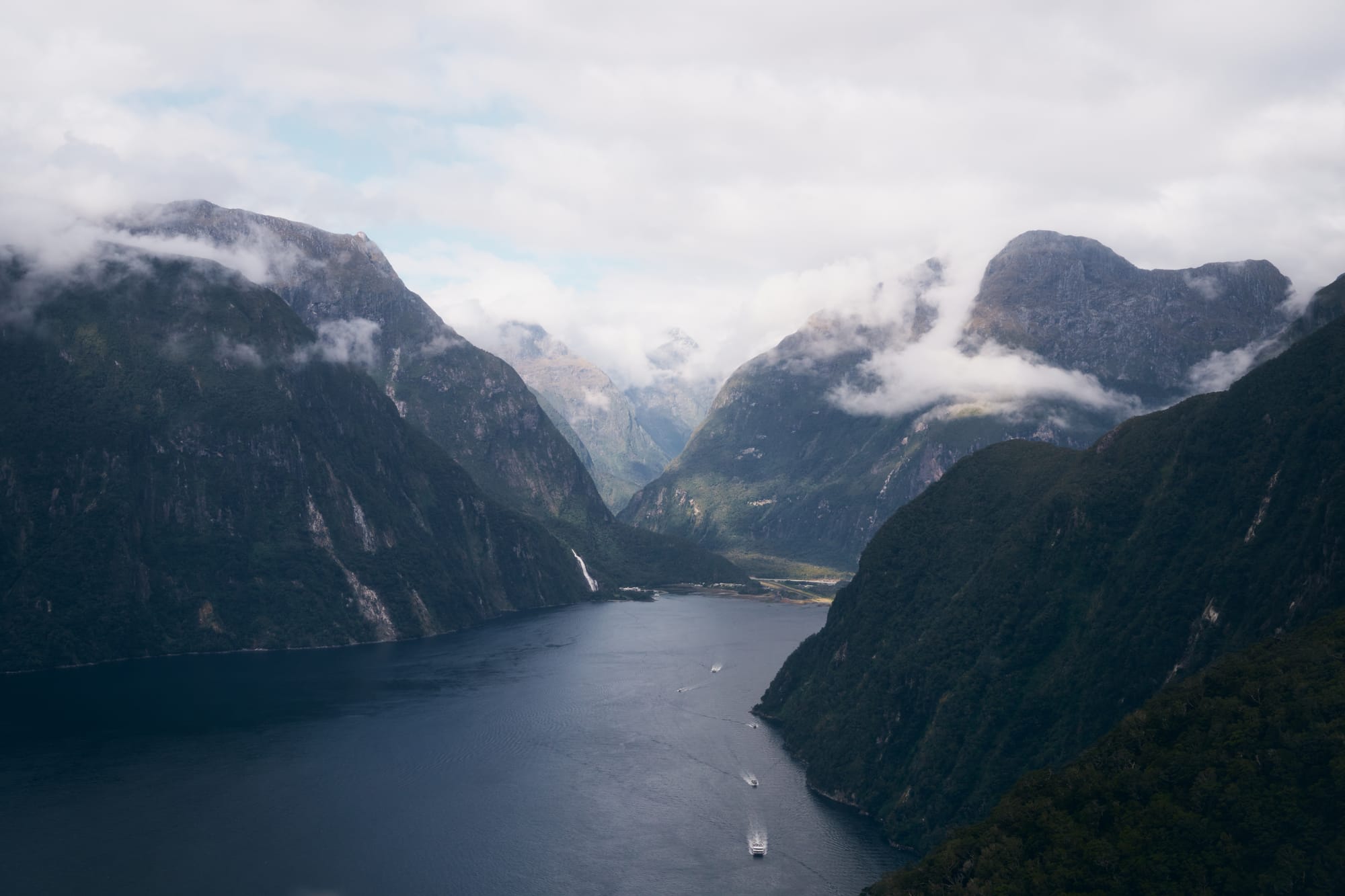
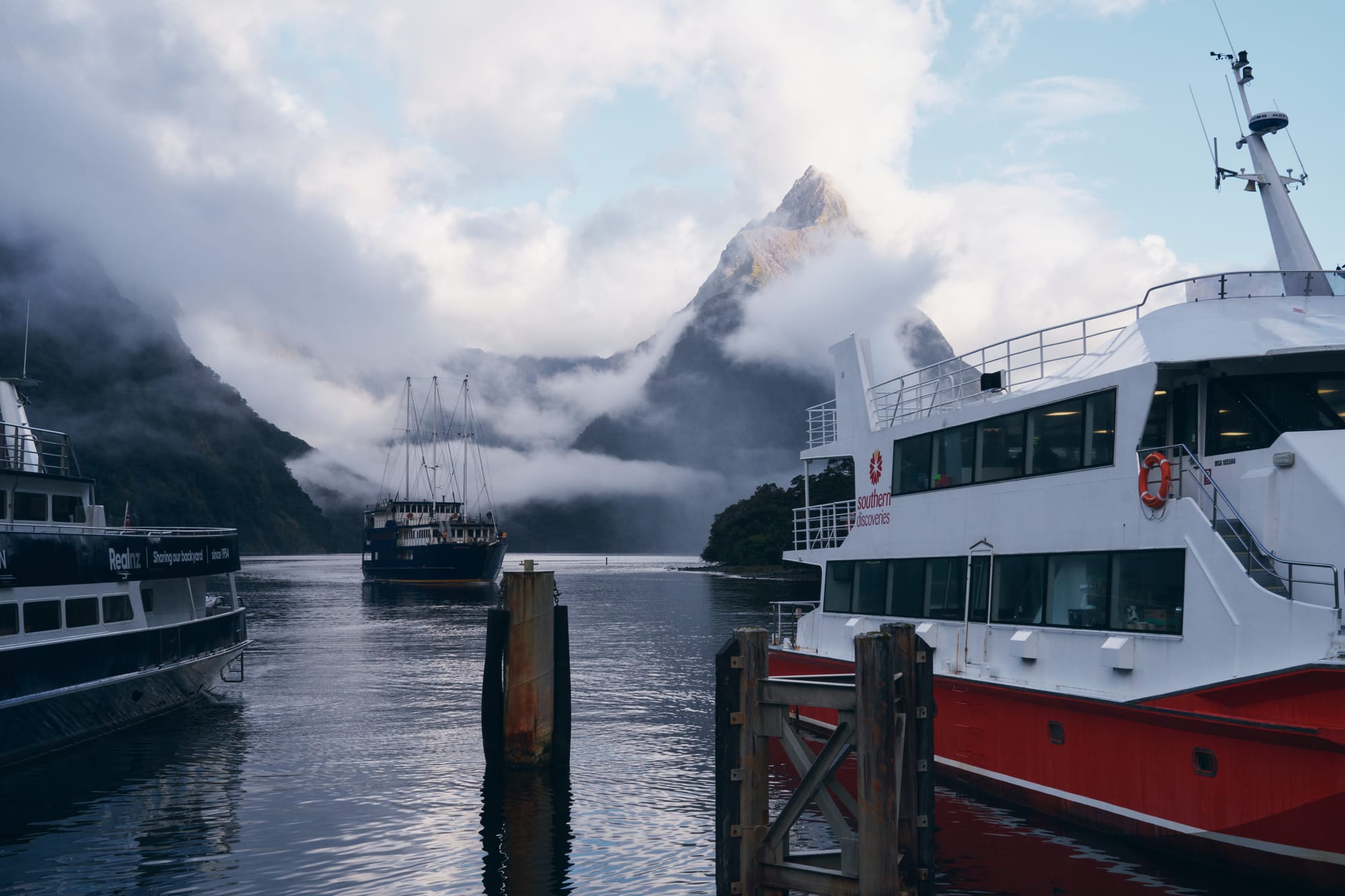
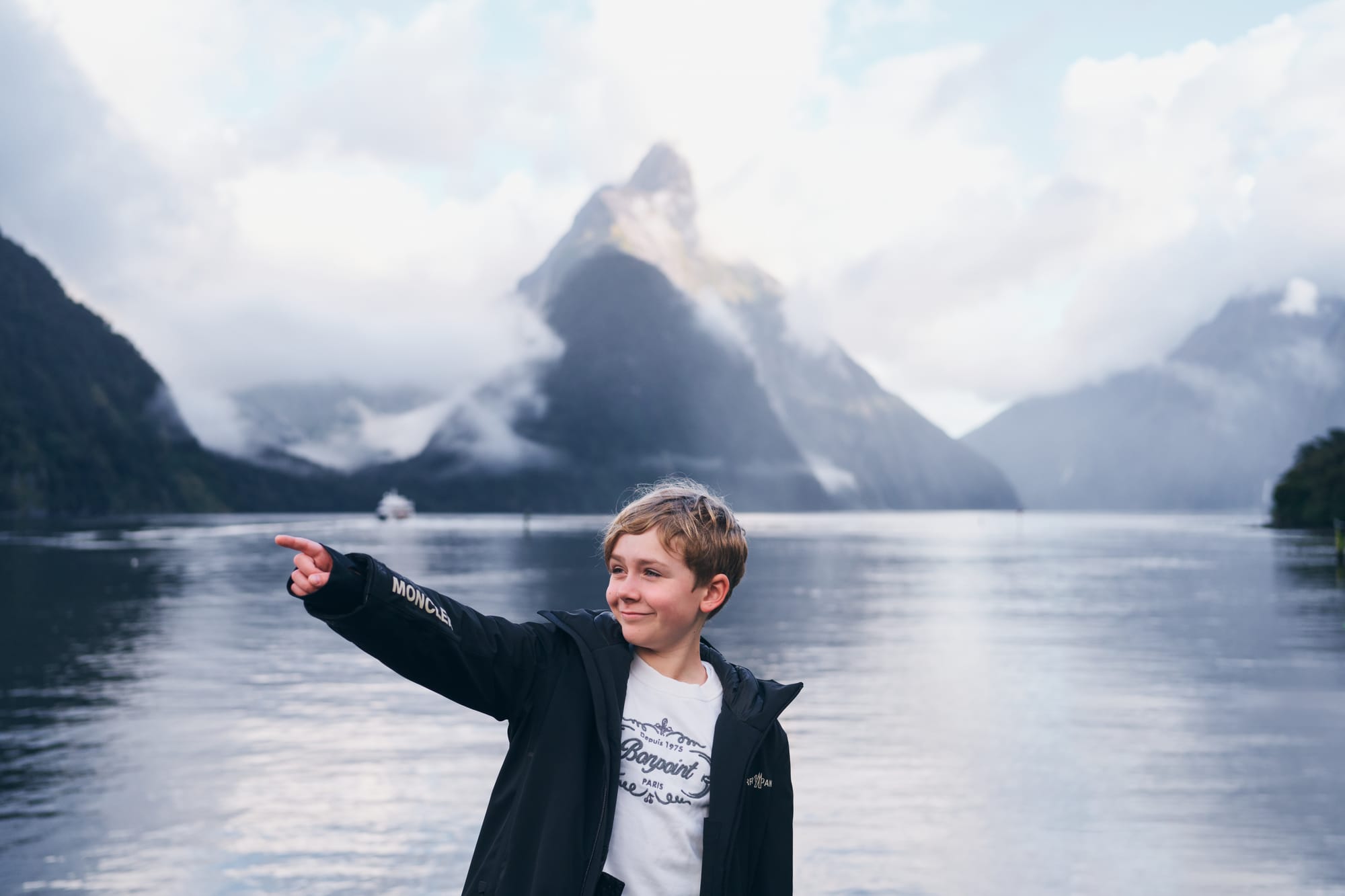
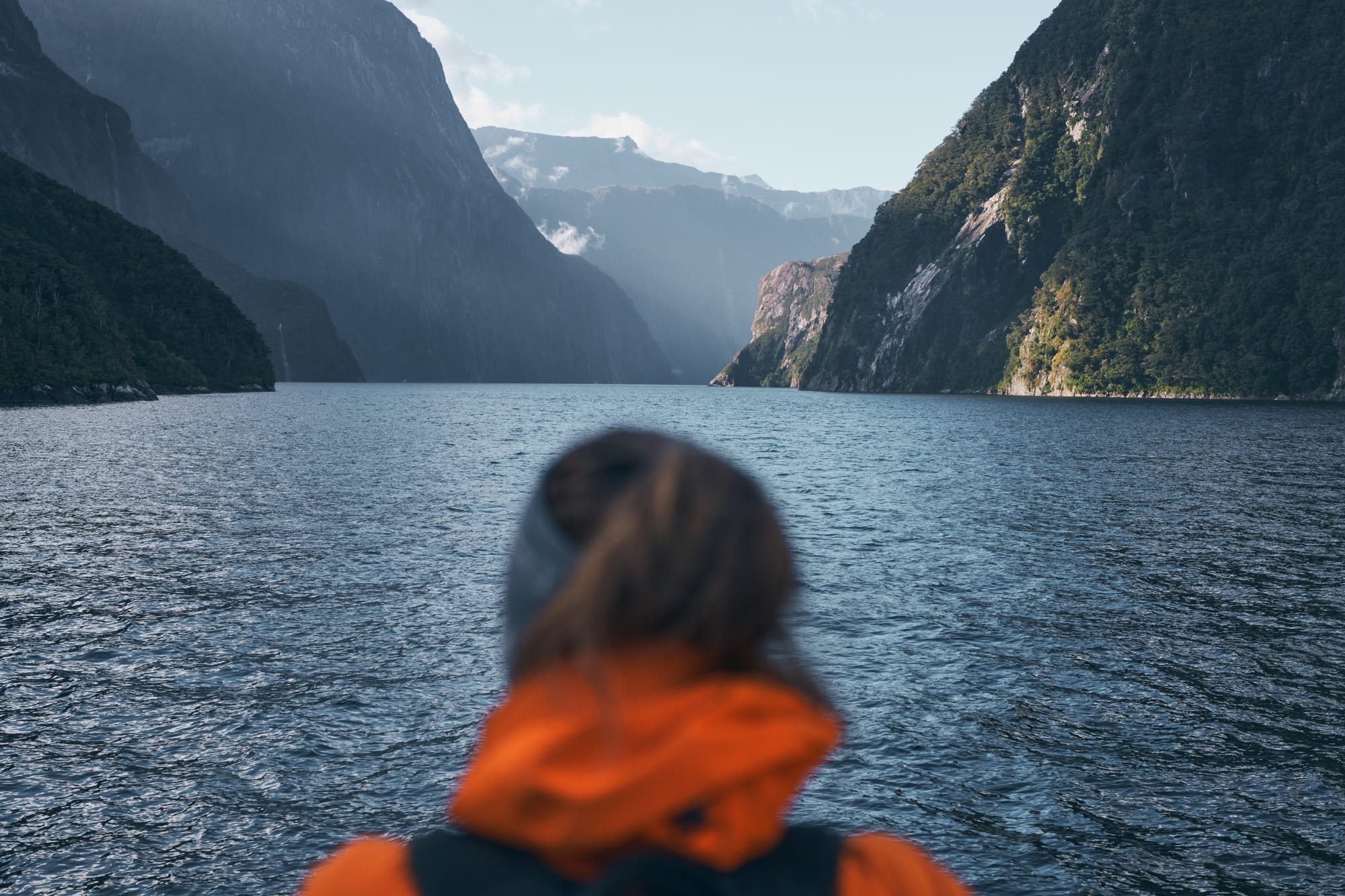
There's a whole story about how a sound is different than a fjord, but I'll save you from the national geographic session. Milford sound is actually a fjord. It's a massive water system that resulted from the glacier applying millions of tons of pressure on a mountain range and carving out a V shaped valley. The scale is massive. Thousands of waterfalls cascade down the walls of the fjord, looking like strands of silver on the granite from a distance. To top off the adventure our boat is escorted by a pod of playful dolphins. Ashton announces that he saw a rare pink dolphin. Who am I to argue?
Rosewood Matakauri
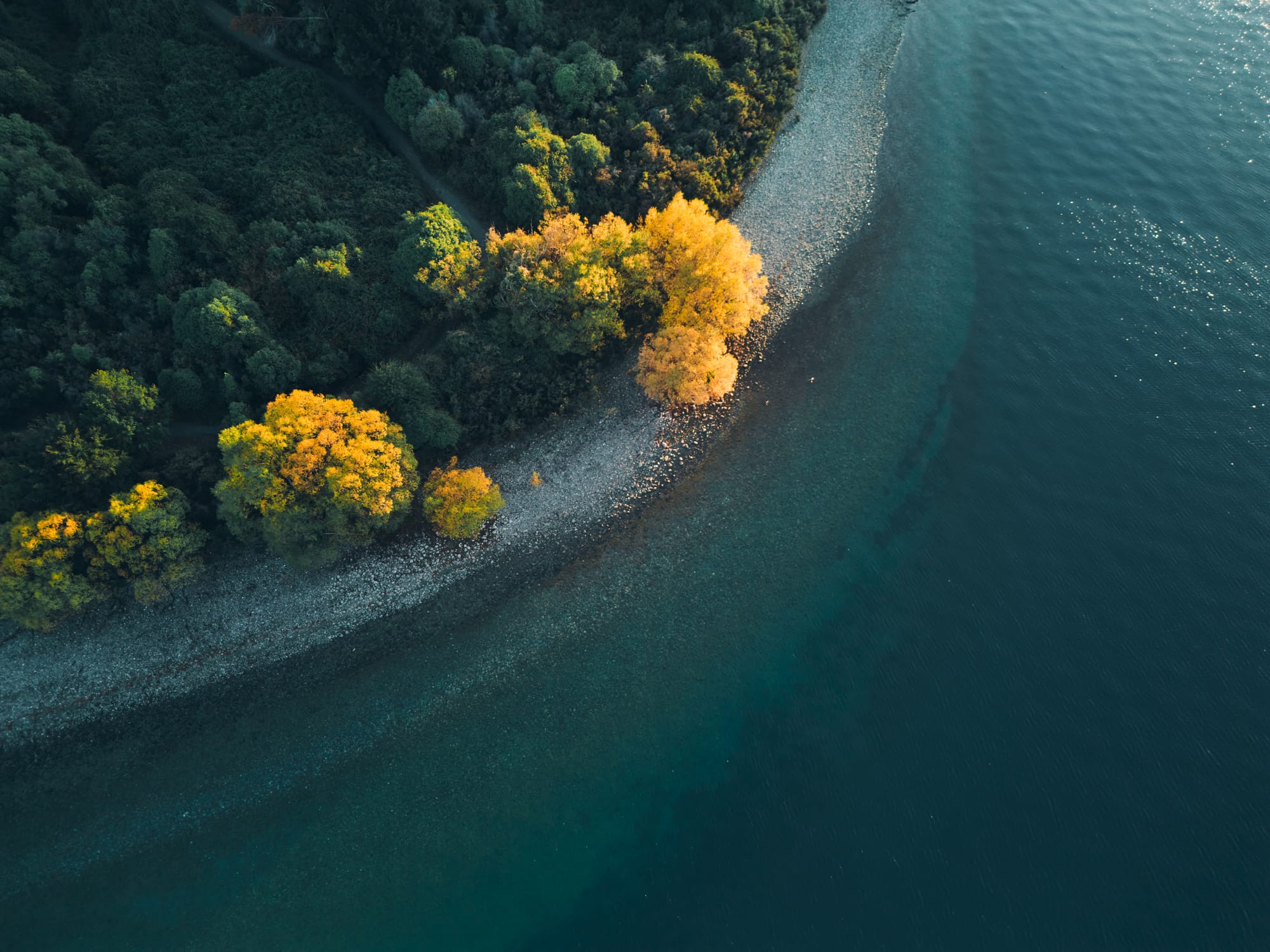
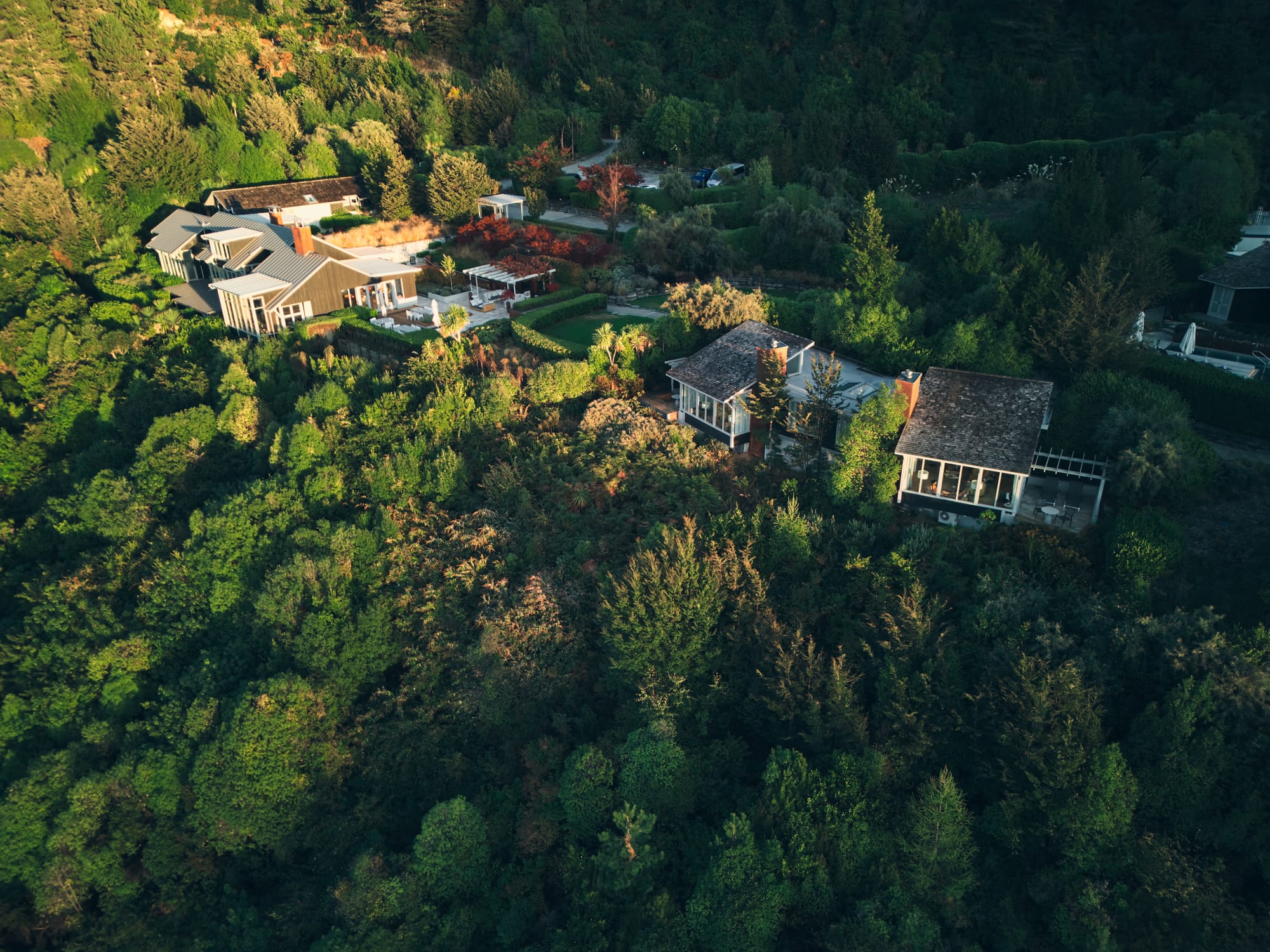
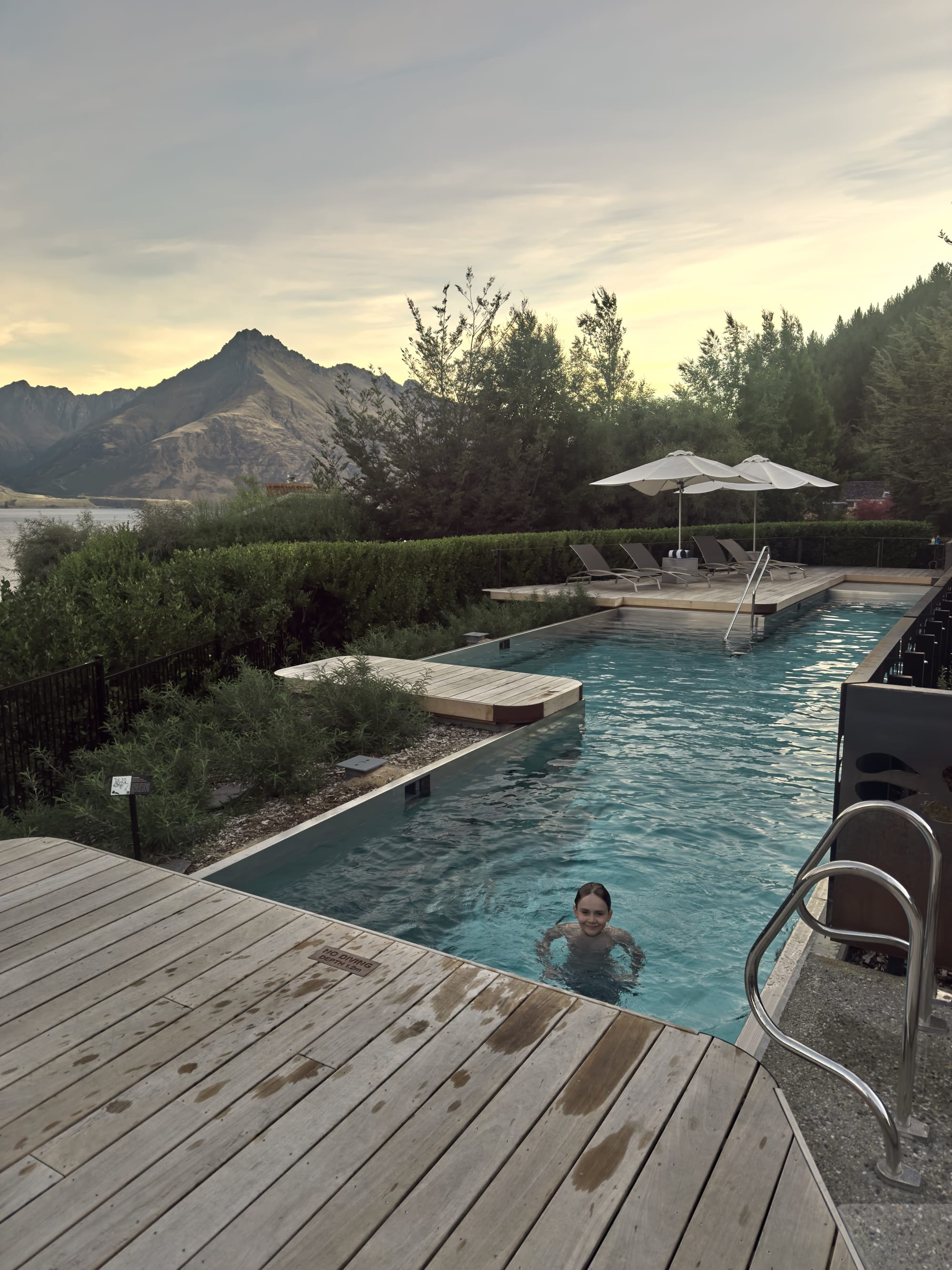
We're on the Southern end of the island and the plan is to drive North, stop by Lake Tekapo, then continue all the way up to Flockhill lodge - our final stay. My initial route, assisted by Grok, by the way, has me driving for over 8 hours from Milford Sound to Lake Tekapo. I enjoy my Hilux, but not that much. Virginija does not resist to lighten the load and books us for a night at Rosewood next to Queenstown to cut our drive in half. She schedules herself a massage, locks herself in the luxurious bathroom, and sends us away to explore the outdoor pool, sauna, and plunge tub. I bounce between the hot tub and the icy plunge pool, the lake and mountains in front of us slowly sinking into the coming dusk. Ashton takes up the dare and tries out the ice bath, as well. Rosy cheeked, happy, and hungry we go searching for mom, worried she may abandon the rest of the trip for an exchange of a few extra days at the spa.
Mount Cook, South Island
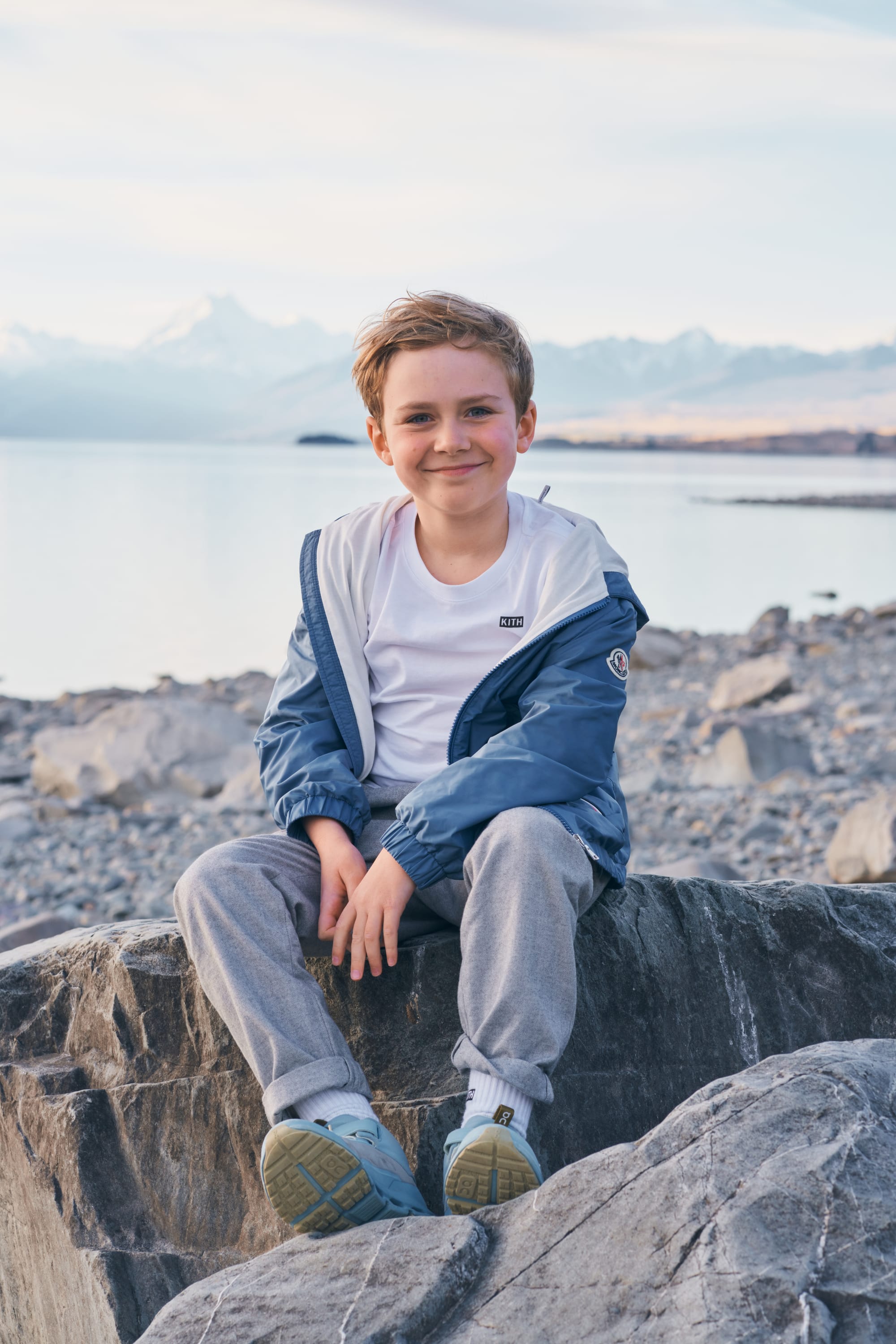
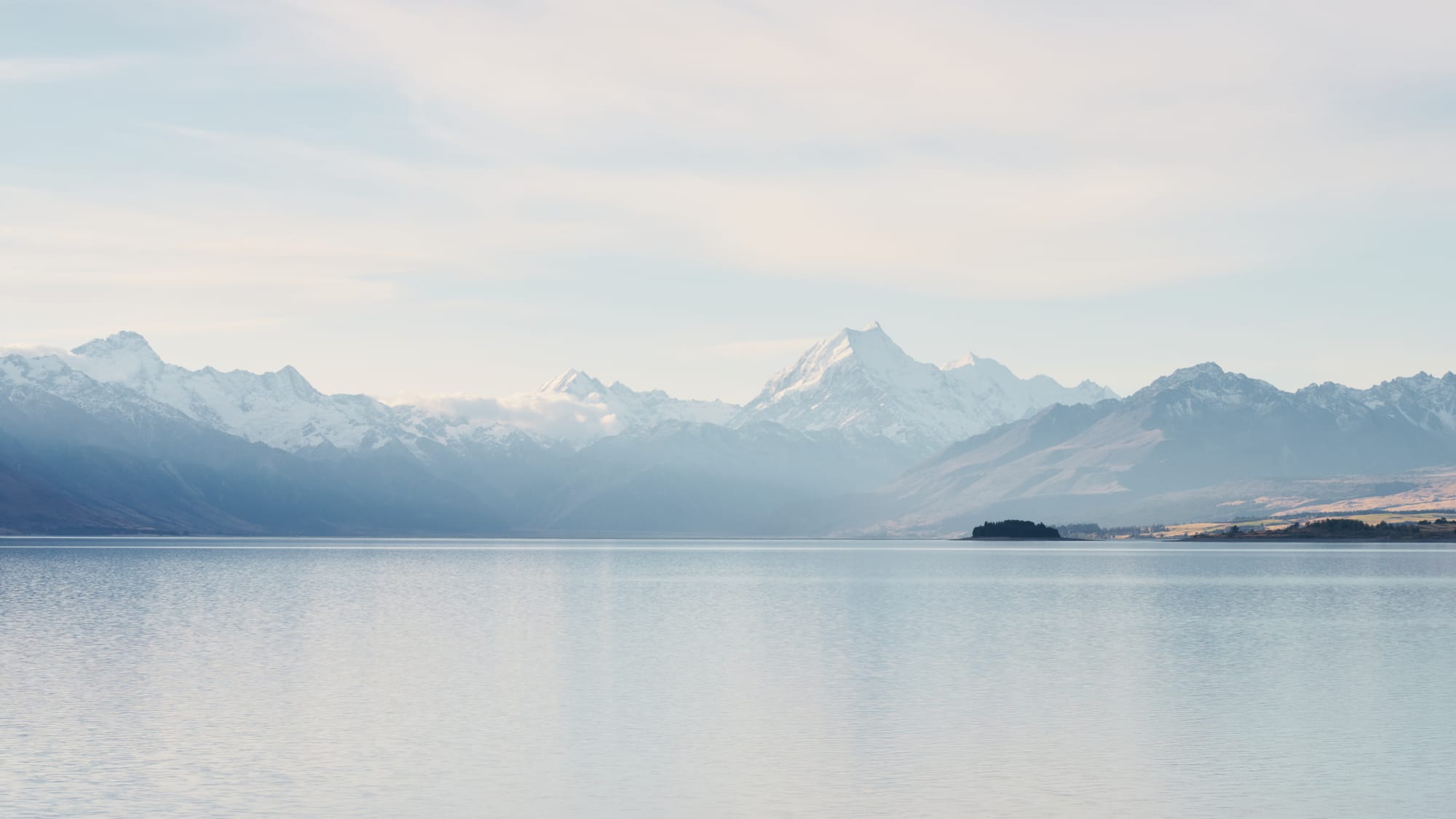
The island starts out wild in the South and then gets a little tamer the further North one goes. We're going to swing up to Mount Cook today, a short detour next to Lake Pukaki. There's a short, accessible hike there called the Hooker Valley track that even my gentle, comfort-loving compatriots may be willing to undertake. It's late afternoon by the time we drive north on 80 to the base of Mount Cook. It's worth saying that everything in this part of the island is incredibly remote and low density - a sheep farm can be found here and there, but a petrol station may require an hours worth of driving. For whatever reason we're ill equipped for our hike ahead - we skipped lunch to get here, snacks are limited to a scattering of mini chocolates Virginija nabbed at the hotel, and we're carrying a single bottle of water. We enter the parking area of the national park and realize there are no park facilities to speak of - just parking, portapotties, and a trailhead.
Ashton gets into one of his moods about the socks not fitting him right, the trail is packed with groups of tourists, and I see an Indian lady with heels on and a stroller coming back from the hike. The reality does not exactly align with the vision we had for this trail and, thirty minutes in, we turn around and bail. This is a familiar feeling, we've been in places like this when we overland in the US. You spend a week in the pristine wilderness without a person in sight and then teleport to a national park crawling with people, RVs, tents, mediocre food, and traffic jams. In retrospect, timing is everything with popular trails and a morning hike would have been just right.
Lake Tekapo, Dark Sky Reserve
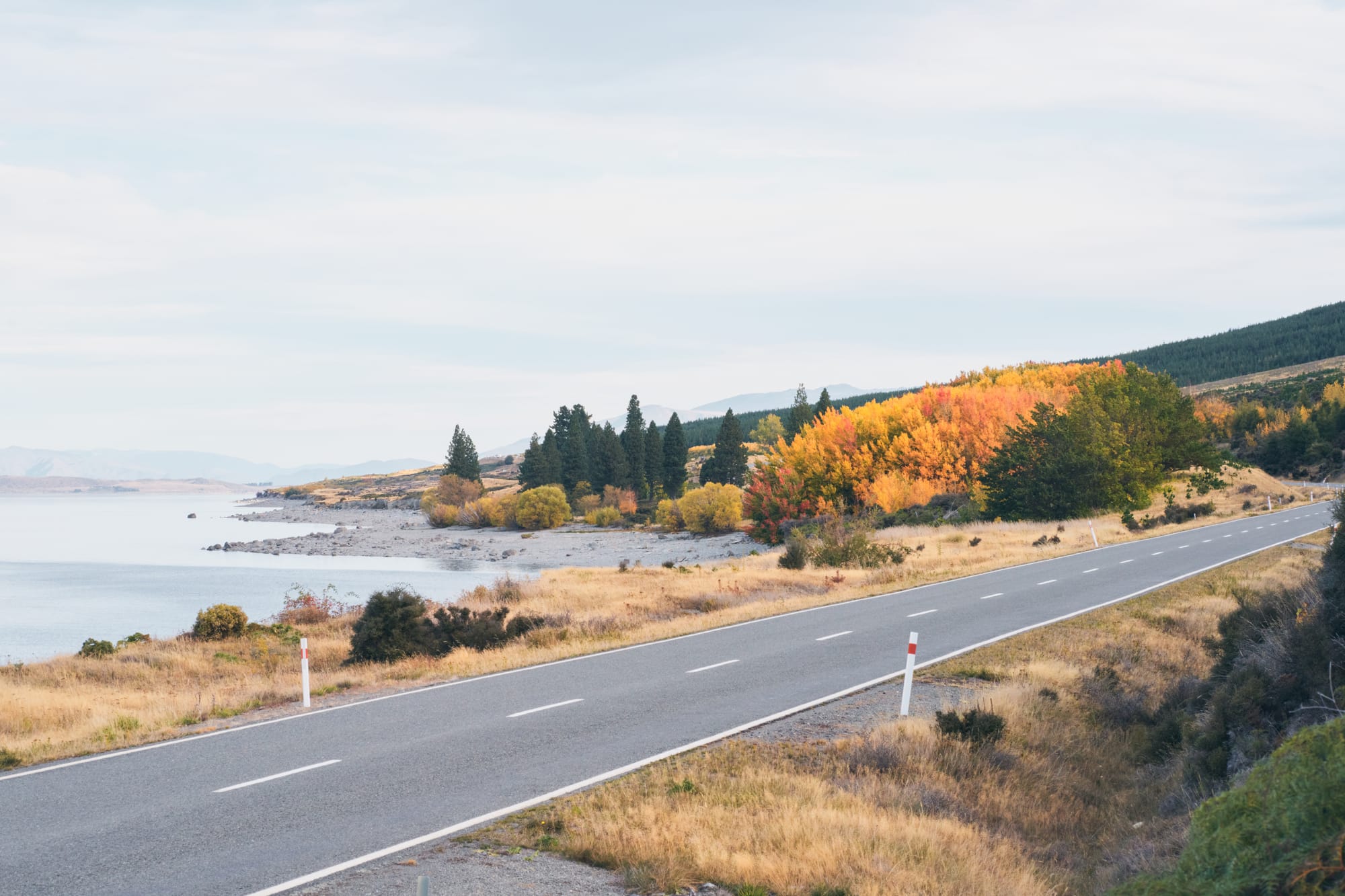
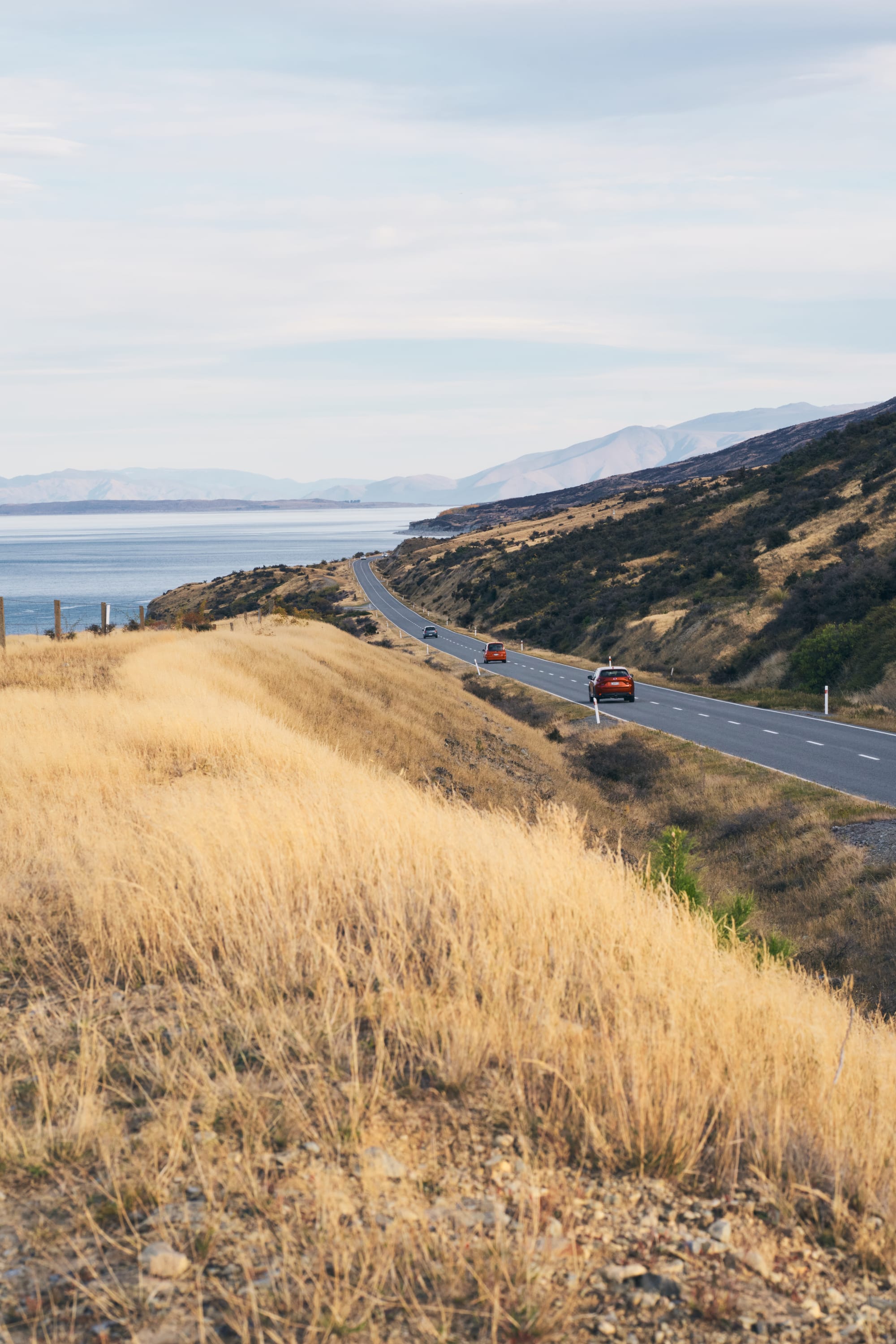
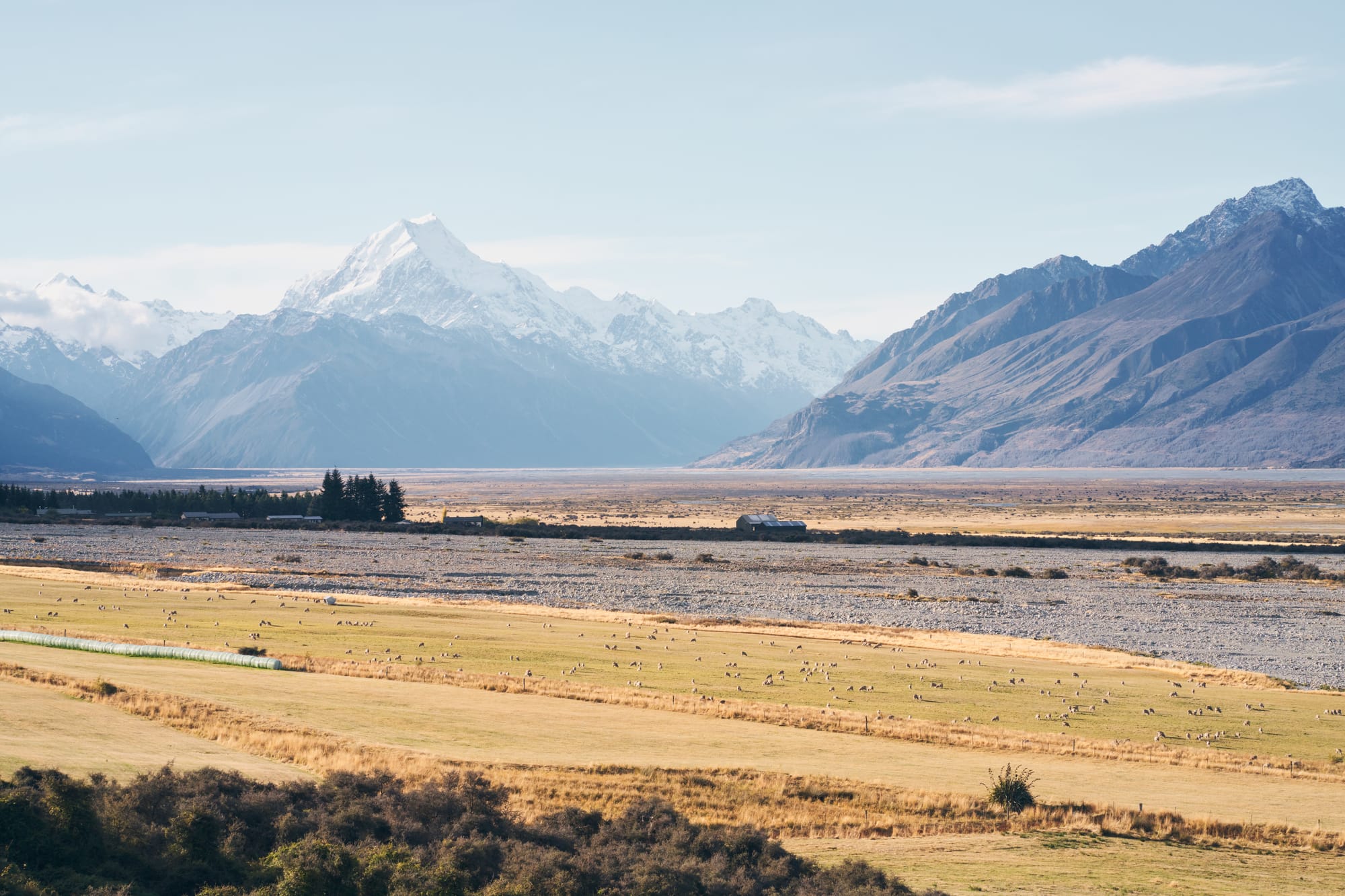
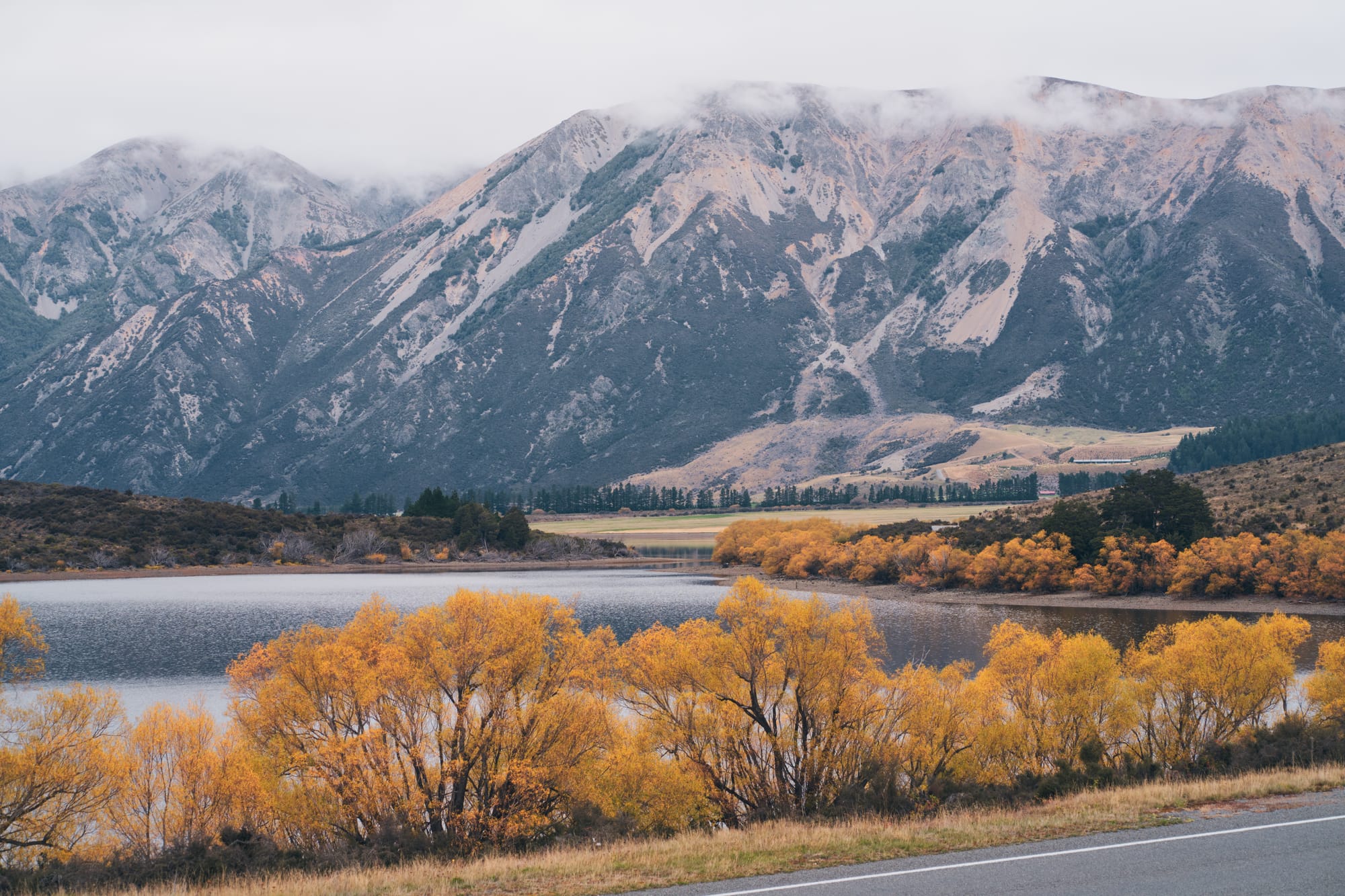
On the upside, the light is spilling over the mountaintops and I'm getting pretty landscape shots of Mount Cook and the surrounding sheep farms. We make a few stops on our way to Lake Tekapo and arrive to the village at sunset. This area is known as a Dark Sky Reserve - one of the world's largest areas with lowest light pollution, ideal for stargazing. Naturally, it's cloudy on the evening we're here. We try to find dinner but there are fewer options than in a typical frontier town and the best ratings indicate that food trucks may be our only option. I run into a local market to grab a few essentials, order two pizzas from a little truck, and navigate our way back to the cabin where we're staying for the night. With the fire crackling in a fireplace, cold beer in my glass, Ashton curled up under the blue glow of his iPad, and greasy cardboard evidence of consumed pizza pies, we settle into the night.
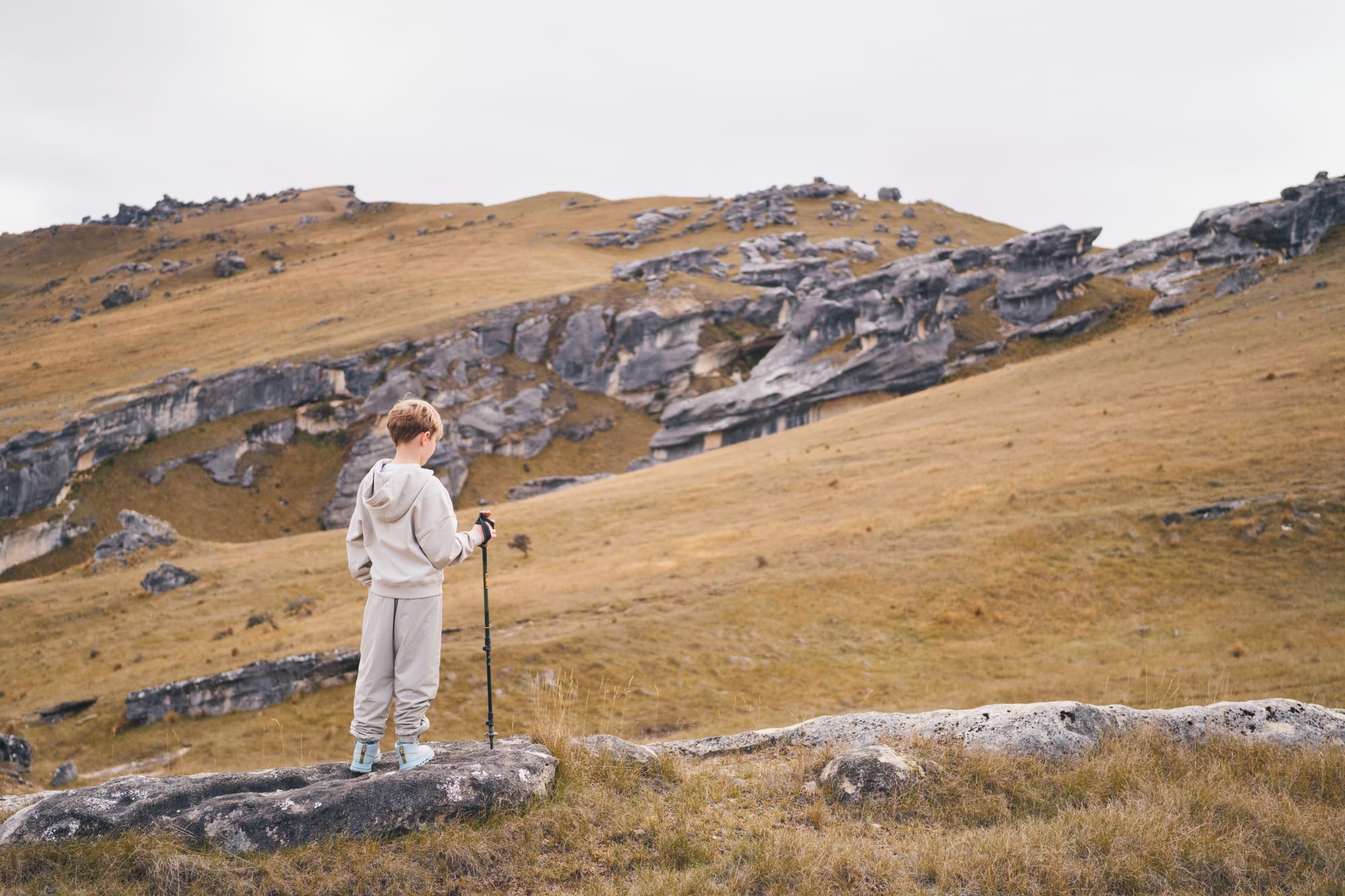
It's an odd village - there's a small central strip with few retail options, a hill with an observatory on top, the famous Church of the Good Shepherd sitting on the edge of the lake, and a wilderness that stretches beyond the visible borders of town. Before we depart for our final stretch of road I have determined to force our family into another, hopefully more successful, hike. The Mount John Summit track should take us a couple of hours to complete, take us all the way up to the observatory on the top of the hill, and circle back through a pine forest. Ashton is rested and inclined for adventures, Virginija is skeptical but I'm hoping to get her deep enough into the hike that backing out becomes impossible.
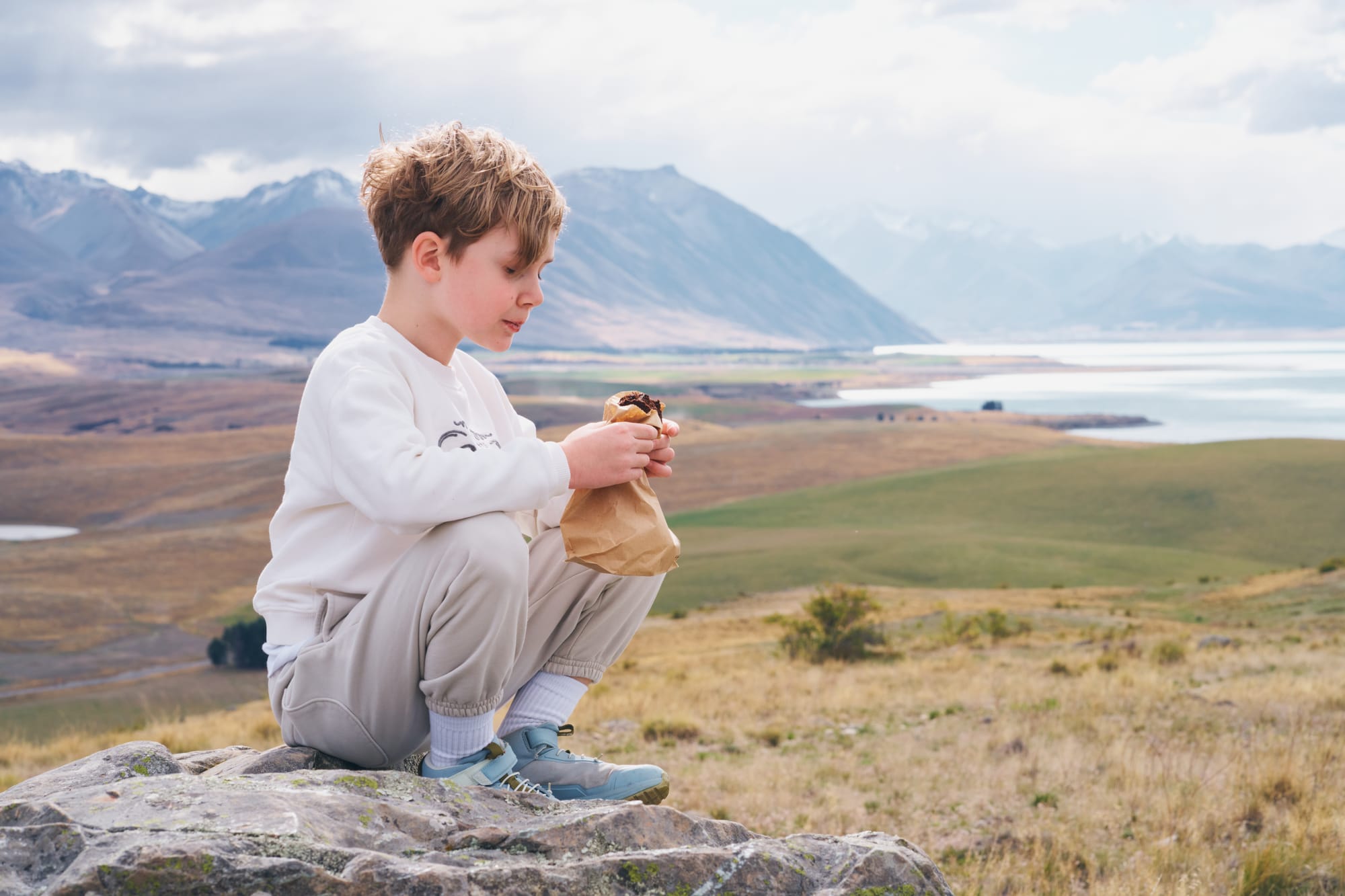
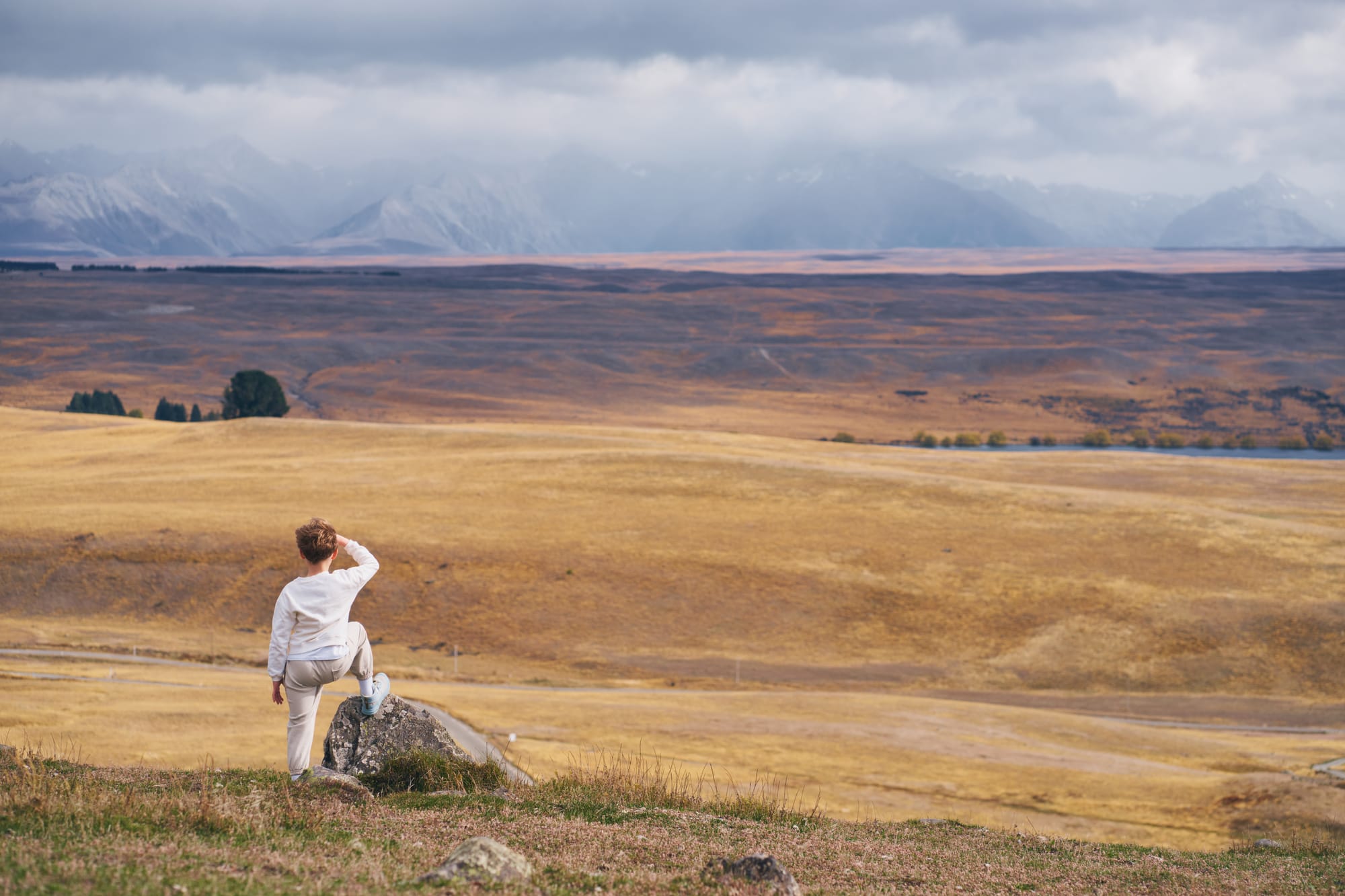
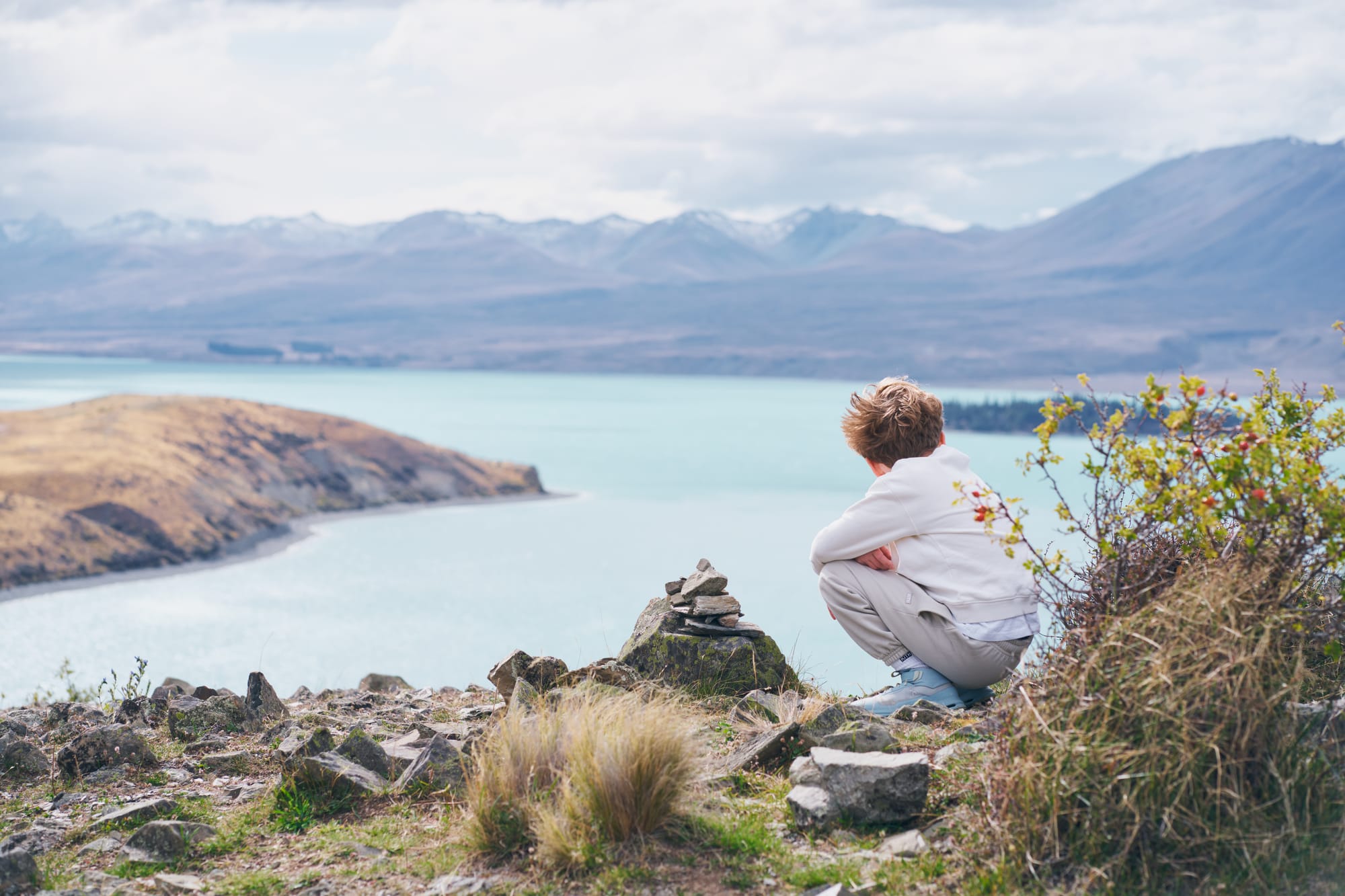
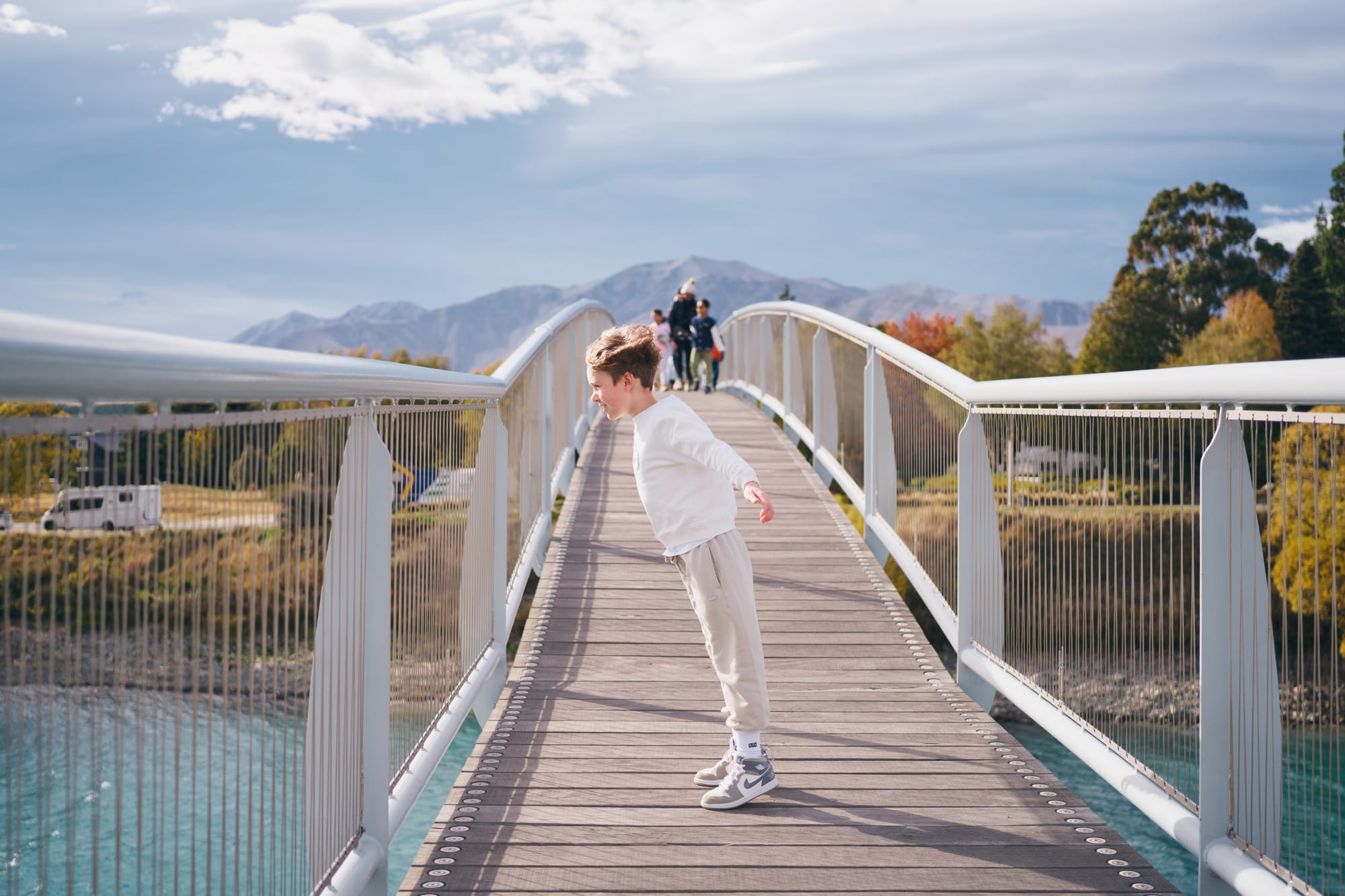
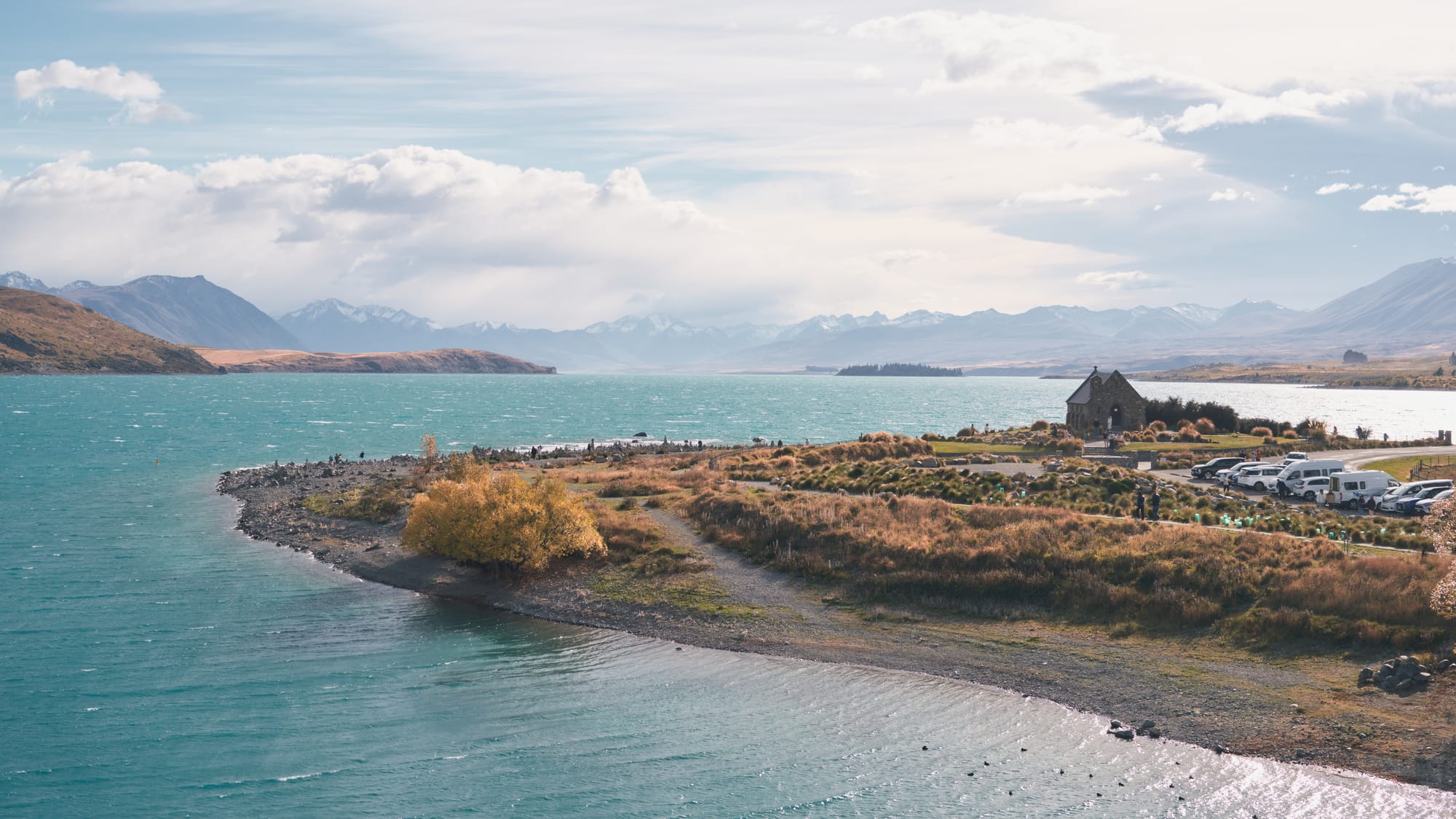
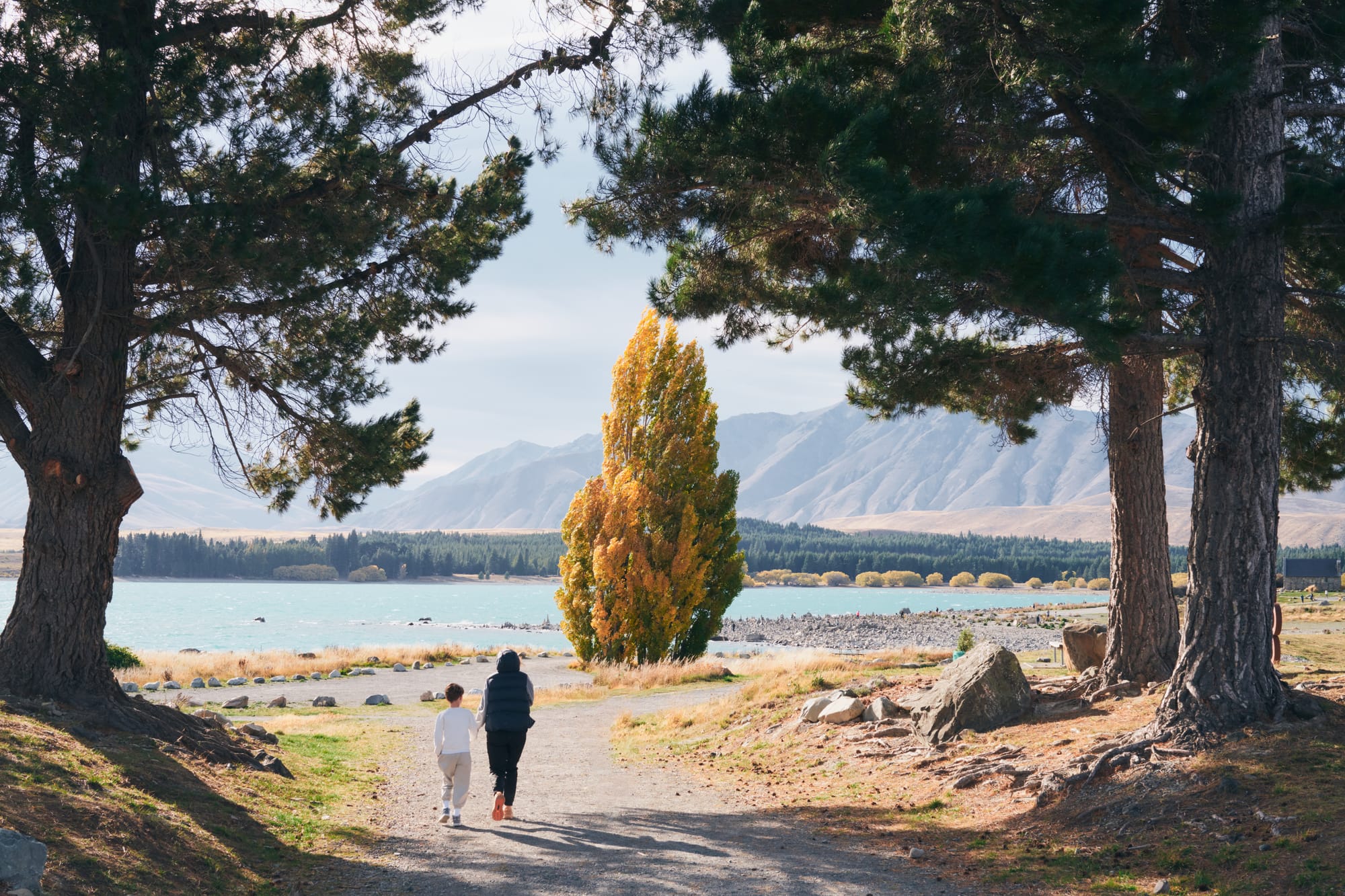
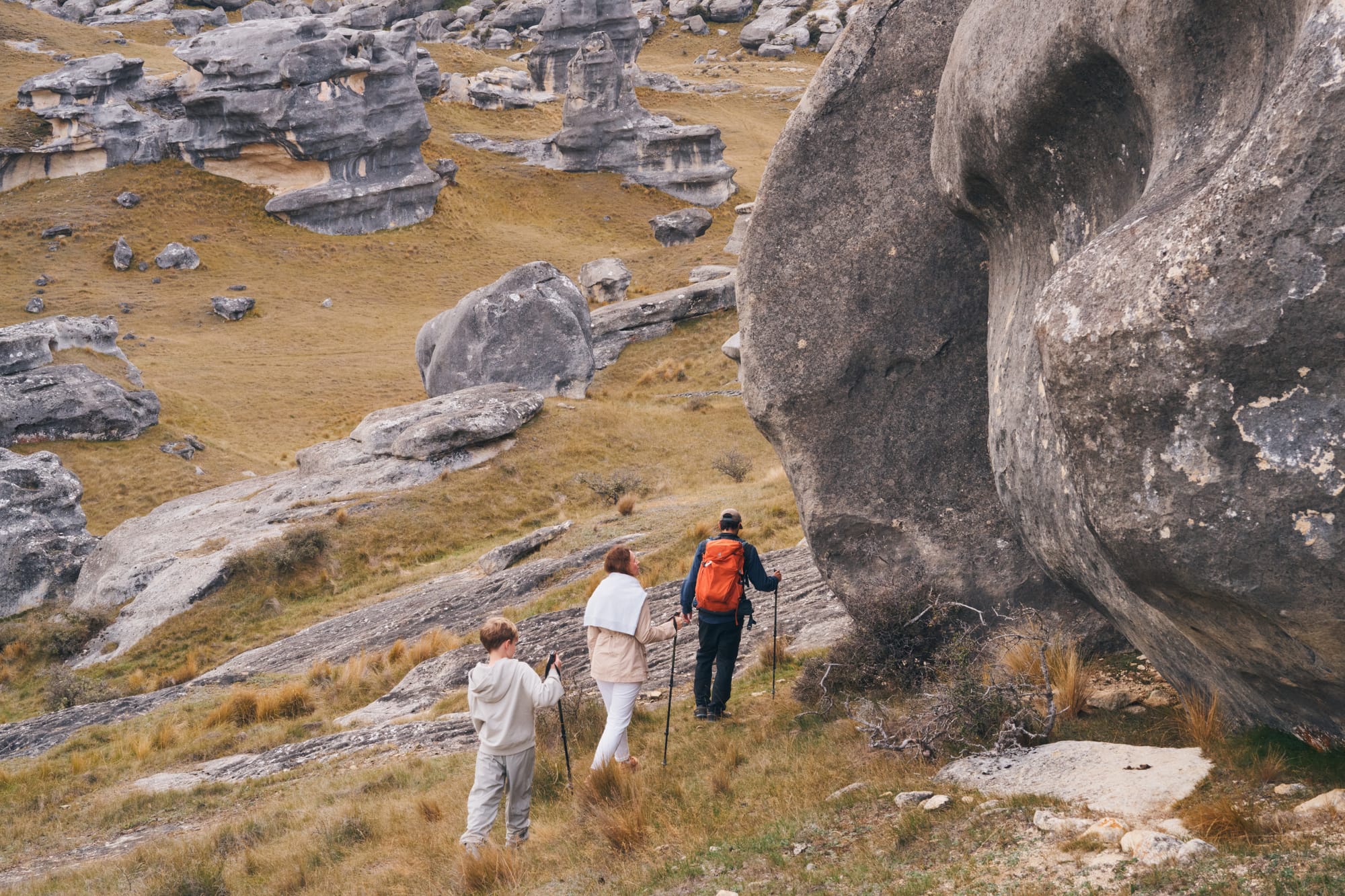
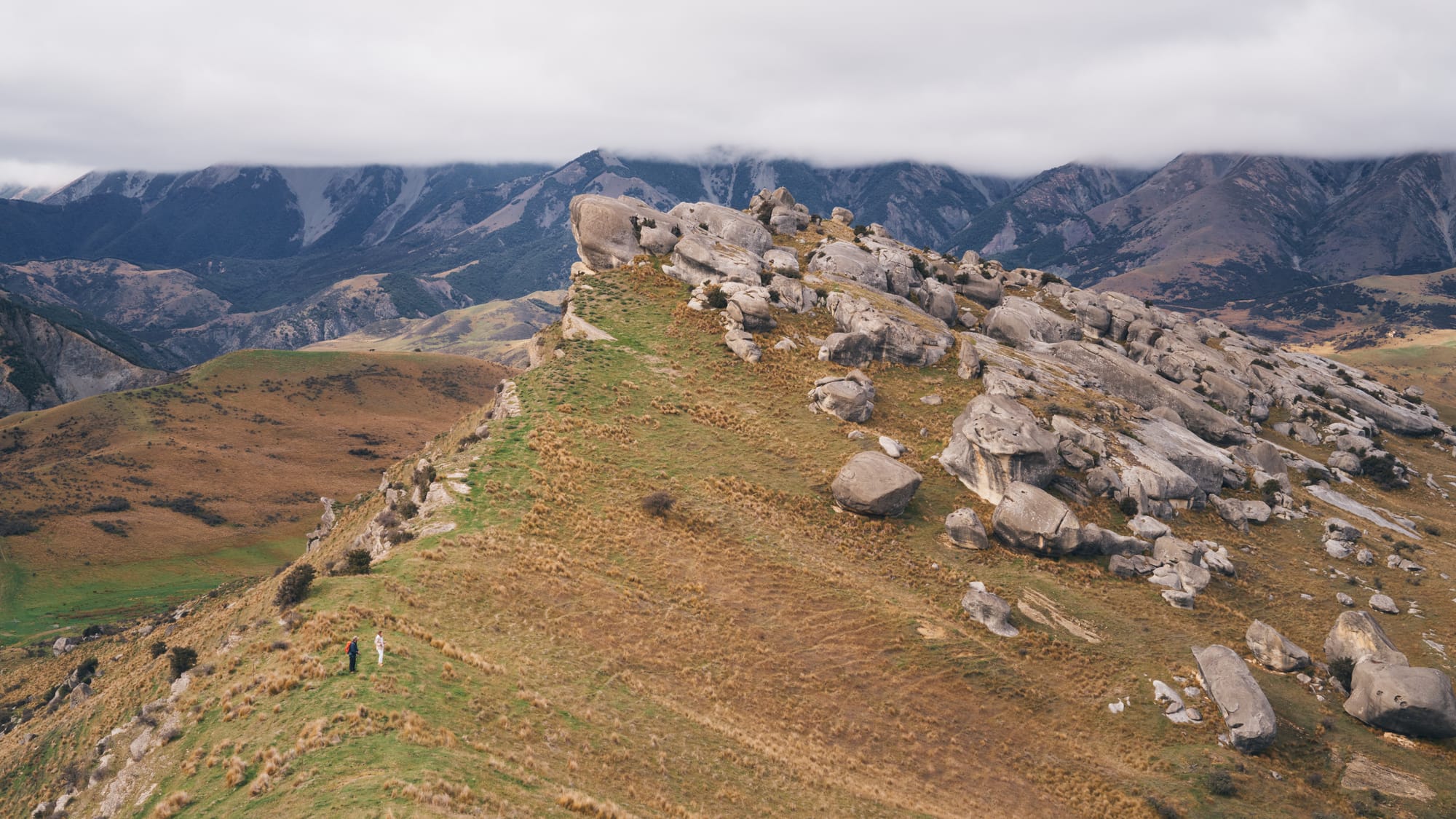
We follow a path North by the lake and Ashton launches into a monologue about an adventure game he is currently playing. It's a futuristic, cyberpunk-ish setting and I'm enjoying his story as we walk. He's chittering so fast and enthusiastically that both Virginija and I can't help ourselves but giggle at the change of mood compared to the day before. Luckily, the trail is empty but for the three of us. We're slowly gaining elevation (for a total climb of 1,300ft) and a breathtaking view of the lake and surrounding mountains opens up in front of us. With a total distance of five miles, it's a healthy three hour hike. The return is a steep sequence of switchbacks through a pine forest and we're all happy it's a descent.
Ashton requests a repeat of the pizza we had last night and, snacks loaded in our Hilux, we jump back on the road to Flockhill lodge. It's a pleasant three hour drive, the mountain ranges tapering down and blending into rolling hills, and finally farmlands that stretch as far as the eye can see. Fog rolls through green fields speckled with white patches of sheep as we arrive at Flockhill station, an active 36,000 acre sheep farm sheltered in a valley of the alps.
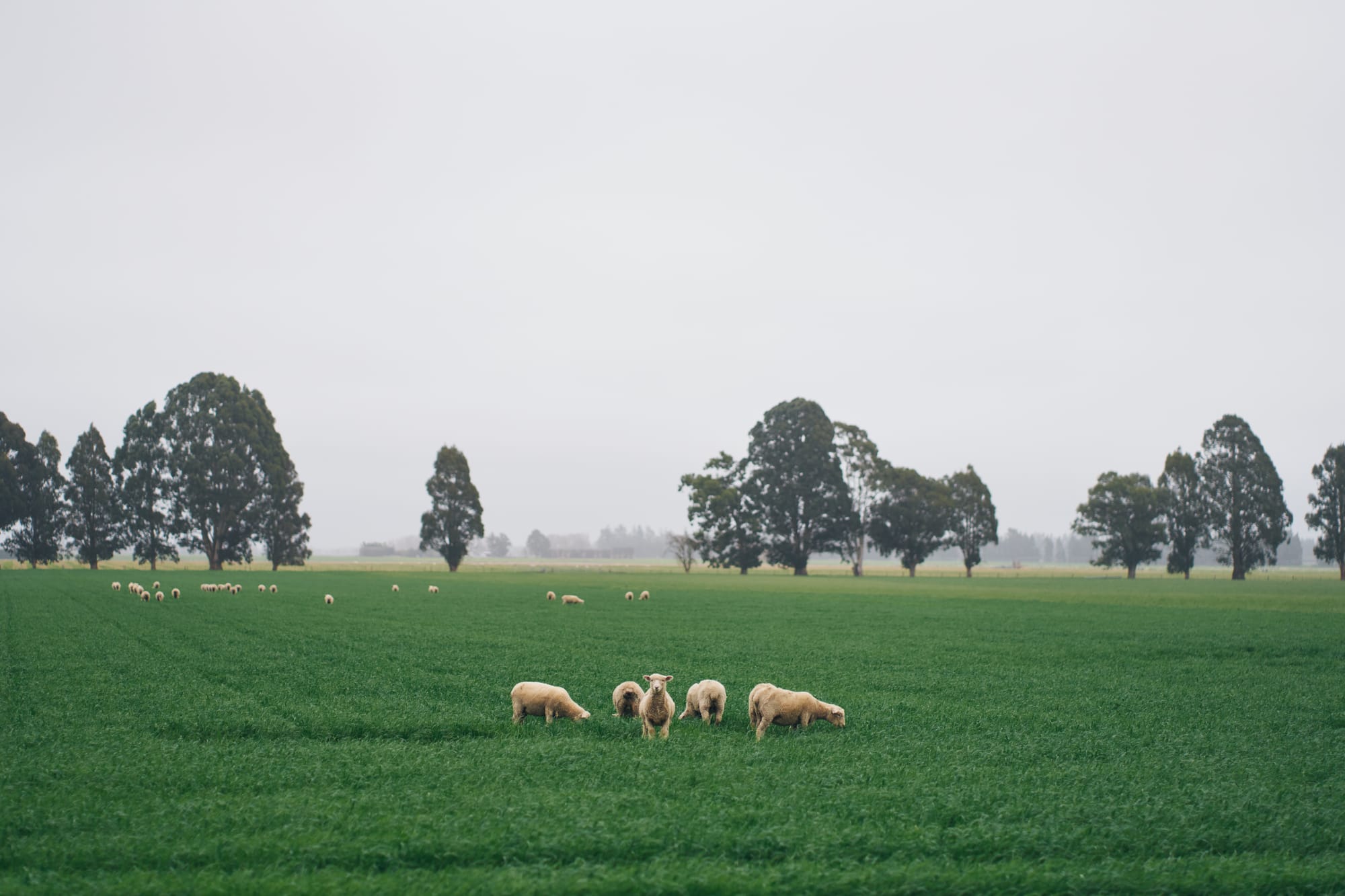
Flockhill Station
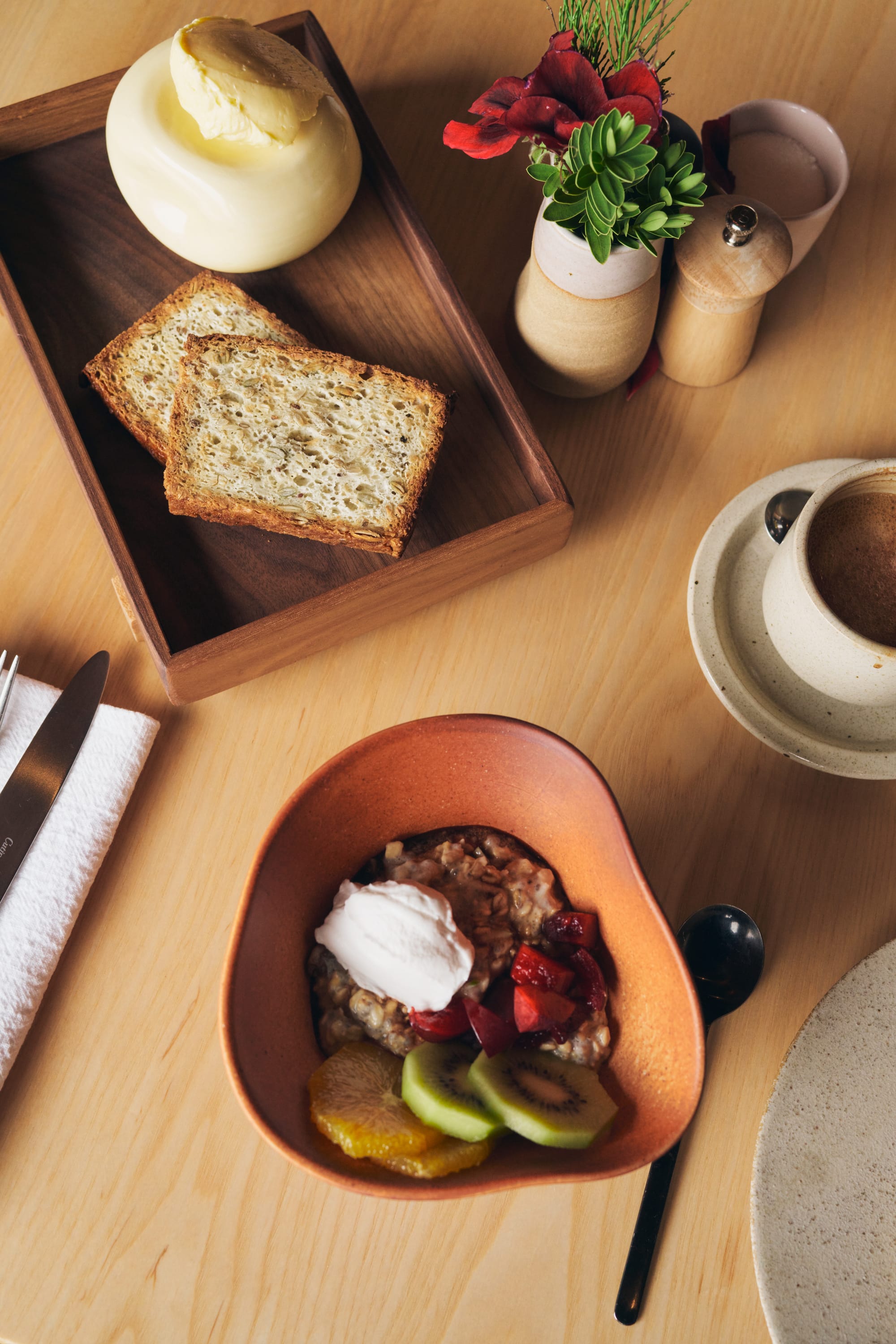
The Flockhill station dates back to the 1800's when a homestead was built in the current location. Eventually the property was turned into an active sheep farm and only recently (last couple of years) a hospitality element was added with a central restaurant/lodge, luxurious villas, and a large four bedroom homestead (that comes with a dedicated chef and attendant). The lodge puts up an incredible tasting dinner every night, outstanding local flavors cooked in an open kitchen, a wood fired oven glowing as the centerpiece. The shelves in the dining area are decorated with various pickled and preserved vegetables, fruits, preserves, herb extracts - all actively used in the recipes we see on the table. A few steps outside is a blooming garden of fresh vegetables, spices, and edible flowers.

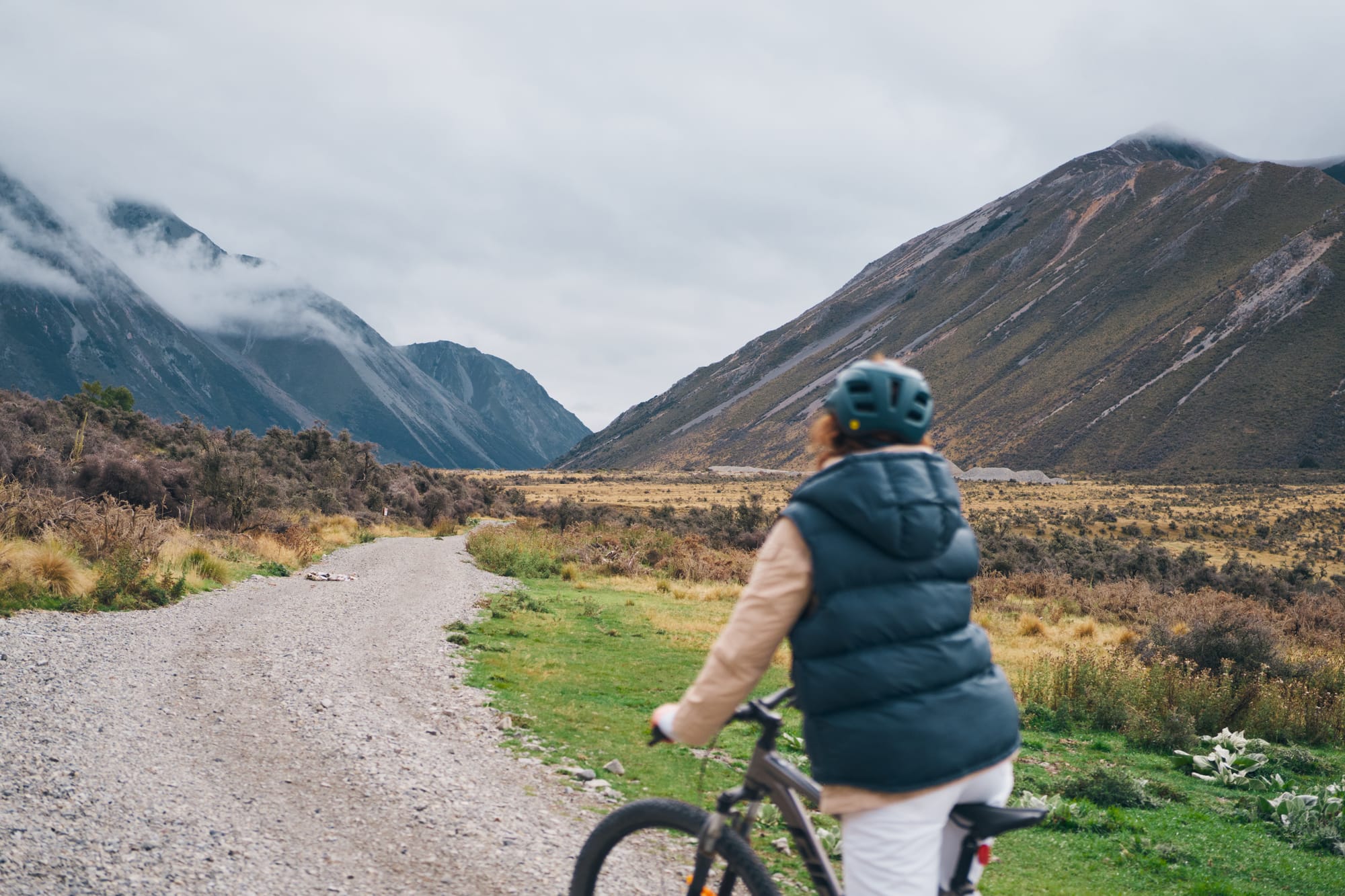
It's been a long trip, almost two full weeks including travel time, and we're ending it on a good note. We have three nights at this property to wind down before the 20+ hour trek back to Chicago. Our favorite experience here is going on a farm tour with a shepherd and her two herding dogs. One of the dogs, the older and more mature one, is a gathering dog - she runs in a wide circle around the herd of seep and collects up all the stragglers into a tidy circle. The other, a larger and younger female, works as a driving/forcing dog - making the maximum amount of noise and ruckus to drive the sheep in a particular direction. Both dogs are blasting all over the field at the speed of light, clearly enjoying the work, each other's company, and the outdoors. Dogs are taught both vocal commands as well as whistle signals. Each dog has their own system of codes it knows to follow, allowing the shepherd to control two working dogs in the same field. It's incredible to watch, making me think that spending days out in this magnificent nature with loyal animals is certainly not the worst way to make a living.
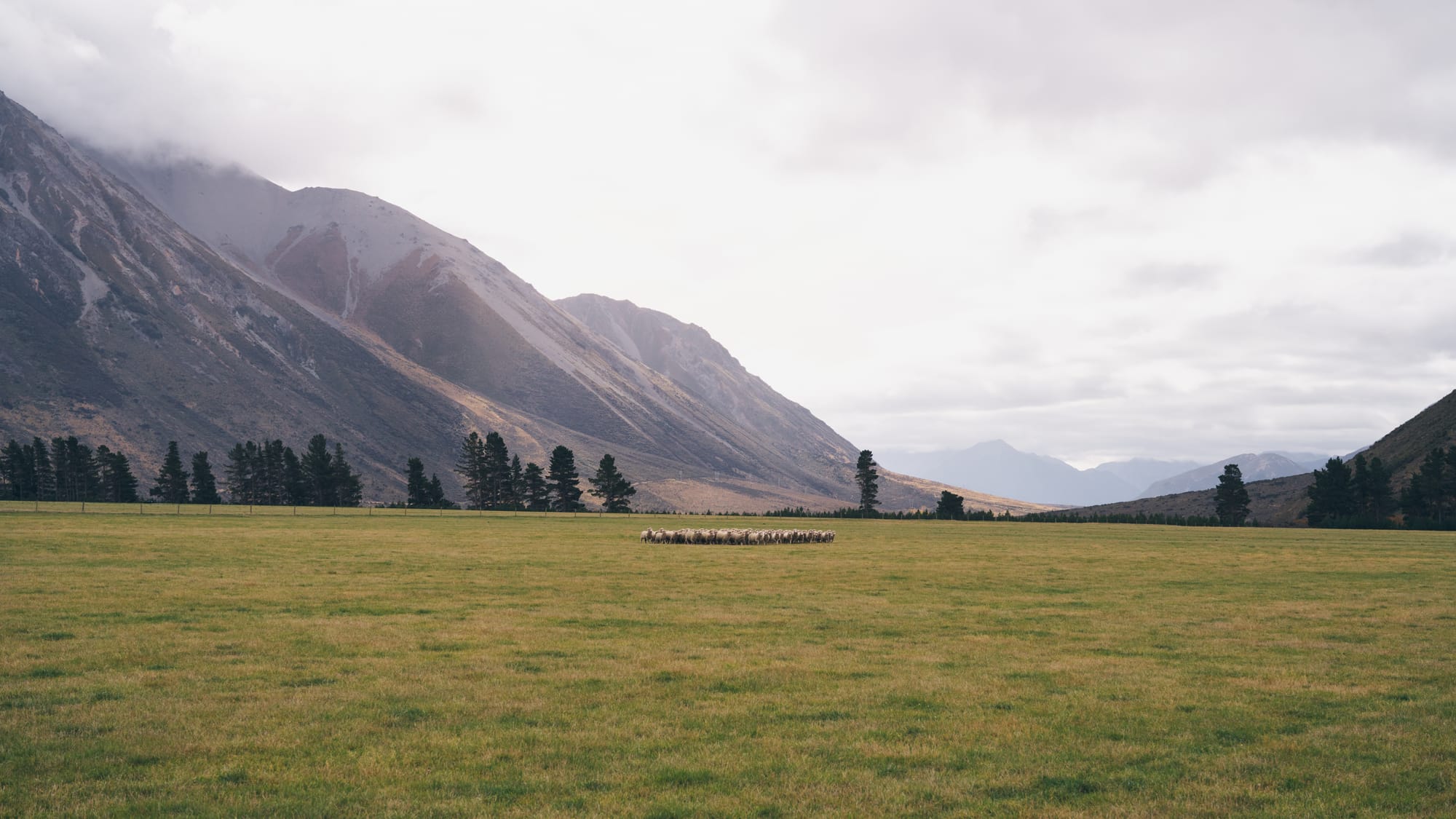
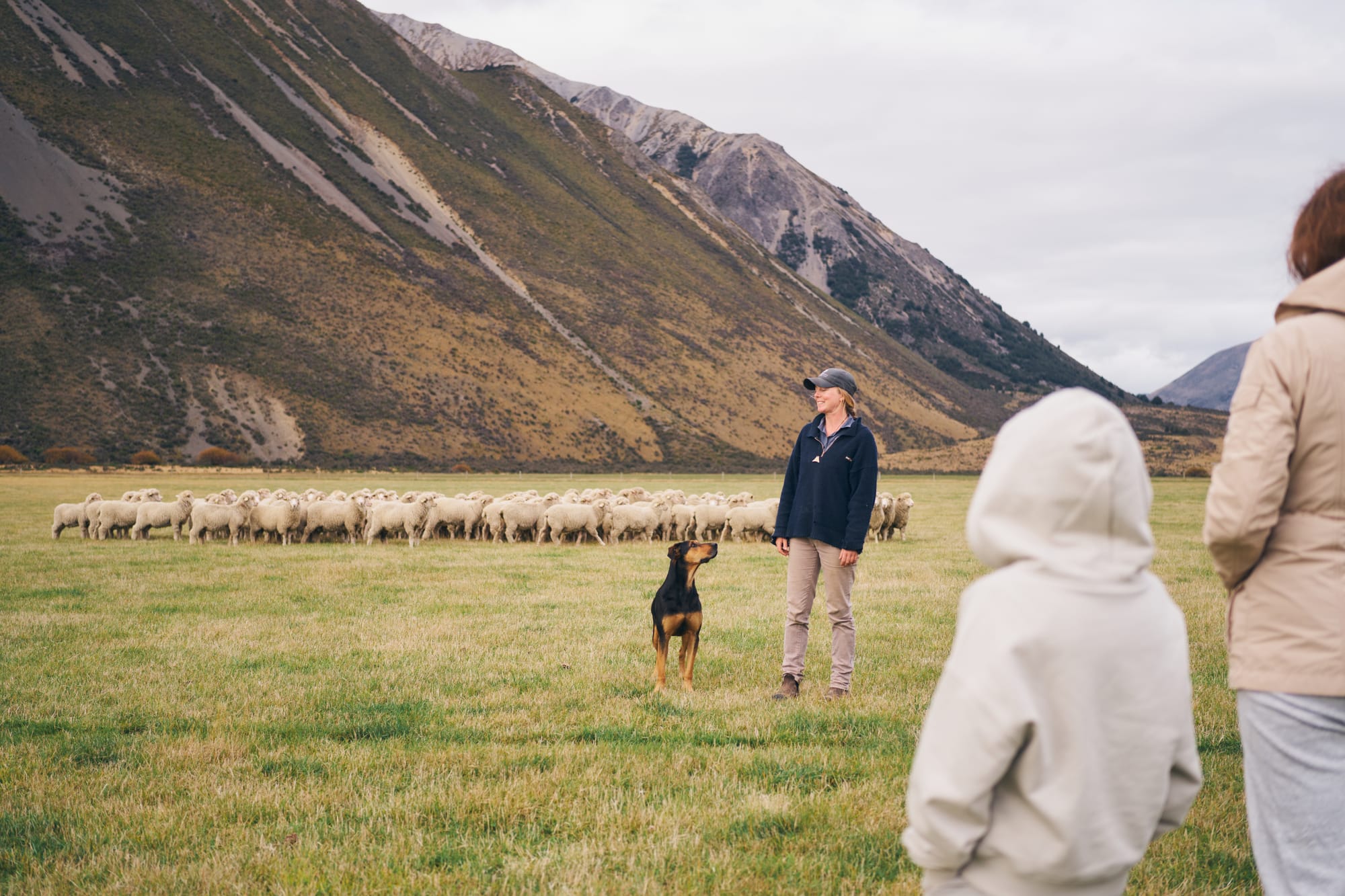
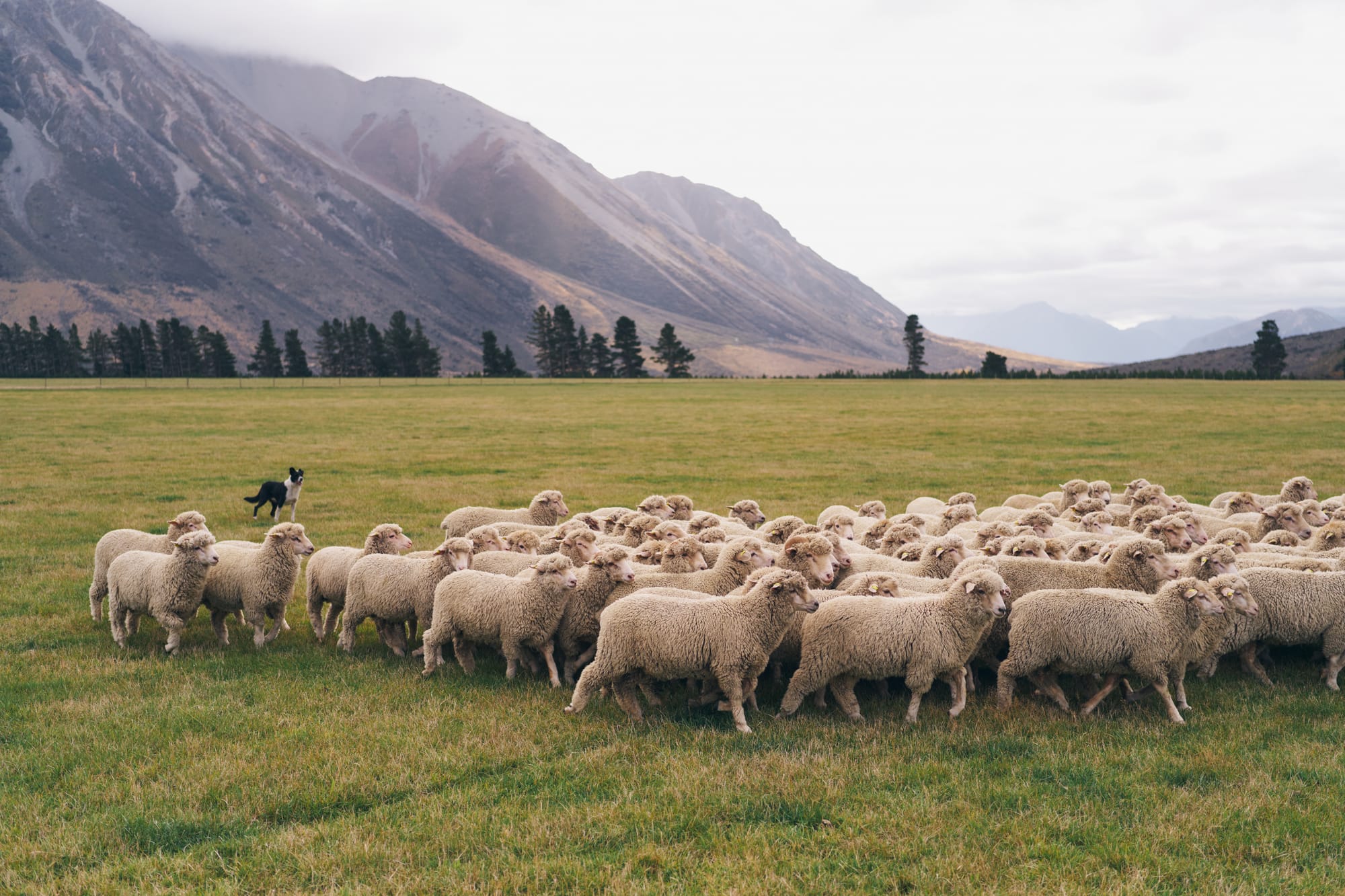
We move a flock of sheep to a new pasture. We find two young bulls at the edge of the property and have to bully (no pun intended, they're not very cooperative) them into returning back to the farm. We visit the shearing facility and learn about the lifecycle of the station, the grades of wool, and the buyers of the final product (e.g., smartwool is one of them, which is cool because I own some of their products). Finally, we visit two young lamb and have Ashton climb into their enclosure and feed them some fresh grass. All of this is made infinitely better by our genuine, smiling guide and her two dogs.
New Zealand is a difficult country to get to, a very easy country to enjoy and love. Its tiny population and foreboding landscape make the interactions between people grounded and real. The folks we met and interacted with all seemed connected to nature and the outdoors, all carrying an ease around them that's hard to describe - the very antithesis to the jitteriness, urgency, and anxiety of urban dwellers back home. We're taking off from Christchurch tomorrow, and I hope the tranquility we found travels back with us to Chicago.
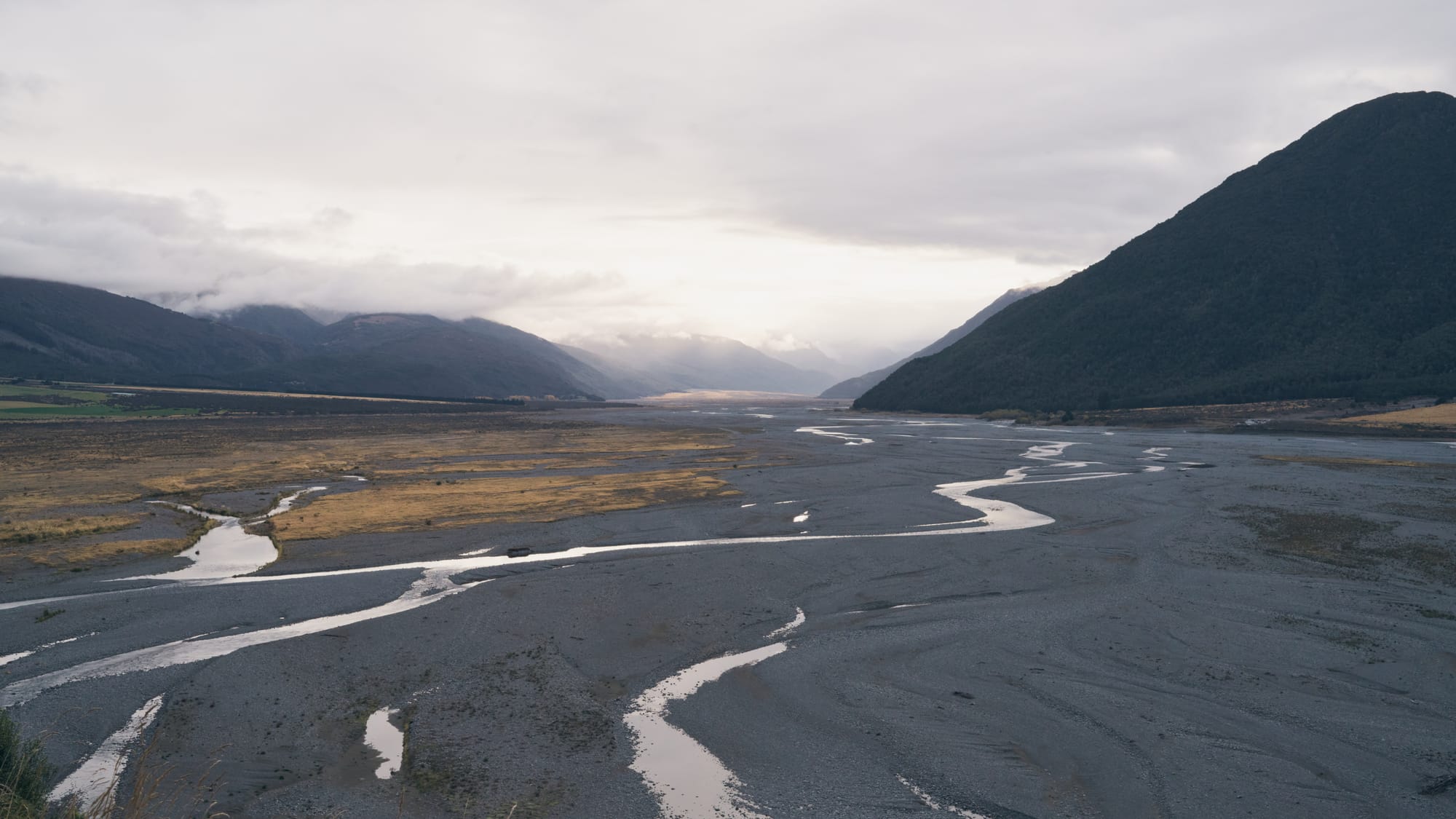
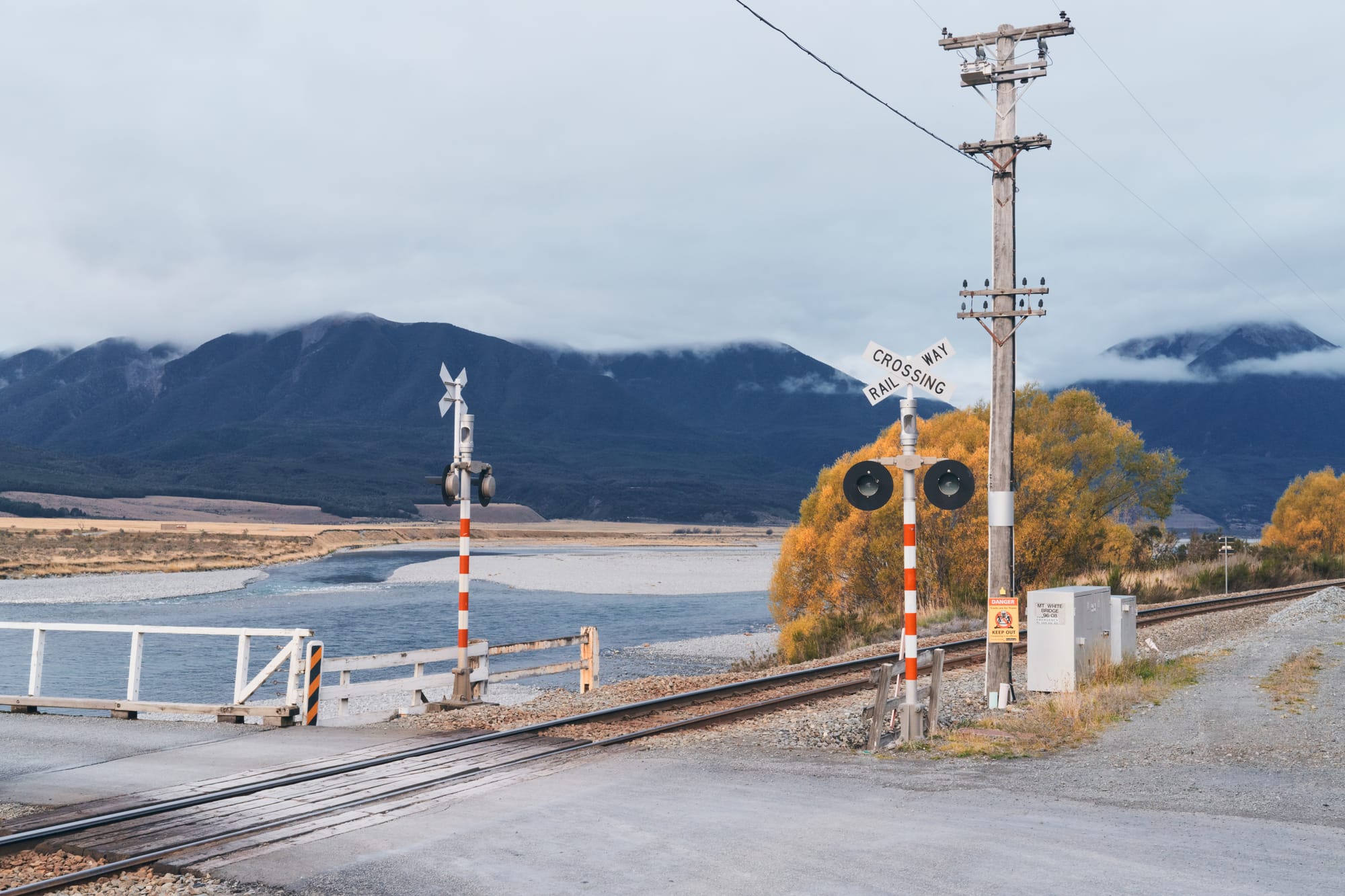
Shot with s Sony A7RV, a 40mm F2.5 and 85mm F1.8.